By Ajay Kaul
Srinagar, Jan 15 (NVI) In a much-delayed move, authorities in Kashmir have begun a process of seeking details of those managing Mosques, Madrassas and other such shrines which have been misused over decades by anti-national elements by indulging in subversive and seccessionist activities.
Since late 1980s, Madrassas, Mosques and other such shrines in Kashmir have been used by anti-national elements to brainwash and recruit Muslim youth for secessionist and terrorist activities at the behest of Pakistan.
These Muslim religious places in the Kashmir Valley and parts of Jammu have been misused by Maulvis and Imams, credentials of many of whom have been suspect and questionable, for fanning anti-India sentiments.
In fact, several of such religious places have been visited and misused by dubious Maulanas, including those from Pakistan like Masood Azhar, who used the mask of Islamic preacher while being an active commander of Harkat-ul Mujahideen terror outfit in early 1990s.
He was arrested during an operation in south Kashmir in early 1990s and got released by India after five Pakistan-supported terrorists hijacked Indian Airlines plane IC-814 in December 1999 and commandeered it to Kandahar in Afghanistan.
With the support of Pakistani military, he later formed Jaish-e-Mohammad (JeM) terror outfit, which has carried out umpteen attacks in Kashmir and some other places in India.
Such dubious and dangerous people could misuse these Muslim religious places surely with the connivance of those managing the affairs there.
But these managers and other key persons of these religious places remained unquestioned and untouched only because they had the cover of religion even as the Madrassas, Mosques and other shrines became nurseries and hunting grounds for anti-nationals and terrorists.
Finally, the authorities have woken up and started to ask questions.
Accordingly, a proforma has been given to village numberdars or village level revenue staff to gather details of mosques and madrassas along with their imams, teachers and management committee members.
For vested interests, some politicians of Kashmir have criticised this move, claiming that it amounts to interference with the Muslim religion.
But they are either unaware or deliberately ignore the fact that such practices have been followed by various Islamic countries, including Pakistan which claims to be the torch bearer of Islam.
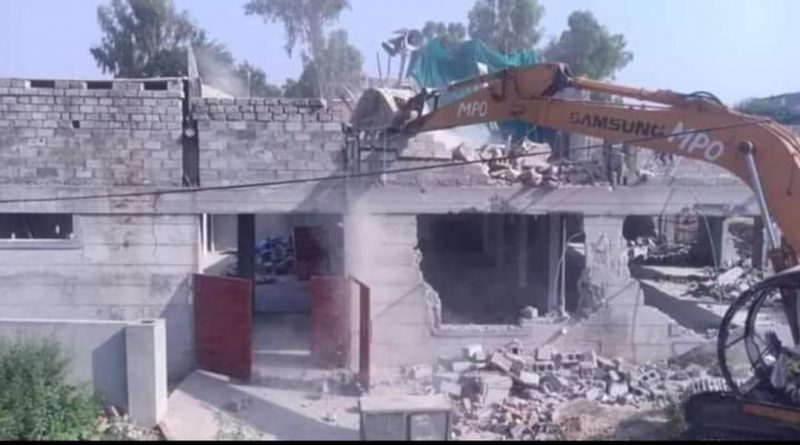
In fact, Pakistani authorities have been brutal in some cases, as was highlighted a few months back when a famous 30-year-old mosque called Jamia-Masjid Tawheed located in Model Town of Islamabad was demolished and its Imam and his two sons were arrested.
While talking about Pakistan, it must be highlighted that mosques in Pakistan have to be registered under the Societies Registration Act, 1860, which means all details of the management and others have to be submitted to the government before even a masjid can become operational.
Similar is the case with Muslim Trusts and Waqfs.
There is mandatory requirement of documentation like land ownership proof, CNICs for committee members, and affidavits, with the process often overseen by Provincial Auqaf Departments or District Administrations.
A No Objection Certificate (NOC) is mandatory for new construction, issued by District Administrations.
In Saudi Arabia, considered the cradle of Muslim religion, planning, construction, maintenance and operations of mosques is strictly monitored and overseen by the Ministry of Islamic Affairs, leaving no scope for independence of these religious places.
Imams are paid government employees, making them subservient to the State.
In big mosques, which may have additional staff like muezzins (callers to prayer) and cleaners, they are all paid by the government.
In Turkey, another country claiming to be the champion of the Islamic world, most mosques are registered and managed by the state’s Diyanet (Presidency of Religious Affairs), which handles their funding, operation, and imam employment for Sunni Islam.
Privately-built mosques usually form associations or foundations (vakıflar) that need government approval to establish and operate, acting as legal entities for construction and management.
The Diyanet oversees the vast majority (around 85,000) of mosques, integrating them into the state’s religious framework, whereas community-built mosques function more independently but still require legal registration as associations or foundations.
In Malaysia, mosques are primarily administered and registered by the State Islamic Religious Council (IRC) and the State Islamic Religious Department (IRD) of their respective states.
Islamic affairs fall under the jurisdiction of individual states in Malaysia, rather than the federal government directly.
No building can be erected or used as a mosque without the express written permission from the relevant State Religious Council.
In Egypt, mosques are registered and administered strictly by the Ministry of Religious Endowments (Awqaf Ministry).
The process is part of a broader government effort to officially supervise all places of worship and religious discourse in the country.
As far as United Arab Emirates (UAE) is concerned, mosques are registered and regulated by government bodies like Dubai’s IACAD and Abu Dhabi’s DCD.
The mosques require official licenses for establishment, operation, and even modifications, with strict rules ensuring alignment with Islamic law and public order, involving documentation from founders, financial plans, and adherence to specific federal and emirate-level regulations for title deeds and management.
In Indonesia, mosques are typically registered as religious organizations or foundations with the Ministry of Religious Affairs (MORA), following general requirements for all religious groups. The specific process involves legal and administrative steps at both the local and national levels.
Qatar mandates that mosques are registered and licensed through the Ministry of Endowments and Islamic Affairs (MEIA), which oversees their establishment, maintenance, staffing (Imams, Muezzins), and operations.
The final approval authority for Islamic centers is with the Minister, implying State control.
These examples underscore the point that the activities of Muslim religious affairs have been, and continue to be, strictly controlled by the governments of these Islamic countries, unlike in India which has followed a much liberal approach towards Islamic practices. (NVI)