New Delhi, Apr 13: Can traditional herbs treat cancer? A claim has been made in this regard but it is subject to detailed laboratory and clinical studies.
Researchers from Nagaland University, Berhampur University, and Saveetha Medical College have claimed to have identified certain traditional herbal formulation which has anti-cancer potential.
This herbal formulation is being used by the Konyak tribe of Nagaland.
While the findings are currently based on computational analysis, the researchers emphasized the need for further laboratory and clinical studies to validate these results, particularly in the context of colon cancer treatment.
The study, described as preliminary, attempts to combine traditional knowledge with modern analytical and computational approaches, said a statement issued by the Nagaland University.
The multi-institute research team investigated a five-plant polyherbal formulation and found that its bioactive compounds can effectively target VEGFR2, a key protein responsible for tumour blood vessel growth, it said.
The findings were published in the Microchemical Journal, a peer-reviewed scientific journal that publishes research on analytical methods and techniques for detecting and measuring chemical substances at micro and trace levels.
The paper was co-authored by Longnyu M. Konyak, Giridharan Bupesh, Parthasarathy Sudharsan, Nokenketla Jamir, Sidhartha Saikia from Department of Forestry, Nagaland University, along with collaborators from Berhampur University and Saveetha Medical College.
Applauding the multi-institute research team for uncovering the cancer-fighting potential of traditional Konyak herbal medicine, Prof. Jagadish K. Patnaik, Vice Chancellor, Nagaland University, said, “By integrating indigenous knowledge with advanced molecular simulations, the study identifies promising compounds that match the efficacy of existing drugs while indicating lower toxicity. This achievement reflects the university’s dedication to innovative, impactful research rooted in local wisdom and global scientific advancement.”
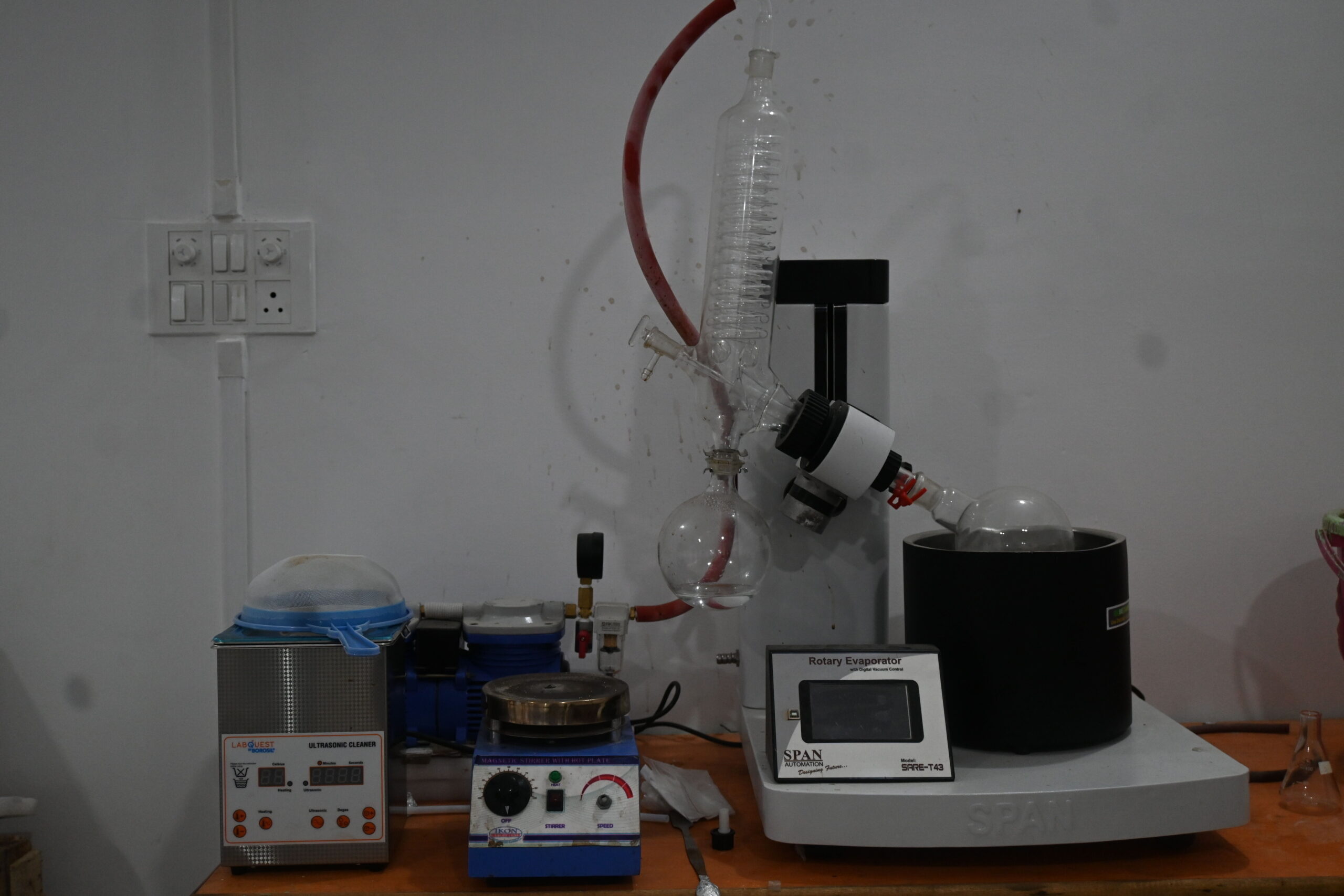
Emphasizing the uniqueness of the study, Dr. G. Bupesh, Assistant Professor (Natural Products and Tribal Health Research), Department of Forestry, Nagaland University, said, “This is the first time a specific five-plant formulation used by the Konyak tribal healers has been scientifically analysed and validated using advanced computational methods. Using advanced techniques such as GC-MS analysis and molecular simulations, we identified compounds with strong anti-cancer potential, showing performance comparable to existing drugs while indicating lower toxicity.”
The study further revealed that these compounds demonstrated stable interactions and favourable safety profiles, indicating their potential as natural anti-angiogenic agents that could inhibit tumour growth. Importantly, the research also showed that these natural compounds selectively target VEGFR2 over similar proteins, which could help reduce side effects in future therapeutic applications.
The study also highlighted that most identified compounds showed low toxicity and acceptable pharmacokinetic properties, making them promising candidates for further drug development. (NVI)