
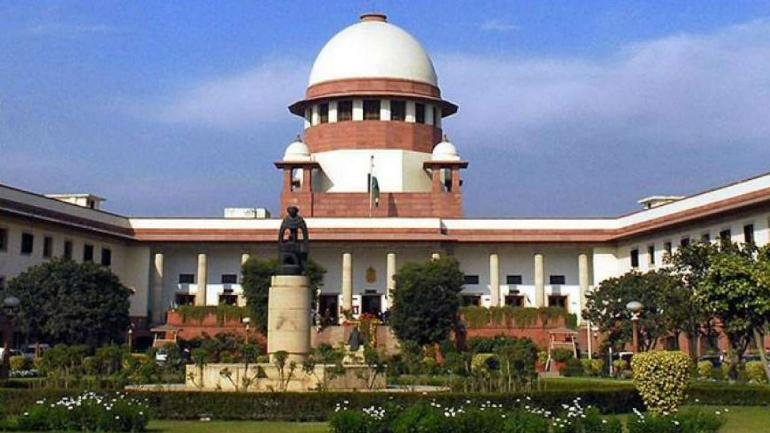
New Delhi, June 12: In a landmark judgment, the Supreme Court has described homemakers or housewives as the “building blocks for the nation’s road to holistic progress” and fixed Rs 30,000 as their notional monthly income, applicable for motor accident insurance claims.
“It is ironic to describe a homemaker as dependent on earning members when, in reality, the household’s functioning depends substantially on the homemaker,” said a Supreme Court bench of Justices Sanjay Karol and N K Singh.
“The earning members are, in fact, solely dependent on the homemaker, but alas, this reality does not receive the acknowledgement it deserves. Efforts have been made across fields to some success, but undeniably, the road is still long,” it said.
The court ruling came in a case related to insurance amount payable for the death of a woman in a road accident on November 25, 2001.
In December 2023, the Motor Accidents Claims Tribunal ordered the payment of Rs 2,42,000 to the woman’s legal heirs by way of insurance.
In December 2024, the Punjab and Haryana High Court enhanced this to Rs 8.43 lakh with 7.5 per cent interest from the date of filing of the claim petition, following which her heirs approached the top court.
The Supreme Court raised it from Rs. 8.4 lakh to Rs 62.78 lakh, saying the loss of a homemaker is “not limited to husband and children”.
“It also directly impacts the women’s own parents, who have been deprived of the love and company of their child, who have lost the support and comfort of this person and are left alone with this boundless grief.
“Still further, the loss is acutely felt by her in-laws, who are more often than not members of the same household and therefore dependent on the love, labour and dedication of this person for food or medicines, for doctor’s visits, or even for the regular company over a morning tea.
Strict arithmetic calculation does not lend its services to any of these scenarios,” Justice Karol wrote in the judgement.
“When the efforts of the homemaker towards the husband and children are taken on the whole, it cannot be disputed that although her labour, be emotional or physical, is within the four walls of the home, its impact is much wider,” the Supreme Court said.
“In enabling the direct contribution today of their husbands and tomorrow of their children, they are the building blocks for the nation’s road to holistic progress,” the bench said.
The bench said that in cases involving the death of a homemaker, Motor Accident Claims Tribunals, High Courts, and the Supreme Court should award an additional lump-sum amount of Rs 30,000 under the head of “loss of domestic care”.
The amount, it said, would help offset the inherent disadvantage faced by homemakers when compensation is calculated on the basis of a conservatively assessed notional income.
It added that the amount should take into account the homemaker’s contribution to the household’s smooth functioning, the loss of maternal support for children, the loss of spousal support, the support and care of an adult child, and the support and care of the deceased’s parents.
The bench clarified that the amount of Rs. 30,000 is “to be taken as a ‘stand-in’ (basic minimum monthly income) for monthly income in cases where the homemaker does not have an input into the house, in strictly conventional, monetary terms.
“In those cases where the homemaker is part of the workforce, the component of loss of domestic care shall be in addition to the monthly income as may be proved before the Tribunal/Courts.”
Homemakers Undervalued
The top court of the country said the work performed by homemakers is often undervalued even when routine household tasks such as cooking, cleaning and caregiving play a vital role in supporting the paid workforce and enabling economic productivity.
These contributions are generally not recognised as productive economic activity in measures such as Gross Domestic Product (GDP), it said.
“To put the enormity of what is missed out by these conventional methods” of calculating notional income, “it may be noted that every day, around 16 billion hours individual are devoted to unpaid domestic work and care,” the bench said.
The court also referred to a Time Use Survey conducted in 2019, “which highlights the extent of unpaid domestic and caregiving work, particularly undertaken by women.”
It said the survey found that women aged 15–59 spend more than seven hours a day on unpaid domestic work, compared with fewer than three hours for men.
On average, women undertake 2.6 times more unpaid caregiving and household responsibilities, even while also engaged in income-generating work.
“This one-sided scenario is probably one of the reasons why the country has a low female labour force participation at 31.7 per cent, since the societal framework generally presumes such responsibilities to be automatically falling upon women. Women’s unpaid caregiving work is estimated to contribute 15-17 per cent of India’s GDP, yet it remains unpaid and unrecognised,” the bench said.
Contribution of Women
The court said women’s contribution to the society extends far beyond biological reproduction as they play a central role in nurturing and developing human capital, which underpins the country’s broader aspirations, including its goal of becoming one of the world’s largest economies.
“It is often said that a mother is the first teacher that a child has. This teaching, however, is not like a school or a college, which has a definite end date and instead continues for the entire lives of both the mother and the child. Whatever positive act is undertaken by the child, such as learning a skill, a language, a trade or a profession, is informed by the training that is given daily by the mother.” (NVI)