
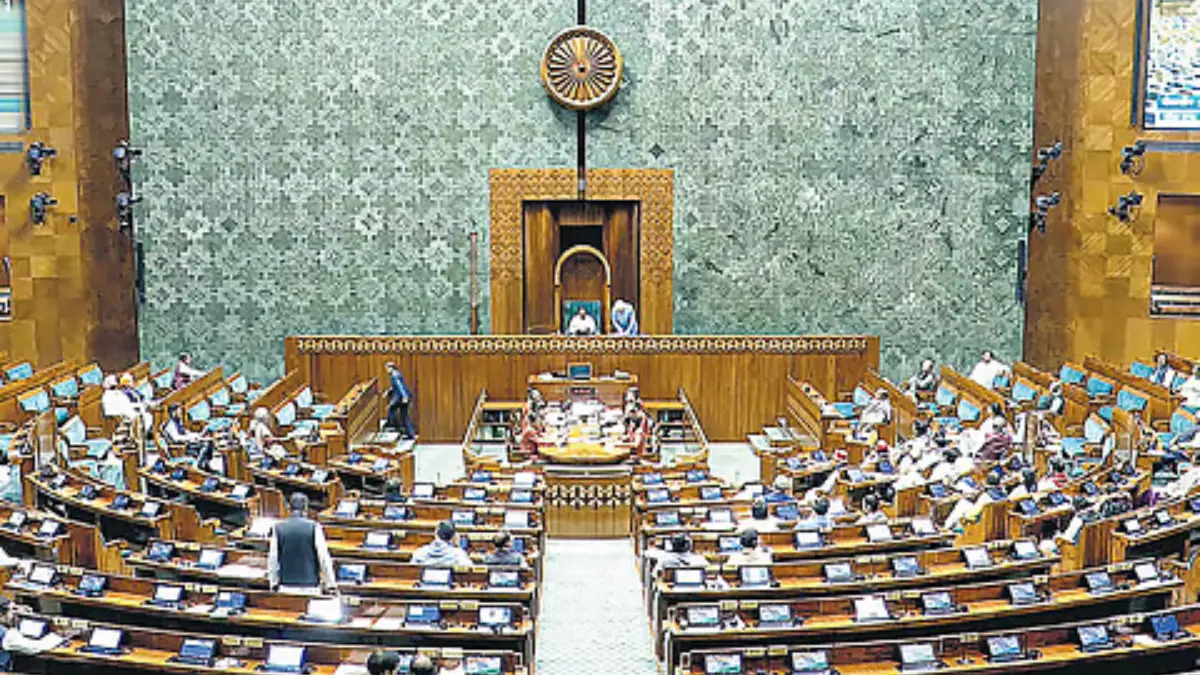
New Delhi, July 29 (NVI) A bill proposing stricter punishment for exam paper leaks, including imprisonment of up to 10 years and fines of up to ₹50 lakh, was passed by the Lok Sabha today amid uproar.
The Public Examinations (Prevention of Unfair Means) Amendment Bill, 2026, was approved by voice vote in the Lower House of Parliament, amid repeated disruptions after the Opposition attacked the government over police action against protesting students at Jantar Mantar recently.
The Bill, which aims to amend the Public Examinations (Prevention of Unfair Means) Act, which came into effect in 2024, was introduced in the Lok Sabha on July 27 by Minister of State in PMO Jitendra Singh.
The bill, besides proposing imprisonment of up to 10 years and fines of up to ₹50 lakh for paper leak, has provision for enhanced penalties for organised crime networks and service providers involved in such offences.
It also mandates completion of investigations within two months and trials within three months through dedicated fast track courts, and establishes a specific appeal mechanism before high courts.
During the debate, Leader of the Opposition Rahul Gandhi attacked the government for the use of police force against students who were protesting over NEET exam paper leak.
He alleged that the use of force was authorised by Union Home Minister Amit Shah, remarks which drew sharp reaction from the Treasury benches, with Parliamentary Affairs Minister Kiren Rijiju asking Gandhi to substantiate the claim.
Union Minister Jitendra Singh rejected the allegation, stating that no bullets were fired and no order to open fire had been issued during the protest.
He clarified that police had used only tear gas during the operation, adding that any order to open fire could only be issued by a magistrate, not by police themselves.
Singh also stated that the government had acted swiftly on the NEET paper leak case, noting that 52 FIRs have been registered since the anti-paper leak law came into force in 2024.
The Lok Sabha was adjourned for the day following the passage of the Bill.
The bill will now go to the Rajya Sabha for passage. (NVI)