By Ajay Kaul
New Delhi, Oct 5 (NVI) In a significant development that can substantially reduce the relevance of China-Pakistan Economic Corridor (CPEC), Afghanistan and China have opened a direct road link between the two countries, bypassing Pakistan.
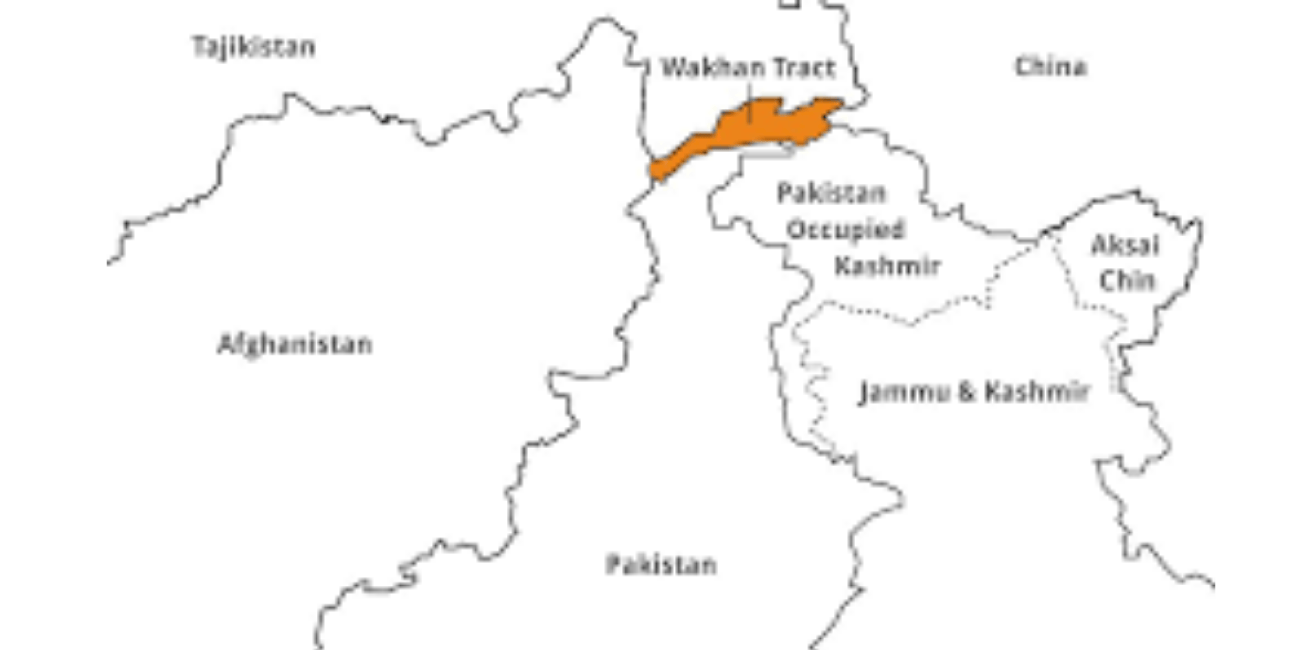
The 121-km-long highway between Afghanistan and China stretches from the Boroghil border area of Afghanistan to the zero point on the Chinese border in Wakhan district of northeastern Badakhshan province.
The construction of the highway was launched two years ago by the Afghan Taliban government
Wakhan is one of Afghanistan’s remotest regions and borders China’s Xinjiang region and Tajikistan, as well as areas along the disputed Durand Line boundary with Pakistan.
It touches Tajikistan’s Gorno-Badakhshan Autonomous Region in the north and Pakistan’s Khyber Pakhtunkhwa province and Gilgit-Baltistan in Pakistan-Occupied Jammu and Kashmir in the east.
The highway provides a strategically crucial road link to China to West Asia, which has been a key objective of the CPEC and thus the huge importance of Pakistan.
But with Wakhan highway becoming operational, road corridors through Pakistan have lost relevance to a large extent.
Security Concerns
China has already been concerned over the completion of the road network under CPEC in Pakistan as these pass through the volatile regions of Khyber Pakhtunkhwa and Balochistan.
The work on CPEC through Khyber Pakhtunkhwa and Balochistan has been badly impacted due to repeated attacks on the construction workers by rebels there. Even Chinese engineers have been killed and injured in those attacks, causing lot of concerns to Beijing.
In fact, China has been angry at Pakistan for not ensuring appropriate security for its ambitious project and its engineers.
The threat level to the project and Chinese engineers in Khyber Pakhtunkhwa and Balochistan remains very high as the rebels in these regions have declared their intentions to sabotage it.
With the opening of the road link through a safer Afghanistan, China would possibly lay more thrust on this route to access West Asia for trade and commerce.
CPEC and USA
China launched the CPEC project in 2013 as part of its bigger and broader project of Belt and Road Initiative (BRI) entailing road, rail and maritime networks up to the African continent through West Asia.
The CPEC is expected to hugely reduce land route between China and West Asia from 12,000 kms to 2,395 kms.
That would be beneficial for China which has huge reliance on West Asia for energy.
To pursue the project, China has already invested around 65 billion dollars for the road construction in Pakistan under CPEC project.
Afghanistan out of the project till August 2021 as it was under the influence of the USA till then.
After the US forces left Afghanistan and its friendly government was ousted by the Taliban in August 2021, the new regime showed inclination to join the BRI.
Establishment of the Wakhan Corridor is a part of that endeavor.
Construction of the highway was launched after officials of Afghanistan and China agreed on the modalities in April 2024.
The Wakhan corridor, while benefitting China, is expected to play an important role in the Afghanistan’s commerce and regional transit, particularly since a hostile Pakistan has shut trade routes with the landlocked in an attempt to choke cripple its economy.