
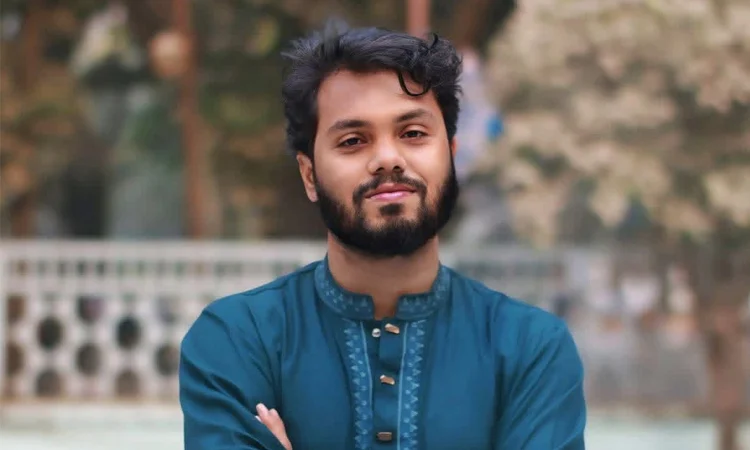
By Ajay Kaul
Bangladesh is in turmoil since last few days after the mysterious killing of radical Islamist leader Osman Hadi by fellow Muslim countrymen and for intriguing reasons his followers are targeting Indian interests in the country.
Hadi, a staunch India-hater who emerged as a national leader during the massive student agitation that led to ouster of Sheikh Hasina government months back, was shot at by masked gunmen in Bangladesh’s capital Dhaka in broad daylight on December 12.
The 32-year-old spokesperson of Inqilab Moncho organisation and independent candidate for the upcoming February Parliament elections, was shot in his head and died on December 18 in a hospital in Singapore where he was taken for specialised treatment at government expense.
According to reports, one of the assailants has been identified as Faisal Karim, a Bangladeshi Muslim.
Although the motive is not clear yet, the reasons for the killing clearly seem to be domestic.
The killing may be the result of some internal fued or machinations of Pakistan’s notorious intelligence agency ISI.
However, Hadi’s followers are targeting India’s interests in the country in the wake of the killing.
Two days back, the residence of India’s Assistant High Commissioner in Chattogram was attacked, with mobs pelting stones at the premises.
In view of this incident, India suspended visa operations in Chittagong (Chattogram) till further notice.
So the question arises, why are Indian interests in Bangladesh being targeted by Hadi’s followers? Isn’t it intriguing?
Do the attacks on Indian interests suggest, in any way, that his followers suspect India’s role in the killing?
It would then mean that his followers are being led down the wrong path by some interests inimical towards India. Who could be these vested interests?
It is no secret that Pakistan’s notorious intelligence agency ISI is very active in Bangladesh and over the last two decades or so, it has penetrated deep into the Bangladeshi society as well as the military, helped by the increasing Islamisation and radicalisation.
ISI, out to avenge the utmost humiliation suffered by the Pakistani military in the 1971 war that led to Pakistan’s partition and creation of Bangladesh, has been fanning hatred against India among the Bangladeshis for decades.
It started achieving success in this endeavour over the last two decades but Sheikh Hasina was a huge hindrance in its efforts.
She kept suppressing the anti-India activities but finally, thanks to a huge let down by her military, she was made to succumb and flee the country to save her life.
It is so ironic that Bangladesh, which was born just because of India, has today so many people nursing hatred for the same birth-giver.
It has been just 54 years and the ungrateful people of Bangladesh have forgotten what oppression and torment their forefathers suffered at the hands of brutal Pakistani military when it was ‘East Pakistan’.
They have forgotten how their forefathers — Bengali-speaking people of ‘East Pakistan’, including Muslims, were humiliated and treated in a derogative manner by the Punjabi-dominated Pakistani establishment based in Islamabad.
They have forgotten how their grandmothers were raped and brutalised, how their grandfathers were tortured and massacred.
They have forgotten how their forefathers lived like suffering pigeons before India intervened militarily and gave them freedom to prosper as proper citizens who could decide their future by themselves.
They need to be reminded that their forefathers, despite being Muslims, suffered extreme brutalities at the hands of Muslim military of Pakistan.
The East Pakistanis were facing anhiliation at the hands of Punjabi army of Pakistan.
India, by defeating the Pakistani military in a short war, saved the people of Bangladesh, including Muslims of course, from a genocide after humiliation which had peaked by then.
In doing so, India had to make many sacrifices, including the ultimate ones in the shape of losing soldiers in the war.
Had India not intervened, Bangladesh would have been another Balochistan of Pakistan.
Those nursing antipathy for India need to be referred to the extreme brutalities being committed by the Pakistani military in occupied Balochistan against the ethnic Baloch people every day.
The Baloch people are yearning and fighting for independence from Pakistan as they also want to live as free citizens who can decide their future by themselves.
Like the Baloch people, Bangladeshis too would have been suffering even today, had India not intervened before it was too late.
There is still time for the Bangladeshis to realise that they are on a path that leads only to destruction and devastation and must take steps backwards.
People of Bangladesh need to realise that Pakistani agencies, who are using Islam to incite them, do not wish well for them. If they need any help in understanding this, they may contact the Taliban in Afghanistan.
Meanwhile, it is shocking that the US, European Union, Germany, France and some others are giving so much undue importance to the killing of a student leader, who was an extremist radical Islamist and was nursing the dream of ushering in Islamic rule in Bangladesh.
Osman Hadi was no proponent of peace but a votary of violent means to achieve the Islamist goals.
Hadi and his followers indulged in widespread arson and violence during the agitation against Sheikh Hasina. They even vandalised and destroyed iconic monuments associated with Sheikh Mujibur Rahman, the legendary founder of Bangladesh.
By giving so much importance to Hadi, these western nations seem to be approving of the actions he and his followers have been undertaking. (NVI)