
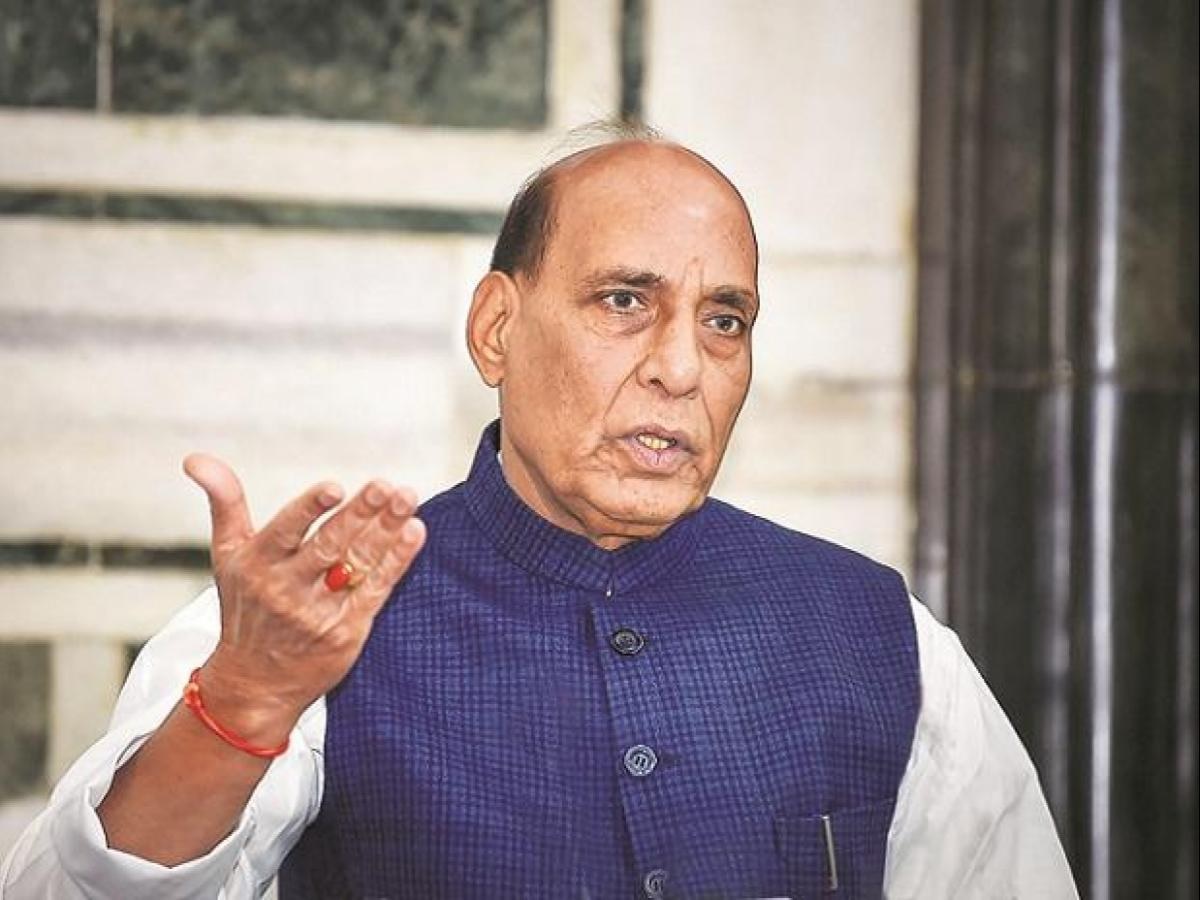
New Delhi, Oct 29 (NVI): Defence Minister Rajnath Singh on Thursday reaffirmed India’s commitment to collective regional security and the eradication of terrorism, offering to share the country’s battle-tested counter-terrorism expertise with partner nations to strengthen joint capabilities.
Addressing the 13th ASEAN Defence Ministers’ Meeting-Plus (ADMM-Plus) in Cebu, the Philippines, Singh said India’s counter-terrorism experience had been acquired through decades of confronting complex cross-border security challenges and was not merely theoretical knowledge.
He said Operation Sindoor had decisively demonstrated India’s proactive and battle-tested doctrine, asserting that the operation dismantled terrorist infrastructure and reinforced India’s resolve against state-sponsored terrorism.
“Terrorism knows no borders,” Singh said, adding that India was prepared to share its operational experience with ADMM-Plus partners through joint exercises, capacity-building programmes and intelligence sharing.
He noted that counter-terrorism remained an important area of cooperation under the ADMM-Plus framework, with India and Malaysia co-chairing the Experts’ Working Group on Counter-Terrorism for the 2024-2027 cycle.
Emphasising India’s commitment to ASEAN centrality, Singh said New Delhi supported a secure, open, inclusive, resilient and rules-based Indo-Pacific, where peace and stability were sustained through collective efforts.
He said India’s engagement with ASEAN was long-term and based on shared interests, mutual respect and practical cooperation. The partnership had also been reinforced through the ASEAN-India Comprehensive Strategic Partnership and the ASEAN-India Plan of Action for 2026-2030, he added.
Referring to the theme of the meeting, “Navigating Our Future, Together”, Singh said it reflected India’s foreign and defence policy priorities and its civilisational ethos of “Sarve Bhavantu Sukhinah”, meaning may all beings be happy.
He said solidarity, mutual trust, cooperation and collective responsibility were essential to addressing challenges to regional peace and stability.
Highlighting maritime security as a key pillar of India’s engagement with ASEAN, Singh referred to the designation of 2026 as the ASEAN-India Year of Maritime Cooperation and the conduct of the second ASEAN-India Maritime Exercise.
He said India remained committed to freedom of navigation, the protection of global sea lines of communication and adherence to international maritime law.
The Indian Navy had maintained an uninterrupted operational presence in volatile maritime corridors, including the Gulf of Aden, since 2008, without resorting to coercive or unilateral actions that undermined the rights of other nations, he said.
Singh said Indian Navy warships had escorted thousands of merchant vessels and helped thwart numerous hijacking attempts, providing protection to commercial shipping irrespective of its flag or nationality.
India would continue to act as a reliable net security provider in the Indian Ocean Region and the wider Indo-Pacific, he said, stressing the need for sustained operational presence and international cooperation to counter transnational maritime threats.
The defence minister also clarified that India’s emphasis on the rule of law, particularly the United Nations Convention on the Law of the Sea (UNCLOS), and its advocacy of freedom of navigation and overflight were not directed against any country.
Instead, these principles were intended to protect the collective interests of regional stakeholders dependent on open sea lanes and stable maritime governance, he said.
Singh expressed India’s readiness to work with ASEAN partners on maritime safety, search and rescue, humanitarian assistance, professional exchanges and capacity-building initiatives.
Highlighting the importance of youth engagement in regional defence cooperation, Singh proposed the establishment of a dedicated defence “Youth Bridge” to strengthen India-ASEAN people-to-people connectivity, promote digital innovation and facilitate capacity building.
He said the initiative would provide young people with greater opportunities to contribute to regional peace and security, in line with the broader objective of Youth, Peace and Security.
Empowering youth and strengthening institutional cooperation would be essential to building a peaceful, resilient and prosperous Indo-Pacific, Singh said.—(NVI)