Srinagar, Apr 2: Months after India suspended the Indus Water Treaty (IWT) with Pakistan, a 124-year-old hydroelectric project on River Jhelum in Baramulla district of Kashmir is being re-activated after remaining defunct for 34 years.
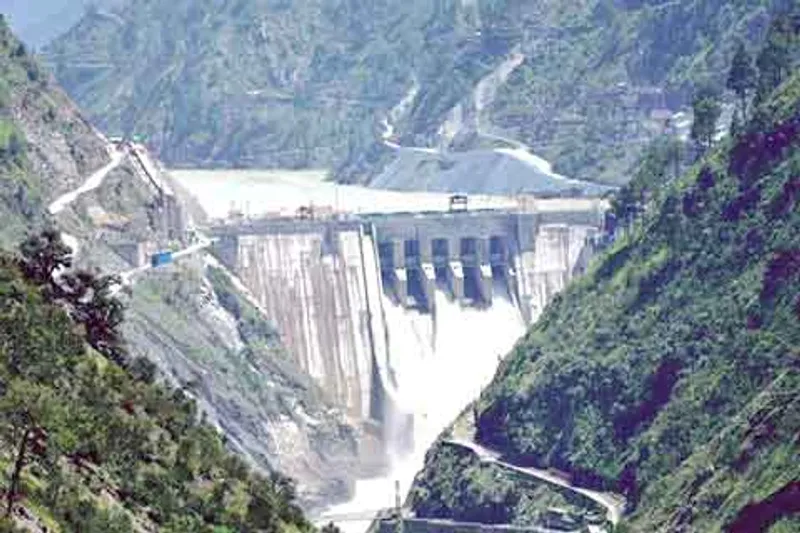
The Mohra Hydroelectric Project (MEP), considered heritage project, is located in Boniyar area of Uri in Baramulla, a district bordering Pakistan-occupied Kashmir (POK), and a process has been set in motion to revive it.
Built way back in 1902, the power plant was shut down in September 1992 after facing extensive damage due to floods.
According to the government, the Board of Directors (BoD) of the Jammu and Kashmir State Power Development Corporation (JKSPDC) has approved a proposal to float a Limited Tender Enquiry (LTE) for the engagement of a Transaction Advisor (TA) from firms empanelled with the Department of Economic Affairs (DEA).
The Transaction Advisor, thus selected, will assist in the renovation, modernization, upgradation and operation and maintenance (RM&OM) of the Mohra HEP.
The BoD further authorized the Managing Director of JKSPDC to finalize the Terms of Reference (ToR) and the evaluation framework, constitute a tender committee, and issue the award to the selected Transaction Advisor.
Jammu and Kashmir Chief Minister Omar Abdullah recently stated in the Assembly that the pace of construction of power projects in the Union Territory is being speeded up with the Indus Water Treaty being kept in abeyance.
Jammu and Kashmir has remained electricity-deficient for decades and one of the main reasons has been handicap to construct power plants on River Jhelum because of the IWT of 1960.
Under the IWT, the rights of usage of 6 common rivers have been divided between India and Pakistan. These rivers are – Jhelum, Chenab (of Jammu and Kashmir), Indus and Ravi, Beas and Sutlej (of Punjab).
The IWT mandates that India has restrictive rights over Jhelum, Chenab and Indus which flow from this country to the Pakistani side. Accordingly, India cannot build dams on these three rivers, whose usage is limited to agriculture and drinking.
On the other hand, India has unrestricted rights over Ravi, Beas and Sutlej rivers.
After the gruesome terror massacre in Pahalgam in Kashmir on April 22 last year by terrorists from Pakistan, India suspended the IWT as one of the measures of retaliation.
The Jammu and Kashmir government stated in the Assembly that the BoD of JKSPDC had deliberated on the matter related to Mohra Hydroelectric Project and taken a decision regarding the 10.5 MW power plant.
Although the present capacity of 10.5 MW is a modest one, officials are confident that it can be increased once the project is reactivated.
A Detailed Project Report (DPR) is being prepared by the IIT Roorkee whose team visited the site recently.
Considered one of the oldest hydroelectric projects in South Asia, the Mohra plant was built during the rule of Maharaja Ranbir Singh. It is said that the machinery for the plant was brought on horse carts from Rawalpindi in present-day Pakistan.
The power plant was constructed by Canadian-born engineer Major Alian de Litbniere and had unique engineering features, including an 11-kilometre-long wooden flume that acted as a water conductor.
The project was first damaged during the 1959 floods, but engineers restored it and expanded its capacity from 4 MW to 9 MW. The power generation capacity was later increased to 10.5 MW.