Srinagar, Jul 16 (NVI): The Jammu and Kashmir government on Thursday deliberated on the proposed Comprehensive Minor Mining Policy-2026 aimed at plugging regulatory gaps, strengthening enforcement and introducing a transparent, technology-driven framework for scientific management of minor mineral resources.
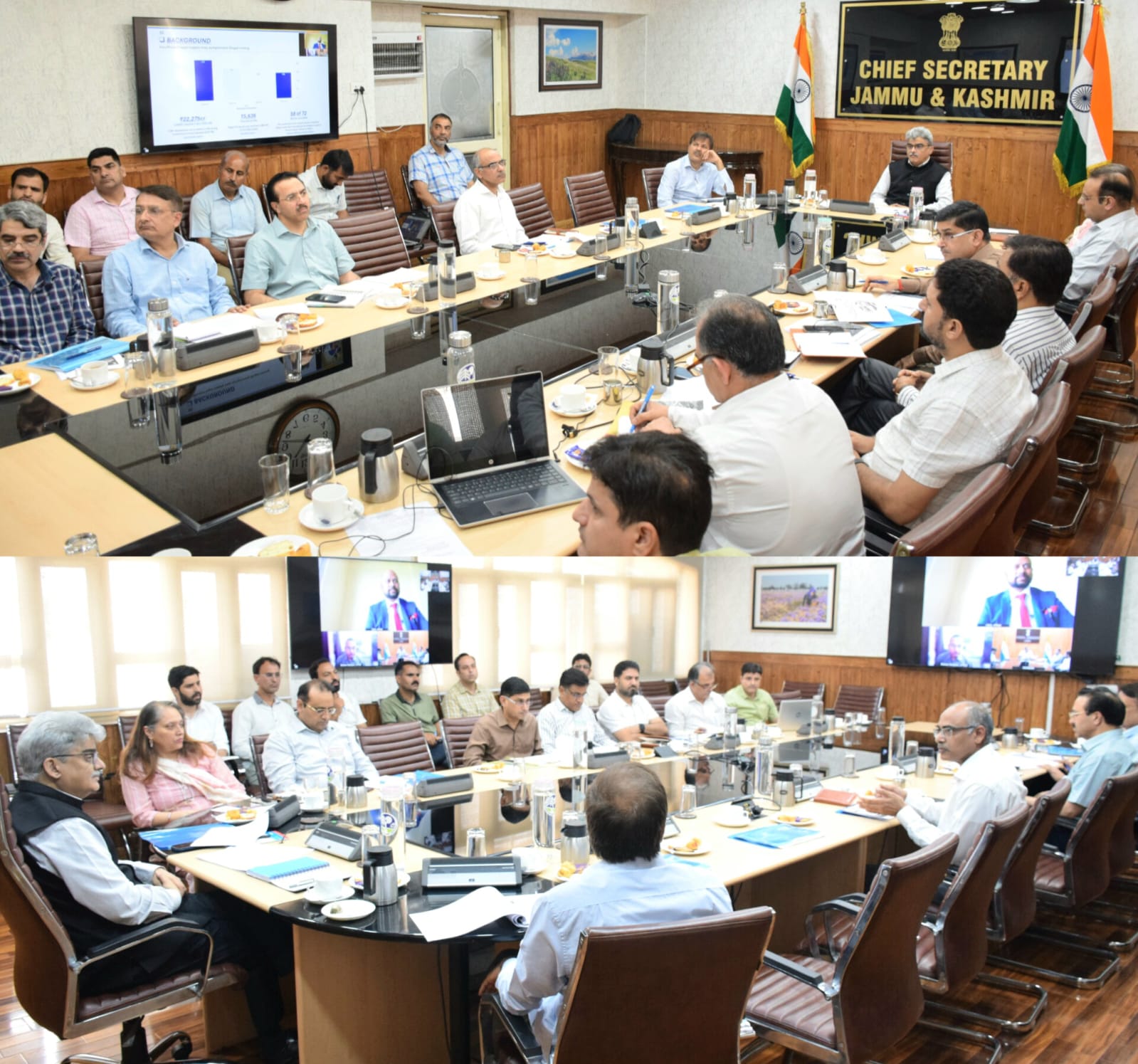
The proposed policy was discussed at a high-level meeting chaired by Chief Secretary Atal Dulloo, attended by senior officers from the Geology and Mining Department, divisional administration, the Pollution Control Committee and other stakeholder departments.
During the meeting, officials reviewed the broad contours of the draft policy and discussed measures to make the mining sector legally robust, environmentally sustainable and technology-driven.
Dulloo said the proposed policy should be fully aligned with the provisions of the Central legislation governing minor minerals and capable of withstanding legal scrutiny. He also called for adopting best practices from other states, particularly Odisha, while tailoring them to Jammu and Kashmir’s requirements.
The chief secretary stressed the need to safeguard the livelihoods of traditional mining communities through a transparent digital ecosystem while ensuring mining rights remain non-transferable and are not misused.
Expressing concern over illegal mining, Dulloo directed the departments concerned to explore stronger legal deterrents against habitual offenders and called for wider inter-departmental consultations before finalising the policy.
Officials also discussed introducing an integrated digital system featuring e-challan generation, geo-fencing and real-time monitoring of mineral transportation to improve transparency and enforcement.
The meeting identified several gaps in the existing framework, including the absence of priority allocation of minor minerals for government infrastructure projects, delays in statutory approvals and the need for a single-window clearance mechanism.
Among the proposals discussed were a legally compliant “mine-to-market” tracking system, periodic revision of penalties, third-party audits of extraction from private lands, scientific replenishment assessments, and stronger enforcement against illegal mining.
The meeting also decided that the Centre for Innovation, Technology Assessment and Good Governance (CITaG) would incorporate suggestions from stakeholder departments into the draft policy for further consideration.
The proposed policy aims to establish an accountable and technology-enabled mining ecosystem balancing environmental sustainability, ease of doing business and public interest, officials said.(NVI)