Column
By Ajay Kaul
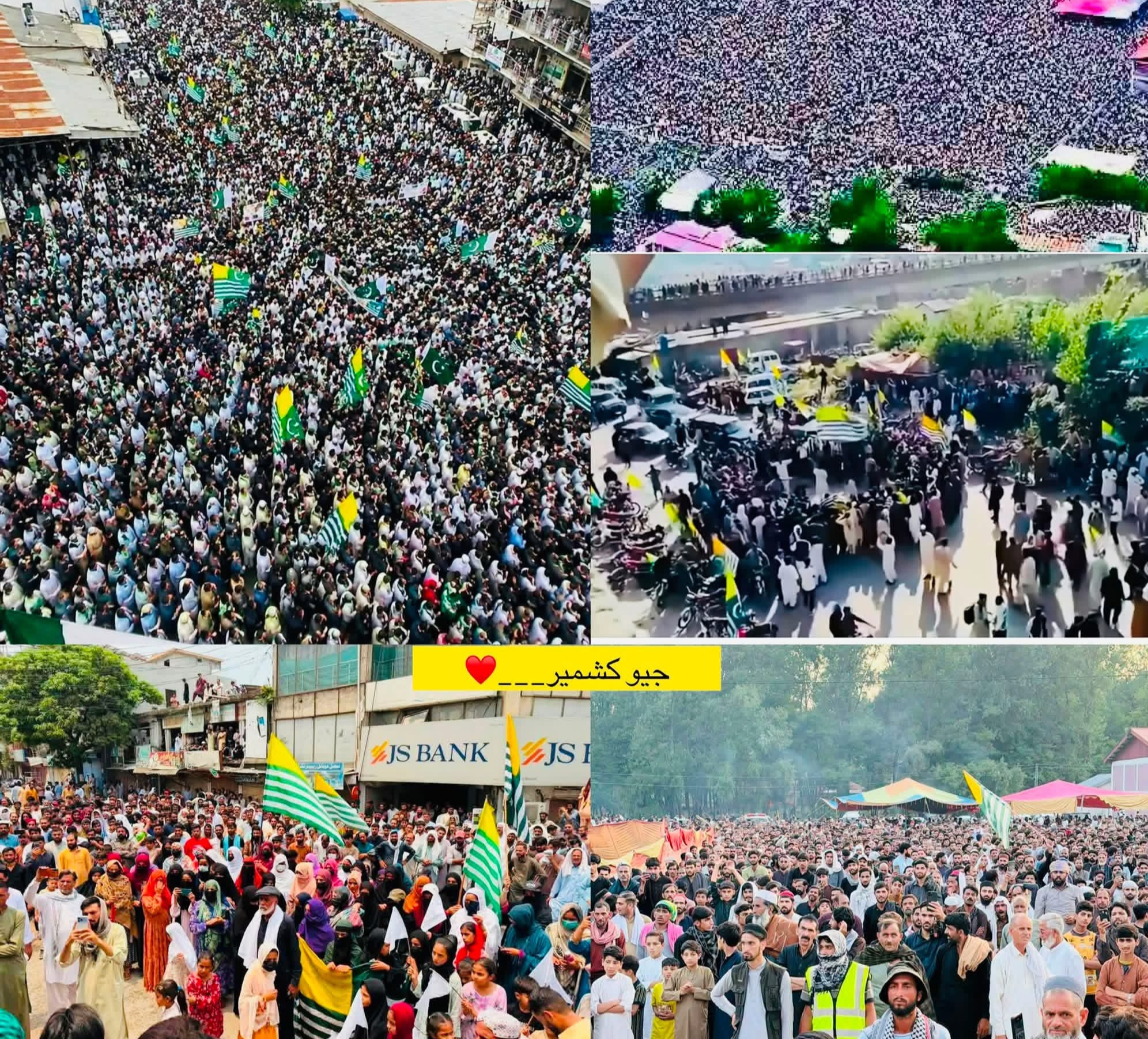
For the last 5 weeks, lakhs of people of Pakistan-occupied Jammu and Kashmir (POJK) have been on the roads and streets, raising their voice vehemently against the oppression and illegalities committed on them by Pakistan.
The Pakistani establishment, true to its character, has been using extreme means of brutalities in an attempt to crush the agitation, akin to a revolt, but has failed miserably.
Lakhs of Pakistani forces have been unable to dampen the spirit of the people of POJK, even after firing bullets into peaceful protesters, violating the modesty of women at their homes and denying basic essentials like food and medicine to the occupied region’s population comprising Muslims.
The Pakistani military, which claims to follow Islam, did not hesitate in firing at Muslim devotees even during the Namaz at Mosques.
However, the people of POJK are unfazed and are pledging now to be cowed down this time before the illegal occupier – Pakistan.
They have finally realized that Pakistan has been fooling them for the last 78 years after militarily occupying the region in October 1947.
Even though Pakistan calls the region ‘Azad Kashmir’ (Independent Kashmir), the ground realities are hugely different as there is hardly any freedom of any kind in the occupied region and Kashmiris are treated in the most disrespectful manner.
The people of POJK have been treated in a pathetic manner by Pakistan which has been having extreme distrust in them and has been looting their rich resources, particularly the wealth of hydropower.
Here are some of the examples of Gross Discrimination:
1 – The Legislative Assembly of so-called ‘Azad Kashmir’ is a lame duck one as Pakistan has disallowed it powers to make any kind of legislation.
2 — No local person from POJK can become Inspector General of Police (IGP), the top most police post of the region. The post is reserved for a Pakistani national and appointment is made not by the POJK government but by the Pakistan government. Local Kashmiri police officers cannot rise beyond the post of DIG.
3 — A local person cannot become the Chief Secretary of POJK, the top bureaucratic position. This post too has been reserved for a Pakistani national and the appointment is made by Pakistan government.
4 — The Secretaries of Finance and Health in POJK are also appointed by the Pakistani military generals from Punjab, since they do not trust the local Kashmiris.
5 — Even in the Pakistan Army, people from POJK are not allowed to rise to the rank of Lt General. They have to settle for lower posts.
All this is because Pakistan does not trust Kashmiris, even though the establishment in Islamabad, whoever is in power, keeps shouting from the roof that “Kashmir is our jugular vein”.
The reality is that Pakistan has been treating Kashmiris like slaves and cannon fodder, just like any illegal occupier does with the people of occupied territories.
Besides, Pakistan has been looting the rich natural resources of POJK and depriving people of the occupied region of their rightful energy dues.
For example, the occupied region has two big and 30 small hydro projects, producing 15,000 MW of electricity, most of which is transferred to Pakistan, particularly Punjab.
These discriminations are besides the control over the polity of POJK, maintained through the provision of 12 of the 53 seats in the Assembly reserved for “refugees of Jammu and Kashmir”.
These “refugees”, according to Islamabad, are those people who migrated to Pakistan in 1947, 1965, and 1971, the three wars involving Jammu and Kashmir.
Interestingly, these “refugee constituencies” are not in PoJK, but in Punjab, Sindh, and Khyber Pakhtunkhwa.
So, the locals in POJK cannot vote for these seats in the Assembly which is supposed to belong to so-called ‘Azad Kashmir’.
The value of the vote of a PoJK citizen is less than that of a “refugee vote” cast 500 km away.
Effectively, these 12 members of the Assembly, who become crucial for government formation, are chosen by voters who don’t even live in POJK and mostly have mysterious and dubious credentials.
This amounts to remote-controlled representation from Islamabad.
The scheme was designed under the 1974 “Interim Constitution Act”, which centralised power under the Ministry of Kashmir Affairs (Pakistan), ensuring that no government in PoJK could ever act independently.
Every time, people of POJK raise their voice for basic needs, rights and jobs, the system deploys these 12 external seats to tilt majorities and manufacture consent.
So, whenever Pakistan talks of “freedom for Kashmir,” remember that it has kept the people of territories under its occupation as slaves without any voice for the last 78 years.
Locals say that “Azadi” under Pakistan means “governance without geography”.
The locals call it the “representation without residency” model, a colonial relic disguised as constitution.
Whenever Pakistan talks about “disputed territories,” it should be asked: How are you treating POJK?
People of POJK, having seen the real character of Pakistan, are now in no mood to pardon the occupier and want their ongoing movement to be taken to the final conclusion.
The mass agitation against Pakistan, which started on June 7, is strengthening and building each day in all parts of POJK and also the occupied regions of Gilgit-Baltistan.
There is massive participation of people, including women and children, in rallies and demonstrations which continue day and night, braving brutalities by Pakistani forces and the inclement weather.
They are determined to reshape their future and destiny.
Ends