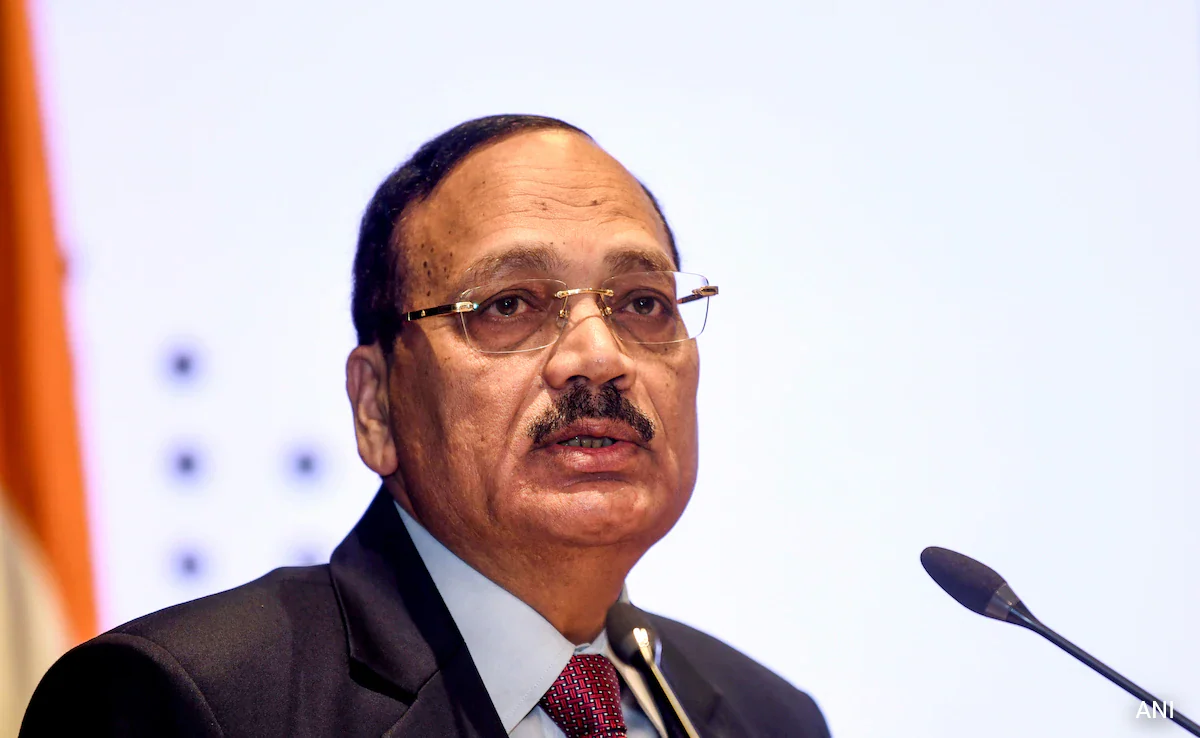
New Delhi, Oct 12 (NVI) Ahead of the planned march by Congress to the Supreme Court, Chief Justice of India (CJI) Justice Surya Kant today said the top court remains accessible to every citizen and any individual or an elected representative can approach it to seek relief through established legal procedures.
The statement comes amid questions over the role of the Supreme Court in the matter related to agitation against Chief Election Commissioner Gyanesh Kumar.
His statement also came against the backdrop of leaders of the Opposition parties seeking an appointment with him.
Justice Surya Kant confirmed that he had received a request seeking an appointment with opposition leaders but had conveyed his inability to meet the delegation.
The CJI said he had received the communication a day earlier and responded the same night, explaining why the proposed meeting could not take place.
He was speaking to reporters on the sidelines of the 33rd Foundation Day programme of the National Human Rights Commission (NHRC) here.
Assuring accessibility of the judiciary, he maintained that the Supreme Court was open to all citizens, irrespective of their position or status.
He emphasised that anyone with a grievance could approach the court through an appropriate petition and seek relief in accordance with the law.
Leader of Opposition in the Lok Sabha Rahul Gandhi and Leader of Opposition in the Rajya Sabha Mallikarjun Kharge had sought a meeting with the CJI between 4 pm and 5 pm today.
The opposition leaders reportedly intended to present a memorandum highlighting their concerns over alleged electoral irregularities, which Congress has described as “vote chori”.
Among the issues raised by the opposition are demands for accountability from Chief Election Commissioner Gyanesh Kumar, suspension of the Special Intensive Revision (SIR) of electoral rolls and restoration of the paper ballot system.
The allegations have become a major political flashpoint, with opposition parties calling for greater transparency in electoral procedures. The claims remain allegations and should not be treated as established findings of wrongdoing.
The Chief Justice of India declined to make the contents of the exchanged correspondence public, citing the confidentiality of the communication. (NVI)