
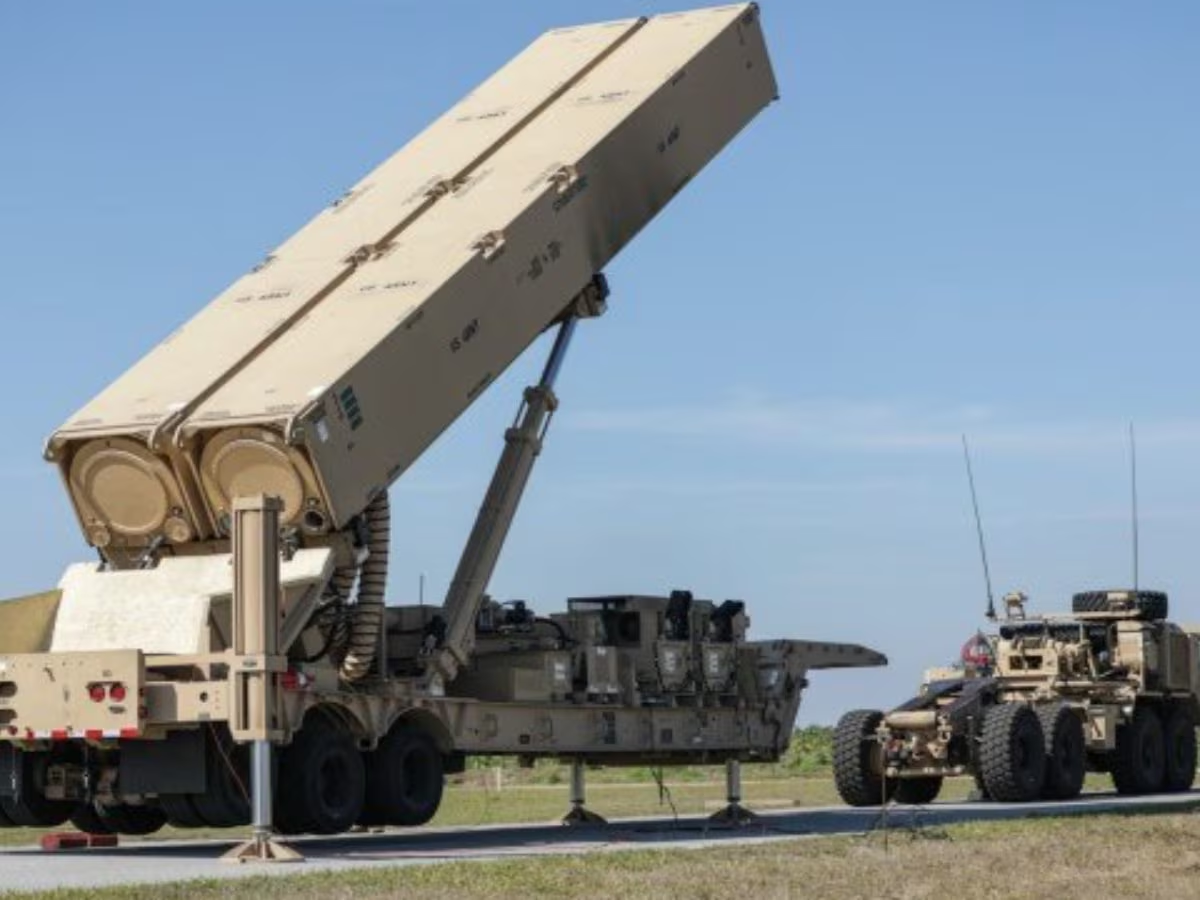
Washington, May 01: The United States is reportedly weighing the possible deployment of its long-range hypersonic missile, the Dark Eagle, in West Asia for potential use against Iran. According to reports, US Central Command (CENTCOM) has requested the system’s deployment, citing the need for a weapon capable of striking deeply buried or distant targets. The move has not yet been approved, but it signals a potential escalation even amid an ongoing ceasefire environment between the two countries.
The development highlights rising strategic tensions and the growing role of hypersonic weapons in modern warfare, especially in scenarios involving highly defended military infrastructure.
Why the US Wants to Deploy Dark Eagle
The push for deploying the Dark Eagle missile is primarily driven by range limitations in existing US strike systems. Iranian forces are believed to have repositioned key missile assets beyond the reach of current US precision strike weapons, which can engage targets at a few hundred miles. This has raised concerns that conventional systems may not be sufficient for long-range, high-value targets inside Iran.
Reports suggest CENTCOM’s request is based on the need for deeper strike capability, particularly if future military operations require hitting mobile or heavily defended sites. However, the proposal is still under review and has not received final approval.
What Is the Dark Eagle Hypersonic Missile
The Dark Eagle, officially known as the Long-Range Hypersonic Weapon (LRHW), is a next-generation US Army missile system still under development. It is designed to deliver conventional precision strikes against heavily defended and time-sensitive targets.
The system works by launching a hypersonic glide vehicle using a booster rocket. Once it reaches high altitude, the glide body separates and travels toward its target at extremely high speeds while maintaining maneuverability. This combination of speed and control makes it difficult for existing air defence systems to detect and intercept.
Speed, Range, and Operational Capability
The Dark Eagle is designed to travel at speeds exceeding Mach 5, or five times the speed of sound. Its estimated range varies depending on sources, but reports suggest it can strike targets between approximately 1,700 km and 3,500 km away.
This range places it among the longest-reaching conventional strike systems in the US arsenal. However, despite its advanced design, the missile has not yet been officially declared fully operational, as testing and deployment phases are still ongoing.
Why It Is Difficult to Intercept
What makes the Dark Eagle particularly dangerous is not only its speed but also its ability to manoeuvre mid-flight. Unlike traditional ballistic missiles that follow predictable trajectories, hypersonic glide vehicles can change direction, making interception significantly more difficult.
Because it travels at hypersonic speeds and does not follow a fixed path, defence systems have a very short reaction window. This combination of unpredictability and velocity makes it especially challenging for even advanced air defence networks to counter.
Cost, Strategic Value, and Debate
The Dark Eagle is one of the most expensive missile systems being developed by the United States. Estimates suggest each missile costs around $15 million, while a full battery system could cost billions of dollars.
This high cost has sparked debate among defence analysts about whether such a sophisticated and expensive weapon should be used in conflicts involving regional adversaries. Critics argue that deploying it against Iran may not justify the expense, especially given its status as a strategic-level weapon designed for high-end warfare scenarios.
How It Compares to Russia and China
The US development of Dark Eagle is widely seen as a response to hypersonic systems already deployed by other major powers. Russia’s Kinzhal missile and China’s DF-17 are both operational hypersonic weapons with similar speed and range advantages.
While these systems have already been integrated into active service, the Dark Eagle is still in development, reflecting the US effort to close the technological gap in hypersonic strike capability.
What Its Deployment Could Mean
If approved for deployment, the Dark Eagle would mark the first operational use of a US hypersonic missile in a real conflict scenario. Such a move could significantly raise the intensity of any future military escalation involving Iran.
Analysts suggest that introducing this system into an active theatre would signal a shift toward faster, more precise, and potentially more destructive long-range strike capabilities. However, it could also increase geopolitical tensions and raise concerns about further escalation in an already fragile security environment.