London, Dec 22 (NVI) An event organised here to remember Karima Baloch, a martyred woman leader of Baloch freedom struggle, became a platform for political leaders, intellectuals, human rights activists of various sections oppressed by the Pakistani establishment to voice the tales of their sufferings.
Karima, former Chairperson of Baloch Students Organisation (Azad) who had taken asylum in Canada to escape persecution by Pakistani intelligence agencies, was found murdered on this day in 2020 near the Ontario Lake in mysterious circumstances.
The 30-year-old activist who was named one of the world’s 100 most “inspirational and influential” women in 2016 by the BBC had gone missing on December 20, 2020, two days before her body was found.
The killing was clearly the handiwork of notorious Pakistani intelligence agencies but nobody has been punished so far for the gruesome crime.
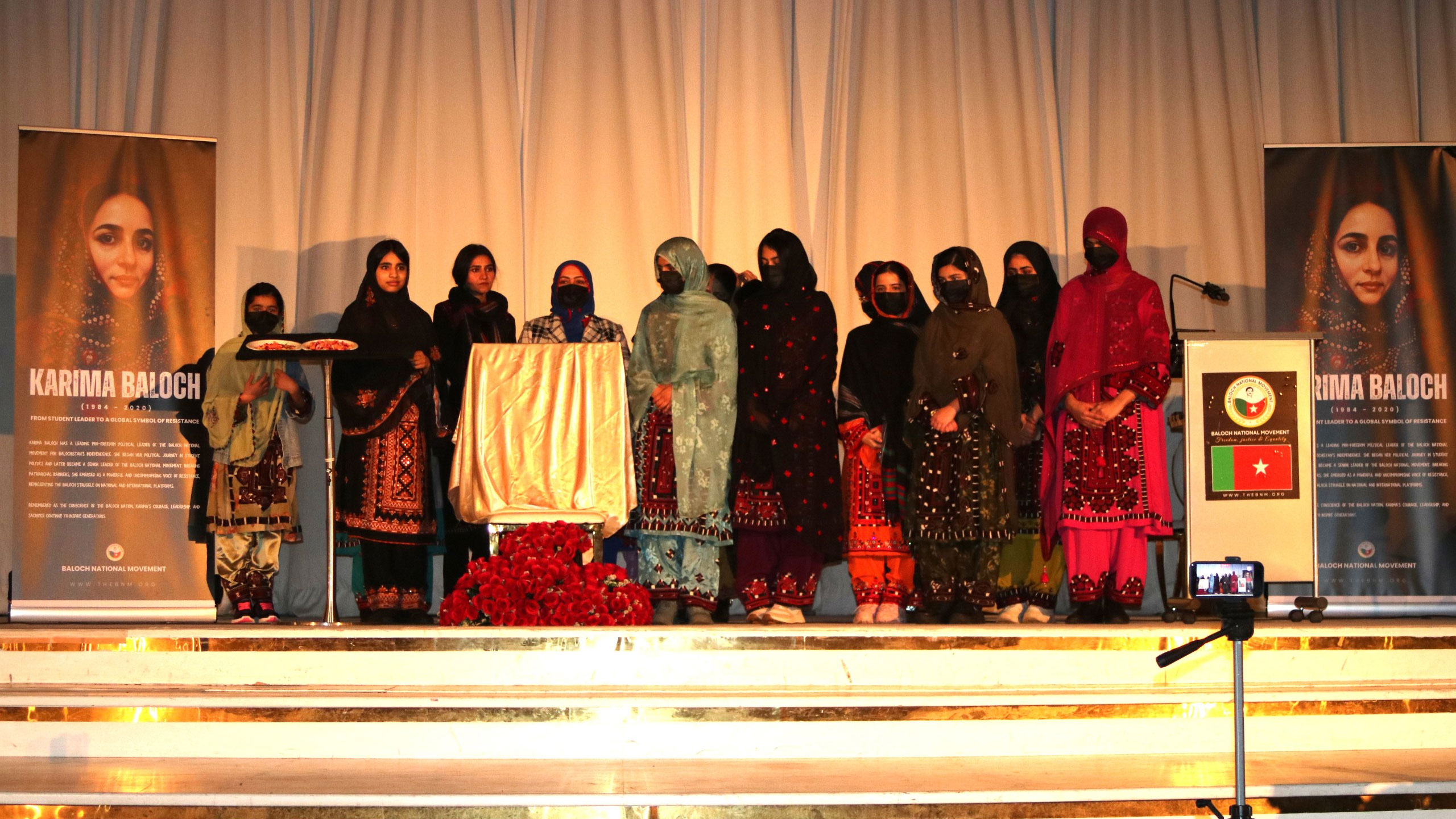
The Baloch National Movement (BNM) organized a seminar here to mark the 5th anniversary of the martyrdom of Karima Baloch.
Political leaders, intellectuals, human rights activists, and representatives of oppressed nations attended the event and expressed solidarity with the Baloch struggle, said BNM in a statement.
Participation by people from various nations—particularly Sindhi, Pashtun, Kashmiri, and Gilgit-Baltistan communities—was seen as a symbol of unity among oppressed nations, it said.
At the beginning of the programme, the participants observed a one-minute silence to remember Karima’s life, struggle, and sacrifice.
A short documentary titled ‘Banuk Karima: Life, Struggle, and Legacy’ was then screened, highlighting Banuk Karima Baloch’s political journey, her fearless leadership, and her enduring legacy as a global symbol of resistance.
The seminar also featured the launch of the book “Karima Baloch: From Student Leader to a Global Symbol of Resistance,” published by Zurbesh Publications.
Speakers at the event included BNM Chairman Dr. Naseem Baloch; author Dr. Naseer Dashti; University of London scholar and SOAS South Asia Centre member Burzine Waghmar; Fahmeeda Khushik, Deputy Organizer of the World Sindhi Congress (UK & Europe); human rights activist Noor-e-Maryam Kanwar; Pashtun Tahafuz Movement (PTM) representative Brakhna Sayyad; and Banuk Karima’s cousin, Mehlab Kambar.
Dr. Naseem Baloch described Karima Baloch as a leader with extraordinary political insight and consciousness.
He said that although the suffering of the Baloch, Sindhi, Pashtun, and Kashmiri nations may appear different, the root cause is the same: a Punjabi-dominated military state that calls itself Pakistan.
He emphasized that Karima’s exile was imposed upon her and was not a personal choice, yet she continued her struggle for dignity and freedom for her people.
According to Dr. Naseem Baloch, her life and martyrdom exposed the colonial nature of the Pakistani state and its systematic repression of oppressed nations.
He criticized Western governments for the selective application of human rights principles and questioned why occupation and oppression are condemned in some regions but ignored in Balochistan and other oppressed areas.
He stated that Karima challenged not only military occupation but also the occupation of history, language, resources, and political authority.
Concluding, he said that freedom is not extremism but a natural human instinct, and peace in the region is impossible until Pakistan’s colonial structure is dismantled and oppressed nations attain freedom.
Author and political analyst Dr. Naseer Dashti said that Karima Baloch will be remembered as a pioneer who transformed the foundations of the Baloch national struggle.
Comparing her historical role to that of Nawab Akbar Bugti, he said Karima inspired a new generation—especially Baloch women—to actively participate in politics and resistance.
He stressed that today’s Baloch leadership must make bold and principled decisions, adapt to global conditions, and work to secure dignity and unity for the nation.
University of London scholar and SOAS South Asia Centre member Burzine Waghmar strongly criticized Pakistan’s human rights record and held Pakistan’s deep state responsible for the killing of Karima Baloch.
He said Pakistan exploits international neglect and impunity to target peaceful activists even in exile.
He also questioned the failure of Canadian authorities to conduct a transparent investigation and raised concerns about the role of international interests in the exploitation of Balochistan’s resources.
Waghmar warned that silence over such crimes is often bought through financial and political collusion.
Fahmeeda Khushik, Deputy Organizer of the World Sindhi Congress in the UK and Europe, said that Karima Baloch played a central role in organizing Baloch youth and raising global awareness about enforced disappearances and extrajudicial killings.
She emphasized that Karima’s struggle transcended gender and geography, and that her martyrdom represents a shared loss for both the Baloch and Sindhi nations.
According to her, Karima Baloch’s legacy continues to inspire political activism and resistance among oppressed nations.
Human rights activist Noor-e-Maryam Kanwar said that collective punishment is among the most brutal methods used against the Baloch nation.
She referred to the enforced disappearance of the father of prominent human rights activist and young leader of the movement for the recovery of enforced disappeared persons, Mahzeb Shafiq, explaining how the state targets families to suppress resistance.
She described the Baloch Women’s Red March as a historical continuation of Karima Baloch’s struggle and said that Karima provided leadership in organizing women even under extreme pressure.
Pashtun Tahafuz Movement (PTM) representative Barkhna Syed expressed solidarity with the Baloch struggle and said that enforced disappearances and collective punishment have become a daily reality in Pashtun regions as well.
She described Karima Baloch as a symbol of hope who broke patriarchal barriers and stood firmly against state repression. Rejecting official claims regarding Karima’s death, she said her martyrdom symbolizes resistance against international pressure and oppression.
Karima Baloch’s cousin, Mehlab Kambar, highlighted Karima’s continuous struggle for justice, national identity, and collective strength.
She said Karima organized rallies and protests for enforced disappeared persons and consistently raised her voice against the genocide of the Baloch nation.
She emphasized that Karima never confined the struggle to herself but encouraged collective participation and always worked for a better future for the Baloch nation.
She further stated that Karima was born into a politically conscious family, where her uncles—Wahid Kambar and Dr. Khalid—devoted their lives to the national struggle.
Despite repeated state raids and threats, Karima remained a source of strength, courage, and resilience for her family.
Mehlab said that Karima’s presence, guidance, and unwavering commitment made her a central figure in sustaining and advancing the Baloch movement. (NVI)