Srinagar, July 17 (NVI) The Jammu and Kashmir government is preparing a Public-Private Partnership (PPP) Policy with the objective of creating an enabling ecosystem for attracting private investment and accelerating infrastructure and public service development across the Union Territory.
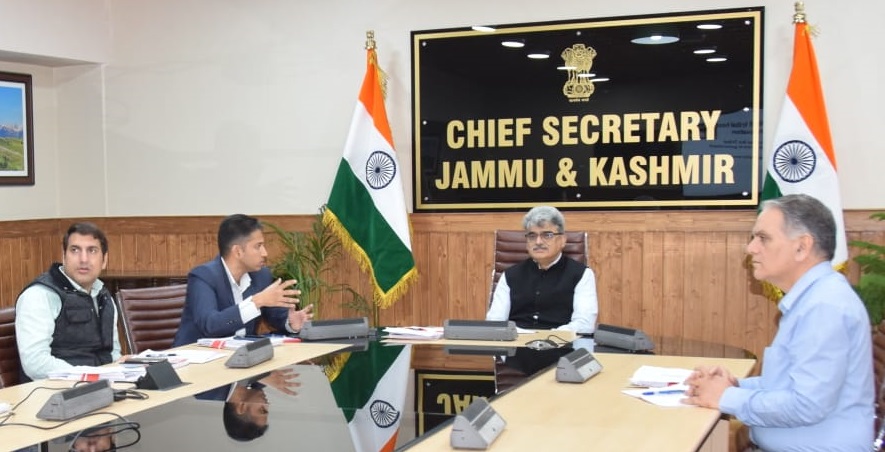
Chief Secretary Atal Dulloo today chaired a meeting to deliberate upon the broad contours of the proposed Policy.
Addressing the meeting, the Chief Secretary underscored the importance of building institutional capacity for successful implementation of the proposed policy.
He stressed the need for systematic capacity building of officers and officials at different levels so that they are adequately equipped to operationalise the policy in an effective and time-bound manner.
Emphasising the need for delivering tangible outcomes on the ground, Dulloo observed that the Government must lead by example in implementing the policy to instil confidence among investors as well as the general public.
He directed the Industries Department to take lead in formulation of the policy by suitably refined it and incorporating the suggestions received during the meeting so that a comprehensive and well-structured policy document is finalised within the next month.
Referring to global best practices, the Chief Secretary cited the World Bank’s well-established STEP model, describing it as a dynamic and self-evolving framework that enables efficient project execution with minimal procedural hurdles.
He called for developing a similar institutional model tailored to the unique requirements, administrative structure and developmental priorities of Jammu and Kashmir.
The Chief Secretary further directed CITaG to proactively identify a pipeline of viable PPP projects across sectors and simultaneously establish a robust institutional mechanism and implementation framework to facilitate their timely execution once the policy is notified.
Speaking during the meeting, Additional Chief Secretary, Finance, Shailendra Kumar, observed that the overarching objective of the proposed policy is to leverage private investment for creating public assets and delivering quality public services for the welfare of the people.
He emphasised that while drawing from national and international best practices, the policy should remain rooted in the local context, addressing Jammu and Kashmir’s unique developmental priorities, challenges and opportunities.
Earlier the Chief Executive Officer, CITaG, gave a detailed presentation on the proposed policy framework, highlighting the prevailing PPP landscape across the country and the existing scenario in Jammu and Kashmir.
The presentation outlined the need for a comprehensive, transparent and investor-friendly policy to position the Union Territory as a preferred destination for private investment in key sectors.
The presentation proposed a streamlined regulatory framework aimed at reducing procedural bottlenecks by facilitating timely statutory approvals, including No Objection Certificates (NOCs), environmental clearances and other mandatory permissions, thereby making the investment process more efficient, predictable and less cumbersome for prospective investors.
It further envisaged a multi-sectoral institutional mechanism with clearly defined roles and responsibilities to facilitate appraisal, approval, monitoring and implementation of PPP projects through a coordinated government setup, ensuring time-bound decision-making and seamless project execution.
The proposed policy identified several high-potential sectors for PPP interventions in Jammu and Kashmir, including urban infrastructure, solid waste management, agriculture, food processing, energy, power, tourism, hospitality and healthcare, where private participation can significantly enhance service delivery, infrastructure creation and economic growth.
The presentation also elaborated upon the proposed framework for identification and prioritisation of projects, transaction structuring, operational modalities, legal architecture, governance safeguards, grievance redressal mechanism and a well-defined institutional hierarchy with clearly delineated powers and responsibilities to ensure transparency, accountability and effective implementation.
During the deliberations, the Administrative Secretaries and Heads of Departments offered valuable suggestions and sector-specific feedback for further strengthening the proposed policy framework, with emphasis on making it practical, implementation-oriented and aligned with the developmental aspirations of Jammu and Kashmir. (NVI)