
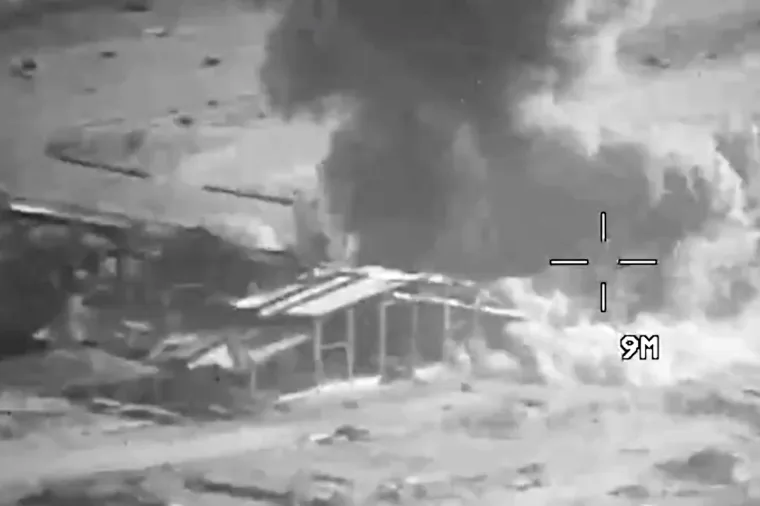
New Delhi, July 24 (NVI) West Asia remains engulfed in intense fighting on the 13th day today as the US carried out attacks on Iran, which retaliated by targeting American bases in Bahrain and Jordan.
Iranian military today said it attacked US military facilities at Jordan’s Al-Azraq base and Bahrain’s Sheikh Isa air base.
Earlier last night, the US struck base of Iran’s Islamic Revolutionary Guards Corps (IRGC) in the northern province of Gilan.
“This morning, an IRGC naval forces headquarters in Zibakenar was targeted by American enemy projectiles, which damaged some of the equipment in the complex,” said Ali Bagheri, deputy governor for the province.
US miiltary’s Central Command said the latest round of attacks were aimed to “further degrade Iran’s ability to threaten civilian mariners and commercial vessels transiting regional waters” as the Americans push to regain control over the Strait of Hormuz, through which a fifth of the world’s oil and gas transited in peacetime.
It said the strikes ended shortly before 5 a.m. local time Friday.
The previous day, Yemen’s Iran-backed Houthi rebels said they targeted two Saudi oil tankers in the Red Sea, potentially widening the Iran war as international oil topped $100 a barrel.
Blasts were also reported Thursday on Iran’s Qeshm Island, home to stores of naval assets including drone boats that Iran can use to attack vessels on the Strait of Hormuz, as well as to the northwest near Andimeshk, Omidiyeh and Firuzabad.
Four people were killed and five wounded in a US missile attack on the outskirts of Ahvaz on the Karun River, Iranian state media said.
Houthis threaten to shut second key shipping route
Meanwhile, the Houthis threatened to shut down Bab El-Mandeb Strait, another key trade route with the world economy already reeling from Iran’s closure of the Strait of Hormuz.
The Bab El-Mandeb Strait at the southern tip of the Arabian Peninsula, is a vital shipping chokepoint connecting the Red Sea to the Gulf of Aden.
Around 12 percent of the world’s trade, including a fourth of global container traffic, passes through there, moving between Europe and Asia via Egypt’s Suez Canal.
The Houthi attacks put at risk oil shipments from Saudi Arabia’s Yanbu port on the Red Sea and present a “double whammy” on top of the disruption in the Strait of Hormuz, said maritime data and analysis firm Lloyd’s List Intelligence.
The escalating fighting is causing economic damage across the world as the price of Brent crude oil, the international standard, spiked more than 6 percent to about $100 a barrel.
That’s the highest level since May, before the two sides reached a preliminary peace agreement last month that has since collapsed.
Both sides dig in over Strait of Hormuz
The Strait of Hormuz is the biggest cause of contention between the US and Iran.
Iran says it has the right to manage traffic and potentially charge fees in the Strait of Hormuz, which was open to all toll-free before the war.
It has attacked ships using a route through the strait that is overseen by US forces and intended to be outside Tehran’s control.
Trump said on social media Thursday that sanctioned Iranian funds in the possession of the US will cover the expense of fixing boats damaged in the war.
“Please let this statement serve to represent, until further notice, that from this point forth, any and all damages done to Ships, Cargo, or anything related thereto, will be paid for by Iranian Money that the United States has in its possession, and controls,” Trump said.
It was unclear what legal mechanisms Trump would use to access and spend the funds, but he said that doing so would be “the fair and equitable thing to do.”
Iran’s Foreign Minister Abbas Araghchi condemned the suggestion, writing on X that “once governments normalize confiscation, no one’s assets are safe. Ensuing chaos will not be pretty or peaceful.” (NVI)