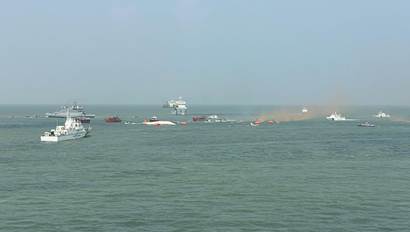
New Delhi, Oct 8 (NVI) The Indian Coast Guard on Thursday conducted the 12th National Maritime Search and Rescue Exercise (SAREX-2026) off the Paradip coast in Odisha to demonstrate preparedness and coordination among various agencies during mass rescue operations at sea.
Conducted under the aegis of the National Maritime Search and Rescue Board (NMSARB), the exercise was held with the theme “Leveraging Technology to Strengthen SAR Preparedness and Maritime Safety”.
The exercise was reviewed by Director General of Indian Coast Guard Paramesh Sivamani and witnessed participation from the Coast Guard, Navy, Air Force, Shipping Corporation of India, Directorate General of Shipping, fisheries and customs authorities, marine police, Paradip Port Authority and the Odisha administration.
As many as 32 observers from 30 countries also participated in the exercise, aimed at promoting international cooperation, sharing best practices and enhancing interoperability in maritime search and rescue operations.
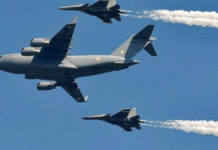
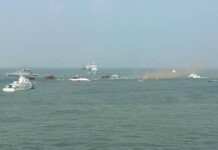
The exercise involved 15 Coast Guard ships, three Dornier aircraft, three Advanced Light Helicopters, a Chetak helicopter, IAF C-130J and Mi-17 aircraft and two Indian Navy ships, besides civil and state resources.
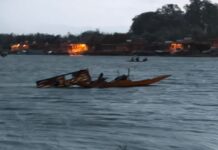
The sea drill simulated a mass rescue operation following a combined aeronautical and maritime distress scenario.
Under the simulated scenario, a passenger aircraft carrying 228 people ditched at sea near Paradip Port and its fuselage collided with a container vessel, MV Zumba, causing structural damage and fire.
The participating agencies carried out firefighting, helicopter evacuation, deployment of life rafts and air-droppable life rafts, and rescue operations using equipment including Jason Cradle, Gemini boats, rescue baskets and scramble nets.
The exercise also demonstrated the capabilities of a remotely operated vehicle (ROV).
The Coast Guard said SAREX-2026 reinforced India’s commitment to building a technology-enabled and coordinated maritime search and rescue framework and strengthening cooperation with international partners.
The exercise also reaffirmed the principle that every distress call at sea should receive a coordinated response and all possible efforts should be made to save lives, it said.—(NVI)