
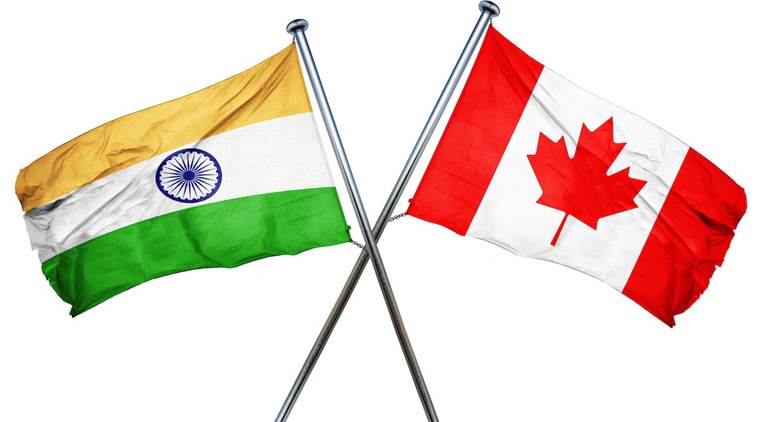
New Delhi, Oct 12 (NVI) The largest trade delegation of Canada to India in more than 30 years is arriving here to explore opportunities to enhance commerce between the two countries which are working towards concluding a Comprehensive Economic Partnership Agreement (CEPA) by the end this year.
The 300-member strong delegation is being led by Canadian Trade Minister Maninder Sidhu and it will visit Mumbai and Bengaluru from 12 to 17 October.
The visit is aimed at building commercial partnerships across sectors including aerospace, clean technology, information and communications technology, life sciences and agri-food.
India and Canada aim to more than double annual bilateral trade to CAD 70 billion by 2030, up from CAD 30.4 billion in goods and services trade in 2025, according to Canada’s Global Affairs department.
The delegation will engage with Indian decision-makers, industry representatives and potential business partners to identify trade and investment opportunities.
The programme is expected to include business briefings, networking with local industry leaders, sector-specific visits and pre-arranged business-to-business meetings for eligible participants.
The mission’s priority sectors include aerospace and space, clean technologies and the energy transition, information and communications technologies, life sciences, forestry and wood products, and agri-food.
The programme is intended to connect Canadian businesses with opportunities in the Indian market, although some meetings and visits are subject to selection criteria and capacity limits.
The mission also forms part of Canada’s effort to diversify its export markets beyond the United States. Ottawa has identified expanding trade with India as an element of its broader Indo-Pacific economic engagement, with the two countries seeking to build commercial ties across multiple industries.
The trade mission comes as India and Canada continue negotiations for a CEPA, which the two governments aim to conclude by the end of 2026.
The proposed agreement is intended to provide a framework for expanding market access, trade and investment, although its final provisions remain subject to negotiations.
Canadian Trade Minister Maninder Sidhu met India’s Commerce and Industry Minister Piyush Goyal in Mumbai in September to discuss the agreement and identify opportunities to strengthen economic ties.
The ministers reiterated their commitment to advancing a mutually beneficial pact. In a 2nd October readout, Canada’s Global Affairs department said the fifth negotiating round was scheduled for 5 to 9 October.
The trade mission follows that scheduled round, but a confirmed outcome from the talks should be included only if subsequently established through an official announcement.
Two-way trade in goods and services between Canada and India totalled CAD 30.4 billion in 2025, according to Canada’s Global Affairs department.
The two countries are targeting annual bilateral trade of CAD 70 billion by 2030. Canadian merchandise exports to India totalled CAD 3.9 billion in 2025, led by vegetables, mineral fuels and oils, and wood pulp.
Merchandise imports from India amounted to CAD 9.7 billion, primarily comprising precious stones and metals, machinery and pharmaceutical products.
Services also account for a significant share of the bilateral relationship. Canada’s October 9 trade mission announcement put Canadian service exports at CAD 15.1 billion in 2025 and service imports from India at CAD 4.3 billion.
An earlier September release reported different service-trade figures, so these figures should be attributed to the October announcement rather than presented as a reconciled final series.
Investment is another component of the relationship. Canadian direct investment in India reached CAD 11.4 billion in 2025, while direct investment from India in Canada totalled CAD 9.7 billion, according to Canadian government figures.
Canadian investment in India was concentrated in finance and insurance, utilities, and real estate, while Indian investment in Canada included finance and insurance, professional and technical services, and manufacturing.
The mission is expected to provide Canadian businesses with opportunities to develop partnerships in India as both governments continue work on the proposed trade agreement. The final scope and timing of CEPA will depend on the outcome of negotiations. (NVI)