
Srinagar, Jun 10 (NVI): The Jammu and Kashmir administration on Wednesday approved a comprehensive rehabilitation and socio-economic reintegration framework for victims of drug abuse, aimed at ensuring their long-term recovery and successful return to mainstream society.
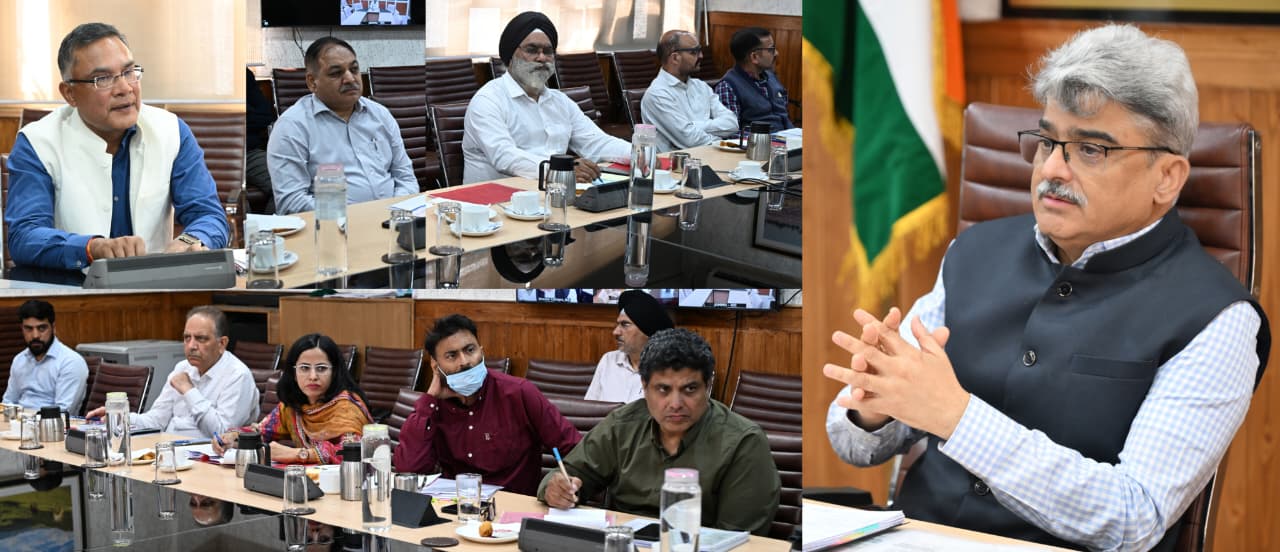
The framework was discussed at a high-level meeting chaired by Chief Secretary Atal Dulloo and attended by senior officials from the finance, home, social welfare, education and health departments, among others.
Officials said the proposed model seeks to move beyond conventional de-addiction treatment by integrating medical care, psychosocial support, education, skill development, livelihood opportunities and sustained monitoring to prevent relapse.
Dulloo directed that the framework be implemented on a pilot basis through the Institute of Mental Health and Neurosciences (IMHANS), Srinagar, and one additional district before being expanded across the Union Territory.
He said each beneficiary would be provided an Individual Reintegration Plan (IRP) tailored to their specific educational, social and economic needs.
Under the proposed mechanism, addiction treatment facilities will function through a coordinated support system involving psychiatrists, counsellors, ASHA workers and social workers.
The chief secretary said ASHA workers would assist beneficiaries in adhering to treatment protocols and follow-up consultations, while social workers would facilitate their rehabilitation and integration into livelihood and welfare schemes.
He also stressed the need for community participation and suggested involving trained counsellors from self-help groups, educational institutions and health centres to strengthen outreach and follow-up efforts.
Additional Chief Secretary, Finance, Shailendra Kumar assured full support for implementation of the initiative and called for refining the framework to make it more outcome-oriented.
According to officials, the framework is built around six objectives, including institutionalising a structured rehabilitation cycle, ensuring a seamless transition from treatment to socio-economic stabilisation, reducing relapse rates through continuous monitoring and promoting interdepartmental convergence.
Commissioner Secretary, Social Welfare Department, Sarmad Hafeez said the rehabilitation process would be carried out in three phases.
The first phase will focus on treatment and stabilisation, including assessment, detoxification and preparation of Individual Reintegration Plans. The second phase will concentrate on reintegration through education, skill development, employment and livelihood support, while the third phase will emphasise sustained monitoring, social inclusion and long-term socio-economic stability.
A key feature of the framework is mentor-led handholding, under which each beneficiary will be assigned a dedicated mentor to guide them through the rehabilitation process, monitor progress and facilitate access to opportunities and support services.
Head of IMHANS Srinagar, Prof Arshid Hussain, presented the proposed framework and highlighted evidence-based treatment protocols and the institution’s “Circle of Care” model for rehabilitation and reintegration.
Officials said the initiative aims to reduce relapse rates, improve recovery outcomes and enable recovering individuals to lead productive, dignified and self-reliant lives. (NVI)