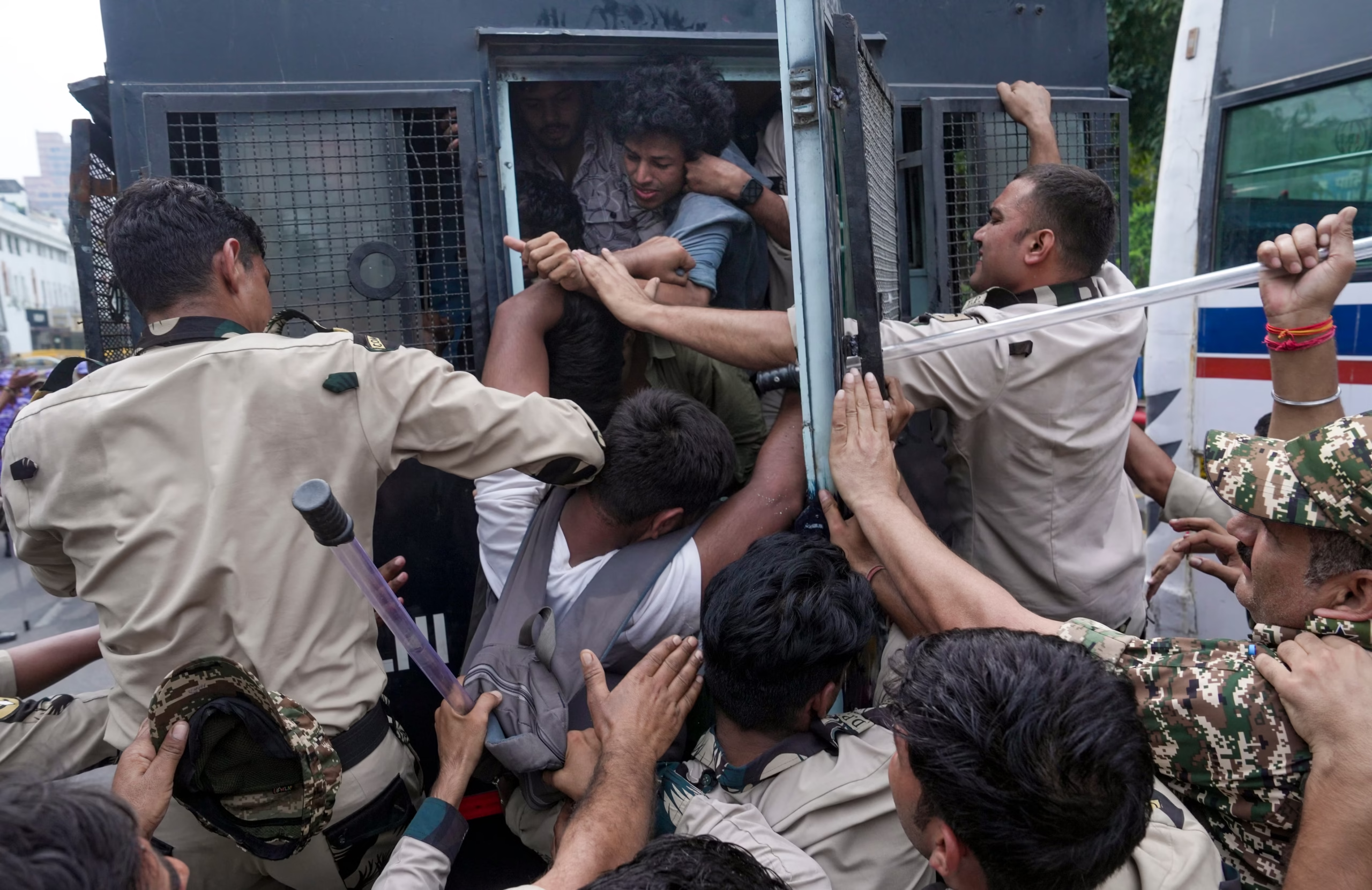
New Delhi, Oct 11 (NVI) The Supreme Court today ordered restoration of normal operations of Metro and Railway services, undisturbed Internet connectivity and free movement of people in Delhi while ruling that peaceful, unarmed protesters cannot be detained except in accordance with the “procedure established by law”.
The court also ordered authorities to remove a notice imposing prohibitory restrictions around the Supreme Court and other court complexes to ensure unhindered “access to justice”.
In a special hearing on Sunday, a bench of justices Joymalya Bagchi and V Mohana issued the directions on petitions alleging mass detentions, restrictions on movement, suspension of internet services and non-compliance with the court’s October 9 order on transport curbs ahead of Saturday’s protest against chief election commissioner (CEC) Gyanesh Kumar.
The bench directed that metro and rail facilities run normally unless restrictions are required to address a public order situation within the framework of Article 19(2) of the Constitution.
It further ordered that people’s free movement in the city be permitted subject to law, internet services remain undisturbed in accordance with law, and no person be detained except in accordance with the procedure established by law, particularly in the case of peaceful, unarmed assemblies beyond the area covered by a prohibitory order under Section 163 of the Bharatiya Nagarik Suraksha Sanhita (BNSS).
It went on to issue notices to the alleged contemnors in the contempt proceedings, including the Delhi Metro Rail Corporation (DMRC), the concerned railway authorities and Delhi Police, seeking their responses to the allegations of non-compliance with its October 9 order.
It directed the authorities to file short affidavits in response to the contempt pleas and submit compliance reports detailing the steps taken to implement Friday’s directions on regulated metro and rail services and the publication of traffic advisories.
Solicitor General Tushar Mehta disputed the allegations, maintaining that metro services had operated normally on Saturday, although entry and exit had been restricted at 45 of the network’s 303 stations. The bench sought details of the affected stations and directed the authorities to file their responses by Tuesday, while listing the matter for October 13.
The court also directed the authorities to take down the notice or any such imposition of Section 163 BNSS in and around the Supreme Court complex, saying the measure was necessary to remove any apprehension regarding access to the Supreme Court or any other court of law.
The directions came a day after the court’s intervention against sweeping restrictions on public transport ahead of the protest called by the Cockroach Janata Party (CJP) and other political groups demanding Kumar’s resignation over alleged irregularities in the Special Intensive Revision of electoral rolls. On Friday, a bench led by Chief Justice of India Surya Kant had directed the authorities to reconsider the closure of metro stations and regulate, rather than prohibit outright, metro and rail services to minimise inconvenience to the public.
At Sunday’s hearing, the bench took note of allegations that the Friday order had been flouted, with petitioners claiming that metro stations and railway facilities remained inaccessible, people were detained beyond the area covered by prohibitory orders, and the city witnessed a curfew-like situation.
“We would like to ponder on how far the police acts fall in sync with requirement of expression under Article 19 (right to protest and free movement),” observed the observed, as it considered the competing claims of public order and the right to peaceful protest.
The court also made clear that its concern extended to the rights of all individuals, irrespective of whether they were lawyers, protesters or police personnel. “Courts are agnostic of identity of the individuals, be it a police officer or a lawyer. Response and concerns of the court is to protect rights and liberty of all individuals,” it said.
The petitions were moved after a sweeping police crackdown on Saturday, during which Opposition leaders, students, lawyers and other protesters were detained amid heightened security across Delhi. Trinamool Congress MP and senior advocate Menaka Guruswamy challenged the preventive detention of Opposition leaders, including four former chief ministers, while other petitions questioned the legality of the restrictions and sought accountability for alleged police excesses.
Senior advocates KK Venugopal, Kapil Sibal, Gopal Sankaranarayanan and others appeared before the bench, while the Supreme Court Advocates-on-Record Association (SCAoRA) and other lawyers also raised concerns about restrictions on movement and the detention of advocates.
Senior advocate Shadan Farasat, appearing for SCAoRA, told the court that the situation in Delhi on Saturday was suppressive and that people were not even being allowed to stand or move around freely. He said he had himself been picked up and thrown into a moving bus, adding that the city was “one step away from a police state”.
Sankaranarayanan submitted that videos and photographs had been placed on record showing senior advocates, including Dinesh Dwivedi, Uttara Babbar and Farasat, being detained beyond the jurisdiction of Jantar Mantar. He also alleged that Section 163 BNSS had been imposed around the Supreme Court, questioning the necessity of the restrictions and alleging that children, women, students and elderly people had been pushed, shoved or assaulted.
Senior advocate Sanjay Hegde argued that access to lawyers was also access to justice, and that advocates had been detained and taken to police stations far from the protest site, with some allegedly beaten.
The bench acknowledged the concerns raised by lawyers and said it understood the magnitude of the detentions alleged. (NVI)