

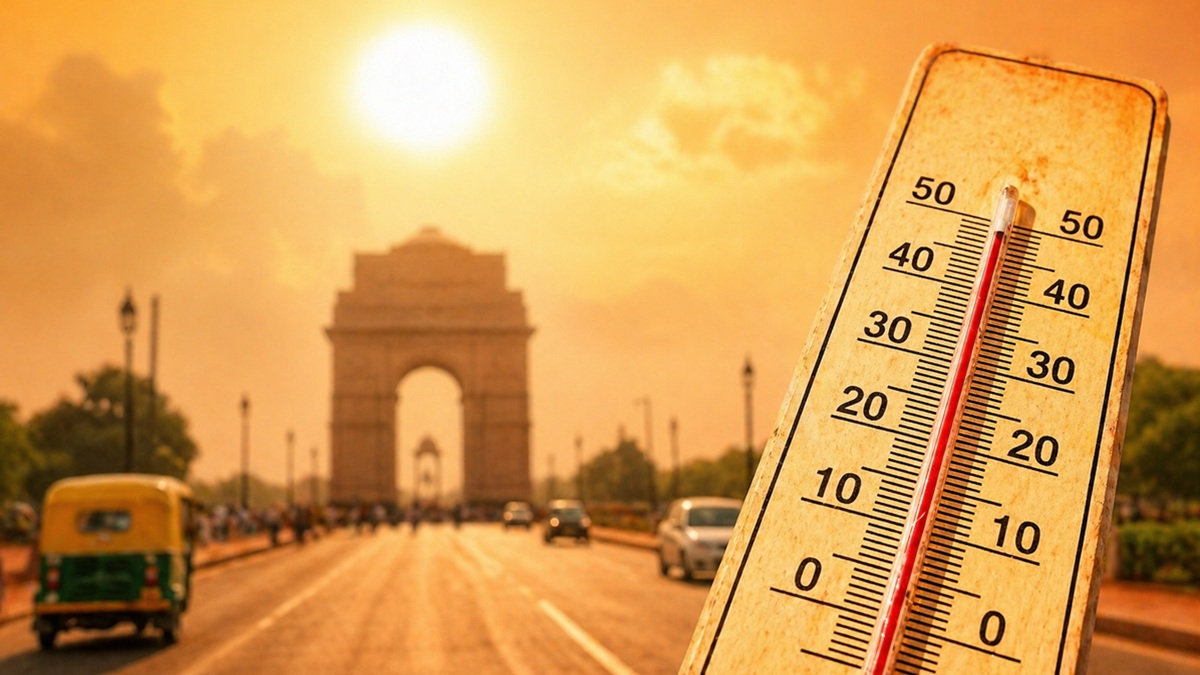
NEW DELHI: The India Meteorological Department (IMD) has issued an Orange Alert for the national capital today, April 26, as Delhi endures its third consecutive day of severe heatwave conditions. Residents are battling sweltering temperatures driven by dry northwesterly winds and intense solar heating.
While the heat is expected to persist for the next 48 to 72 hours, the IMD has offered a glimmer of hope with a prediction of light rain and thunderstorms on Monday afternoon.
Temperature Outlook: April 26 – April 28
| Date | Forecast/Alert | Max Temp | Min Temp |
| Sunday, April 26 | Orange Alert (Severe Heatwave) | 43–45°C | 25–27°C |
| Monday, April 27 | Yellow Alert (Isolated Heatwave + Thunderstorm) | 42–44°C | 26°C |
| Tuesday, April 28 | Gradual Improvement Expected | 41–42°C | 25°C |
Regional Impact
The heatwave is not limited to Delhi; several neighboring states are also under high-temperature warnings:
-
Haryana & UP: Orange alerts have been sounded in Gurgaon, Faridabad, and Lucknow, where temperatures have surged nearly 4°C above the seasonal normal.
-
Rajasthan: Yellow alerts are active for Jaipur, Bikaner, and Jodhpur.
-
Himachal & Jammu: Even high-altitude regions are reporting isolated heatwave conditions, a rare early-season occurrence.
Health Advisory: How to Stay Safe
The IMD and local health authorities have reactivated specialized “Heatwave Clinics” across Delhi hospitals. Citizens are urged to follow these safety protocols:
Also read: Rain, Gusty Winds Likely in J&K from April 27: MeT
-
Avoid the Peak: Stay indoors between 12:00 PM and 4:00 PM when the sun is most intense.
-
Hydrate: Drink plenty of water and oral rehydration solutions (ORS), even if you do not feel thirsty.
-
Protective Gear: If you must step out, use umbrellas, wide-brimmed hats, and light-colored cotton clothing.
-
Vehicle Safety: Never leave children or pets in parked vehicles, as temperatures inside can become lethal within minutes.
Why Is It So Hot?
Meteorologists attribute this early and intense spike to a combination of strong solar heating and dry northwesterly winds. Additionally, global climate patterns, including the forecasted Super El Niño of 2026, are contributing to a “nearly global dominance” of above-normal temperatures this season.