The nuclear tests conducted by Pakistan on May 28, 1998, in Chagai mountains of Balochistan have resulted in devastating consequences for the region and its people, according to activists. The radiation emitted from the atomic explosions have caused serious health problems for the people, particularly the children. It has also seriously impacted the water bodies and flora of Balochistan. #nuclear #nucleartests #Chagai #balochistan #health #Pakistan #atomic What We Offer In-Depth Analysis and Exclusive Reports: Our team of experienced journalists and analysts delve deep into the complexities of regional and international issues, providing you with exclusive reports and thorough analysis. Whether it’s the intricate political dynamics of Balochistan, the ongoing developments in POK, or the security challenges in Kashmir, we bring you stories that matter. Timely and Accurate Updates: Stay informed with our timely updates on the latest events and trends. From breaking news to detailed feature stories, NVI ensures you are always ahead of the curve with accurate and reliable information.
Persecution of Hindus, Christians and other minorities in Pakistan
Minorities, like Hindus and Christians, have been suffering immense atrocities in Pakistan. Very frequently, some or the other member of a minority community, whether Hindu or Christian, is subjected to humiliation, tortrure and cruelty in various forms. While men are thrashed and even lynched, their girls are raped and forcibly converted to Islam to be married to a Muslim man against their choice. Most tragically, the victims of these victims get no support from the police, the government or even the judiciary. #pakistan #minorities #Hindus #christians
India’s neighbours participate in Modi’s grand oath-taking ceremony
Prime Minister Narendra Modi met with the visiting leaders who congratulated him for the historic third consecutive term in office.
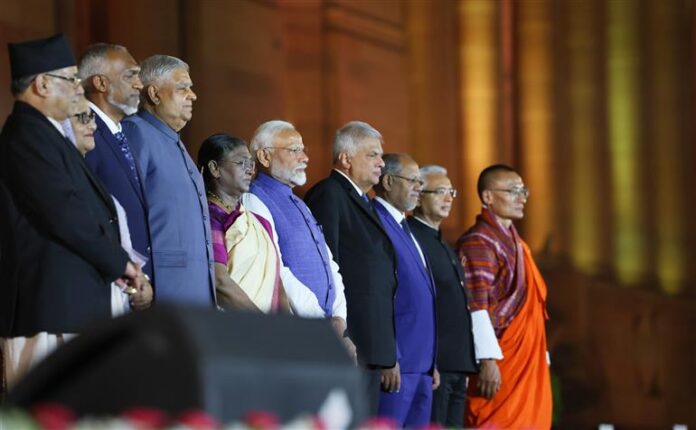
New Delhi, June 9: Narendra Modi took oath as the Prime Minister of India for the third consecutive time, in a grand ceremony on Sunday evening that saw the leaders of seven neighbouring countries invited as honoured guests.
Modi, clad in white kurta and churidar and donning a blue jacket, was administered the oath of office and secrecy by President Droupadi Murmu at the Rashparati Bhawan here.
The 74 year old leader took the oath in the name of God to loud cheers from the large number of guests, which included leaders from India’s neighbourhood and the Indian Ocean Region.
The leaders who attended the ceremony included President of Sri Lanka, Ranil Wickremesinghe; President of Maldives Mohamed Muizzu; Vice-President of Seychelles Ahmed Afif; Prime Minister of Bangladesh Sheikh Hasina; Prime Minister of Mauritius, Pravind Kumar Jugnauth accompanied by his spouse; Prime Minister of Nepal Pushpa Kamal Dahal ‘Prachanda’; and Prime Minister of Bhutan, Tshering Tobgay. Leaders of Maldives, Bangladesh, Nepal and Bhutan were accompanied by Ministers.
Following the swearing-in ceremony, Prime Minister Narendra Modi met with the visiting leaders who congratulated him for the historic third consecutive term in office. Thanking them for gracing the occasion, Prime Minister Modi reaffirmed India’s commitment to its ‘Neighbourhood First’ policy and ‘SAGAR Vision’.
Prime Minister Modi emphasized that in his third term, India will continue to work for the peace, progress and prosperity of the region in close partnership with the countries, even as it pursues its goal of VIKSIT BHARAT by 2047, a statement said.
In this context, he called for deeper people-to-people ties and connectivity in the region. He further added that India would continue to amplify the voice of the Global South in the international arena.
The leaders also attended a Banquet hosted by President Droupadi Murmu at Rashtrapati Bhavan. The President while welcoming them and conveying her wishes to Prime Minister Modi in the service of the nation, stated that India’s democratic exercise was not only a moment of pride for its people, but an inspiration to millions around the world.
The participation of leaders from India’s neighbourhood and the Indian Ocean region on the momentous occasion of swearing-in ceremony of the Prime Minister and Council of Ministers, underlines India’s deep-rooted bonds of friendship and cooperation with the region, a statement said.
Journalists, opposition groups boycott controversial Punjab Defamation Bill
The central Joint Action Committee (JAC) of the media bodies announced a total boycott of coverage concerning all government affairs as a mark of protest.
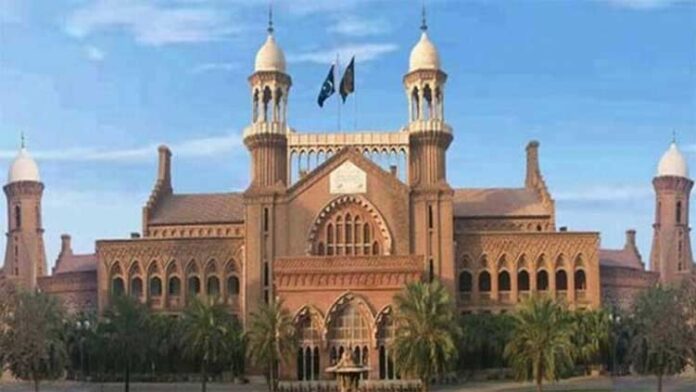
Islamabad, June 9: The controversial Punjab Defamation Bill 2024 was officially brought into effect and became a full-fledged law in Pakistan after the province’s Acting Governor Malik Ahmed Khan signed it. Seen as a draconian bill which curbs press freedom in the country, the bill was boycotted by various organisations and opposition groups in the National Assembly.
Drawing great ire from journalist groups and civil society organisations, the central Joint Action Committee (JAC) of the media bodies announced a total boycott of coverage concerning all government affairs at both the provincial and federal proceedings in the National Assembly as a mark of protest.
The Council of Pakistan Newspaper Editors (CPNE), All Pakistan Newspapers Society (APNS), Pakistan Broadcasters Association (PBA), Pakistan Federal Union of Journalists (PFUJ) and Association of Electronic Media Editors and News Directors (AEMEND), held an emergency meeting to discuss the development and decided to record their protest against the law.
Just hours after the bill was passed, a joint petition was filed in the Lahore High Court (LHC) by journalists Riaz Ahmad Raja and Jaffar Ahmad Yar challenging its legality. The petition asked the high court to strike down the defamation law, saying it violated the fundamental rights of citizens protected in the Constitution.
The plea lamented that journalists were not consulted before the passing and approval of the defamation law, arguing that it was ludicrous and unconstitutional to allow a person to bring a claim of defamation without any proof.
Two ships with Indians struck in Hormuz, 2 Indians missing

New Delhi, Oct 11 (NVI) Two ships carrying Indian seafarers came under attack in the Strait of Hormuz today and two of them are missing, according to the government here.
Two Indian seafarers went missing after their commercial vessel MT Petro Dolphin was subjected to a drone attack at Sohar Anchorage near the coast of Oman, Shipping Minister Sarbananda Sonowal said in a social media post.
He wrote that the tanker carried 11 Indian seafarers, and 9 of them were rescued safely.
“Search-and-rescue operations are actively underway by the local Coast Guard,” he said, adding the government of India is coordinating with all relevant authorities to fully support the ongoing rescue efforts and ensure every possible action is taken to safely locate the missing personnel.
Earlier in the day, another vessel — Marshall Islands-flagged tanker M/T Valthera — with 11 Indian seafarers was struck by “an unknown projectile” in the Strait of Hormuz, resulting in an onboard fire.
Thankfully, all the Indian crew members were reported to be safe, Sonowal said. (NVI)
Two Chinese grenades recovered during search operation in J&K’s Anantnag
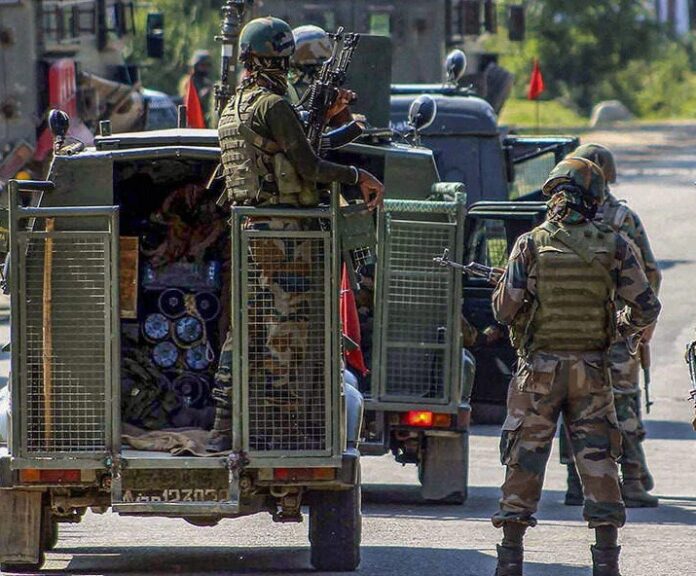
Anantnag, Oct 11 (NVI): Two Chinese grenades were recovered during a cordon-and-search operation in a forest area of Seer Hamdan in south Kashmir’s Anantnag district on Sunday, officials said.
Security forces jointly launched the operation in the forest area under the jurisdiction of Mattan, following which the grenades were recovered during searches, they said.
A bomb disposal squad from the District Police Lines (DPL), Anantnag, was subsequently called to the spot and destroyed both grenades on the spot, officials said.
No loss of life or injuries were reported during the destruction of the explosives, they added.—(NVI)
Balochistan: BLA attacks Pakistan Coast Guard boats, kills 13 personnel

Quetta, Oct 11 (NVI) Baloch Liberation Army (BLA) today claimed to have killed 13 personnel of Pakistan Coast Guard in an attack in Gwadar in Balochistan.
The attack targeted two Pakistani Coast Guard boats in the Jiwani area of Gwadar district, BLA spokesman said.
The attack was carried out by BLA’s maritime unit, the Hammal Maritime Defence Force (HMDF).
The group said it formally announced the establishment of the HMDF in April 2026 and claimed the unit had previously targeted a naval patrol boat near Jiwani. (NVI)
Pakistan: Emergency imposed in Khyber Pakhtunkhwa ruled by Imran Khan’s party
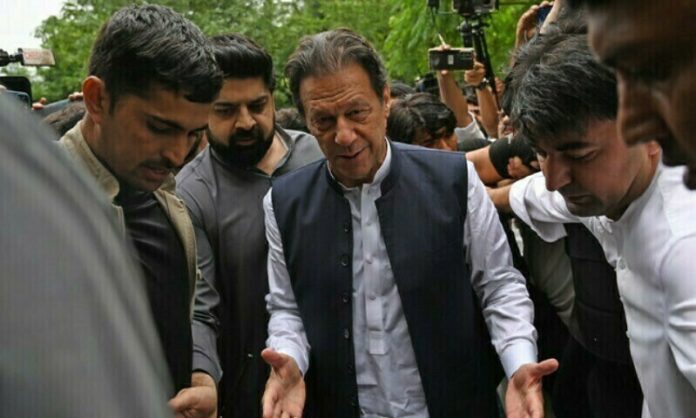
Islamabad, Oct 11 (NVI) The Pakistani regime today declared a State of Emergency in Pashtun-dominated Khyber Pakhtunkhwa Province and dismissed the elected local government led by the party of imprisoned former Prime Minister Imran Khan.
The measures were taken by the federal government ahead of the planned march to Islamabad by supporters of Imran Khan, the chief of Pakistan Tehreek-e-Insaf (PTI) party, demanding his release.
Pakistan President Asif Ali Zardari announced imposition of Emergency rule after the federal Cabinet of Prime Minister Shehbaz Sharif recommended emergency rule, accusing the provincial government of “deliberate disengagement from the fight against terrorism.”
Sohail Afridi, the ousted Chief Minister of Khyber Pakhtunkhwa, and his Cabinet ministers were detained by the Pakistani forces on orders by the Federal government.
Afridi launched a protest campaign last week to demand early release of Khan, leading marches through several districts in the province. Yesterday, he gave a call to PTI supporters to prepare to march on Islamabad.
Sharif’s government has been urging Afridi since last month to postpone the march, citing a surge in attacks by the Pakistani Taliban in the northwest.
It has also accused Khan’s party of sympathizing with the militant group, also known as Tehrik-e-Taliban Pakistan (TTP).
Khan is Sharif’s main political rival and has been imprisoned since 2023 on corruption and other charges that he and his party say are politically motivated.
Despite his imprisonment, he retains a substantial and passionate support base, keeping him at the center of Pakistan’s turbulent political landscape.
Federal Interior Minister Mohsin Naqvi, considered close to the powerful Pakistan Army, accused the provincial government of neglecting counter-terrorism efforts while focusing on securing Khan’s release.
Naqvi said delays in decision-making and poor coordination between Islamabad and the provincial government had allowed militants to gain ground, prompting the decision to impose an emergency in the province.
Law Minister Azam Nazeer Tarar said militant violence in the province had increased by 196% in recent years.
Information Minister Attaullah Tarar announced an 11-member advisory council, which will run provincial affairs under the governor.
Police detained several supporters of Khan’s party overnight and authorities deployed additional police and security forces to prevent unrest.
Shipping containers placed by police along key routes in Islamabad since last month to block potential rallies have disrupted traffic and forced residents in the capital and neighboring Rawalpindi to take lengthy detours.
Khan’s spokesperson Zulfiquar Bukhari condemned the suspension of the provincial government, calling it a “disguised coup.”
He said the Khyber Pakhtunkhwa government was the only one with a genuine popular mandate following the February 2024 parliamentary elections, which Khan’s party says were rigged.
“Now that little bit of democracy is also gone,” Bukhari said in a statement.
Referring to recent talks between Khan’s party and the federal government, Bukhari accused officials of having no intention of reaching an agreement. He said government representatives had focused on counterterrorism, while Khan’s representatives had come to discuss the imprisoned leader’s basic rights.
Talks between Khan’s Pakistan Tehreek-e-Insaf party, or PTI, and the federal government last week on postponing the march failed.
Besides Khan’s release, his party demanded his transfer to a hospital and permission for his family to visit him.
Sharif’s government has said Khan is in good health and receives regular family visits but maintains that meetings with the imprisoned former leader cannot be used for political purposes. (NVI)
Arms, ammunition recovered in joint operations in Manipur, Mizoram
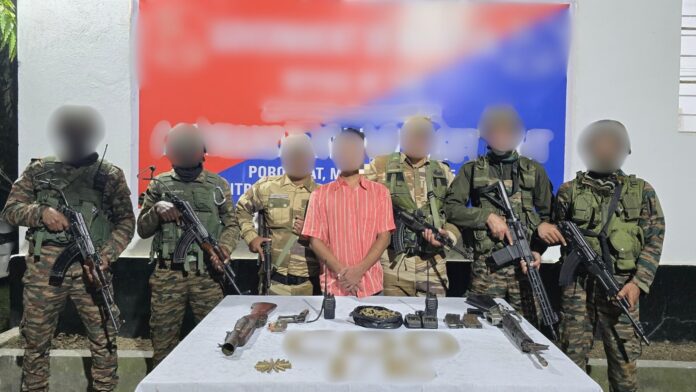
Imphal, Oct 11 (NVI) Security forces, in coordination with Manipur Police, arrested an active cadre of a banned organisation in Manipur’s Imphal East district and recovered three weapons, ammunition and other stores, the Army said.
In a separate operation, Assam Rifles apprehended a Myanmar national who was allegedly attempting to enter India illegally in Mizoram’s Champhai district and recovered a weapon and ammunition from him, it said.
Both operations were conducted under the aegis of the Army’s Spear Corps.
The operations highlighted coordination between security forces and police agencies in strengthening peace and security in the northeastern region, the Army said.—(NVI)
SC orders restoration of free public movement in Delhi, rules against illegal detentions
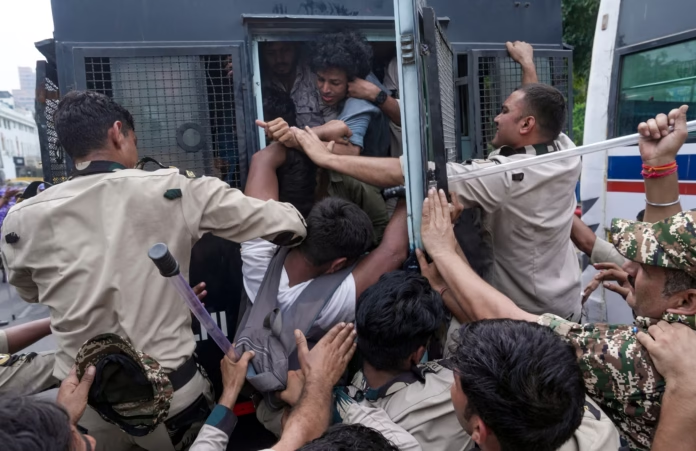
New Delhi, Oct 11 (NVI) The Supreme Court today ordered restoration of normal operations of Metro and Railway services, undisturbed Internet connectivity and free movement of people in Delhi while ruling that peaceful, unarmed protesters cannot be detained except in accordance with the “procedure established by law”.
The court also ordered authorities to remove a notice imposing prohibitory restrictions around the Supreme Court and other court complexes to ensure unhindered “access to justice”.
In a special hearing on Sunday, a bench of justices Joymalya Bagchi and V Mohana issued the directions on petitions alleging mass detentions, restrictions on movement, suspension of internet services and non-compliance with the court’s October 9 order on transport curbs ahead of Saturday’s protest against chief election commissioner (CEC) Gyanesh Kumar.
The bench directed that metro and rail facilities run normally unless restrictions are required to address a public order situation within the framework of Article 19(2) of the Constitution.
It further ordered that people’s free movement in the city be permitted subject to law, internet services remain undisturbed in accordance with law, and no person be detained except in accordance with the procedure established by law, particularly in the case of peaceful, unarmed assemblies beyond the area covered by a prohibitory order under Section 163 of the Bharatiya Nagarik Suraksha Sanhita (BNSS).
It went on to issue notices to the alleged contemnors in the contempt proceedings, including the Delhi Metro Rail Corporation (DMRC), the concerned railway authorities and Delhi Police, seeking their responses to the allegations of non-compliance with its October 9 order.
It directed the authorities to file short affidavits in response to the contempt pleas and submit compliance reports detailing the steps taken to implement Friday’s directions on regulated metro and rail services and the publication of traffic advisories.
Solicitor General Tushar Mehta disputed the allegations, maintaining that metro services had operated normally on Saturday, although entry and exit had been restricted at 45 of the network’s 303 stations. The bench sought details of the affected stations and directed the authorities to file their responses by Tuesday, while listing the matter for October 13.
The court also directed the authorities to take down the notice or any such imposition of Section 163 BNSS in and around the Supreme Court complex, saying the measure was necessary to remove any apprehension regarding access to the Supreme Court or any other court of law.
The directions came a day after the court’s intervention against sweeping restrictions on public transport ahead of the protest called by the Cockroach Janata Party (CJP) and other political groups demanding Kumar’s resignation over alleged irregularities in the Special Intensive Revision of electoral rolls. On Friday, a bench led by Chief Justice of India Surya Kant had directed the authorities to reconsider the closure of metro stations and regulate, rather than prohibit outright, metro and rail services to minimise inconvenience to the public.
At Sunday’s hearing, the bench took note of allegations that the Friday order had been flouted, with petitioners claiming that metro stations and railway facilities remained inaccessible, people were detained beyond the area covered by prohibitory orders, and the city witnessed a curfew-like situation.
“We would like to ponder on how far the police acts fall in sync with requirement of expression under Article 19 (right to protest and free movement),” observed the observed, as it considered the competing claims of public order and the right to peaceful protest.
The court also made clear that its concern extended to the rights of all individuals, irrespective of whether they were lawyers, protesters or police personnel. “Courts are agnostic of identity of the individuals, be it a police officer or a lawyer. Response and concerns of the court is to protect rights and liberty of all individuals,” it said.
The petitions were moved after a sweeping police crackdown on Saturday, during which Opposition leaders, students, lawyers and other protesters were detained amid heightened security across Delhi. Trinamool Congress MP and senior advocate Menaka Guruswamy challenged the preventive detention of Opposition leaders, including four former chief ministers, while other petitions questioned the legality of the restrictions and sought accountability for alleged police excesses.
Senior advocates KK Venugopal, Kapil Sibal, Gopal Sankaranarayanan and others appeared before the bench, while the Supreme Court Advocates-on-Record Association (SCAoRA) and other lawyers also raised concerns about restrictions on movement and the detention of advocates.
Senior advocate Shadan Farasat, appearing for SCAoRA, told the court that the situation in Delhi on Saturday was suppressive and that people were not even being allowed to stand or move around freely. He said he had himself been picked up and thrown into a moving bus, adding that the city was “one step away from a police state”.
Sankaranarayanan submitted that videos and photographs had been placed on record showing senior advocates, including Dinesh Dwivedi, Uttara Babbar and Farasat, being detained beyond the jurisdiction of Jantar Mantar. He also alleged that Section 163 BNSS had been imposed around the Supreme Court, questioning the necessity of the restrictions and alleging that children, women, students and elderly people had been pushed, shoved or assaulted.
Senior advocate Sanjay Hegde argued that access to lawyers was also access to justice, and that advocates had been detained and taken to police stations far from the protest site, with some allegedly beaten.
The bench acknowledged the concerns raised by lawyers and said it understood the magnitude of the detentions alleged. (NVI)
Security Agencies Test Counter-Terror Preparedness at Aharbal in J&K’s Kulgam
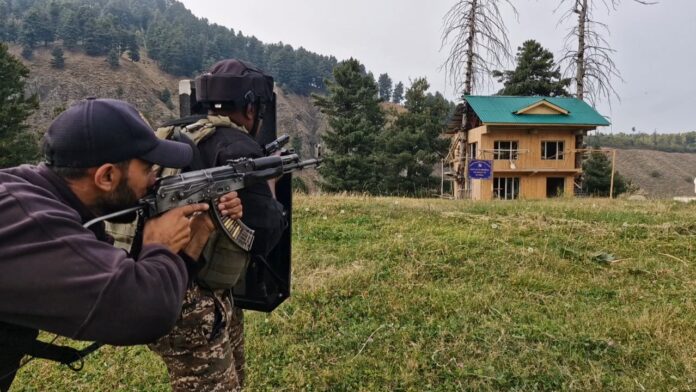
Kulgam, Oct 11 (NVI): Police on Sunday conducted a counter-terrorism mock drill at the famous Aharbal tourist destination in Jammu and Kashmir to assess operational readiness and strengthen coordination among security agencies.
The exercise was conducted under the supervision of Senior Superintendent of Police (SSP), Kulgam, and led by Deputy Superintendent of Police (Operations), Manzgam.
Personnel from the Manzgam police station, Special Operations Group (SOG) Manzgam, Markhor Manzgam and the CRPF’s 18th Battalion participated in the drill, officials said.
The exercise was aimed at evaluating the preparedness of security personnel to respond swiftly and effectively to any potential security threat at the tourist destination.
It also focused on improving communication and coordination among the participating agencies to ensure a prompt and effective response in the event of an emergency, they said.
Kulgam Police reiterated its commitment to ensuring the safety of tourists and the general public, particularly at important tourist destinations across the district.—(NVI)
SC to Hold Special Hearing Tomorrow on Delhi Protests
By Sangeeta Sharma
New Delhi, Oct 10 (NVI): A Special Bench of the Supreme Court will hear tomorrow (Sunday) a petition challenging the preventive detention of opposition leaders and others during today’s protests in Delhi against Chief Election Commissioner Gyanesh Kumar.
The petition has been filed by senior advocate Maneka Guruswamy and it will be heard by Justice Joymalya Bagchi and Justice V. Mohana of the Supreme Court.
Guruswamy has questioned the police action of detaining protesters from the streets and picking up opposition leaders, including four former Chief Ministers, during the demonstrations at Jantar Mantar.
The plea contends that preventive detention cannot be used to suppress the fundamental right to peaceful protest, particularly when the persons detained include leaders who have previously held constitutional offices.
The matter assumes significance amid allegations of police action against lawyers who were participating in the protests.
The Delhi High Court Bar Association (DHCBA) has strongly condemned what it described as the “illegal detention” of several advocates by Delhi Police and the “disproportionate” use of force against lawyers.
The DHCBA said video footage showed lawyers, including Senior Advocates, being physically dragged by police personnel, describing the alleged treatment as “wholly reprehensible” and a serious affront to the dignity and constitutional rights of members of the legal fraternity.
The Supreme Court is also expected to consider a separate contempt petition alleging non-compliance with its October 9 directions concerning public transport during the protests.
The contempt plea, filed by advocate Shailendra Mani Tripathi, alleges that several Delhi Metro stations remained closed despite the Court’s direction against a complete shutdown of public transport. It names Union Home Secretary Govind Mohan, Delhi Police Commissioner Anurag Kumar and DMRC Chairperson D. Thara as respondents./ SNG
Houthi attacks on Saudi: Air India flights to remain cancelled till Oct 15

New Delhi, Oct 8 (NVI) As Saudi Arabia continued to face Houthi attacks, Air India has extended the cancellation of its flights to and from Riyadh until October 15, 2026.
The airline said affected passengers would be offered a full refund if they cancel their bookings.
It added that it was closely monitoring developments and assessing the situation.
Earlier, Air India Express, IndiGo and Akasa Air had cancelled flights to and from Riyadh following heightened security concerns after Yemen’s Houthi rebels claimed they had carried out a ballistic missile strike on King Khalid International Airport in the Saudi capital.
Earlier on Thursday, the government of India strongly condemned the attacks on the two Saudi airports, calling the targeting of civilian infrastructure “completely unacceptable”.
The ministry of external affairs said, “India condemns the attacks over the past few days targeting Abha International Airport and King Khalid International Airport in Riyadh, which have resulted in civilian deaths and injuries.”
“The targeting of civilian infrastructure is completely unacceptable. We express our deepest condolences to the families of those who have lost their loved ones. We wish speedy recovery for those injured,” the ministry said.
New Delhi also expressed solidarity with Saudi Arabia, saying, “We express solidarity and stand with the people and government of the Kingdom of Saudi Arabia.” (NVI)
Huge arms, ammunition cache recovered in J&K’s Sopore forests
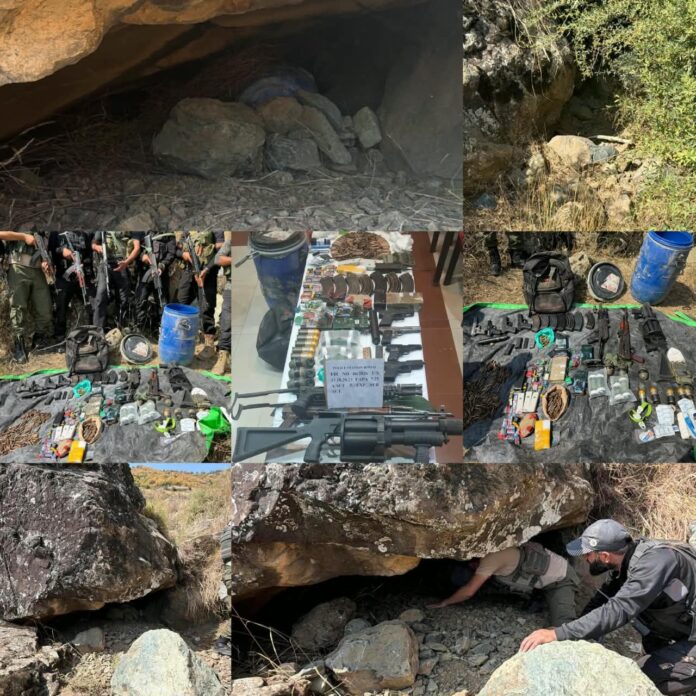
Sopore, Oct 10 (NVI): Police have recovered a huge cache of arms, ammunition and explosives, including two assault rifles, four pistols, 11 hand grenades and three improvised explosive devices (IEDs), from a forest area in Jammu and Kashmir’s Baramulla district, officials said on Saturday.
The recovery was made in the Mukaam Cherhar forest area under the jurisdiction of Bomai police station following specific intelligence inputs, they said.
During searches, a blue-coloured barrel and a bag were found concealed beneath a large boulder, following which a Bomb Disposal Squad was called in to examine and safely handle the suspected explosive material, officials said.
The seized items included an AK-47 rifle, an AK-76 rifle, seven magazines, four pistols with four magazines, a multi-grenade launcher with five rounds, 11 hand grenades, three IEDs fitted with remote controls, eight detonators and two timers.
Other material, including a Y-SMS set, prima cords, wires, battery cells and IED-related components, was also recovered, they said.
A case has been registered at Bomai police station under relevant sections of the Unlawful Activities (Prevention) Act, the Arms Act and the Explosive Substances Act, and further investigation is underway, officials said.
Investigators are trying to establish the source and intended ownership of the seized weapons and explosives, identify those involved in concealing the cache and ascertain possible terror links, they added.—(NVI)