Thursday, September 10, 2026
Home Blog Page 1082

Zojila tunnel work begins, will ensure all-weather connectivity b/w Srinagar & Leh 

Abid Bashir

Srinagar (NVI): The construction work of Zojila Tunnel in Jammu and Kashmir’s Ganderbal district began today. The 14.15 km longest tunnel road in Asia will ensure all-weather connectivity between Srinagar and Leh on NH-1.

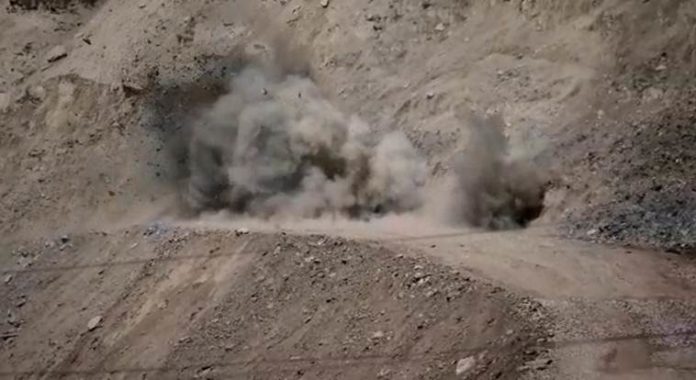
The work on the strategic tunnel began after Union Transport Minister Nitin Gadkari initiated the first ceremonial blasting. The construction work of the tunnel has been assigned to National Highways and Infrastructure Development Corporation Limited (NHIDCL).


The idea for the tunnel was conceived first in 2004 by the then government at Centre and the erstwhile State of J&K.

Officials said the total cost of the project is Rs 7,000 Crore. Speaking on the occasion, Divisional Commissioner, Kashmir PK Pole said that he was glad to see work starting on the ambitious road project and was hopeful that the tunnel will be completed within a stipulated time frame. “I wish the construction agency all the best,” he said. “The tunnel is going to be Asia’s longest all-weather tunnel.” He said the tunnel will remain open for the maximum period of the year.

Officials said that the project holds strategic significance as the Zozila Pass is located at an altitude of 11,578 feet. The tunnel is also being constructed at a time when India-China relations have soured in Ladakh due to Chinese incursions in Eastern Ladakh where peace talks between Indian and Chinese army officials are on to de-escalate the tensions.

The tunnel will hold also strategic importance as troops movement from Srinagar to Ladakh can take place throughout the year as the road will be all-weather.

During winters, the Srinagar-Leh route remains closed due to heavy snowfall, thereby cutting off the Ladakh region from Kashmir. “The project was conceived to bring an all-round economic development and socio-cultural integration of Jammu and Kashmir and Ladakh and was given to the National Highways and Infrastructure Development Corporation Limited (NHIDCL) in July 2016 for implementation on Engineering, Procurement, and Construction (EPC) model,” officials said.

The ambitious project got stalled for some period due to the hectic tendering process. Work was awarded to M/s ITNL (ILFS) at Rs 4,899.42 crore and approval of the Cabinet Committee on Economic Affairs (CCEA) was obtained for a total project cost of Rs 6,808.69 crore for completion within seven years.

Sources said that the contract agreement was signed on January 24, 2018. “Work progressed up to July 2018 but the project was stuck due to financial problems faced by ILFS. The contract was terminated on January 15, 2019,” they said.

They said that in February 2020, Gadkari reviewed this whole project in detail, and in order to reduce the cost and execute this project on priority, the matter was referred to an expert committee. “After expert committee deliberations and consequent to approval, NHIDCL (National Highways and Infrastructure Development Corporation) invited the bids in June this year,” they said.

Comparing to the present cost of the integrated project, based on the tender received at Rs 4509.5 crore, the total capital cost of the project would be Rs 6808.63 crore, they said.

-ARK
Kovind holds talks with Turkmenia Prez

ram nath
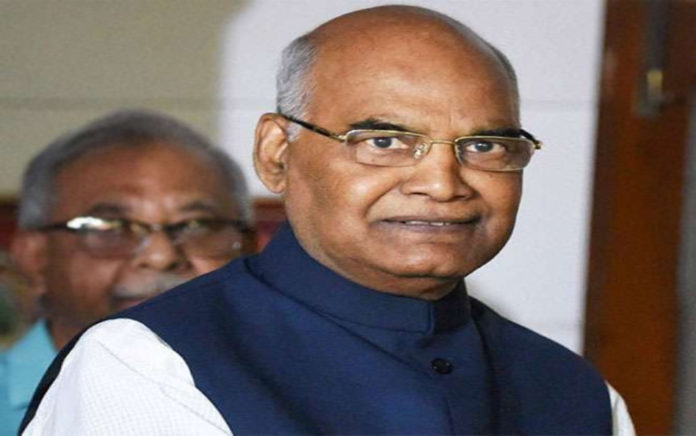
Ram Nath Kovind (file photo)

New Delhi (NVI): President Ram Nath Kovind today held a telephonic conversation with his excellency Gurbanguly Berdimuhamedov, the President of Turkmenistan.

During the conversation, both the leaders acknowledged the warm and cordial relations between the two countries underpinned by historical and civilizational links, the Ministry of External Affairs said in a statement.

The two leaders noted with satisfaction the sustained momentum of cooperation in diverse areas, it added.

They also agreed on the immense potential that exists in trade and economic spheres and noted the success of joint collaboration between Indian and Turkmen companies, particularly in the pharmaceutical sector.

Kovind further thanked the president of Turkmenistan for his telephone call and for his personal commitment to strengthening bilateral relations with India.

-RJV

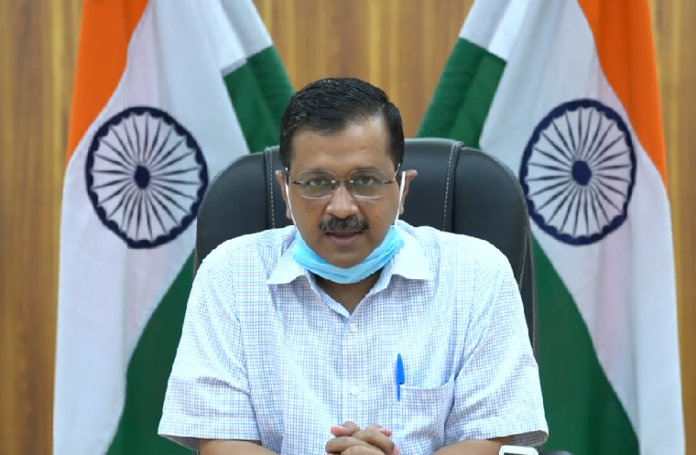
Kejriwal launches ‘Red light on, gaadi off’ campaign to tackle pollution in Delhi

Free Covid vaccination
Delhi Chief Minister Arvind Kejriwal

New Delhi (NVI): Delhi Chief Minister Arvind Kejriwal today launched a new campaign to tackle pollution in the national capital- ‘Red light on, gaadi off’, and appealed to people to turn off their vehicles while waiting on a traffic signal.

“One crore vehicles are registered in Delhi today, even if just 10 lakh people start switching off their vehicles on red light, then experts have told me that the PM10 levels will reduce by 1.5 tonnes a year, and PM2.5 will reduce by 0.4 tonnes,” Kejriwal said in a virtual press briefing.

The Delhi CM further added that when we do idling (waiting at a traffic signal with the engine on), then the fuel consumed in a minute is more than when we are driving. “In 10 seconds of idling, more fuel is consumed as compared to when you switch off the vehicle and then turn it on,” Kejriwal said, adding that if people start switching off their vehicles at red lights, then they will save their fuel as well as contribute less to the pollution.

“On average, a vehicle daily spends 15 to 20 mins on a red light while going to the office and coming back. In these 15-20 minutes, a vehicle consumes around 200 ml of oil and if you start turning off your vehicles, then you can save around 7,000 rupees in a year,” he said.

Kejriwal also highlighted that vehicular pollution is especially harmful in winters when the smoke and dust settles below as compared to summers when it goes up. “So when we do idling at red lights in winters, the pollution settles near the ground and affects us,” he said.

While saying that Delhi has been able to reduce 25 per cent pollution in last five years, Kejriwal appealed to Delhiites to join the campaign.

-ARK

Cinema halls reopen in many states today amid safety protocols

New Delhi (NVI): Cinema halls in several parts of the country are reopening today after being shutdown for seven months during the pandemic, amid strict adherence to the Centre’s COVID-19 safety protocols.

Theatres and multiplexes, closed since March because of the coronavirus crisis, recently allowed to resume operations as per the guidelines issued under Unlock 5.

All cinema halls that will open today have to observe 50 per cent occupancy, maintain staggered show timings and follow social distancing protocols to prevent moviegoers.

At the food and beverages section, all food will be sterilised under UV rays in a machine for eight minutes before being handed over to the customer. Popocorn containers will completely be covered with paper lids.

Furthermore, thermal screening, adequate protection gear for the staff, and compulsorily providing phone numbers for “contact tracing” are some of the changes movie-goers will see.

Inside the hall, there will be floor and seat markers to help individuals adhere to social distancing norms.

Individuals going to the theatres are also expected to keep their masks on and always cover their faces while coughing. Another round of thermal screening will be conducted before patrons can enter the hall.

Other SOPs mandated by the central government like proper ventilation and air conditioner temperature above 23 degrees Celsius will also have to be maintained.

Delhi, Haryana, Uttar Pradesh, West Bengal, Madhya Pradesh, Gujarat, Andhra Pradesh and Karnataka are some of the states where cinema halls have been allowed to open.

However, theatres will remain closed in states like Maharashtra, Telangana, Tamil Nadu, Kerala and Chhattisgarh.

-CHK

COVID-19 pandemic puts global fight against tuberculosis at risk: WHO

(Source: @WHO)

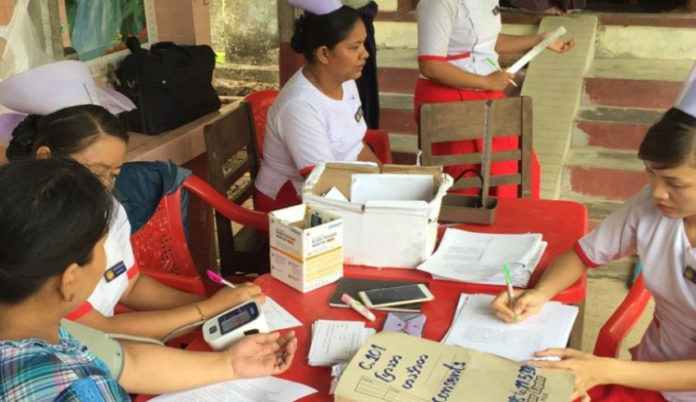
New Delhi (NVI): The COVID-19 pandemic is disturbing global efforts to tackle tuberculosis (TB), with cases to rise without urgent action and funding, the World Health Organization (WHO) said.

The new report from WHO showed that access to TB services remains a challenge, and that global targets for prevention and treatment will likely be missed without urgent action and investments following the outbreak of COVID-19.

“Equitable access to quality and timely diagnosis, prevention, treatment and care remains a challenge,” said Tedros Adhanom Ghebreyesus, Director-General of WHO. “Accelerated action is urgently needed worldwide if we are to meet our targets by 2022,” he added.

According to the WHO report, prior to the COVID-19 pandemic, many countries were making steady progress in tackling tuberculosis, with a 9 per cent reduction in incidence seen between 2015 and 2019 and a 14 per cent drop in deaths in the same period.

There has been a continuous drop in the high-level political commitments at global and national levels that were earlier on delivering results in the fight against TB before countries shifted all the attention to fight COVID-19, WHO added.

The report also said that approximately 1.4 million people died from TB-related illnesses last year. Of the estimated 10 million people who developed TB that year, some 3 million were not diagnosed with the disease, or were not officially reported to national authorities.

However, the situation is even more acute for people with drug-resistant TB. About 4,65,000 people were newly diagnosed with drug-resistant TB in 2019 and, of these, less than 40 per cent were able to access treatment, the situation is expected to worsen in 2020.

There has also been limited progress in scaling up access to treatment to prevent TB, the report said.

Moreover, the data collated from over 200 countries has shown significant reductions in TB case notifications in the first half of 2020, as countries imposed lockdowns to curb the spread of COVID-19.

The three high burden countries – India, Indonesia, the Philippines reported drop of 25-30 per cent between January and June 2020 compared to the same six month period last year. These reductions in case notifications could lead to a dramatic increase in additional TB deaths, according to WHO modelling.

Meanwhile, the WHO warns that human, financial and other resources have been reallocated from TB to the COVID-19 response in all countries. These continued disruptions in services caused by the pandemic have led to further setbacks, data collection and reporting systems have also been negatively impacted.

In addition to this, the organization guidance that countries have taken measures to mitigate the impact of COVID-19 on essential TB services, including by strengthening infection control.

“In the face of the pandemic, countries, civil society and other partners have joined forces to ensure that essential services for both TB and COVID-19 are maintained for those in need,” said Tereza Kaseva, Director of WHO’s Global TB programme.

“These efforts are vital to strengthen health systems, ensure health for all, and save lives,” Kaseva added.

Tuberculosis (TB), the world’s deadliest infectious killer, is caused by bacteria (Mycobacterium tuberculosis) that most often affect the lungs. It can spread when people who are sick with TB expel bacteria into the air for example, by coughing.

Nearly 90 percent of those who fall sick with TB each year live in 30 countries. Most people who develop the disease are adults.

Tuberculosis is preventable and curable, about 85 per cent of people who develop TB disease can be successfully treated with a 6-month drug regimen; treatment has the added benefit of curtailing onward transmission of infection, the report said.

-RJV

State-wise details of Covid-19 cases in India

covid
Representative image

New Delhi (NVI): The total number of coronavirus cases in India has crossed the 73 lakh-mark and stands at 73,07,098 after 67,708 fresh cases were reported in the last 24 hours, according to Union Health Ministry data.

The country’s death toll stands at 1,11,266 after 680 new fatalities were reported during the same period.

In worst-hit Maharashtra, the COVID-19 cases climbed to 15,54,389, followed by Andhra Pradesh with 7,67,465 cases, and Karnataka with 7,35,371 positive cases.

Total positive cases in States/UTs:

Andaman and Nicobar Islands- 4,046

Andhra Pradesh- 7,67,465

Arunachal Pradesh- 12,768

Assam- 1,98,213

Bihar- 2,00,103

Chandigarh- 13,403

Chhattisgarh- 1,50,696

Dadra Nagar Haveli & Diu – 3,171

Delhi- 3,17,548

Gujarat- 1,54,936

Goa- 39,438

Haryana– 1,45,507

Himachal Pradesh- 18,008

Jammu and Kashmir- 85,409

Jharkhand- 94,369

Karnataka- 7,35,371

Kerala- 3,10,140

Ladakh- 5,304

Madhya Pradesh- 1,55,276

Maharashtra- 15,54,389

Manipur- 14,094

Meghalaya- 7,991

Mizoram- 2,220

Nagaland- 7,416

Odisha- 2,59,541

Puducherry- 32,245

Punjab- 1,25,760

Rajasthan- 1,65,240

Sikkim- 3,459

Tamil Nadu- 6,70,392

Telangana- 2,17,670

Tripura- 29,031

Uttarakhand- 56,070

Uttar Pradesh- 4,44,711

West Bengal – 3,05,697

State/UT wise total death toll:

Andaman and Nicobar Islands- 55

Andhra Pradesh- 6,319

Arunachal Pradesh- 29

Assam- 834

Bihar- 967

Chandigarh- 199

Chhattisgarh- 1,339

Dadra and Nagar Haveli- 2

Delhi- 5,898

Goa- 519

Gujarat- 3,595

Haryana- 1,614

Himachal Pradesh- 255

Jammu and Kashmir- 1,352

Jharkhand- 811

Karnataka- 10,198

Kerala- 1,066

Ladakh- 64

Madhya Pradesh- 2,686

Maharashtra- 40,859

Manipur- 103

Meghalaya- 70

Nagaland- 22

Odisha- 1,062

Puducherry- 568

Punjab- 3,925

Rajasthan- 1,694

Sikkim- 59

Tamil Nadu- 10,423

Telangana- 1,249

Tripura- 319

Uttar Pradesh- 6,507

Uttarakhand- 796

West Bengal- 5,808

However, a total of 63,83,441 people have been cured or discharged. The total active cases stands at 8,12,390 in the country.

-CHK

Healthy young people may have to wait till 2022 for Covid vaccine: WHO

WHO chief scientist Soumya Swaminathan

New Delhi (NVI): Healthy, young people may have to wait until 2022 to be vaccinated against coronavirus, according to the World Health Organization’s chief scientist, Soumya Swaminathan, who says health workers and those at highest risks to be prioritised.

Swaminathan indicated that, despite the many vaccine trials being undertaken, speedy, mass shots were unlikely, and organising who would be given access first in the event of a safe vaccine being discovered was still being worked on.

“Most people agree, it’s starting with healthcare workers, and frontline workers, but even there, you need to define which of them are at highest risk, and then the elderly, and so on,” Swaminathan said.

“There will be a lot of guidance coming out, but I think an average person, a healthy young person might have to wait until 2022 to get a vaccine,” she said.

Swaminathan hoped there would be at least one effective vaccine by 2021 but it would be available only in “limited quantities”.

Swaminathan also warned against complacency about the virus death rate, saying with the increasing number of cases, mortality would also rise.

“Mortality increases always lag behind increasing cases by a couple of weeks,” she said. “We shouldn’t be complacent that death rates are coming down.”

So far, more than 38.4 million people have been infected globally and nearly 1.1 million people have died.

-CHK

Coronavirus cases surpass 38.4 million worldwide

Coronavirus
Representational image

New Delhi (NVI): More than 38.4 million people around the world have been diagnosed with COVID-19 while the death toll has crossed 10,91,000, according to data from Johns Hopkins University. More than 26.5 million people have recovered from the disease.

In the US, the number of coronavirus infections have surpassed 7.9 million while the death toll has exceeded 2,16,000 in the country.

Brazil’s covid cases are nearing 5.15 million while the number of fatalities have surged past 1,51,000.

Paris and eight other French cities will be subject to a curfew from Saturday. “We have to act. We need to put a brake on the spread of the virus,” President Emmanuel Macron said.

Germany has recorded its highest daily coronavirus cases since the start of the pandemic. It added 6,638 new infections on Thursday, eclipsing the March 28 figure of 6,294. Thursday’s tally showed the reported death toll rose by 33 to 9,710.

The Czech Republic has set a new record for daily Covid cases, recording 9,544 new infections, the highest since the pandemic started, Health Ministry data showed.

China has reported 11 new Covid cases, down from 20 a day earlier, the country’s health authority said on Thursday.

Spain will close bars and restaurants across Catalonia for the next 15 days following a surge in cases, as the country tackles one of the highest rates of infection in Europe, with nearly 9,00,000 cases and more than 33,000 deaths.

World Health Organization’s chief scientist, Soumya Swaminathan, has indicated that young, healthy people may have to wait until 2022 to get a vaccine and, that a despite the many vaccine trials being undertaken, speedy, mass shots were unlikely.

-CHK

France imposes curfew in Paris, other major cities as COVID-19 cases surge

Representational image

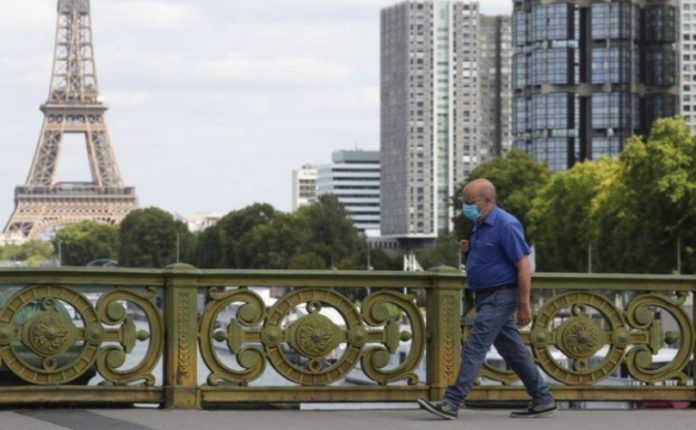
New Delhi (NVI): The France government imposed a night-time curfew in Paris and eight other main cities from this weekend to curb the spread of coronavirus.

The night curfew will take effect from October 17 and run each night from 9pm to 6am the following morning for at least four weeks, the French President Emmanuel Macron announced at a press briefing. However, a public health emergency has also been declared.

Apart from Paris curfew will be imposed in Saint-Etienne, Lille, Lyon, Marseille, Grenoble, Toulouse, Montpellier and Rouen. The tough measures come as the country continues to battle the virus with over 32,000 fatalities reported.

These regions are already on maximum alert, with bars and gyms shut down, theatres and restaurants under strict health protocol.

In his first major TV appearance since July, Macron spoke on deadly virus which starts off again and spreads rapidly in Europe and France while reassuring that the second wave of COVID-19 remained under control.

The new measures will stop people visiting restaurants and private homes during the evening and night-time, he said.

In areas where infections exceed 50 per 1,00,000 inhabitants, bars and restaurants must close their doors by 23:00 and gatherings of more than 10 people are prohibited in public spaces such as beaches and parks.

Residents will need a valid reason to be outside their homes during the hours of curfew, the president said, adding that he understood that a curfew was a hard thing to ask people to do.

Essential trips will be permitted and anyone found breaking the curfew will be fined 135 euros (159 U.S. dollars), and permissions will be available for those who have health emergencies and work at night, he added.

Schools will remain open and people will still be able to travel between regions during the day. Additionally, no more than six people will be allowed to gather inside private homes, but exemptions will be made for large households, Macron said.

He also promised that the government will adopt a testing strategy to drastically reduce the delays to have the results.

Notably, many other nations in Europe including Germany, Ireland and Netherlands have been witnessing a second wave of the COVID-19 pandemic and have imposed restrictions to curb the new infections.

France has been in a second wave of the coronavirus with an average of 20,000 new virus cases per day. Macron said the new measures aimed to reduce daily cases to around 3,000.

So far, the total number of coronavirus cases in France stands at 8,20,376, Europe’s second biggest tally after Spain.

-RJV

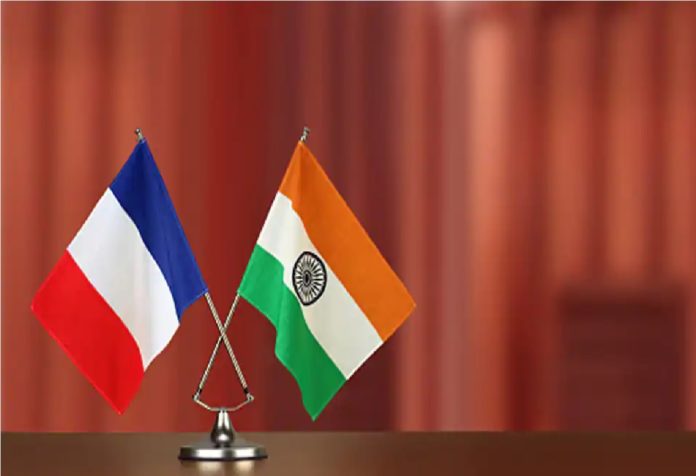
India, France re-elected as president, co-president of International Solar Alliance

India, France to hold strategic dialogue tomorrow

New Delhi (NVI): India and France were re-elected as the president and co-president of the International Solar Alliance (ISA) for a term of two years at the virtual meeting of the Third Assembly.

The event was attended by 34 ISA Members ministers. A total of 53 member countries and 5 signatory and prospective member countries participated in the Assembly.

In addition to this, four new vice-presidents were also chosen to represent the four regions of ISA, according to a statement by the Ministry of New and Renewable Energy

The representatives of Fiji & Nauru for Asia Pacific Region; Mauritius & Niger for Africa Region; UK & Netherlands for Europe and others Region, and Cuba and Guyana for Latin America and Caribbean Region assumed the vice presidency, the statement added.

The ISA is an initiative that was launched by the Prime Minister of India and the President of France on November 30, 2015, in Paris, France, on the side-lines of the COP-21. The overarching objective of the ISA is to collectively address key common challenges to the scaling up of solar energy in ISA member countries.

For the first time since the inception of the framework agreement of ISA, Solar awards were conferred on countries of the region as well as institutions working for solar. The Assembly witnessed the conferment of the Visvesvaraya award which recognizes the countries with maximum floating solar capacity in each of the four regions of ISA. The awards went to Japan for the Asia Pacific region and the Netherlands for Europe and other regions.

The Assembly also approved the initiatives of the ISA Secretariat in institutionalizing ISA’s engagement with the private and public corporate sector through the Coalition for Sustainable Climate Action (CSCA). Ten public sector organisations in India presented a cheque for 1 million USD each at the assembly.

Speaking in the plenary, the President of the ISA assembly, India’s Power and New and Renewable Energy Minister, RK Singh, appreciated the Alliance Members coming together to work for combating climate change. He welcomed the seventh initiative on heating and cooling to be introduced for discussion in the Third Assembly.

Singh said that Solar Energy has come a long way in last 5 years and is now the fastest growing energy source globally. He said, “Solar energy is already contributing around 2.8% of global electricity ,and if trends were to continue, by 2030, solar will become most important source of energy for electricity production in large part of the world.”

President ISA also mentioned about various activities and programmes initiated by ISA since the 2nd Assembly. He said that six programmes and two projects are now underway covering various aspects of solar energy. A robust pipeline of more than USD five billion has been developed for solar energy applications to meet the lighting, irrigation, drinking water and productive energy requirement of the ISA member countries, which have so far been largely deprived of modern energy services.

The Co-President of the Assembly, Barbara Pompili, France’s Minister for Ecological Transition underlined that ISA played an essential role to help redirect funding towards renewable energies, particularly in developing countries, and take up the challenge of an energy at the service of all.

She reiterated France’s involvement: pointing out that of the 1.5 billion euros of financing France committed for solar projects in ISA member states up until 2022, 1.15 billion € has been committed to concrete projects.

France has also supported the collaboration with the World Bank to mobilise financing: a facility “Sustainable Renewables Risk Mitigation Initiative” (SRMI) should help mobilize 18 billion € in private investment to finance more than 10 gigawatts of solar projects, and a first project is being launched in Mozambique with the support of France and the European Union.

She further announced that, in the frame of the ISA Star-C programme, the French National Institute for Solar Energy (INES) will very soon launch a specific program for the small island states of the Pacific.

Furthermore, in the wake of the global pandemic, ISA responded by setting up ISA CARES, an initiative dedicated to deployment of solar energy in healthcare sector in LDC/SIDS ISA Member countries.

The initiative aims to solarize one primary health sector in each district of the target Member countries. Australia has provided AUD 92,000 for the ISA CARES initiative in the Pacific to provide ongoing reliable solar energy for health centres in the Pacific, helping remote island communities reduce reliance on costly and uncertain diesel fuel imports.

-CHK

MUST READ