Thursday, September 10, 2026
Home Blog Page 1128

Three Pak journalists, critical of Imran Khan govt, face sedition charges

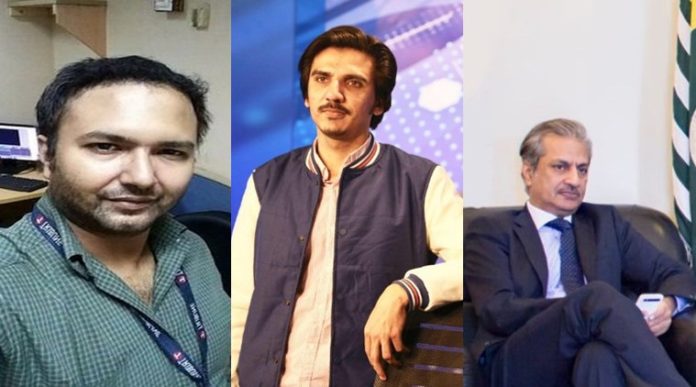
New Delhi (NVI): As Pakistan gets intolerant of criticism of its government and military, and stands exposed for launching a media crackdown recently, three journalists in the country are now facing sedition charges under the 2016 Prevention of Electronic Crimes Act (PECA).

Journalists Asad Toor, Bilal Farooqi, and Absar Alam have all been charged with sedition between September 11 and September 16 for publishing allegedly ‘objectionable’ and ‘derogatory’ material online, according to a statement by the International Federation of Journalists (IFJ).

The IFJ, along with its Pakistan affiliate, have called on the authorities to reign in the broad powers of this Act to ensure no journalists are charged solely for criticising government officials and institutions.

According to the IFJ statement, Asad Toor was charged on September 12 after a public complaint citing that he had “used derogatory language to refer high-level government institutions, including the Pakistan Army.”

The First Information Report (FIR) detailing Toor’s offences states he had breached PECA’s Sections 499 on defamation, 505 on statements conducing public mischief and 20 on offences against the dignity of a person to name a few, IFJ said.

Another journalist, Farooqi was detained on September 11 following a complaint claiming that resulted in a FIR claiming he had “defamed” the Pakistan Military on social media.

Similarly, Alam faced a FIR for allegedly using derogatory language against “state institutions and personalities.” Both Farooqi and Alam were charged with sedition under PECA’s Section 20.

“Prosecuting journalists for fulfilling their role as a check on government powers and a critical voice of government institutions is inherently undemocratic. Pakistan’s freedom of speech and ability to function as a democracy is greatly threatened by the implications of these sedition charges and their associated legislation,” the IFJ statement read.

The draconian PECA Act of Pakistan government has drawn criticism before also its implementation due its secretive conception, and once implemented sparked grave concerns over its criminalization of speech and the unchecked powers it gave to authorities to both curtail and prosecuted it.

The law was supposedly created to “check extremist content, prosecute hate speech and curb online harassment of women” but has had far reaching implications above and beyond these pursuits, such as Section 37 which gives “unbridled powers” to the Pakistan Telecommunications Authority to restrict freedom of expression by blocking/removing online content, IFJ said.

The PFUJ Secretary General Rana Muhammad Azeem said: “The PFUJ believes in freedom of speech & expression and urges the authorities to be cautious and have thorough investigations before charging any media person, in accordance with the law of the land.”

“The ruling party must reconsider this broad and sweeping legislation that has been shown to give the government the power to remove critical voices from public discourse. These recent sedition charges will undoubtedly influence the work of journalists in Pakistan and push the country’s media into passive submission. Journalists need a safe environment to both criticise and hold government officials and institutions accountable or democracy cannot function,” IFJ statement added.

Recently, Pakistan Prime Minister Imran Khan’s remarks that there is no media crackdown had exposed the Pak government’s hypocrisy on the press freedom, especially at a time when Mir Shakilur Rehman, editor-in-chief of the Jang group, the largest media organization in the country, has been in pretrial detention since March 12 this year.

Pakistan is ranked 145th out of 180 countries in Reporters Without Borders (RSF) 2020 World Press Freedom Index, three places lower than in 2019.

The United Nations Human Rights Office has also expressed its concern over the increasing instances of threats of violence against journalists and human rights activists in Pakistan.

-ARK

Google Maps to get COVID layer feature for safer navigation

Representational image

New Delhi (NVI): Google has rolled out a new feature which could be one of the most relevant and crucial features of recent times.

To counter COVID-19 pandemic, Google has introduced a new layer for its Maps platform on mobile devices which will now give essential information about the rate of infections.

The new update shows up on Google Maps and can be found by tapping the Layer button which is found under the profile picture.

The feature will be accessible through the layer tool called ‘COVID-19 info’.

The new feature will be made available on Android and iOS starting this week, Google said.

The feature provides a seven-day average data of new coronavirus cases per 1,00,000 people next to an arrow which reveals if they are trending up or down with appropriate coded colours.

The new Maps tool will use colour coding to illustrate the density of new cases in an area. So regions with the maximum number of cases and the maximum threat will be shown in red, thereafter in orange and yellow.

In terms of data procurement, Google says, “Data featured in the COVID layer comes from multiple authoritative sources, including Johns Hopkins, the New York Times, and Wikipedia. These sources get data from public health organizations like the World Health Organization, government health ministries, along with state and local health agencies and hospitals. Many of these sources already power COVID case information in Search, and we’re now expanding this data to Google Maps.”

“While getting around is more complicated these days, our hope is that these Google Maps features will help you get where you need to be as safely and efficiently as possible. The COVID layer starts rolling out worldwide on Android and iOS this week,” it added.

-CHK

Govt telemedicine service ‘eSanjeevani’ records 3 lakh tele-consultations

Representational image

New Delhi (NVI): The ‘eSanjeevani’ telemedicine service platform of the Ministry of Health & Family Welfare has completed a milestone of 3 lakh tele-consultations.

This landmark milestone has been achieved within a short period of six months since its launch in midst of the pandemic.

“The eSanjeevani OPD services have enabled patient-to-doctor telemedicine in midst of the COVID-19 pandemic. This has helped in containing the spread of COVID-19 by ensuring physical distancing and has simultaneously enabled provisions for non-COVID essential healthcare,” the Ministry of Health said in a statement.

The number of high tele-consultations is a testimony of its popularity among the citizens, it added.

The ministry also informed that, among all the states, Tamil Nadu has held the largest number of tele-consultations, with 1.29 lakh digital interactions so far.

“Tamil Nadu had been a pioneer in the field registering 32,035 OPD consultations by August 9 and 56,346 consultations by the 19th of the same month. The State had registered nearly one lakh consultations by September 8,” it said.

Moreover, the platform had provided essential healthcare to the State, one of the worst affected by COVID-19, at a critical time when conventional medicine was perceived to be risky owing to the nature of the infectious disease.

Tamil Nadu was followed by Uttar Pradesh with 96,151 consultations, Kerala with 32,921 consultations and Uttarakhand with 10,391 consultations. These four states account for total 2,69,264 tele-consultations (89.75 per cent consultations).

However, the total of States and Union Territories using eSanjeevani has gone up to 26, with on boarding of Gujarat and UT of Jammu and Kashmir on eSanjeevani OPD and Chhattisgarh on eSanjeevani (AB-HWC), the ministry noted.

Around 4,600 doctors have been trained on eSanjeevani OPD and on an average over 6,000 consultations or day are recorded in eSanjeevani’s national network.

The ministry further said ‘eSanjeevani’ is not only consistently increasing with respect to its efficiency or productivity but it is also getting enriched with newer functionalities and features as required by the users in the States.

The platform supports two types of telemedicine services — doctor-to-doctor through ‘eSanjeevani’ and patient-to-doctor through ‘eSanjeevani OPD’.

The former is being implemented through Ayushman Bharat Health and Wellness Centre (AB-HWC), which aims to implement tele-consultation in all 1.5 lakh HWCs in conjunction with identified Medical College hospitals in a ‘Hub and Spoke’ model.

In addition to this, states have identified and set up dedicated ‘Hubs’ in Medical Colleges and District hospitals to provide tele-consultation services to ‘Spokes’, through SHCs, PHCs and HWCs.

Furthermore, the health ministry rolled out the second tele-consultation service ‘eSanjeevani OPD’ enabling patient-to-doctor telemedicine owing to the COVID-19 pandemic in April this year.

“This has proved a boon in containing the spread of COVID-19 while simultaneously enabling provisions for non-COVID essential healthcare,” the ministry added.

-RJV

75% of new Covid cases in 10 States/UTs

(Source: Twitter)

New Delhi (NVI): A total of 86,508 new coronavirus cases have been reported in the last 24 hours in the country out of which 75% are concentrated in 10 States/UTs, the Union Health Ministry said in a statement today.

Maharashtra continues to top this list, with more than 21,000 cases, followed by Andhra Pradesh and Karnataka which have more than 7,000 and 6,000 cases respectively.

Meanwhile, for the sixth consecutive day, the number of new confirmed cases has been lower than the new recoveries, the Health Ministry said.

Apart from that, 1,129 deaths have been registered since yesterday. 10 States/UTs account for 83% of the deaths in the last 24 hours due to COVID. Maharashtra reported 479 deaths followed by Uttar Pradesh and Punjab with 87 and 64 deaths, respectively.

India has substantially ramped up its testing infrastructure across the country. As on date, there are 1810 labs including 1082 government and 728 private labs, the Health Ministry said.

11,56,569 tests were conducted in the past 24 hours. The total number of tests has crossed 6.74 cr today, it said.

India has witnessed a single-day jump of 86,508 new cases of coronavirus in the past 24 hours, taking the overall tally to 57,32,519. The country’s death toll has reached to 91,149 with 1,129 new fatalities being reported during this period.

-ARK

Monsoon Session of Parl concludes

New Delhi (NVI): The monsoon session of Parliament has concluded, eight days ahead of schedule, due to concerns over the spread of the coronavirus disease among members.

The session, which started on September 14 amid the COVID-19 pandemic, was otherwise scheduled to conclude on October 1.

The Union Minister for Parliamentary Affairs, Prahlad Joshi, in a statement issued today informed that the productivity of Lok Sabha was approximately 167 per cent and that of Rajya Sabha was approximately 100.47 per cent during the Monsoon Session, 2020.

“During the Session, 22 Bills (16 in Lok Sabha and 06 in Rajya Sabha) were introduced. Lok Sabha and Rajya Sabha individually passed 25 Bills each,” he further informed.

Appreciating the arrangements made for conducting the Session amid Covid-19 pandemic, the Minister said that the extra-ordinary output of this Session has become possible due to tireless efforts of all agencies and individuals involved in the transaction of – Business before two Houses of Parliament.

During this session, while the Rajya Sabha met in the first half of the day, the Lok Sabha assembled at 3 pm.

-CHK

India releases Rs 96 cr as post-quake reconstruction assistance to Nepal

New Delhi (NVI): India has released 1.54 billion Nepali Rupees (about Rs 96 crore) to Nepal towards housing and school sector assistance under New Delhi’s post-earthquake reconstruction commitment to Kathmandu.

Namgya Khampa, Deputy Chief of Mission of Embassy of India, anded over cheques worth NPR 1.54 billion (about INR 96 crore) to Sishir Kumar Dhungana, Secretary, Ministry of Finance of Nepal, the Embassy said in a statement.

India has committed USD 150 million in grant and Line of Credit towards housing sector projects in the Himalayan country in the wake of the devastating 2015 earthquake.

“With this handover, India has reimbursed about USD 72 million from grant to Government of Nepal for housing sector reconstruction. Out of Government of India’s commitment to rebuild 50,000 houses in Gorkha and Nuwakot districts, 92% of the houses have been completed,” the Indian Embassy in Nepal said.

Apart from this, India has also committed support for the reconstruction of 70 schools and 1 library under USD 50 million grant assistance. “Out of this, the first tranche of USD 4.2 million for ongoing schools was reimbursed to Government of Nepal,” the Embassy said.

“Government of India remains committed to continue supporting the people and Government of Nepal in their post-earthquake recovery efforts,” it added.

In 2015, nearly 10,000 people had lost their lives and thousands were injured when an earthquake with a magnitude of 7.9 Richter scale had struck the Himalayan nation. Sindhupalchok, one of the epicentres of the earthquake, had suffered the most.

Nepal has recieved several aftershocks since the 2015 quake. On September 16, a strong earthquake of 6 magnitude shook Nepal’s capital Kathmandu and surrounding areas on, forcing people to rush out of their houses.

-ARK

Govt notifies standards for safety evaluation of hydrogen cell vehicles

Representational image

New Delhi (NVI): In another step towards promoting green fuel, the Ministry of Road Transport and Highways today notified standards for safety evaluation of hydrogen fuel cell-based vehicles.

“The Ministry of Road Transport and Highways has notified the Standards for Safety Evaluation of vehicles being propelled by Hydrogen Fuel cells through an amendment to Central Motor Vehicles Rules 1989 dated September 23, 2020,” the ministry said in a statement.

This would facilitate the promotion of hydrogen fuel cell-based vehicles in the country, which are energy-efficient and environmentally friendly, it added.

The ministry further said the standards for the testing of such vehicles, which are at par with the international standards, have been made available with the prospective manufacturers and suppliers.

Moreover, the fuel cell vehicles use hydrogen gas to power an electric motor. Unlike conventional vehicles which run on petrol or diesel, fuel cell cars combine hydrogen and oxygen to produce electricity, which runs a motor.

Earlier in July, the Ministry issued a draft notification to include motor vehicles of Categories M and N, running on compressed gaseous hydrogen fuel cell, to be in accordance with AIS (automative industry standard) 157:2020.

Further, the hydrogen fuel specifications for fuel cell vehicles will be in accordance with ISO 14687 till the corresponding BIS specification is notified under the Bureau of Indian Standard Act, 2016.

The ministry also invited suggestions from stakeholders for inclusion of hydrogen-enriched CNG as an automotive fuel, but no objections or suggestions were received in this respect.

-RJV

UK finally launches COVID-19 tracking app in England, Wales

Coronavirus cases
File photo

New Delhi (NVI): The British government today finally launched a COVID-19 smartphone app for England and Wales, allowing users to trace contacts, check the local level of risk and record visits to venues such as pubs, four months after the technology was promised to the public.

The NHS COVID-19 app comes as Britain braces for a second wave of infections, with daily cases rising at rates not seen since the peak of the pandemic and a testing system unable to cope with demand in many areas.

The government had said a COVID-19 app would arrive in May, but early trials were dogged by problems, and developers abandoned home-grown technology in favour of Apple and Google’s model in June, according to media reports.

The COVID-19 app from the National Health Service (NHS) uses Bluetooth technology to alert users if they spend 15 minutes or more within two metres (six feet) of another user who subsequently tests positive for COVID-19.

The app generates a random ID for each user to protect privacy, and matches cases on the device rather than on a central server, as was the case in the first iteration.

It will also enable users to book a COVID-19 test subject to availability, check symptoms, and register at venues using a QR-type bar code displayed by businesses.

Furthermore, the Scottish government launched its own app earlier this month, while Northern Ireland rolled out its smartphone tracing tool in August.

-CHK

PM launches ‘Fit India’ protocols, interacts with fitness enthusiasts

New Delhi (NVI): Prime Minister Narendra Modi today interacted with fitness icons including cricket captain Virat Kohli and actor-model Milind Soman, and launched ‘Fit India’ protocols on the first anniversary of ‘Fit India Movement’.

The ‘Fit India Age Appropriate Fitness Protocols’ were launched by the Prime Minister during the online Fit India Dialogue 2020, which was hosted by Union Sports Minister Kiren Rijiju.

Fitness experts and enthusiasts like nutritionist Rujuta Diwekar also participated in the virtual interaction with PM which was live on his social media handles.

“I am glad that healthy eating is becoming a part of our way of living. Becoming fit is not as difficult as most think. It just requires a little discipline,” he said, adding that we need to inspire one another to stay fit. “Families that play together, stay together,” the PM said.

Paralympic javelin gold medallist Devendra Jhajharia and footballer from Jammu and Kashmir Afshan Ashiq were the first ones to speak at the event.

Paralympian Jhajharia stressed on the importance of not giving up in the face of hardships. The PM also lauded his determination to keep himself fit despite a physical disability and said he was an inspiration to many in the country and the world.

Footballer Afshan Ashiq said she is proud that she is representing her state Jammu and Kashmir at a big level. Afshan, who plays as a goalkeeper at Mumbai’s FIFA club, said that she ensured her physical fitness by waking up early and working out to become an inspiration for all women of the country.

Milind Soman, whom PM greeted with “Make in India Milind”, said that walking for hundreds of kilometers was not a difficult task if one had the mental strength to do it. “Fitness knows no limit,” he said.

“Whatever is said about your age online – are you really that old or is it something else?”, PM humorously asked 55-year-old Milind, who has often surprised his fans and social media followers with his fitness levels.

Nutritionist Rujuta Diwekar urged people to stick to simple and home-cooked food. “We should not lose health, but weight. We should eat home-made food and avoid packaged food. This is the secret to good health,” she said.

PM Modi also appreciated her “eat local, think global” mantra, saying that it resonates with “vocal for local” mantra of the government.

Virat Kohli, while sharing his views on fitness said that being fit has been a self-realization for him. “I don’t feel bad if the practice is missed for a day, but I do feel bad if I skip my fitness session for a single day,” Kohli said.

Swami Shivadhyanam Saraswati and Bharatiya Shikshan Mandal’s Mukul Kanitkar also interacted with the PM and shared their mantras for fitness.

-ARK

Cabinet condoles demise of Suresh Angadi

New Delhi (NVI: The Union Cabinet today condoled the demise of Minister of State for Railways, Suresh C Angadi, who passed away yesterday after battling with COVID-19.

Angadi is the first Union Minister to succumb to the deadly virus. He tested positive for the coronavirus on September 11.

Cabinet observed a two-minute silence in honour of Angadi, and passed a resolution expressing grief over his demise.

“The Cabinet expresses profound sorrow at the sad demise of Suresh C Angadi, Union Minister of State for Railways on September 23, at New Delhi. In his passing away, the nation has lost an eminent leader, an educationist, a distinguished parliamentarian and an able administrator,” a statement from the Union Cabinet read.

Born on June 1, 1955 at KK Koppa village in Belagavi District of Karnataka, Angadi completed his graduation from S.S.S. Samithi College, Belagavi and thereafter obtained a degree in Law from Raja Lakhamgouda law College, Belagavi, the statement stated.

A member of Bhartiya Janata Party, Angadi became Vice- President of a Party’s Belagavi District unit in 1996. He was nominated as President of the same unit in 2001 and continued to hold that post until he was nominated as Party’s candidate for the Belagavi Lok Sabha Constituency in 2004.

He became a member of the 14th Lok Sabha by a large margin and was re-elected to the Lok Sabha from Belagavi in 2009, 2014 and 2019. Later in May, 2019, Angadi became Minister of State for Railways, the statement said.

“The Cabinet extends its heartfelt condolences to the bereaved family on behalf of the government and the entire nation,” it added.

-RJV

MUST READ