Thursday, September 10, 2026
Home Blog Page 1132

India, Sri Lanka to hold bilateral summit

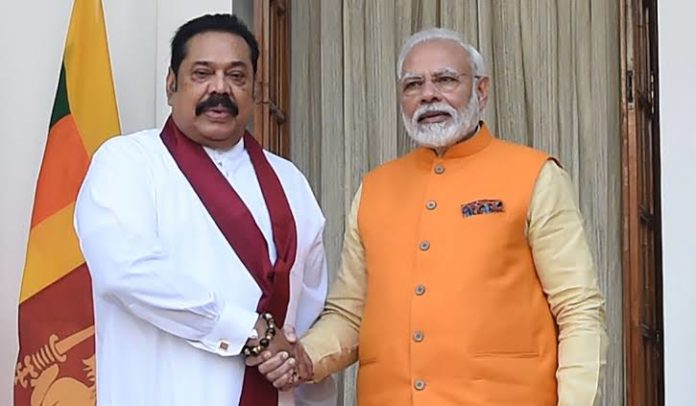
New Delhi (NVI): Prime Minister Narendra Modi and his Sri Lankan counterpart Mahinda Rajapaksa will hold a virtual bilateral summit on September 26, the Ministry of External Affairs today said.

“The bilateral summit will give an opportunity to the two leaders to comprehensively review the broad framework of the bilateral relationship soon after the Parliamentary elections in Sri Lanka and in the context of the time-tested friendly ties between the two countries,” the Ministry of External Affairs (MEA) said in a statement.

This virtual summit will be the first official interaction between the leaders after they met in New Delhi in February this year.

Earlier last week, Sri Lankan President Gotabaya Rajapaksa and Prime Minister Mahinda Rajapaksa had telephoned and conveyed their birthday wishes to PM Modi.

They expressed strong desire and commitment to further strengthen the relationship between the two neighbouring countries.

-RJV

Coronavirus cases surpass 31.5 mn globally, US death toll tops 2 lakh

Coronavirus cases

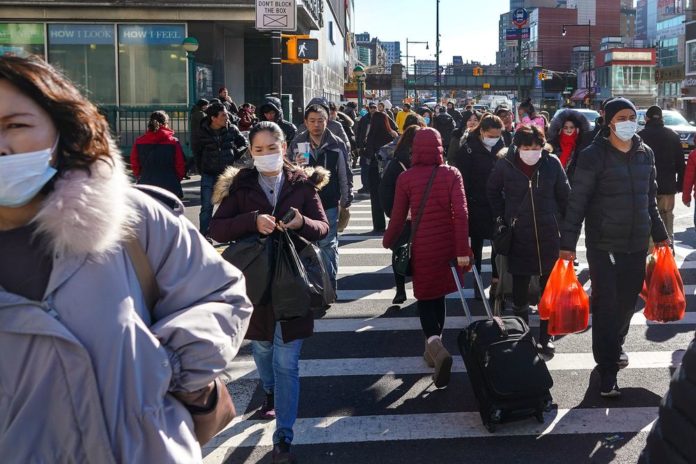
New Delhi (NVI): More than 31.5 million people around the world have been diagnosed with the novel coronavirus and almost 9,69,000 have died, according to Johns Hopkins University. More than 21.6 million people have recovered.

The US coronavirus death toll passed the grim milestone of 2 lakh, the highest in the world. According to a tally, at least 2,00,786 Americans have died of Covid-19 since the pandemic started in March, that is about one-fifth of the global death toll.

Brazil’s coronavirus infections are nearing 4.6 million while the death toll surpassed 1,38,000 in the country.

Mexico’s confirmed coronavirus caseload rose to 7,05,263 on Tuesday, along with a reported death toll of 74,348. Authorities reported 4,683 new cases along with 651 deaths in the last 24 hours.

In Netherlands, coronavirus cases hit 13,471, an increase of 60 per cent on the 8,265 cases reported the week prior.

People arriving in Italy from Paris and seven other areas of France now have to undergo mandatory coronavirus tests. The move comes amid rising infections in France.

Iran reported a record daily rise in infections. A further 3,712 positive cases took the tally to 4,29,193.

Jordan reported its highest daily count of positive cases as another 634 positive cases took the tally to 5,679.

The number of confirmed coronavirus cases in Germany increased by 1,769 to 2,75,927. The reported death toll rose by 13 to 9,409, the tally showed. In recent weeks, cases have consistently been over 1,500 after falling to below 500 between June and July.

Mainland China reported 10 new Covid-19 cases as of September 22, up from 6 a day earlier, the country’s national health authority reported. The total number of confirmed Covid-19 cases for mainland China now stands at 85,307, while the death toll remained unchanged at 4,634.

-CHK

DCGI issues guidelines for pharma companies developing Covid-19 vaccine

vaccine
(File/Representational image)

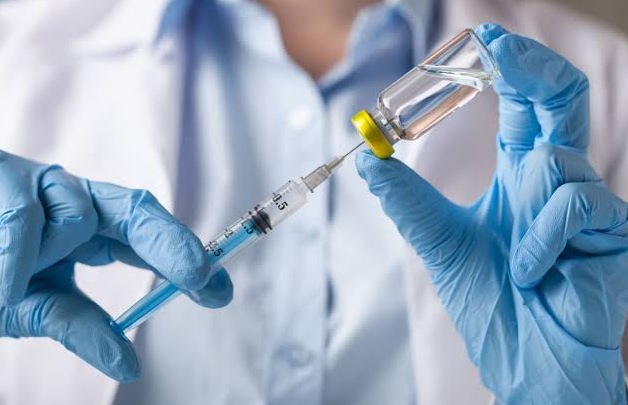
New Delhi (NVI): The Drugs Controller General of India (DCGI) has issued new guidelines focussing on safety, immunogenicity and efficacy parameters for pharma companies who are manufacturing COVID-19 vaccines.

According to the new guidelines, a COVID-19 vaccine candidate should have at least 50 per cent of efficacy in the Phase 3 clinical trial for it to be widely deployed.

Furthermore, the pharma companies developing the vaccines must provide adequate data informing the potential risk of vaccine-associated Enhanced Respiratory Disease (ERD), the guideline said.

DCGI has also asked the pharma companies to keep pregnant women and women of childbearing potential in mind as they are developing the vaccines.

“Safety assessments throughout clinical development and all pregnancies in study participants for which the date of conception is prior to vaccination or within 30 days after vaccination should be followed for pregnancy outcomes, including pregnancy loss, stillbirth, and congenital anomalies,” it said.

Under the guidelines the DCGI has urged the pharma companies to present a final analysis plan before closing the trial database. “This should include any planned interim analyses, which should be adequately addressed in terms of purpose, timing, and any statistical adjustments required,” it stated.

“If a trial fails to meet the predefined criteria for superiority and/or non-inferiority with respect to any of the antigenic components, the possible reasons for the result and the clinical implications of it should be carefully considered before proceeding with clinical development or licensure,” DCGI said.

Moreover, there are three things for a vaccine to develop—the safety, immunogenicity, and the efficacy, World Health Organization (WHO) guideline says that if we can get more than 50 per cent efficacy than it is an accepted vaccine.

“For respiratory viruses, we by no means get 100 per cent efficacy. We’re aiming for 100 per cent efficacy however might get 50-100 per cent,” said Balram Bhargava, Director-General, ICMR, while responding to a query on the efficacy of COVID-19 vaccine.

-RJV

India’s COVID tally crosses 56-lakh mark, death toll at 90,020

corona
(File/Representational image)

New Delhi (NVI): India registered a single-day rise of 83,347 new cases of coronavirus in the past 24 hours, taking the overall caseload to 56,46,011, Union Health Ministry confirmed.

The country’s death toll has gone up to 90,020 with 1,085 new fatalities being reported during this period.

So far, 45,87,614 patients have recovered all over the country, while active cases stands at 9,68,377. The recovery rate also improves further to 80.86 per cent.

In terms of total number of cases, Maharashtra continues to be the worst affected state with 12,42,770 coronavirus cases followed by Andhra Pradesh with 6,39,302 cases, Tamil Nadu with 5,52,674 positive cases.

The other worst affected states includes Karnataka (5,33,850), Uttar Pradesh (3,65,173) and Delhi (2,53,075).

In terms of fatalities, Maharashtra tops the tally with 33,407 deaths followed by Tamil Nadu 8,947, ministry said.

The death toll in the national capital surged to 5,051 while another 2,16,401, patients have recovered in the city so far, healthy ministry data shows.

According to the Indian Council Medical Research (ICMR), a total 6,62,79,462 samples tested up to September 22 for COVID-19. Of these, 9,53,683 samples were tested yesterday.

Meanwhile, the Delhi government has said it will challenge the High Court’s order staying reservation of 80 percent ICU beds for COVID-19 patients in 33 private hospitals.

-RJV

J&K’s Covid tally hits 66,261 as 18 more die, 1,235 test positive

Over 3,200 cops COVID positive in J&K and 15 succumbed to virus
File photo

Abid Bashir

Srinagar (NVI): Jammu and Kashmir today recorded 1,235 fresh infections, taking the tally of positive cases to 66,261 in the Union Territory while 18 more people died due to virus, pushing the death toll to 1,042.

Of the total 66,261 cases, 42,059 are from Kashmir and 24,202 from Jammu division.

Officials said that among 1,235 new cases, 499 belong to Kashmir division while 736 are from Jammu division, adding that the total number of positive cases in Kashmir division has reached to 42,059 including 32,277 recoveries and 789 deaths.

The total number of positive cases in Jammu division has reached 24,202 including 11,457 recoveries and 253 deaths.

The UT health officials said that total number of active cases in J&K is 21,485 including 8,993 from Kashmir division and 12,492 from Jammu division.

With 1,619 more recoveries, the tally of total recoveries in the UT has reached 43,734 which is 66.002 percent of the total cases and was over 78 percent over two weeks back.

Notably, the active cases have reached over 21,000 in J&K. Active cases in Jammu division are more than recovered cases.

“Cases tested positive in J&K include 210 from Srinagar, 59 from Budgam, 30 from Baramulla,  62 from Pulwama, 28 from Anantnag,  36 from Bandipora, 22 from Kupwara, 21 from Ganderbal, 12 from Kulgam and 19 from Shopian in Kashmir division while as 736 from Jammu division include 253 from Jammu, 68 from Rajouri, 64  from Udhampur,  41 from Kathua, 98 from Doda, 52 from Samba, 73 from Poonch, 35 from Ramban, 15 from Reasi and 37 from Kishtwar,” as per th daily Covid bulletin.

Notably, in the last 24 hours, 18 persons who were tested positive for COVID-19 have died which include 11 from Kashmir division and seven from Jammu division.

As per media bulletin, patients who have died include four from Srinagar, three from Anantnag and two each from Baramulla and Bandipora in Kashmir division while 7 from Jammu division include five from Jammu district and two from Doda.

As per the daily information bulletin, 5,51,008 persons in Jammu and Kashmir are under observation while 28,480 persons have been kept under home quarantine. Besides that, 21,485 persons are in isolation.

Apart from that, 4,38,048 persons have completed surveillance period and 61,953 persons are under home surveillance.

So far, results of 14,36,409 samples are available out of which 13,70,148 tested negative while 66,261 tested positive. Among positive cases, 21,485 are active, 43,734 persons have recovered and 1042 persons have died.

-ARK

Indian Rlys extends MoU with IIT Roorkee for undertaking joint R&D

New Delhi (NVI): Indian Railways has renewed an MoU with Indian Institute of Technology (IIT) Roorkee along with IIT Kanpur and IIT Madras to foster cutting-edge joint collaborative research.

The MoU has been extended to intensify outreach to academia and industry to leverage the domain knowledge and expertise for undertaking core and fundamental research for the development of new technologies and applications for use on the Indian Railways network, according to a statement released by IIT Roorkee.

The MoU will facilitate research in the core area of track, bridges and structures, civil infrastructure of high-speed rail, bridges, structures and health monitoring, track management system, remote monitoring of railway assets, among others through the Centre for Railway Research (CRR) sanctioned by the Ministry of Railways for undertaking core and fundamental research.

The MoU was signed between Alka Arora Misra, Principal Executive Director (T&MPP), Ministry of Railways and Manish Shrikhande, Dean, Sponsored Research and Industrial Consultancy, IIT Roorkee.

“The Indian Railways has witnessed a paradigm shift in organizational structure with segregation of management and research and development cadres. Research and Development is our priority and it can be successful only if it is fully integrated with the on-ground situation. We look forward to a long-lasting partnership to foster cutting-edge research that will herald a transformation of Indian Railways.

“Going forward, we also plan to restructure RDSO on lines of Defence Research and Development Organization (DRDO) and Indian Space Research Organization (ISRO)” said Vinod Kumar Yadav, Chairman& CEO, Railway Board.

“The role of IITs will be crucial resolving key technical concerns of Indian Railways. Ensuring the efficiency of rolling stock through minimum heat dissipation, minimum dust accumulation and minimum vibration as well as technological advancements such as remote condition monitoring in operations management are among our key challenges.

“I am confident that this MoU will go a long way in fulfilling aspirations of Indian Railways,” said Rajesh Tiwari, Officer on Special Duty (Safety) who was earlier the Member, Traction, Indian Railways.

The MoU envisages a multi-disciplinary approach for conducting the research through engagement with industry (Startups, SME, MSME, etc.) with the focus on time-bound delivery at the Technology Readiness Levels of prototyping. Ministry of Railways and RDSO will provide necessary technical inputs along with system requirements based on the intended applications including the field data available with railways.

“I would like to thank CEO& Chairman Railway Board Shri Yadav for organizing this event and facilitating continuation of our ongoing collaboration. We value our partnership with Indian Railways and have provided a dedicated space for the Centre for Railway Research (CRR) to implement railway related research activities. IIT Roorkee’s expertise can also be leveraged for Masters level academic programs for senior railway officials which will facilitate the objectives of this MoU,” said Prof. Ajit K Chaturvedi, Director, IIT Roorkee

The MoU mandates the setting up of the apex steering committee consisting of senior officials, faculty members and experts of both institutions to be chaired by DG, RDSO and co-chaired by Director, IIT Roorkee. A Programme Advisory Committee (PAC) would also be established comprising officers from Indian Railways and faculty members of IITR to be chaired by ADG, RDSO and co-chaired by Dean (SRIC), IIT Roorkee.

PAC will administer, monitor and supervise all the R&D related activities under this MoU. A Divisional Railway Manager, Moradabad will also be co-opted in the PAC for ensuring the timely completion of all the activities under MoU.

The MoU also mandates periodic monitoring by both institutions to review the progress made in R&D projects. It empowers the Centre for Railway Research to facilitate manpower training and explore the possibility of offering degree programs, postgraduate programs and Ph.D. programs in research areas related to Railways through the sponsored research avenue of IIT Roorkee.

It will also involve CRR, IIT Roorkee research projects and design and offer appropriate courses and electives related to Railway technology through mutual discussions.

MoUs were also renewed between Indian Railways and IIT Kanpur as well as Indian Railways and IIT Madras.

Indian Railways is one of the largest railway systems in the world transporting 8.397 billion passengers and over 1000 million tons of freight annually.

It is witnessing a major technological transformation involving modernization and up-gradation of its assets including track infrastructure, bridges, rolling stock and signaling infrastructure. It is also working on the development and induction of new technologies in the field of condition monitoring, predictive maintenance systems, data analytics, and much more.

Speed up-gradation Projects on core routes of the network are also being taken up in Mission-mode by the Ministry of Railways, IIT-Roorkee said in a release.

-ARK

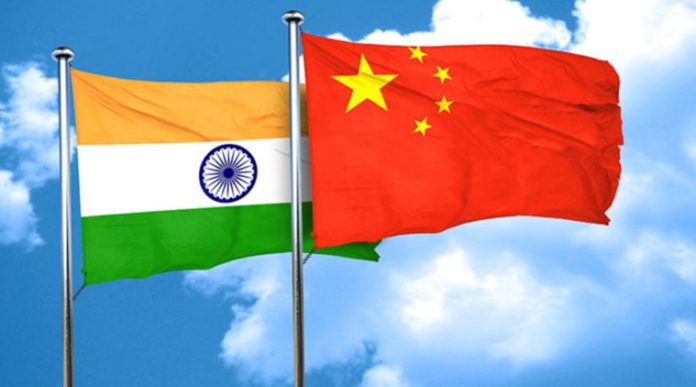
India, China agree to ‘strengthen communication’, ‘stop sending more troops’

Ladakh

New Delhi (NVI): Amid an escalating border row, India and China in the sixth round of senior commanders’ meeting have agreed to strengthen communication on the ground, avoid misunderstandings and misjudgments, stop sending more troops to the frontline, according to a joint statement, released by the Indian Army.

Top military commanders of India and China held another round of talks yesterday, aimed at defusing the situation which threatens to escalate.

The Lieutenant General-level meeting was held on the Chinese side of the LAC, near the traditional Chinese Border Post in Moldo in the eastern Ladakh sector. A Joint Secretary from the Ministry of External Affairs was also part of the Indian delegation.

According a joint statement released by the Army, the two sides had candid and in-depth exchanges of views on stabilizing situation along LAC in India – China border areas. They also agreed to refrain from unilaterally changing situation on ground, and avoid taking any actions that may complicate the situation.

The two sides also agreed to hold the next (seventh) round of military commander-level meeting as soon as possible, “take practical measures to properly solve problems on the ground, and jointly safeguard peace and tranquility in the border area.”

This was the sixth round of military level talks between the two sides since China launched aggression in May to change the status quo on the LAC.

The tense faceoff has already seen an incident of physical combat on June 15, in which India lost 20 soldiers, including a Colonel. Chinese soldiers also died in the incident but the Chinese government has not revealed the numbers.

An incident of Chinese troops firing in the air, first such instance in 45 years, also took place on August 29 after an attempt by the Peoples Liberation Army of China to evict Indian troops from a hill top was thwarted.

The earlier rounds of talks, including at the levels of National Security Advisers, Foreign Ministers and Defence Ministers, have not yielded the desired results due to China’s belligerence.

The statement comes more than a week after Indian and Chinese foreign ministers reached an agreement in Moscow on a five-point agreement to resolve the border standoff.

In a meeting between Foreign Minister S Jaishankar and his Chinese counterpart Wang Yi in Moscow on September 10 on the sidelines of the Shanghai Cooperation Organisation (SCO) meet, the two sides had reached a five-point agreement on defusing tensions.

The agreement included measures like quick disengagement of troops, avoiding action that could escalate tensions, adherence to all agreements and protocols on border management and steps to restore peace along the LAC.

However, China has not implemented the agreement, nor is it showing any inclination to do so.

India has been maintaining that the tensions can reduce once China sincerely undertakes complete disengagement and pulls back its troops from all the friction points. However, China, instead of withdrawing its Army, has been scaling up the number of its troops and military hardware along the LAC. India too has carried out the mirror deployment of troops and weapon systems to meet any eventuality.

As the standoff seems to be a long haul, the Indian Army has made appropriate arrangements for its troops to see through the extreme winter conditions in the mountainous border areas, including special winter clothing and tents.

-ARK

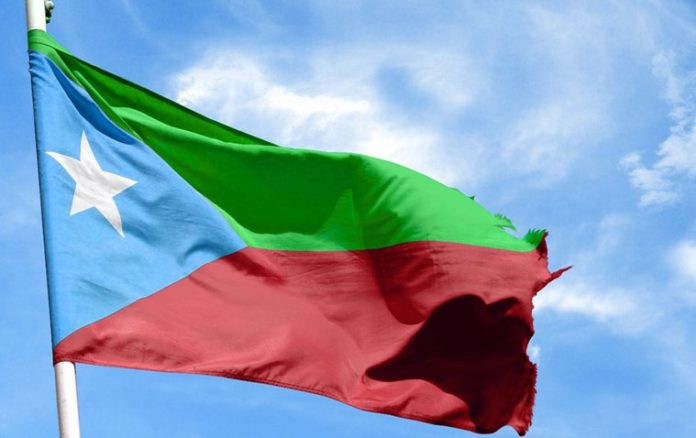
Balochistan Liberation Charter translated to Hindi, Gujarati, Marathi and Punjabi

The Balochistan flag

New Delhi (NVI): Balochistan Liberation Charter or BLC, a guide for the Baloch people to regain their inalienable democratic rights of freedom and independence from an oppressing Pakistan, is now available in Hindi, Gujarati, Marathi and Punjabi languages.

This is an effort for the Baloch voices to be heard on a larger platform as Balochistan struggles for freedom from a repressive Pakistan. The charter has been translated by supporters of Baloch freedom struggle from India. The charter is also available in English, Brahui and Farsi (Persian) languages.

India has always welcomed Balochistan’s freedom struggle and advocated its right to resist Pakistan’s illegal occupation and raise voice against increasing human rights violations by Islamabad.

The development was confirmed by Free Balochistan Movement (FBM), a political party campaigning to regain independence of Balochistan.

“Now @BaluchistanLC is also available in #Hindi, #Gujarati, #Marathi & #Punjabi languages. We thank our Indian friends & well wishers that they have put a lot of time & effort in translating BLC. We are looking forward to translate BLC in more languages. http://balochistanliberationcharter.com,” read a tweet by FBM.


The Balochistan Liberation Charter (BLC) is both a roadmap and a contract that guarantees the Baloch nation that there will be democracy, justice and freedom for all the citizens of Balochistan. It is also meant to inform the international community about the kind of state the Baloch people are aspiring to establish, writes Sobdar Baloch, a journalist and a human rights activist who associated with the Free Balochistan Movement.

According to Baloch, the ongoing struggle for independence is with the intention to establish a country whose constitutional make-up will be premised on the tenets of democracy, secularism, liberty and equality; qualities that have hardly been seen in the political dispensations in Pakistan at any given time.

Balochistan is the largest province of Pakistan occupying about 45 per cent of the territory and bordering Iran. The province is rich in natural resources. It is for this reason that Pakistan is dependent on the province in the wake of its dwindling economy and is exploiting its resources with China at its back, through China Pakistan Economic Corridor (CPEC).

The BLC also addresses some very important issues including the relations between state and religion to clear the aim of Baloch struggle for liberation.

-ARK

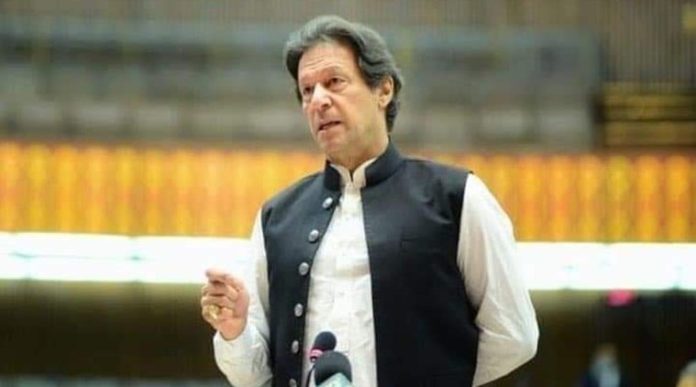
Imran Khan on shaky wicket

COLUMN

-By RC GANJOO

Eventually, all opposition parties in Pakistan have rolled up their sleeves against Imran Khan to get rid of his Pakistan Tehreek-e-Insaf government.

After a series of brainstorming discussions on the dwindling political situation in Pakistan, all opposition political parties finally reached the conclusion in All Parties Conference (APC) on 20th Sept and officially announced the name of a new front Pakistan Democratic Movement (PDM) against the federal government.

The initiative of bringing all opposition on the same page was taken by Jamiat Ulema-e-Islam (F) chief Maulana Fazlur Rehman. He stressed the need for chalking out a charter, similar to the Charter of Democracy inked by the PPP and the PML-N in 2006, to ensure that the opposition parties worked towards the same goals and abided by the agreement.

In a joint news conference of PDM addressed by, Pakistan People’s Party chief Bilawal Bhutto Zardari, Pakistan Muslim League (Nawaz) President Shehbaz Sharif and Jamiat Ulema-e-Islam (F) leader Maulana Fazlur Rehman was unanimous   that the country could no longer bear Imran Khan at the helm. Maulana Fazlur Rehman said, “The alliance is aimed at getting rid of the incompetent government. The alliance will run the nationwide protest movement in an organised and coordinated manner.”

In a resolution passed by the PDM — an “alliance structure which will lead and guide nationwide protests against the anti-public and anti-nation the government in a disciplined and integrated manner”. The campaign against Imran Khan will start countrywide in which lawyers, traders, farmers, labourers, students, civil society, media and general public will participate. The protest against Imran Khan will be in a phased manner.

According to the opposition parties’ agreement, joint rallies will be held in Karachi, Quetta, Peshawar, and Lahore in the first phase in October and November.

Major rallies and demonstrations will be held in provincial capitals in December 2020. A full-fledged countrywide protest and Long March towards Islamabad will be held in January 2021.

The resolution urged that the institutions should not interfere in politics. “We call for new elections and a reduction in prices of essential commodities without any outside intervention. There should also be electoral reforms,” the JUI-F chief said.

The PDM rejected the option of the Presidential System and blamed the government for the fall of Kashmir. The meeting also called for lifting the “worst restrictions” on media in history and dismissing cases against journalists. The National Action Plan, CPEC, 18th Amendment, the supremacy of parliament, restoration of local bodies, cuts in the higher education budget, Aghaz-e-Haqooq (provision of rights initiative) Balochistan, restoration of civil authority in place of Frontier Corps were also part of the resolution.

The resolution demanded the formation of a Truth Commission to document the true history of Pakistan from 1947 to date.

The JUI-F chief said the incidents of terrorism had increased in the country due to the non-implementation of the National Action Plan, adding the inexperienced government. He blamed the government for jeopardizing Pak-China Economic Corridor. The resolution unanimously demanded holding of elections in Gilgit-Baltistan transparently. The PDM also ratified the resolution of the Pakistan Bar Council calling for an end to the disappearance of Pakistani nationals.

We get swayed by narrative on COVID tally but forget about 45 lakh recoveries: Health Min

positivity rate
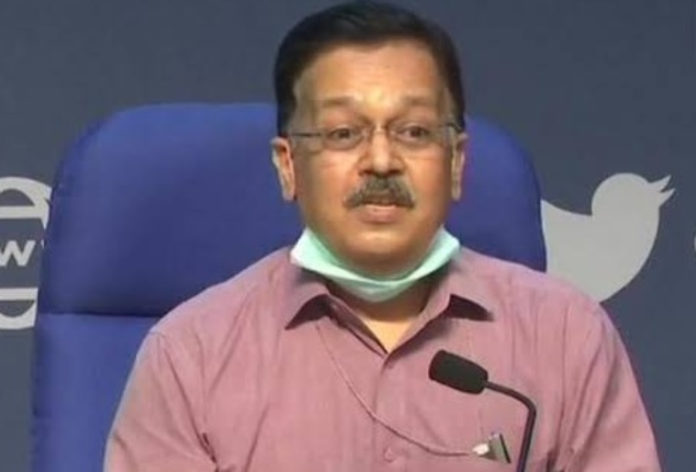
Health secretary Rajesh Bhushan

New Delhi (NVI): We get swayed by the narrative that India has over 50 lakh coronavirus cases, but we forget that nearly 45 lakh people have already recovered from the disease, health secretary Rajesh Bhushan said.

India today crossed the 5.5 million mark in terms of number of coronavirus disease cases. But the Union Health Ministry said that the country’s active cases are less than a fifth of the total tally.

While addressing a press conference, Bhushan said, “The number of Covid-19 related fatalities in India per million population is among the lowest in the world. It stands at 64 for India and 123 for world.”

He also said that daily recoveries from Covid-19 are more than the number of new infections reported per day since past four consecutive days.

“India has highest number of recovered cases of Covid-19 in the world – 44,97,867,” he added.

The ministry had earlier said that the country registered over 1 lakh Covid-19 recoveries in the last 24 hours, the highest number of single-day recoveries.

In addition to this, the government’s data said that India’s Covid-19 cases share is 17.7 per cent of global infections, while those who have recuperated are 19.5 per cent of total recoveries in world.

Furthermore, the Case Fatality Rate (CFR) in the country currently stands at 1.59 per cent.

According to the World Health Organisation (WHO), CFR is a measure of the severity of a disease and is defined as the proportion of reported cases of a specified disease or condition which are fatal within a specified time.

With a spike of 75,083 new cases and 1,053 deaths in the last 24 hours, India’s Covid-19 count crossed 55 lakh today.

-CHK

MUST READ