Tuesday, October 6, 2026
Home Blog Page 1177

Parliament passes Institute of Teaching and Research in Ayurveda Bill

Lok Sabha

New Delhi (NVI): The Rajya Sabha today passed the Institute of Teaching and Research in Ayurveda Bill, 2020, which was moved by Union Health Minister Harsh Vardhan in the absence of Ayush Minister Sripad Naik.

The bill seeks to establish an Institute of Teaching and Research in Ayurveda (ITRA), in Jamnagar, Gujarat which will be given the status of an Institution of National Importance (INI).

However, the proposed Institute will be situated on the campus of Gujarat Ayurved University, Jamnagar.

The bill has the provision to merge three Ayurveda institutes situated in Jamnagar, Gujarat into one. The institutes are, the Institute of Post-Graduate Teaching and Research in Ayurveda, Shree Gulabkunverba Ayurved Mahavidyalaya and the Indian Institute of Ayurvedic Pharmaceutical Sciences, the Ministry of AYUSH said in a statement.

These institutions had come up over the past many decades, and together made a unique family of Ayurveda institutions existing in close proximity, it said.

The ministry said it is expected that the enactment of the proposal will further provide autonomy to the institute to develop patterns of teaching in undergraduate and postgraduate education in Ayurveda and Pharmacy.

The synergies among the different constituent institutions will help ITRA to demonstrate high standards of such education and to emerge as a lighthouse institution to the entire AYUSH Sector, it added.

It is also expected to provide the highest level of training of personnel in all important branches of Ayurveda including Pharmacy, and to take up in-depth study and research in the field of Ayurveda, the ministry said.

Earlier, the Bill was passed in Lok Sabha’s budget session on March 19.

The ministry informed that, ITRA will be the first institution with INI status in the AYUSH Sector, and this will enable the institution to be independent and innovative in the matter deciding course content and pedagogy.

The decision comes at a time when global interest in health solutions based on traditional wisdom is at an unprecedentedly high level and ITRA is poised to take Ayurveda education to new vistas, it added.

-RJV
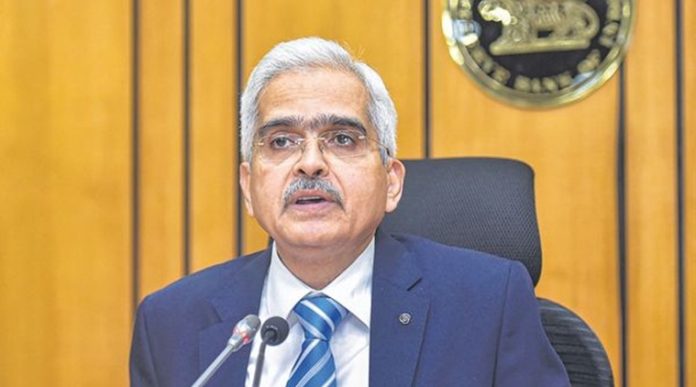
Indian economy likely to recover gradually amid COVID-19: RBI Guv

Economic growth
RBI Governor Shaktikanta Das

New Delhi (NVI): The Indian economy, reeling under the impact of coronavirus disease (Covid-19) pandemic, will recover gradually, Reserve Bank of India (RBI) Governor Shaktikanta Das today said.

While addressing a virtual meeting of FICCI National Executive Committee, Das said, “Economic recovery is not fully entrenched; it will be gradual.”

The central bank chief also said that the RBI stands battle-ready to take whatever steps that are needed to be taken for the economy.

Persistently large liquidity infusion by RBI has ensured large borrowing by the government at a low rate and in a non-disruptive manner, the RBI governor said.

Referring to the GDP contraction of 23.9 per cent in the first quarter (Q1), Das said that it is the “reflection of the ravages of the Covid-19”.

He further noted that high-frequency indicators like agricultural activity, Purchasing Managers Index for manufacturing, certain private estimates for unemployment, point to some stabilisation of economic activity in the second quarter of the current year.

“Contractions in many other sectors are simultaneously easing,” he added.

He said that the central bank’s efforts have led to the softening of bond yields. Das also said that the RBI is very carefully monitoring the markets and will take further actions as and when required. The RBI governor said that the current bond yields are lowest in the past 10 years due to surplus liquidity.

The government and RBI have been taking measures for mitigating the impact of pandemic on the economy by introducing stimulus packages, reforms, and interest rate cuts.

However, the revival is expected to take time as there is still high uncertainty regarding Covid-19 cases across the country.

-CHK

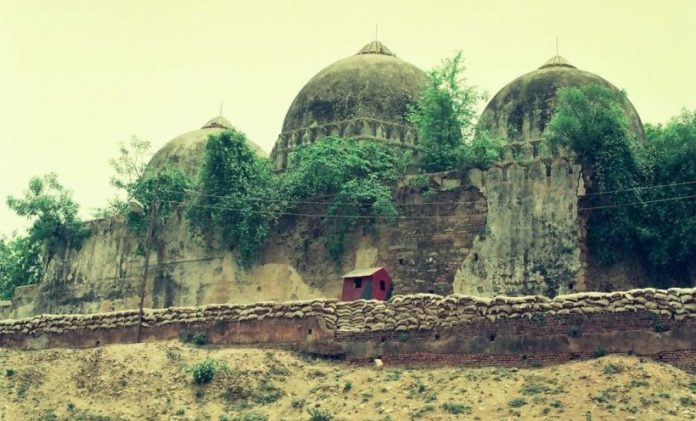
Babri Masjid demolition verdict on Sept 30

New Delhi (NVI): The Special CBI judge Surendra Kumar Yadav will pronounce judgment in Babri Masjid demolition case on September 30.

The top court has directed all the accused to remain present in the court on that day for hearing the judgment.

There are 32 accused in the case including former deputy Prime Minister LK Advani, BJP leader MM Joshi, Kalyan Singh, Uma Bharti and Vinay Katiar.

On August 19, a bench of the apex court, headed by Justice Rohinton Fali Nariman, had passed an order extending the deadline for pronouncing the judgement till September 30.

The top court had, in its last order, granted the trial court CBI judge in Lucknow time till August 31 to pronounce the judgement.

However, the court order came on a plea filed by special judge SK Yadav, who is hearing the matter related to the demolition of Babri Masjid, seeking more time to pronounce the judgement in the cases.

-RJV

Delhi BJP chief tests COVID positive

Delhi BJP president Adesh Gupta

New Delhi (NVI): Delhi BJP president Adesh Gupta today said he has tested positive for COVID-19.

Gupta has previously tested negative but got tested again due to ill-health conditions over a week

“Last week, I took a COVID test after having a light fever. Its report was negative. I was tested again as I was feeling unwell. The report has now come as positive,” he said in a tweet in Hindi.

Gupta said he was in quarantine during the last week and advised those who had come in contact with him to get themselves tested.

Meanwhile, the Delhi BJP office on Pant Marg was closed for sanitisation on Wednesday, a day after 17 people there tested positive for COVID-19.

-CHK

International tourism drops 65% in the first half of 2020: UN

Representational image

New Delhi (NVI): International tourist arrivals dropped by 65 percent during the first half of 2020 when compared to last year, the return to 2019 levels may take two to four years, according to UNWTO report.

The World Tourism Organization (UNWTO) said that this is an unprecedented setback due to the closure of borders and travel restrictions implemented in the world to fight against the COVID-19 pandemic.

According to UNWTO report, the collapse of the demand for international travel from January to June 2020 caused the loss of 440 million international arrivals and around USD 460 billion in export earnings from tourism.

That level of decline in incomes is five times that of the 2009 global financial and economic crisis, it added.

“This latest report shows that the lockdowns introduced during the first half of the year have had a massive impact on international tourism. The sharp and sudden fall in arrivals has placed millions of jobs and businesses at risk,” the UNWTO said.

Moreover, the report stated international tourist arrivals plunged 93 percent in June when compared to 2019. “The return to 2019 levels in terms of tourist arrivals would take between 2 to 4 years,” it added.

The organization also noted that despite the gradual reopening of many destinations since the second half of May, the anticipated improvement in international tourism numbers during the peak summer season in the Northern Hemisphere did not materialize.

The Asia-Pacific region was the most affected by the current situation with a 72 percent downturn in tourists received in the first half of 2020. It was followed by Europe with a decrease of 66 percent, Africa and the Middle East (57 per cent) and the Americas (55 per cent).

Furthermore, the organization said it seems likely that reduced travel demand and consumer confidence will continue to impact results for the rest of the year.

In May, UNWTO outlined three possible scenarios, pointing to declines of 58 percent to 78 percent in international tourist arrivals this year.

The organization further stated, current trends through August point to a drop in demand closer to 70 percent, especially now as some destinations re-introduce restrictions on travel.

UNWTO Secretary-General Zurab Pololikashvili said, “Safe and responsible international travel is now possible in many parts of the world, and it is imperative that governments work closely with the private sector to get global tourism moving again. Coordinated action is key.”

-RJV

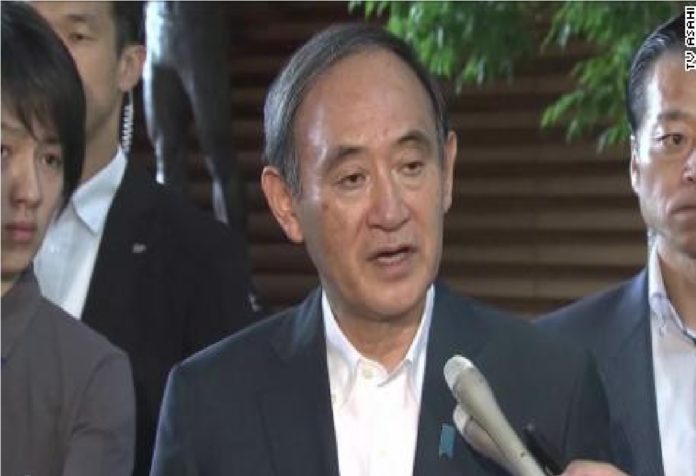
Yoshihide Suga formally elected as Japan’s new Prime Minister

Japan's Prime Minister Yoshihide Suga

New Delhi (NVI): Japanese ruling party leader Yoshihide Suga has been elected as the new Prime Minister in a in a parliamentary vote Wednesday, becoming the country’s first new premier in nearly eight years.

Suga’s ruling Liberal Democratic Party used its majority in the lower house of parliament, which is empowered to pick the premier, and elect him to lead the world’s third largest economy as it tries to recover from the coronavirus pandemic.

Following the vote, Suga is due to enter the Prime Minister’s Office as the new leader and name his cabinet later in the day.

The 71-year-old Suga – the son of a strawberry farmer – won the leadership contest of the governing Liberal Democratic Party (LDP) on Monday and was all but assured the top job when his appointment went to a vote in parliament given the party’s two-thirds majority.

Suga, who previously served as Abe’s right-hand man, has pledged to keep in place his former boss’s flexible fiscal stance and ultra-easy monetary policy known as “Abenomics.”

India’s Prime Minister Narendra Modi today sent a congratulatory message to Japan’s new prime minister.

“Heartiest congratulations to Excellency Yoshihide Suga on the appointment as Prime Minister of Japan @kantei. I look forward to jointly taking our Special Strategic and Global Partnership to new heights. @sugawitter” Modi said in a Twitter post.

-CHK

Pak targets forward areas in Gurez sector of J&K’s Bandipora, 2nd day in a row

Ceasefire
Representational image

Abid Bashir

Srinagar (NVI): In yet another ceasefire violation, Pakistani troops today resorted to unprovoked firing along the Line of Control (LoC) in Gurez sector of north Kashmir’s Bandipora district, targeting forward locations at Bagtore area, defence officials said.

The fresh ceasefire violation (CFV) in Gurez, Bandipora comes a day after the Indian Army recovered a US-made assault rifle and other arms and ammunition in the same district.

Defence officials said that the Pakistani army initiated firing with small arms and mortar shelling along the LoC in Bagtore sector at 11:30 am today.

They said that Pakistani troops targeted forward defence locations in Bagtore.

“Indian Army is giving a strong and befitting response to the ceasefire violation,” a defence official said, adding that “heavy shelling was going on from both sides.” However, there was no immediate report of any causality on either side, he added.

After the abrogation of Article 370 on August 5 last year, J&K has witnessed a huge spurt in CFV the along the LoC, taking toll on civilians and also on the security forces especially army men deployed on the forward posts. Yesterday, three soldiers including an army major were injured in J&K’s Rajouri district in the CFV of which one rifleman later succumbed.

Official figures reveal that this year, 1,840 CFVs were recorded in borders of J&K along the LoC and IB, the highest ever in the past three years.

-ARK

‘Mysterious death’ of youth sparks row in J&K’s Baramulla

Indianapolis
Representational Image

Abid Bashir

Srinagar (NVI): The death of a 23-year-old youth in Sopore area of north Kashmir’s Baramulla district today sparked a row, with the police claiming that the deceased was an Over Ground Worker (OGW), who was arrested with two grenades and that he fled while being taken to recover more incriminating material.

Police have said that the OGW fled during the course of investigation when he was taken to a spot in Chairdaji area of Tujjar-Sharief last night and that his dead body was found near a stone quarry later.

The deceased youth, identified as Irfan Ahmad Dar (Photo via arrangement)

The family of the youth, however, rejected the police statement and alleged that their son was dubbed as a militant and was killed in police custody.

A police statement issued here said, “On September 15 at around 12:45 pm, one OGW identified as Irfan Ahmad Dar (age about 23/24 years), R/O Sidiq-Colony, Sopore was apprehended and two Chinese hand grenades were recovered from his possession.”

“In this regard, Case FIR No. 257/2020 U/S 18 ULA (P) Act, 7/27 A Act was registered in Police Station Sopore and investigation taken up,” the police statement read.

“During the course of investigation, a police team visited Chairdaji area of Tujjar-Sharief along with OGW for affecting some more recovery on the disclosure of the OGW,” it added.

The police statement further stated that the OGW, while taking advantage of darkness and terrain, managed to escape, regarding which a separate FIR was registered at Police Station Bomai.

“And during search, the body of OGW was found near stone quarry of Tujjar-Sharief,” the police said, adding that the body was taken to the nearby Primary Health Centre (PHC), wherefrom it was shifted to PCR Kashmir Hospital for fulfilling medical and other legal formalities. “Further investigation is going on,” police said.

However, the family members of the deceased youth have accused police of dubbing their son as a militant and killing him in custody. “I along with my brother Irfan were picked up by police for questioning on September 14 and we were kept separately. I was set free but my brother was kept in the police custody,” said Javaid Ahmed, Irfan’s brother.

He said that his brother has been killed in police custody and that he had no militant links. “My brother is innocent and was a shopkeeper by profession. He was unmarried and that the police claim about the recovery of grenades is nothing but a baseless story,” he said.

Javaid has demanded an impartial independent probe into what he alleged as “the cold-blooded murder” of his brother. “We have CCTV installed at the residence of our main gate and rooms. Let police check whether any militant had visited us. They won’t be able to establish any connection between us and the militancy,” he added.

Meanwhile, the authorities have snapped mobile internet services in the area to prevent any law and order situation.

-ARK

State-wise details of Covid-19 cases in India

(Representational/file photo)

New Delhi (NVI): The total number of coronavirus cases in India today crossed the 5 million mark and reached 50,20,360 after 90,123 new cases were reported in the past 24 hours, according to Union Health Ministry data.

The country’s death toll has gone up to 82,066 after 1,290 new fatalities were reported in the country during this period.

In worst-hit Maharashtra, the COVID-19 cases climbed to 10,97,856, followed by Andhra Pradesh with 5,83,925 cases, and Tamil Nadu with 5,14,208 cases.

Total positive cases in States/UTs:

Andaman and Nicobar Islands- 3,574

Andhra Pradesh- 5,83,925

Arunachal Pradesh- 6,466

Assam- 1,46,575

Bihar- 1,60,871

Chandigarh- 8,592

Chhattisgarh- 70,777

Dadra Nagar Haveli & Diu – 2,783

Delhi- 2,25,796

Gujarat- 1,16,183

Goa- 25,511

Haryana– 98,622

Himachal Pradesh- 10,335

Jammu and Kashmir- 56,654

Jharkhand- 64,439

Karnataka- 4,75,265

Kerala- 1,14,033

Ladakh- 3,499

Madhya Pradesh- 93,053

Maharashtra- 10,97,856

Manipur- 8,210

Meghalaya- 4,036

Mizoram- 1,480

Nagaland- 5,229

Odisha- 1,58,650

Puducherry- 20,601

Punjab- 84,482

Rajasthan- 1,05,898

Sikkim- 2,173

Tamil Nadu- 5,14,208

Telangana- 1,62,844

Tripura- 20,150

Uttarakhand- 34,407

Uttar Pradesh- 3,24,036

West Bengal– 2,09,146

State/UT wise total death toll:

Andaman and Nicobar Islands- 52

Andhra Pradesh- 5,041

Arunachal Pradesh- 13

Assam- 492

Bihar- 836

Chandigarh- 99

Chhattisgarh- 589

Dadra and Nagar Haveli- 2

Delhi- 4,806

Goa- 315

Gujarat- 3,244

Haryana- 1,026

Himachal Pradesh- 90

Jammu and Kashmir- 914

Jharkhand- 571

Karnataka- 7,481

Kerala- 466

Ladakh- 44

Madhya Pradesh- 1,820

Maharashtra- 30,409

Manipur- 47

Meghalaya- 28

Nagaland- 15

Odisha- 645

Puducherry- 405

Punjab- 2,514

Rajasthan- 1,264

Sikkim- 19

Tamil Nadu- 8,502

Telangana- 996

Tripura- 217

Uttarakhand- 438

Uttar Pradesh- 4,604

West Bengal- 4,062

However, a total of 39,42,360 people have been cured or discharged. Total active cases stand at 9,95,933.

-CHK

World Ozone Day: Theme, significance of preservation of ozone layer

Representational image

New Delhi (NVI): The international community is today observing the World Ozone Day (WOD) marking the 35 years of the Vienna Convention for the protection of the ozone layer.

This year’s theme for the World Ozone Day 2020 is “Ozone for life: 35 years of ozone layer protection”.

The year 2020 has been one of many catastrophes, from a global pandemic, natural disasters, raging fires that wreaked havoc with the environment. The importance of preserving and restoring our environment has never been more significant. In order to not add complications in the ozone layer to the list, we must all do our parts for the preservation of the stratospheric layer.

Simply put, life on Earth will not be possible without sunlight, but the energy emanating from the sun is too harmful for anything to survive, when in direct contact with it. The ozone layer is a stratospheric layer that acts as a shield for the earth, protecting it from the sun’s harmful ultraviolet radiation.

The ultraviolet radiation or UV rays emitted by the sun have the potential to cause skin cancer and cataract. These harmful rays also cause significant damage not only to humans but also to plant and marine life.

In 1970, when scientists first discovered the hole in the ozone layer, it was a matter of grave concern. They raised the alarm and informed people on how to best reduce their carbon emissions which are the leading cause for harm to the ozone layer.

With this in mind, the world’s governments banded together and formed the Vienna Convention in 1985. Under the convention, they established the Montreal Protocol which dictated that governments, scientists, and industries work together and cut out 99% of all ozone-depleting substances.

According to the United Nations Environment Programme (UNEP), the ozone layer is recovering and expected to return to pre-1980 values by mid-century all thanks to the Montreal Protocol.

Meanwhile, supporting the Montreal Protocol, the Kigali Amendment, which came into force in 2019, will work towards reducing hydrofluorocarbon (HFCs) and greenhouse gases that have climate-warming potential and are damaging to the environment.

Inger Anderson, Executive Director of UNEP, said, “This convention and its Montreal Protocol united the world to cut out the gases creating a hole in the planet’s ozone layer, critical in shielding us against deadly UV radiation. This model of international cooperation has put the ozone layer on the road to recovery, protecting human and ecosystem health. Such cooperation demonstrates that when people work together, they can fix problems on a global scale.”

“We need this unity of purpose more than ever, as we seek to address nature loss, climate change and pollution in the wake of the COVID-19 pandemic and the discussions on the replenishment of the multilateral fund,” she added.

-CHK

MUST READ