Wednesday, April 22, 2026
Home Blog Page 1221

State-wise details of Covid-19 cases in India

New Delhi (NVI): As India enters the fifth phase of nationwide lockdown, coronavirus cases in the country continue to surge with Maharashtra, Tamil Nadu and Gujarat being the worst affected states.

India is now the seventh worst-hit country by the Covid-19 pandemic with a tally of 1,90,535 cases including 5,394 casualties, according to the World Health Organisation (WHO) coronavirus tracker.

Maharashtra tops the country with the maximum number of coronavirus cases and has reported nearly 67,000 confirmed cases so far.

The first confirmed coronavirus case in India was reported in the state of Kerala on January 30. Since then, the virus has tightened its grip across the country.

Total positive cases in States/UTs:

Andaman and Nicobar Islands- 33

Andhra Pradesh- 3,679

Arunachal Pradesh- 4

Assam- 1,272

Bihar- 3,815

Chandigarh- 293

Chhattisgarh- 498

Dadar Nagar Haveli- 2

Delhi- 19,844

Gujarat- 16,779

Goa- 70

Haryana– 2,091

Himachal Pradesh- 331

Jammu and Kashmir- 2,446

Jharkhand- 610

Karnataka- 3,221

Kerala- 1,269

Ladakh- 74

Madhya Pradesh- 8,089

Maharashtra- 67,655

Manipur- 71

Meghalaya- 27

Mizoram- 1

Nagaland- 43

Odisha- 1,948

Puducherry- 70

Punjab- 2,263

Rajasthan- 8,831

Sikkim- 1

Tamil Nadu- 22,333

Telangana- 2,698

Tripura- 313

Uttarakhand- 907

Uttar Pradesh- 7,823

West Bengal – 5,501

State/UT wise total death toll:

Andhra Pradesh- 62

Assam- 4

Bihar- 21

Chandigarh- 4

Chhattisgarh- 1

Delhi- 473

Gujarat- 1,038

Haryana- 20

Himachal Pradesh- 5

Jammu and Kashmir- 28

Jharkhand- 5

Karnataka- 51

Kerala- 9

Madhya Pradesh- 350

Maharashtra- 2,286

Meghalaya- 1

Odisha- 7

Puducherry- 1

Punjab- 45

Rajasthan- 194

Tamil Nadu- 173

Telangana- 82

Uttar Pradesh- 213

Uttarakhand- 5

West Bengal- 317

A total of 91,819 people have been cured or discharged from hospitals in India. There are around 93,322 active cases currently, according to the Health Ministry.

Jaish module busted in J&K’s Budgam, minor among 6 held

Weapons, cash and drugs recovered from the militant associates. (Photo via arrangement)

Abid Bashir

Srinagar (NVI): Jammu and Kashmir police today said that it has unearthed a “narco-militant module” of Jaish-e-Muhammad terror outfit in central Kashmir’s Budgam district by arresting six militant associates including a minor and recovered large quantities of heroin, money and weapons.

A police official said acting that on a specific input, Budgam police along with the Army and CRPF busted a narco militant module, who were operating in different parts of the Valley, including the Chadoora area in Budgam.

“Six militant associates have been arrested who were a part of this module,” the official said.

A police spokesman said that the arrested militant associates were identified as Mudassir Fayaz, Shabir Ganaie, Sageer Ahmad Poswal, Issaq Bhat of Shopian, and Arshid Thoker. The identity of the sixth one wasn’t revealed as he is a minor, police said.

The spokesman also said that a Chinese pistol, a pistol magazine, four pistol rounds, a grenade, one kg Heroine and Rs 1,55,000 in cash was recovered from the arrested people.

Police further added that as per the initial investigation, the module was working in close connection with militant handlers sitting across the LoC and were involved in “drug trade, the supply of weapons and money to active militants of Jaish outfit operating in various parts of Kashmir.”

Police said that with the arrest of six militant associates, “an interconnection between drug dealers and militants has also been exposed.”

In this regard, an FIR under relevant provisions of UA (P) Act and NDPS Act has been registered in Chadoora police station, Budgam, and an investigation has been taken up.

World Milk Day 2020: History, significance and theme

Representational image

New Delhi (NVI): World Milk Day is observed on June 1 every year, to raise awareness about milk and its importance as a global food.

The day was established by the Food and Agriculture Organization (FAO) of the United Nations and is being observed on June 1 since 2001.

Milk has been consumed for thousands of years. It is an integral part of the daily lives and has an entire industry that revolves around it.

In the past few years, India has become one of the largest producers of milk around the globe with over 150 million tonnes of production and per capita availability of over 300 grams per day.

This year, as the initiative has completed 20 long years, the theme is simply called ’20th Anniversary of World Milk Day’.

Due to COVID-19, no major events have been organised. However, this year activities will be done online to observe the day due to the ongoing pandemic.

The Global Dairy Platform has asked the participants to talk about the benefits of dairy and highlight the problems in accessing milk and dairy products in several parts of the world.

In India too, dairy products are a major part of the people. This Day is celebrated with a lot of enthusiasm and gives the people an opportunity to discuss various aspects of milk and dairy products in the country.

On the occasion, India’s Vice President M Venkaiah Naidu took to Twitter to wish people and said, “Greetings on World Milk Day. The day recognizes the importance of milk as a global food, and celebrates the dairy sector. India being the largest milk producer in the world, dairying holds a special place in our rural economy. #WorldMilkDay.”

The day encourages the benefits of dairy products related to health and nutrition, effectiveness and attainability, and the passion of the sectors and commitment to feeding our communities.

Coronavirus cases surge past 6.15 million globally

Coronavirus cases

New Delhi (NVI): More than 6.15 million cases of coronavirus have been confirmed around the world, while nearly 3,72,000 people have died, according to data from Johns Hopkins University.

At least 2.64 million have recovered so far globally.

In the US, at least 19,788 new coronavirus cases and 600 virus-related deaths were identified in the last 24 hours. The total in the country now stands at 17,90,191 reported infections, including at least 1,04,381 deaths.

In Brazil, more than 5,14,000 infections have been recorded while at least 29,000 people have lost their lives due to the deadly contagion.

Meanwhile, the death toll in Latin America has now exceeded 50,000 with some one million cases reported across the region.

Many countries have now started to ease the restrictions put in place due to the virus, wherein, restaurants, cafes, museums, beaches and swimming pools are due to reopen in Turkey as the government further relaxes its lockdown.

In addition to this, residents of Moscow will be allowed to go out for a walk for the first time in more than two months, from today, while the UK is also preparing to relax its lockdown despite concerns among the government’s scientific advisory body.

In another development, Japan recorded 33 new coronavirus infections and one virus-related death on Sunday, according to the country’s health ministry.

South Korean health authorities identified 35 new coronavirus cases during this period – all but five of which were locally transmitted.

COVID cases in India climb to over 1.9 lakh, death toll at 5,394

New Delhi (NVI): As the nation enters lockdown 5.0, the total number of coronavirus cases in India increased to 1,90,535 with 5,394 deaths from the pandemic, Union Health Ministry confirmed.

At least 91,819 patients have been cured of the virus or discharged.

In the past 24 hours, 8,392 fresh COVID-19 infections were reported, the highest single-day spike in the country.

In terms of total number of cases, Maharashtra continues to be the worst affected state with 67,655 coronavirus cases followed by Tamil Nadu with 22,333 cases and Delhi with 19,844 positive cases.

The other worst affected states are Gujarat (16,779) Rajasthan (8,831) Madhya Pradesh (8,089) and Uttar Pradesh (7,823).

In terms of deaths, Maharashtra tops the tally with 2,286 fatalities, ministry said.

The death toll in the national capital surged to 473 while another 8,478 patients have recovered so far, healthy ministry data shows.

India has now become the world’s seventh worst-hit country in terms of coronavirus cases, according to the World Health Organization (WHO) coronavirus tracker.

Meanwhile, the Railways said it would begin operations of 200 special trains from today and over 1.45 lakh passengers would travel on the first day.

16 pregnant women among 105 new Covid cases in J&K, tally rises to 2,446

Srinagar (NVI): Jammu and Kashmir continue to witness a surge in the Covid-19 positive cases as 105 fresh cases including 16 pregnant women were recorded today, taking the total number of cases in the Union Territory to 2,446.

Officials said that 16 expecting mothers were tested positive that include 10 from Baramulla district, five from Kulgam and one from Anantnag district.

They said that among the new 105 cases, 21 were tested positive at SKIMS, 50 at CD hospital, 2 at JVC Bemina, and remaining at Army’s Command Hospital in Udhampur, besides other private labs.

Among 105 new cases, 90 belong to Kashmir division while 15 are from the Jammu division. The total number of positive cases in Kashmir has now reached 1,943 including 807 recoveries and 25 deaths while the total number of positive cases in Jammu has reached 503 including 120 recoveries and 3 deaths.

The officials said that the total number of active cases in Jammu and Kashmir is 1,491 including 1,111 from Kashmir and 380 from Jammu.

Cases tested positive in J&K include 24 from Anantnag, 17 from Kulgam, 8 from Srinagar, 11 from Budgam, 10 from Kupwara, 2 from Shopian, 15 from Baramulla, and 3 from Pulwama in Kashmir while 15 from Jammu include 6 from district Jammu, 2 from Ramban, 3 from Kathua, 1 from Samba and 3 from Rajouri.

As per official figures, 338 positive cases including five deaths and 122 recoveries are from Anantnag, 294 including four deaths and 26 recoveries are from Kulgam, 280 including 7 deaths and 141 recoveries are from Srinagar, 268 including 75 recoveries are from Kupwara, 232 including 103 recoveries and 5 deaths are from Baramulla, 146 including 134 recoveries and 1 death is from Bandipora, 170 including 108 recoveries and 1 death from Shopian, 110 including 61 recoveries and 2 deaths are from Budgam, 32 including 24 recoveries are from Ganderbal and 73 including 13 recoveries are from Pulwama.

In Jammu division, 136 including 39 recoveries and 2 deaths are from district Jammu, 91 including 15 recoveries are from Ramban, 73 including 20 recoveries are from Kathua, 65 including 25 recoveries and 1 death is from Udhampur, 43 including 11 recoveries from Samba, 38 are from Poonch, 30 including 5 recoveries are from Rajouri, 14 including 3 recoveries are from Reasi, 8 including 1 recovery is from Kishtwar, 5 including 1 recovery is from Doda.

As per the daily information bulletin, 1,72,844 persons in Jammu and Kashmir are under observation while 35,572 persons have been kept under home quarantine. Apart from that, 1,491 persons are in hospital isolation while 45 persons are under hospital quarantine.

According to the bulletin, 86,289 persons have completed the surveillance period and 46,419 persons are under home surveillance.

So far, results of 171,045 samples are available out of which 168,599 have tested negative while 2,446 have tested positive. Among those tested positive, 1,491 are active, 927 persons have recovered and 28 have died.

Indian Railways to start 200 special trains from tomorrow

PRS counter tickets
(Representational Image)

New Delhi (NVI): Over 1.45 lakh passengers are expected to travel on Day 1 of 200 trains starting from tomorrow, even as the country enters the fifth phase of nationwide lockdown which will witness easing of restrictions in a phased manner outside containment zones.

The Indian Railways will be starting these 200 trains in addition to the existing Shramik Special trains being run since May 1 and Special AC trains (30 trains) being run since May 12.

“These trains are on the pattern of Regular Trains. These are fully reserved trains having both AC & Non AC classes,” the Ministry of Railways said in a statement.

“General (GS) coaches have reserved sitting accommodation. There will be no unreserved coach in the train. Normal class wise fare will be charged and for reserved GS coaches (General sitting), being reserved, second seating (2S) fare for reserved trains shall be charged and seat will be provided to all the passengers,” it added.

Around 26 lakh passengers have booked for Advance Reservation Period (ARP) from June 1 to June 30, the Ministry said.

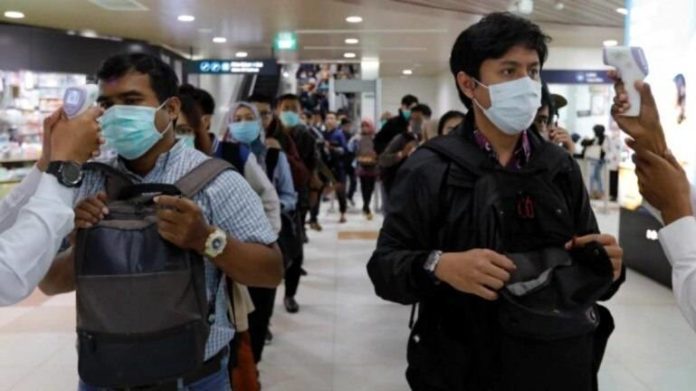
As per the guidelines issued by the Ministry of Railways, in consultation with the Union Health Ministry and MHA, the passengers will have to reach the station 90 minutes in advance to facilitate thermal screening at the station. Only passengers who are found asymptomatic will be permitted to travel.

J&K: 75 pregnant women infected by Covid-19 so far, guidelines issued

Abid Bashir

Srinagar (NVI): At least 75 pregnant women have tested positive for coronavirus in Jammu and Kashmir so far, prompting authorities to issue fresh guidelines in this regard and make it mandatory for all expecting mothers in the UT to go for Covid testing, two weeks ahead of their delivery date.

Strict social distancing measures are already in place in the Union Territory that has witnessed a surge in corona cases in the last few days.

Official figures accessed by NVI suggested that of the total 75 women tested positive so far, two have died before delivering their babies. A majority of the infected women are from Kashmir’s Anantnag district and their common contact was Child and Maternity Care Hospital where the first pregnant woman died along with her twin babies in her womb on May 2.

Medicos opine that pregnant women have a suppressed immune system which makes them prone to the virus.

A health expert working at a Srinagar hospital said that during pregnancy, the upper respiratory tract tends to be swollen due to high levels of estrogen, progesterone and restricted lung expansion, which makes expecting mothers susceptible to respiratory pathogens.

“A pregnant woman who tests positive for the virus should be carefully monitored throughout pregnancy and the postpartum period since they receive anti-viral drug therapy and radiation exposure from CT examinations,” he said, wishing not to be named.

Dr Shabir Sidiqi, Medical Superintendent at the lone maternity hospital Srinagar – Lal Ded – said that pregnant women are prone to Covid-19 as pregnancy weakens the immune system but they can reduce this risk by cutting the social contacts.

“Not only Covid-19, but in general pregnant ladies are vulnerable to respiratory infections,” he said. “There is no evidence for vertical transmission of the virus but an increased prevalence of preterm deliveries has been noticed,” he added.

The doctor said that there is no evidence that the virus can transmit to unborn baby. However, Covid-19 may alter immune responses at the maternal-fetal interface and affect the well-being of mothers and infants, he said.

Another expert, Dr Tabasum, who is Deputy Medical superintendent at Jawhar Lal Nehru Memorial Hospital Srinagar said that pregnant women are a bit more vulnerable to Covid-19 than the general population. “However, if pregnant women will follow the universal guidelines issued by World Health Organisation (WHO) and other organizations in letter and spirit, then chances of getting Covid positive are very less,” she said.

She, however, said that there is no evidence that that virus can transmit to a baby. “Mother-breast feeding is a must. But a mother should use protective gear while breastfeeding and baby must be kept away from infected mother soon after breastfeeding,” she said.

Dr Tabasum said that pregnant ladies from urban areas are following the guidelines like maintaining social distances and wearing face masks, as compared to those in rural areas due to which the most Covid-19 cases have been found in women belonging to these areas.

The doctor said that pregnant women must wash hands frequently, practice social distance, avoid contact with others as much as possible, get flu vaccination on time, use tissue while coughing or sneezing, do not ignore any respiratory symptoms, consider virtual consultations instead of prenatal visits to a doctor, do things that make them happy, exercise and do not take much stress.

‘Looks delicious’: PM Modi on Australian PM’s ‘ScoMosas’ tweet

New Delhi (NVI): Australian Prime Minister Scott Morrison showed off his culinary skills on Twitter today as he shared pictures of him with a tray full of ‘samosas’, the popular Indian snack, all “made from scratch” by him including the “chutney” (sauce).

Sharing the pics on the microblogging site, the Australian PM said that he would have liked to share, what he called “ScoMosas” with Prime Minister Narendra Modi, since “they’re vegetarian”. Morrison also tagged PM Modi in his tweet.

“Sunday ScoMosas with mango chutney, all made from scratch – including the chutney! A pity my meeting with @narendramodi this week is by videolink. They’re vegetarian, I would have liked to share them with him,” he tweeted.

Morrison’s tweet got a huge response from netizens and it also reached PM Modi who responded by saying that the two countries are connected by the “Indian Ocean” and united by “Indian Samosa”. While replying to Morrison’s tweet, the PM said that he would enjoy samosas with his Australian counterpart as soon as the coronavirus pandemic is under control.

“Connected by the Indian Ocean, united by the Indian Samosa! Looks delicious, PM @ScottMorrisonMP! Once we achieve a decisive victory against COVID-19, we will enjoy the Samosas together. Looking forward to our video meet on the 4th,” PM tweeted.

The two leaders engaged in the ‘samosa diplomacy’ ahead of their video conference on June 4. India and Australia are scheduled to hold a virtual meeting on Thursday, looking forward to strengthening their strategic partnership.

World No Tobacco Day 2020: Experts urge youth to avoid tobacco in all forms

Representative image

New Delhi (NVI): World Tobacco Day is observed on May 31 every year and it tries to educate people on the dangers of using tobacco and the industry tactics which are now luring youth to hook them to addictive products.

The theme for the World No Tobacco Day 2020 is #TobaccoExposed. On the occasion, experts have urged people, especially youth, to quit tobacco and nicotine in all forms and do not allow these life-threatening habits to swipe out youthfulness.

The experts have urged the young generation to come forward to derail the tobacco industry’s aggressive and well-resourced tactics to attract youth to tobacco and nicotine products. They have said that youths need to stand up against the tobacco industries’ systematic and aggressive strategies to attract a new generation of tobacco users. No Tobacco Day will provide a counter-marketing campaign and empower young people to engage in the fight against Big Tobacco, they said.

On its part, the World Health Organisation (WHO) has urged influencers – in pop culture, on social media, in the home, or in the classroom – who reach and connect with youth to expose the industries’ manipulative tactics to create a new generation of tobacco users.

Amid COVID-19 pandemic, those who are addicted to tobacco or smoking are at a very high risk as the oral cancer screening has taken a hit and not being done as earlier due to high risk associated with the examination of the oral cavity.

Life is a roller coaster ride once the patient is diagnosed with cancer, has its multitude of implications on the patient and family, physically, financially and emotionally. It spares no one, young or old.

India has one-third of oral cancer cases in the world, according to a report. Oral cancer accounts for around 30% of all cancers in the country. Every year 1.19 lakh new cases are registered which indicates its severity. Over 72,000 deaths are caused by it. People who smoke or consume tobacco in any form are at higher risk for oral and lung cancers.

One can take an active role in detecting oral cancer early, should it occur, by conducting a self-exam at least once a month and see the dentist/doctor on a regular schedule. But COVID-19 has come as a setback for early screening.

“Screening or early detection, and time detection are the keys to combating cancers. Amid COVID-19 people, who are addicted to tobacco or smoking, are at a very high risk as the oral cancer screening under government-run National Cancer Screening Programme has been temporarily suspended due to high risk associated with the examination of the oral cavity as saliva is high in Sars-Cov- 2load that causes coronavirus disease. We can easily realize the gravity of the situation,” says Dr Surendra K Dabas, Senior Director & HOD-Surgical Oncology & Robotic Surgery, BLK Super Specialty Hospital.

“A growth or sore in the mouth that does not go away is suspected as oral cancer. It can occur in the lips, cheeks, tongue, hard & soft palate, and pharynx (throat). Oral cancers can be life-threatening if not diagnosed and treated early. Oral Cancer is diagnosed by clinical examination and a biopsy may be needed to determine the makeup of a suspicious-looking area and requires further radiological evaluation before treatment commences,” said Dr Ashwani Sharma, Associate Director, Surgical Oncology, BLK Super Specialty Hospital in Delhi.

“Oral cancer is treated the same way many other cancers are treated – with surgery to remove the cancerous growth, followed by radiotherapy and chemotherapy, if required, to destroy any remaining cancer cells,” Dr Dabas added.

Risk factors for the development of oral cancer include smoking, consumption of tobacco such as Gutkha and Pan masala, infections such as Human papillomavirus (HPV) among others. According to experts, the overall 5-year survival rate for patients with an early diagnosis of oral cavity and pharynx cancers is around 75-80%. If cancer has spread to nearby tissues, organs, or lymph nodes, the 5-year survival rate drops to 55-60%.

To prevent oral cancer, experts strongly recommend youth to start a quit tobacco journey and avoid it in any form. Eating a well-balanced diet, limit exposure to environmental carcinogens and pollutants, and regular exercise would help a lot maintaining youthfulness. Experts also urged the youth to enhance their resolve to fail the tobacco industry’s strong strategies to attract them for the use of tobacco or smoking.

MUST READ