Wednesday, June 24, 2026
Home Blog Page 1228

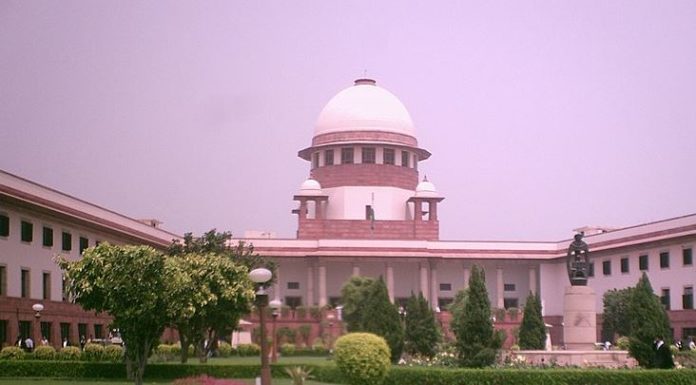
Maharashtra extends lockdown till July 31

Maharashtra
File photo

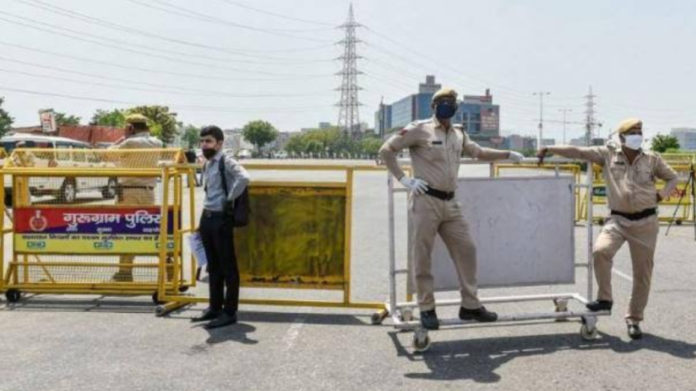
New Delhi (NVI): The Maharashtra government today extended lockdown till July 31, in view of the rising number of coronavirus cases in the state. This comes a day after Maharashtra CM Uddhav Thackeray pointed out that it was not possible to remove the lockdown post June 30.

The government stated that restrictions on the non-essential activities and movement of people will be re-imposed in COVID-19 hotspots and within the neighborhood in the Metropolitan Mumbai Region.

Yesterday, during a media briefing, Uddhav Thackeray dubbed lockdown as ‘Mission Begin Again’ and said that the unlock process in the state will be gradually implemented to put the economy back on track.

Although there would still be restrictions after June 30, eventually more relaxations will be provided to people, he added.

The movement of people for the purposes of non-essential activities like shopping and the outdoor activities shall be restricted within the neighborhood area limits with all necessary precautions of wearing masks, social distancing and personal hygiene.

All essential shops, e-commerce activity for essential and non-essential items, all industrial units which are presently operational and home delivery of food will be allowed. However, the unrestricted movement will be allowed for attending offices and emergencies.

Maharashtra remains the worst-hit state in the country having recorded nearly 1.65 lakh confirmed cases and over 7,400 deaths so far.

-RJV/ARK

Bangladesh COVID-19 tally surpasses 1.41 lakh

New Delhi (NVI): As Bangladesh is witnessing a spurt in the number of coronavirus cases and deaths, 45 new fatalities were reported in the last 24 hours taking the total death toll to 1,783.

In addition to this, 4,014 new cases were also detected during this period, taking the total number of Covid-19 patients in the country to 1,41,801, according to United News of Bangladesh.

So far, 57,780 people have recovered in the country after 2,053 more patients were recovered during this period.

The detection rate of new patients has been recorded at 20.91 percent in the country.

Against the total number of detected cases, the recovery rate is 40.75 percent and the mortality rate is 1.27 percent.

-CHK

What are the tropical regions and why are they important

The Tropics account for 40 per cent of the world’s total surface (Source: @UN)

New Delhi (NVI): The Tropics are a region of the Earth, roughly defined as the area between the tropic of Cancer and the tropic of Capricorn.

Although topography and other factors contribute to climatic variation, tropical locations are typically warm and experience little seasonal change in day-to-day temperature, according to the United Nations.

An important feature of the Tropics is the prevalence of rain in the moist inner regions near the equator, and that the seasonality of rainfall increases with the distance from the equator. The tropical region faces several challenges such as climate change, deforestation, logging, urbanisation and demographic changes.

The International Day of the Tropics marked on June 29 every year, celebrates the extraordinary diversity of the tropics while highlighting unique challenges and opportunities nations of the Tropics face.

Tropical nations have made significant progress but face a variety of challenges that demand focused attention across a range of development indicators and data in order to achieve sustainable development, according to the UN report.

By 2050, the region will host most of the world’s people and two-thirds of its children. Consistent with the higher levels of poverty, more people experience undernourishment in the Tropics than in the rest of the world. The proportion of the urban population living in slum conditions is higher in the Tropics than in the rest of the World, according to the report.

As the culmination of a collaboration between twelve leading tropical research institutions, the inaugural State of the Tropics Report was launched on 29 June 2014. The report offers a unique perspective on this increasingly important region.

Marking the anniversary of the report’s launch the United Nations General Assembly adopted resolution A/RES/70/267 in 2016, which declared that 29 June of each year is to be observed as the International Day of the Tropics.

The International Day of the Tropics was designated to raise awareness to the specific challenges faced by tropical areas, the far-reaching implications of the issues affecting the world’s tropical zone and the need, at all levels, to raise awareness and to underline the important role that countries in the tropics will play in achieving the Sustainable Development Goals.

As per UN report, the Tropics is home to nearly 95 per cent of the world’s mangrove forests by area and 99 per cent of mangrove species. The Tropics have just over half of the world’s renewable water resources (54 per cent), and biodiversity is also much greater at 80 per cent.

-RJV/ARK

Nepal coronavirus tally exceeds 13,000-mark

Representational image

New Delhi (NVI): Nepal reported 476 new cases of coronavirus today, taking the national tally to 13,248, according to local media reports.

The country’s Ministry of Health and Population said, of the newly infected, 364 are males and 112 females. In total, 11,662 males and 1,586 females have contracted the infection.

In the last 24 hours, 121 people achieved recovery and were discharged form the hospitals, taking the tally of recovery cases to 3,134.

As of today, coronavirus has spread to all 77 districts of Nepal, as per the reports.

So far, 2,23,630 sample tests have been performed in Nepal through the PCR, as per the reports.

Currently, 10,085 people are under isolation and 57,368 in quarantines across the country.

Meanwhile, another COVID-19 related deaths have been confirmed in Nepal today, taking the total death-toll of the disease to 29 in the country.

-RJV

PM FME scheme launched

Harsimrat Kaur Badal

New Delhi (NVI): In line with the Centre’s ‘Atmanirbhar Bharat Abhiyan’ initiative, the Ministry for Food Processing has launched the PM Formalisation of Micro Food Processing Enterprises (PM FME) scheme today which would generate an investment of Rs 35,000 crore and 9 lakh employment opportunities.

Minister for Food Processing Industries, Harsimrat Kaur Badal, while launching the scheme said that, “The Ministry will adopt the ‘One District One Product (ODOP)’ approach and focus on scaling up existing clusters. States will be given complete flexibility in deciding what product needs to be promoted and from which districts.”

These could be perishable or cereal based products such as mango, potato, litchi, tomato, poultry or millet-based products.

The scheme will assist nearly 2 lakh micro-food processing enterprises with credit-linked subsidy and special focus will be on supporting farmer producers organisations, self-help groups and cottage industries in rural and tribal regions, over the next five years.

The expenditure under the scheme would to be shared in 60:40 ratio between Central and State Governments, in 90:10 ratio with North Eastern and Himalayan States, 60:40 ratio with UTs with legislature and 100% by Centre for other UTs.

Union FPI Minister said, “The unorganized food processing sector comprising nearly 25 lakh units contribute to 74% of employment in food processing sector. Nearly 66% of these units are located in rural areas and about 80% of them are family-based enterprises supporting livelihood rural household and minimizing their migration to urban areas.”

Support would be provided through credit linked grant of 35% for development of common infrastructure including common processing facility, lab, warehouse, cold storage, packaging and incubation center through FPOs/SHGs/cooperatives or state owned agencies or private enterprise to use by micro units in the cluster.

-CHK

India allows export of 50 lakh PPE coveralls per month

File photo

New Delhi (NVI): Partially relaxing export norms, the Central government today allowed the export of personal protective equipment (PPE) coveralls and set the limit for export as 50 lakh units per month, after a ban since the coronavirus disease outbreak.

The product was banned for export earlier, but it has now been moved to the restricted category.

The Directorate General of Foreign Trade (DFGT) in its order stated that, “A monthly quota of 50 lakh PPE medical coverall for COVID-19 units has been fixed for issuance of export licence to the eligible applicants to export PPE medical coveralls for COVID-19 as per the criteria to be separately issued in a trade notice”.

There would be a quantitative ban on the export of the PPE items to ensure that the country doesn’t suffer from any shortage of it.

However, all other items like masks, medical goggles, nitrile rubber or NBR, gloves and face shields remain prohibited for export in accordance with the DGFT order issued on June 22.

Commerce and Industry Minister Piyush Goyal tweeted in this regard, “Boosting Make in India exports, PPE medical coveralls for COVID-19 have been allowed with a monthly export quota of 50 lakh.”

India was producing one crore PPE units per month as per the Central government’s specifications to fight the viral outbreak.

-CHK

Meet the ‘lake man’ of Karnataka who has dug 16 ponds in 42 years!

PM Modi said that the ponds dug by the farmer may be small but his “efforts are huge". (Twitter)

New Delhi (NVI): 84-year-old Kame Gowda, a shepherd from a remote village in Karnataka’s Mandya district, has spent almost half of his life digging ponds to overcome water scarcity as well as quench the thirst of animals and birds in the area.

The octogenarian has dug 16 ponds in his village in the last 42 years, which has immensely benefitted the ecosystem in the area. Also known as ‘pond man’ or ‘lake man’ at his native place, Kame Gowda has spent almost all of his life’s savings on his passion.

40 years back, a younger Gowda realised that the Kundinibetta hill next to his village in Malavalli Taluk, Mandya, had sparse shrubs with almost no greenery. While taking his cattle for grazing at Dasandoddi village, he saw that animals and birds had a tough time in the area due to lack of watering holes or water bodies, especially during hot summer days.

It was then, that he started digging ponds in the area, without giving a second thought and nothing has stopped him since then. Even at this age, he wakes up early in the morning and explores the slightest possibility of digging a new pond. In all these years, Gowda has grazed his sheep during the daytime, while making sure he wakes up early the next morning to restart again.

The shepherd’s passion to make life easy for animals and birds in the area is evident from the fact that he spent the reward money from the prestigious Kannada Rajyotsava award and Basavashri Award he received.

The ordinary man with extraordinary passion has become the talk of the town since his remarkable story was narrated by Prime Minister Narendra Modi in his monthly Mann Ki Baat radio address. In the 66th edition of his radio address yesterday, the Prime Minister praised Gowda for his selfless passion that became a “personal feat” for him.

Gowda has never expected any award or reward for a work that he is enjoying for the past four decades. “He has achieved a personal feat that will leave anyone awestruck! Kamegowdaji, aged 80-85 takes out his animals for grazing but at the same time he has taken it upon himself to build new ponds in his area,” the PM said in his radio address.

The PM said that the ponds dug by the farmer may be small but his “efforts are huge”.

Kame Gowda is an unsung hero and a living example of the undying human spirit. By 2018, he had constructed 14 ponds. The hill on which the ponds have been created is not barren anymore! The shepherd has literally turned no stone unturned in turning a barren hill into a lush and green area with all the ponds linked by a waterway that ensures when the upper ponds on the hill are filled, the surplus water flows into the ponds below.

He started all by himself, with a shovel, spade, pickaxe, and other tools to dig a pond, that he bought after he sold his sheep.

Gowda also had an interaction with Union Jal Shakti Minister Gajendra Singh Shekhawat recently, during which he requested the minister to fund and facilitate the interlinking of his lakes. The minister has assured full support to the farmer while asking Karnataka Chief Minister BS Yediyurappa for all possible assistance in this regard.

-ARK

Odisha: 2 nurses found Covid positive at Govt Cancer hospital in Cuttack

Acharya Harihar Postgraduate Institute of Cancer in Cuttack

Subrat Kumar Sarangi

Bhubaneswar (NVI): Two nurses of Acharya Harihar Regional Cancer Centre at Cuttack tested positive for Covid-19 yesterday, the only government-run cancer hospital in the state.

Both the nurses had come in contact with a cancer patient from Ganjam district of Odisha (the only district with the highest number of positive cases in Odisha). Following the detection of the case, the ward has been sealed and sanitized, officials said.

The doctors and nurses who had come in contact with them have been sent to home quarantine. Swab samples of 52 persons were collected and sent for tests out of which one male and one female nurse was found coronavirus positive and sent to a private hospital in the city for admission, Director of the Centre, Lalatendu Sarangi said.

The number of positive cases is increasing day by day in Odisha. The total number of positive cases has touched 6,859 as of now out of which 2,086 are active case and the death toll has reached 23.

-RJV/ARK

Delhi to get India’s first plasma bank to help COVID-19 patients: Kejriwal

Delhi Chief Minister Arvind Kejriwal

New Delhi (NVI): A plasma bank will be set up in Delhi to help COVID-19 patients in the national capital, Chief Minister Arvind Kejriwal today said adding that, “this will probably be the first plasma bank of the country.”

While addressing a virtual press briefing, Arvind Kejriwal said, “The plasma bank will start operation in the next 2-3 days. I appeal to Covid-19 recovered patients to donate their plasma.”

Delhi CM urged the people who have recovered from the infection to donate plasma to help other patients. He also assured that the state government will arrange conveyance to the plasma bank for those willing to donate.

Use of plasma therapy involves injecting blood-component plasma extracted from a cured coronavirus patient into a positive case. The plasma of a cured patient is considered to carry virus-fighting antibodies which boost the immune system’s response to the disease.

The plasma bank, which will be at the Institute of Liver and Biliary Sciences in south Delhi’s Vasant Kunj, will serve the purpose of coordination between plasma donors and recipients, Arvind Kejriwal said.

He also said that a helpline will be set up by the government for queries related to donation of plasma.

So far, a total of 83,077 positive cases of coronavirus have been reported in Delhi while the death toll has reached 2,623, according to Health Ministry data.

-CHK

NRI businessman charged with sedition for his FB post on domicile law in J&K

(Facebook)

Abid Bashir

Srinagar (NVI): Jammu and Kashmir police today booked NRI businessman and former president of Kashmir Chamber of Commerce and Industry (KCCI) Mubeen Shah for his “seditious post” on J&K domicile law.

“Yes, we have lodged a case against him (Shah). Law will take its own course,” said Senior Superintendent of Police (SSP) Srinagar Dr Haseeb Muhgal. A case of sedition against Shah has been lodged at police station Ram Munshibagh, Srinagar.

Shah, a prominent businessman was booked under Public Safety Act (PSA) after August 5 last year and released in December. He is currently based in Malaysia where he runs his Kashmiri handicraft business.

The Facebook post that invited trouble for him read: “All village/mohalla/town committees of Kashmir should come together and make sure that not a single non-local lives in their areas. They should ask all non-Kashmiris to vacate and leave Kashmir. Each and every local committee must do its part.” It further read that, all of these committees should give clear instructions to people that anyone who tries to give space to non-locals will be socially boycotted and anyone who tries to sell land to any non-Kashmiri will be socially boycotted as well as evicted from the area.

“These committees should also make it clear that any tehsildar or any administrator who’s found to have given domicile to any non-Kashmiri will also be socially boycotted. The social boycott against these people should be very strict. They shouldn’t be allowed to enter into the village/mohalla/town and no one should speak to them or their families or do any kind of work with them. We should think of other efficient measures as well to stop India from changing the demographics of Kashmir. It’s most important for all Kashmiris to come together at this very important stage and collectively fight against settler-colonialism. It’s now or never. It’s do or die. All of us have to join hands and fight now!”

The industrialist also wrote on his Facebook that he knows he has been booked. “I know they have booked me and registered an FIR against me. My lawyers will look into it but I will not desist from writing what I feel is the truth and resist as I understand with conviction that the resistance is beautiful. I request all Kashmiris to resist in whatever way you can and stop this settler program,” he wrote.

-ARK

MUST READ