Sunday, April 19, 2026
Home Blog Page 1253

State-wise details of Covid-19 cases in India

New Delhi (NVI): After the first confirmed coronavirus case in India, which was reported in the state of Kerala on January 30, the virus has tightened its grip across the country, with Maharashtra, Gujarat and Madhya Pradesh being the most affected states.

The country has now entered the last week of the third phase of the nationwide lockdown that is slated to end on May 17. The total number of confirmed cases have been reported at 74,281 with 2,415 deaths so far, according to the Union Health Ministry.

Total positive cases in States/UTs:

Andaman and Nicobar Islands- 33

Andhra Pradesh- 2,090

Arunachal Pradesh- 1

Assam- 65

Bihar- 831

Chandigarh- 187

Chhattisgarh- 59

Dadar Nagar Haveli- 1

Delhi- 7,639

Gujarat- 8,903

Haryana– 780

Himachal Pradesh- 65

Jammu and Kashmir- 934

Jharkhand- 172

Karnataka- 925

Kerala- 524

Ladakh- 42

Madhya Pradesh- 3,986

Maharashtra- 24,427

Meghalaya- 13

Mizoram- 1

Odisha- 437

Puducherry- 13

Punjab- 1,914

Rajasthan- 4,126

Tamil Nadu- 8,718

Telangana- 1,326

Tripura- 154

Uttarakhand- 69

Uttar Pradesh- 3,664

West Bengal – 2,173

State/UT wise total death toll:

Andhra Pradesh- 46

Assam- 1

Bihar- 6

Chandigarh- 3

Delhi- 86

Gujarat- 537

Haryana- 11

Himachal Pradesh- 2

Jammu and Kashmir- 10

Jharkhand- 3

Karnataka- 30

Kerala- 4

Madhya Pradesh- 225

Maharashtra- 921

Meghalaya- 1

Odisha- 3

Puducherry- 1

Punjab- 32

Rajasthan- 117

Tamil Nadu- 61

Telangana- 32

Uttar Pradesh- 82

Uttarakhand- 1

West Bengal- 198

A total of 24,386 people have been cured or discharged from hospitals in India. There are around 47,480 active cases currently, according to the Health Ministry.

Coronavirus cases surpass 4.2 million worldwide

Coronavirus cases

New Delhi (NVI): More than 4.2 million cases of coronavirus have been recorded worldwide, including at least 2,91,000 deaths, according to John Hopkins University tally.

In the US, around 82,000 people are now known to have died from COVID-19.

According to a newly revised coronavirus mortality model predicts more than 147,000 Americans will die from COVID-19 by early August, up nearly 10,000 from the last projection, as restrictions for curbing the pandemic are increasingly relaxed.

In addition to this, with more than 2,32,000 infections, Russia now has more confirmed coronavirus cases than any country other than the US.

Brazil’s confirmed coronavirus cases rose to 1,77,589, according to the health ministry, surpassing Germany’s 1,70,508 confirmed cases of the disease.

Meanwhile, nearly 120 cases have been linked to an outbreak in Seoul’s Itaewon nightlife district. With fears of a second wave, authorities have tested more than 20,000 people in relation to the outbreak.

COVID-19 cases in India climb to 74,281, death toll at 2,415

New Delhi (NVI): The total number of coronavirus cases in India has risen to 74,281 and fatalities from the virus has gone up to 2,415 , according to Union Health Ministry.

In the past 24 hours, 3,525 fresh COVID-19 infections were reported with 122 deaths.

In terms of total number of cases, Maharashtra is the worst affected state with 24,427 coronavirus cases.

The other worst-affected states are Gujarat with 8,903 cases and Tamil Nadu with 8,718 positive cases.

Meanwhile, in terms of total deaths, Maharashtra tops the tally with 921 fatalities, ministry said.

With 7,639 confirmed novel coronavirus cases, Delhi remains the severely impacted.

The death toll in the national capital surged to 86. While another 2,512 patients in Delhi have recovered so far, healthy ministry data shows.

With the development, India ranks 12th among countries with most coronavirus cases in world.

However, the doubling time of COVID-19 cases has now improved to 12.2 days in the country from 10.9 days, it said.

At least 47,480 COVID-19 patients have been cured of the virus or discharged so far.

J&K: Highest single-day rise in Covid cases as 55 test positive; total at 934

Abid Bashir

Srinagar (NVI): With 55 fresh Covid-19 cases, Jammu and Kashmir witnessed the highest single-day rise today, taking the overall tally in the Union Territory to 934.

Of the total 55 cases, 42 were reported from Kashmir and 13 from the Jammu region. Officials said that this is the highest single-day rise since the outbreak of pandemic in J&K on March 18. They, however, said that more cases testing positive was the outcome of 3,000 tests being done a day and there was no need to panic. “More tests mean more cases,” an official said.

As per the daily media bulletin on novel Coronavirus (Covid-19), out of 934 positive cases, 469 are active, 455 have recovered and 10 have died. 28 more COVID-19 patients have recovered and discharged from various hospitals of the Kashmir division. The bulletin further said that out of 53,726 test results available, 52,792 samples have tested as negative to date.

Apart from this, 98,083 travellers and persons in contact with suspected cases have been enlisted for surveillance which includes 24,285 persons in home quarantine including facilities operated by government, 153 in Hospital Quarantine, 469 in hospital isolation and 10,830 under home surveillance. Besides, 62,336 persons have completed their surveillance period.

Providing district-wise breakup, the bulletin said that Bandipora has 134 positive cases with 26 active cases, 107 recovered, 1 death; Srinagar has 136 positive cases with 51 active, 81 recovered (including 5 recoveries reported today), 4 deaths; Anantnag district has 127 positive cases (including 04 new cases reported today) with 114 active cases, 12 recovered, 1 death; Baramulla has 109 positive cases with 49 active, 57 recovered (including 12 recoveries reported today), 3 deaths; Shopian has 104 positive cases (including 1 case reported today) with 44 active, 60 recovered (including 09 recoveries reported today).

Kupwara has 83 positive cases (including 10 reported today) with 38 active, 45 recovered (including 2 recoveries today); Budgam has 46 positive cases with 32 active and 14 recovered cases; Ganderbal has 23 positive cases with 9 active cases and 14 recoveries; Kulgam has 69 positive cases (including 27 cases reported today) with 63 active and 6 recoveries; Pulwama reported 13 positive cases with 09 active, 4 recovered.

Similarly, Jammu has 35 positive cases with 9 active cases and 26 recoveries; Udhampur has 22 positive cases with 2 active cases, 19 recovered and 1 death; Samba has 11 positive cases (including 4 reported today) with 7 active cases and 4 recoveries; Rajouri has 4 positive cases and all have recovered; Kathua has 13 positive cases (including 07 reported today) with 12 active and 1 recovered; Kishtwar had only 1 positive case who has recovered, Ramban has 1 active case while Reasi has 3 active positive cases (including 2 new cases reported today).

The bulletin further said that the breakup represents districts from which the patients have been traced or are ordinarily residing.

The advisory has also informed the public in general that all passengers arriving by trains or any other means into the Union Territory of Jammu & Kashmir shall be 100 percent tested for COVID-19. All such passengers will be put into mandatory administrative quarantine till their test results come out to be negative or till they are sent to hospital if test results are positive. All passengers shall be necessarily required to wear face masks/covers and follow social distancing norms. Any violation of these instructions will attract penalties under the Disaster Management Act, 2005 and other provisions of law.

The bulletin has further explained that early detection of COVID-19 can prevent the spread of disease. “Not disclosing symptoms could put life of individuals and their families at risk. In case of symptoms like fever, cough and difficulty in breathing, report early. Do not fear, call COVID-19 helpline numbers and seek medical advice,” the bulletin read.

As a measure for social distancing in public places and workplaces, wearing a face cover is compulsory.

The advisory urged people not to step out of home, unless absolutely necessary. “If you have to move out for unavoidable reasons, ensure that you wear a mask and practice social distancing, personal hygiene and frequent handwashing with soap and water,” it said.

In case of any emergency people can avail free ambulance services 24×7 at their doorsteps by calling on toll-free number 108 while pregnant women and sick infants can avail free ambulance services by dialing toll-free number 102, the bulletin said.

PM announces Rs 20 lakh crore package to tide over Covid-19 crisis

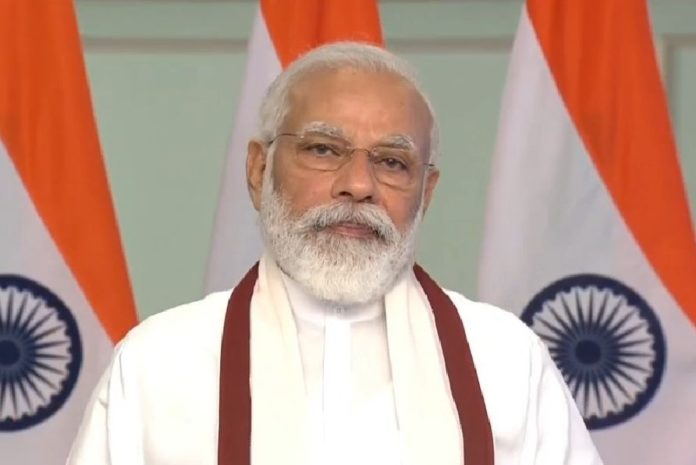
New Delhi (NVI): Prime Minister Narendra Modi today announced a Rs 20 lakh crore economic relief package to deal with the coronavirus crisis, saying that it will play an important role in “Atmanirbhar Bharat Abhiyan” (Mission self-reliant India).

Announcing the special economic package, just five days before the end of the third phase of lockdown, PM said it will support MSMEs, cottage and small scale industries, laboures, farmers and middle class amid the corona crisis. “This package is around 10% of India’s GDP,” PM said during his address to the nation at 8 PM.

He said that Finance Minister Nirmala Sitharaman will announce the details of the special economic package from tomorrow.

During his address, PM said that the building of a self-reliant India will stand on five pillars: Economy, Infrastructure, Tech-driven System, Vibrant Demography and Demand.

He said that Land, Labour, Liquidity, Laws have been stressed upon in the special economic package.

PM also said that being vocal about local is going to be the mantra for economic recovery now. “The current situation has taught us the importance of local supply chains. The global brands we see today were once local. From now, all Indians should become vocal for our local products,” PM said.

“The current situation in the world tells us that there is only one way to deal with this problem- ‘A Self-reliant India’,” the PM said in his opening remarks.

PM said that the vision of a self-reliant India will convert the corona challenge into an opportunity.

“One virus has destroyed the world. This is an unprecedented crisis. We have to protect ourselves and move ahead as well,” he said in an address to the nation.

Throughout his speech, PM stressed the idea of a self-reliant India. Citing an example, he said that when the corona crisis began, then not even a single PPE was manufactured in India. “Today, we are able to manufacture 2 lakh PPE and 2 lakh N-95 masks on a daily basis,” he said.

“When India talks of self-dependence, its focus is not on capital-centric world order, but on the welfare of humanity at large, based on Vasudhaiva Kutumbakam,” he said.

The Prime Minister also announced that lockdown 4.0 will come in a new form, with new rules and restrictions. He said that on the basis of suggestions received from states, important information related to the extended lockdown will be given before May 18.

The third phase of lockdown in slated to end on May 17. The lockdown initially kicked in on March 24 after the PM’s announcement and it has been extended twice since then.

PM’s address also comes a day after his marathon six-hours meeting with Chief Ministers of all states via video conferencing.

J&K: 4,802 industrial units functional amid Covid-19 lockdown

A small industry operating in Jammu (Source: Twitter)

Jammu (NVI): A total of 4,802 industrial units– 2,727 in Jammu division and 2,075 in Kashmir division– are functional in J&K, including large scale, MSMEs and micro enterprises, during the Covid-19 lockdown.

The Department of Industries and Commerce under J&K government today said that efforts are on to keep units making essential supplies, medicines in operation, amid the unprecedented lockdown situation.

The lockdown that was announced in late March has left a deep impact on the social and economic sectors. To generate income and prevent economic activities from a complete freeze amid the lockdown, the J&K government has initiated measures in the UT.

“As the administration is dealing with ensuring the safe return of stranded people of J&K from other parts of the country, at the same time it is working 24*7 to ensure that the economic impact due to lockdown is minimized,” the J&K government said in a statement.

In order to ensure an uninterrupted supply of essential commodities, during the first phase of the lockdown, all the industries involved in their manufacturing were allowed to function as per the SOP issued by the Department of Disaster Management, Relief, Rehabilitation and Reconstruction, it said.

Speaking about the initiatives here today, Director Industries and Commerce, Anoo Malhotra said that the department is ensuring hassle-free operation of food processing industries, flour mills, milk product industries, etc.

She said that the agro industries have been allowed to function during these times, considering the seasonal nature of the agricultural sector. “In addition to these, the pharma units have also been allowed to run to ensure there is no shortage of life-saving medicines in the market,” she said.

Packaging units that cater to essential commodity units are also kept functional, she added.

In the second phase of the lockdown, industries are allowed to function on case to case basis. All the industries falling in rural areas have been allowed to function to stem the tide of rural labour migration. The cold storage units and warehouses are also allowed to function.

“As of today 4802 units, (2727 in Jammu division and 2075 in Kashmir division) are functional including large scale, MSMEs and micro enterprises,” the J&K government said.

The UT administration has allowed the industries to operate only after ensuring strict enforcement of social distancing norms in factory premises, it said.

“The I&C department has allowed the industries to work at 30% of their staff strength, except the pharma sector which has been allowed to function at 60 % of its staff strength. Further, the unit holders have been advised to ensure that masks and sanitizers are provided to the employees. Department of Handloom and KVIB are also manufacturing masks and providing them to the various sectors,” read an official statement.

As per the SOP being followed by the industries, separate areas have been earmarked for unloading/loading of trucks bringing raw material from outside the UT. Quarantining of the truck drivers is also being done. The unit holders have been asked to ensure that all the labourers living in the premises are being provided with hygienic food and sanitary living conditions.

In order to ensure hygiene, fumigation drives are also being carried by the J&KSIDCO and J&KSICOP in their respective industrial estates. The General Managers are regularly inspecting the units so as to ensure all the norms are being adhered to. A robust mechanism has also been devised by the Department for redressal of the grievance of the unit holders. In order to ensure smooth movement, the GMs have been asked to coordinate with respective Deputy Commisioners to provide movement passes to the unit holders.

Health camps and inspections are also being conducted regularly by the department to ensure all SOP’s are being adhered to by the unit holders. To ensure the continuity of the supply chains, the units are functioning in shifts. Industries in the UT have also come forward in a big way to provide free ration and essentials to the needy under CSR initiative.

In this regard, Secretary, Industries and Commerce Department, Manoj Dwivedi who is coordinating all the activities of the Industries and Commerce Department, has reviewed the clearance of outstanding dues of MSMEs and JK Cements pending with other departments by 15th of this month. He has instructed for daily reporting of the clearance of the outstanding amount so that the MSMEs and JK Cement Unit which are facing severe liquidity crunch can be revived.

COVID-19: 1,878 policemen infected in Bangladesh

(Image source: United News of Bangladesh)

New Delhi (NVI): A total of 1,878 policemen have been infected with coronavirus in Bangladesh so far while performing their duties during the pandemic.

Among the infected police members, 865 are from Dhaka Metropolitan Police (DMP) alone, according to United News of Bangladesh.

The total number of deaths from coronavirus continues to rise in Bangladesh as 11 more people died during the period, taking the total casualties in the country to 250.

Besides, a whopping 969 new cases of coronavirus infection were reported during this period, raising the number of such cases in the country to 16,660.

In the last 24 hours, 245 more patients recovered from the disease raising the total recovery number across the country to 3,147.

Coronavirus cases in Pakistan exceed 32,000-mark

COVID-19: Pakistan imposes mini-lockdown in Islamabad

New Delhi (NVI): The total number of positive coronavirus in Pakistan has increased by more than a thousand, taking the overall tally to 32,674 with at least 724 fatalities recorded so far.

Looking at the breakdown of cases, Sindh province has reported 12,610 coronavirus cases, highest among all the provinces, while Punjab has 11,869 positive cases.

On the other hand, Khyber-Pakhtunkhwa has recorded 4,875 cases, Balochistan is at 2,061, Gilgit-Baltistan at 457, Islamabad at 716 and Pakistan-occupied Kashmir is at 86 cases so far, according to Geo News.

Balochistan government has announced that it will celebrate a simple Eid due to the coronavirus.

Provincial government spokesperson Liaquat Shahwani announced that the authorities have banned carnivals, functions and Eid milan parties in the province.

Covid-19: WHO, UNICEF issue guidance for reopening of schools

New Delhi (NVI): World Health Organization (WHO) and UNICEF have together issued guidance on adjusting public health and social measures while managing the risk of a resurgence of coronavirus cases, and prevention and control of COVID-19 in schools.

The guidance that was published on May 10, advises decision-makers that while deciding to close, partially close, or reopening schools, it should be guided by a risk-based approach to maximize the educational and health benefit for students, teachers, staff, and the wider community, and help prevent a new outbreak of COVID-19 in the community.

In a recent framework for reopening schools, WHO, UNICEF and IFRC (International Federation of Red Cross and Red Crescent Societies) highlight six key dimensions to consider when planning: policy, financing, safe operations, learning, reaching the most marginalized and wellbeing/protection.

In response to the coronavirus outbreak, countries around the globe have implemented several public health and social measures (PHSM), such as movement restrictions, closure of schools and businesses, and international travel restrictions.

However, several countries have started to ease the lockdown measures in place, as the disease is gradually loosening its grip from these nations.

Factors to consider in a general health risk assessment include epidemiological factors, health system and public health capacities, community engagement and government capacity to sustain social and economic support to the most vulnerable.

The guidance also suggests that national authorities can facilitate a risk-based approach at the local level by offering standard operating procedures or checklists for schools, based on local epidemiology and conditions.

The guidance suggests that decision-makers should consider the following when deciding on whether to open or close schools:

• Current understanding about COVID-19 transmission and severity in children

• Local situation and epidemiology of COVID-19 where the school(s) are located

• School setting and ability to maintain COVID-19 prevention and control measures

Certain additional factors to consider in deciding how or when to partially close or reopen schools include assessing what harm might occur due to school closure – risk of non-return to school, widening disparity in educational attainment, limited access to meals, domestic violence aggravated by economic uncertainties etc – and the need to maintain schools at least partially open for children whose caregivers are ‘key workers’ for the country.

Message on Govt’s 3-week, 5-phase ‘roadmap’ to ease COVID restrictions is fake

New Delhi (NVI): A message is doing rounds on WhatsApp claiming that a 3-week, 5-phase “roadmap” has been purportedly made by the government to ease Covid-19 restrictions in the country.

Taking note of the viral message, the Fact Check Unit of Press Information Bureau today clarified that this roadmap is not made the Indian government but that of some other country.

“Claim: A so-called 3-week, 5-phase “roadmap”, purportedly made by the Government, to ease #COVID19India restrictions is being circulated on Whatsapp.

“#PIBFactCheck: #Fake news.This roadmap is not made by our Government, but by that of some other country,” PIB Fact Check tweeted.

Apart from PIB, Regional Outreach Bureau (ROB) Chandigarh, under the Ministry of Information & Broadcasting (MIB) also posted a fake news alert regarding the “roadmap” message on Twitter.

The tweet read: “Claim: A message is being circulated down pointing backhand index claiming 5-phase roadmap by Government to ease #COVID19 restrictions based on a 3-week review process.

“#FactCheck: There is no such announcement/decision by the Government. The message is #FAKE & Baseless.”

Social media platforms are flooded with fake news and misinformation around coronavirus. To counter such viral fake messages, PIB has initiated Fact Check handle. One can also submit such messages or claims on PIB’s official website.

MUST READ