Friday, October 2, 2026
Home Blog Page 1281

DRDO launches ‘Dare to Dream 2.0’ contest for innovators, startups

New Delhi (NVI): To promote innovation in defence and aerospace technologies, the Defence Research and Development Organisation (DRDO) has launched ‘Dare to Dream 2.0’ contest on the fifth death anniversary of former President and noted scientist Dr APJ Abdul Kalam.

The scheme has been launched for emerging technologies to promote the individuals and startups for innovation in defence and aerospace technologies in the country after the call of ‘Atmanirbhar Bharat’ given by Prime Minister Narendra Modi, the Ministry of Defence said in a statement.

The ‘Dare to Dream 2.0’ is an open challenge to promote the innovators and startups of the country. The winners will be decided after due evaluation by an expert committee. Award money, up to Rs 10 lakh for startup and Rs five lakh to individual category, will be given to the winners, the ministry said.

Defence Minister Rajnath Singh announced the contest for the ‘Ignited Minds’ yesterday, whether innovators or startups. Further information will be available on DRDO website www.drdo.gov.in soon, the MoD said.

Dr Kalam, also known as the Missile Man of India, had the vision of self-reliance. He was a great visionary who served as the 11th President of India from 2002 to 2007.

Dr Kalam passed away on July 27, 2015, while delivering a lecture to students at the Indian Institute of Management, Shillong. He is still fondly remembered by the citizens of India, especially students, as a source of inspiration.

-ARK

State-wise details of Covid-19 cases in India

File photo

New Delhi (NVI): The total number of coronavirus cases in India jumped to 14,83,157, after 47,704 new cases were reported in the past 24 hours, according to Union Health Ministry data.

Meanwhile, the death toll stands at 33,425 after 654 new fatalities were reported in the country during this period.

In terms of total number of cases, Maharashtra continues to be the worst affected state with 3,83,723 coronavirus cases followed by Tamil Nadu with 2,13,723 cases and Delhi with 1,31,219 cases.

Total positive cases in States/UTs:

Andaman and Nicobar Islands- 338

Andhra Pradesh- 1,02,349

Arunachal Pradesh- 1,239

Assam- 33,576

Bihar- 41,244

Chandigarh- 910

Chhattisgarh- 7,745

Dadar Nagar Haveli & Diu – 946

Delhi- 1,31,219

Gujarat- 56,874

Goa- 5,119

Haryana– 32,127

Himachal Pradesh- 2,270

Jammu and Kashmir- 18,390

Jharkhand- 8,683

Karnataka- 1,01,465

Kerala- 19,727

Ladakh- 1,306

Madhya Pradesh- 28,589

Maharashtra- 3,83,723

Manipur- 2,286

Meghalaya- 738

Mizoram- 384

Nagaland- 1,385

Odisha- 26,892

Puducherry- 2,872

Punjab- 13,769

Rajasthan- 36,878

Sikkim- 555

Tamil Nadu- 2,20,716

Telangana- 57,142

Tripura- 4,049

Uttarakhand- 6,328

Uttar Pradesh- 70,493

West Bengal – 60,830

State/UT wise total death toll:

Andaman and Nicobar Islands- 1

Andhra Pradesh- 1,090

Arunachal Pradesh- 3

Assam- 86

Bihar- 253

Chandigarh- 14

Chhattisgarh- 44

Dadra and Nagar Haveli- 2

Delhi- 3,853

Goa- 36

Gujarat- 2,348

Haryana- 397

Himachal Pradesh- 14

Jammu and Kashmir- 321

Jharkhand- 89

Karnataka- 1,953

Kerala- 63

Ladakh- 4

Madhya Pradesh- 820

Maharashtra- 13,883

Meghalaya- 5

Nagaland- 5

Odisha- 147

Puducherry- 43

Punjab- 318

Rajasthan- 631

Sikkim- 1

Tamil Nadu- 3,571

Telangana- 480

Tripura- 17

Uttar Pradesh- 1,456

Uttarakhand- 66

West Bengal- 1,411

However, a total of 9,52,743 people have been cured or discharged. Total active cases stand at 4,96,988.

-CHK

Pak resorts to ceasefire violation along LoC in J&K’s Poonch

Representational image

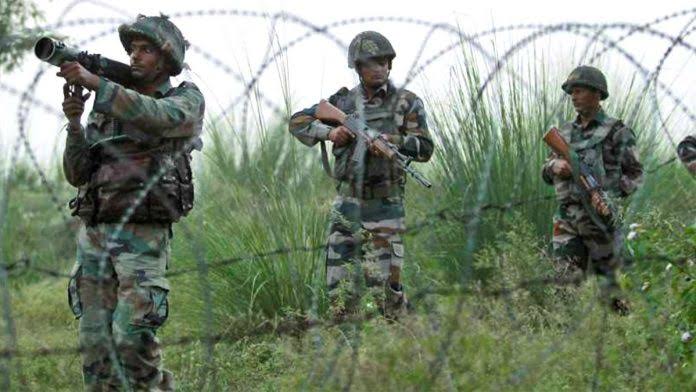
Srinagar (NVI): Pakistan resorted to unprovoked ceasefire violation (CFV) along the Line of Control (LoC) in Degwar and Qasba sectors of Jammu and Kashmir’s Poonch district, defence officials said today.

Officials said that at around 10am, Pakistan’s rangers fired mortars and small arms along the LoC in Degwar and Qasba areas. “Our troops are giving a befitting reply,” a defence official said.

However, there are no reports of any casualties so far.

As per the official records, since January this year, over 1,730 ceasefire violations have taken place in J&K, majority of them in Poonch, Rajouri, RS Pura, Keran and Uri sectors of the union territory.

-CHK

First Phase 3 clinical trial of a COVID-19 vaccine in the US begins

Expert panel recommends Bharat Biotech’s Covaxin for restricted emergency use
Representational/File image

New Delhi (NVI): The first Phase 3 clinical trial of a coronavirus vaccine in the United States has begun. The vaccine, known as mRNA-1273, is developed by the biotechnology company Moderna and the National Institute of Allergy and Infectious Diseases, part of the National Institutes of Health (NIH).

The trial, which will be conducted at U.S. clinical research sites, is expected to enroll approximately 30,000 adult volunteers who do not have COVID-19, according to media reports.

Volunteers will receive either two 100 microgram injections of the vaccine or a placebo about 28 days apart. Investigators and participants will not know who has received the vaccine.

Moderna is leading the trial as the regulatory sponsor and is providing the investigational vaccine for the trial.

Results from a Phase 1 trial of the vaccine published earlier this month in the New England Journal of Medicine found it induced immune responses in all of the volunteers and was generally safe. It had mild side effects, including fatigue, chills, headache, muscle pain, pain at the injection site. Moderna’s phase 2 testing is still ongoing.

A phase 3 trial is usually a drug or vaccine’s final test be it can be sold to the public. Phases 1 and 2, which typically involve giving the drug to smaller groups of volunteers, aim to show that a vaccine candidate generates an antibody response and is generally safe.

Phase 3 trials test a vaccine’s safety and efficacy on a larger number of people across multiple locations.

The Moderna/NIH vaccine is one of 25 in clinical trials around the world, according to the World Health Organization.

According to Johns Hopkins University’s tally of cases in the United States, there are nearly 4.3 million confirmed cases of coronavirus in the country and more than 1,48,935 people have died.

-CHK

World Hepatitis Day 2020: Significance, theme and types of Hepatitis

New Delhi (NVI): Hepatitis, an inflammation of the liver tissue, which is caused by a viral infection. It affects millions of people across the world, causing both acute and chronic liver disease.

On July 28, World Hepatitis Day (WHD) is observed across the globe in order to raise awareness about the disease and with an aim to eliminate it completely from planet earth by 2030.

Moreover, the symptoms of the disease are hard to detect as there may be no symptoms at all sometimes or can also be confused with the common flu. There are 5 main types of viral hepatitis, be it Type A, B, C, D and E are a group of diseases that affect the liver.

This year, the theme for World Hepatitis Day is “Hepatitis-free future,” with a strong focus on preventing hepatitis B among mothers and newborns.

According to the World Health Organisation (WHO), India carries around 50 per cent of the global burden of chronic hepatitis.

Globally, 290 million people are living with viral hepatitis being unaware. Without finding about the undiagnosed disease and linking them to care, millions will continue to suffer, and lives will be lost.

In addition to this, more than 250 million people are living with chronic hepatitis B (HBV) infection worldwide.

However, together, hepatitis B and C are the most common cause of deaths, with 1.3 million lives lost each year. Amid the COVID-19 pandemic, viral hepatitis continues to claim thousands of lives every day.

The Indian Society for Clinical Research (ISCR) in a 2016 report says that Hepatitis C a contagious infection of the liver, affects about 12 million people in the country.

Meanwhile, the WHO will also be publishing new recommendations on the prevention of mother-to-child transmission of the virus today.

-RJV

Coronavirus cases surpass 16.4 million worldwide

Coronavirus cases

New Delhi (NVI): More than 16.4 million people around the world have been diagnosed with the coronavirus and nearly 6,54,000 have died, according to data from Johns Hopkins University. Some 9.5 million patients have recovered.

In the US, the total number of coronavirus cases are nearing 4.3 million while the death toll has surpassed 1,48,000 in the country.

Mexico recorded 4,973 new coronavirus cases on Monday, bringing the country’s total to 3,95,489.

Brazil, where cases have now surpassed 2.4 million, has reported the highest number of infections in Latin America. Meanwhile, the death toll in Brazil is nearing 88,000.

Hong Kong has reported 145 new coronavirus cases, bringing the total number of infections in the city to 2,779.

The number of confirmed coronavirus cases in Germany increased by 633 to 2,06,242. The reported death toll rose by 4 to 9,122, the tally showed.

China reported 68 new coronavirus cases in the last 24 hours, up for the fourth consecutive day, including two positive cases in Beijing.

Vietnam has suspended all domestic passenger flights to and from popular tourist destination Da Nang for 15 days, starting from Tuesday. This comes after the country reported 11 new locally transmitted Covid-19 cases on Monday evening, including four healthcare workers.

The World Health Organization says travel bans cannot be kept up indefinitely, and are also only useful when combined with a wide range of other measures to detect and break chains of transmission.

-CHK

India’s Covid-19 tally nears 15 lakh; death toll at 33,425

New Delhi (NVI): The coronavirus cases in India saw a jump of 47,704 in the last 24 hours, rising the total number to 14,83,157, Union Health Ministry said.

The country’s death toll stands at 33,425 with 654 new fatalities being reported during this period.

So far, 9,52,744 patients have recovered all over the country. With this, the recovery rate also improves further to 63.92 per cent.

In terms of total number of cases, Maharashtra continues to be the worst affected state with 3,83,723 coronavirus cases followed by Tamil Nadu with 2,13,723 cases and Delhi with 1,31,219 cases.

The other worst affected states includes Gujarat, Uttar Pradesh, West Bengal and Rajasthan.

In terms of fatalities, Maharashtra tops the tally with 13,656 deaths, ministry said.

The death toll in the national capital surged to 3,853 while another 1,16,372 patients have recovered so far, healthy ministry data shows.

According to the Indian Council of Medical Research (ICMR), a total of 1,73,34,885 samples had been tested up to July 27. As many as 5,28,082 samples were tested yesterday.

Meanwhile, Prime Minister Narendra Modi yesterday said that efforts are being made to ramp up the testing capacity in the country to conduct up to 10 lakh COVID-19 tests per day.

-RJV

J&K: 79 travelers among 470 new cases, tally at 18,390

Abid Bashir

Srinagar (NVI): Jammu and Kashmir today recorded 470 fresh coronavirus cases including 79 travelers, taking the total number of positive cases in the Union Territory to 18,390.

With 470 new cases, the tally of positive cases in J&K has reached 18,490 including 14,457 from Kashmir and 3933 from Jammu division.

Officials said that among 470 new cases, 309 belong to Kashmir while 161 are from Jammu. The total number of positive cases in Kashmir has reached 14,457 including 8282 recoveries, while the total number of positive cases in Jammu has reached 3933 including 2120 recoveries. So far, 328 people have died in the UT, including 10 today.

They said that the total number of active cases in J&K is 7667 including 5877 from Kashmir and 1790 from Jammu. With 474 more recoveries, the tally of total recoveries in the UT has reached 10,402 which is 56.56 percent of the total cases, which was over 63 percent a few days before.

Pertinently, Srinagar district alone has 4133 positive cases which is more than the total number of positive cases in Jammu- 3933.

Cases tested positive in J&K include 132 from Srinagar, 11 from Baramulla, 23 from Kulgam, 1 from Shopian, 53 from Anantnag, 6 from Kupwara, 38 from Pulwama, 23 from Budgam, 20 from Bandipora and 2 from Ganderbal in Kashmir while 161 from Jammu include 37 from district Jammu, 10 from Kathua, 20 from Rajouri, 15 from Udhampur, 15 from Ramban, 12 from Samba, 15 from Doda, 3 from Poonch, 23 from Kishtwar and 11 from Reasi.

As per the daily information bulletin, 3,57,927 persons in J&K are under observation while 45,645 persons have been kept under home quarantine. Besides that, 7667 persons are in hospital isolation while 12 persons are under hospital quarantine.

According to the bulletin, 2,64,015 persons have completed the surveillance period and 40,267 persons are under home surveillance.

So far, results of 5,92,482 samples are available out of which 574,092 stand negative while 18,390 have been tested positive. Among positive cases, 7,667 are active, 10,402 have recovered.

-ARK

India lodges protest with Pak over attempts to convert gurdwara into mosque

Indo-Pak trade

New Delhi (NVI): India today lodged a strong protest with Pakistan over reports that attempts were being made by some people to convert a historic gurdwara in Lahore into a mosque.

The Ministry of External Affairs lodged the protest with the Pakistan High Commission over reported targeting of Gurdwara ‘Shahidi Asthan’, site of martyrdom of Bhai Taru Singh in the eastern city of Lahore.

“A strong protest was lodged with the Pakistan High Commission today on the reported incident whereby Gurdwara ‘Shahidi Asthan’, site of martyrdom of Bhai Taru Singh ji at Naulakha Bazaar in Lahore, Pakistan has been claimed as the place of Masjid Shahid Ganj and attempts are being made to convert it to a mosque,” External Affairs spokesperson Anurag Srivastava said while responding to a media query here.

Srivastava said that Gurdwara Shahidi Asthan Bhai Taru Ji is a historical gurdwara where Bhai Taru Ji made supreme sacrifice in 1745. The Gurdwara is a place of reverence and considered sacred by the Sikh community, he added.

“This incident has been viewed with grave concern in India. There have been calls for justice for the minority Sikh community in Pakistan,” he said.

The MEA spokesperson further said that India expressed its concerns, in strongest terms on this incident and called upon Pakistan to investigate the matter and take immediate remedial measures.

“Pakistan was also called upon to look after the safety, security, well-being of its minority communities including protection of their religious rights and cultural heritage,” he said.

This is yet another incident of religious persecution of minorities and disrespect to religious monuments of Hindus and Sikhs in Pakistan.

-ARK

One-third of fever outbreaks in India remain undetected: Report

New Delhi (NVI): A number of diseases remain “unknown and unnamed” in India because of limited diagnostic facilities and poor testing available, according to an investigation report that was released at a webinar today hosted by Centre for Science and Environment (CSE).

At the webinar on “Mysterious diseases: The failure of disease surveillance in India” organised by CSE, experts agreed on the report which noted that India’s surveillance system is in shambles at a time when mysterious diseases grip the country.

The coronavirus (Covid-19) pandemic is a little reminder that how limited we understand about a disease and how it can wreak havoc across sections of society- be it poor or rich, according to the report. Thanks to a global research base and WHO, we at least know that it is caused by a coronavirus (SARS-CoV-2).

However, in the case of many “mystery diseases” that were discussed at the webinar, there has been no proper investigation to get to the root cause of the disease, says the report published by Down to Earth Magazine. Such diseases have affected children the most in some parts of the country and left the families devastated.

Vibha Varshney, associate editor, Down To Earth and the researcher-writer behind the investigation highlighted in her report that at a time when ‘mystery diseases’ grip India, surveillance is almost non-existent.

“COVID-19 has changed our lives. But this cannot be the only new microbe which triggers diseases and kill people. There have been regular and numerous reports of outbreaks happening across the country – the first step in combating such outbreaks is understanding their nature, identifying them.

“Surveillance of diseases is the best way to keep a tab on emerging and re-emerging diseases. Our investigation was done to find out if India’s disease surveillance system is effective enough in taking that first step,” said Varshney in her presentation at the webinar.

“What we have found is that the system is in shambles,” she added.

The Down to Earth investigation has also listed some of the major mysterious outbreaks that have happened in the recent past.

For instance, since 2005, encephalitis cases have been reported every year from Gorakhpur and its neighbouring districts in Uttar Pradesh. It has been variously identified as Japanese encephalitis or connected to an enterovirus or the scrub typhus – mistakenly because the disease continues to kill.

In September 2019, more than 1,000 cases of fever were reported from village Chaan in Sawai Madhopur (Rajasthan). Just 28 blood samples were collected — 15 of these were found positive for dengue, chikungunya and scrub typhus.

Out of another 15 throat swab samples, three were found positive for the diphtheria pathogen; only two of the 570 blood smears tested positive for malaria. This still left many undiagnosed patients.

In February 2020, 15 deaths were reported from just one village, Kenduguda, in Malkangiri district of Odisha. The patients complained of swelling in the legs and stomach and acute respiratory problems. Medical teams from Malkangiri diagnosed that the deceased could be suffering from kidney or heart ailments, or anaemia, or tuberculosis.

“These ‘mystery’ diseases are of concern as there is an increased fear of emerging and re-emerging diseases. Researchers have identified 43 emerging and re-emerging viral diseases that threaten India today — 23 of these are of zoonotic origin. There are reports that zoonotic diseases are spreading very fast across the country,” said Varshney.

“The Nipah virus, for instance, was reported from Siliguri in 2001,and became an outbreak in Kerala in 2018. Cases of kalaazarare coming up in Kerala, though the disease is typically reported from Bihar. These outbreaks can be fatal in absence of strategies and policies to fight them,” she said.

Also present at the webinar, Sunita Narain, Director General, Centre for Science and Environment (CSE), who anchored the webinar and moderated its discussions, said that such diseases if remain untraced, have the potential to turn in a Covid-19-like pandemic.

“What is alarming today is the declining interest in infectious diseases and in their control and prevention. We must remember that each of these mysterious diseases – perhaps perceived as ‘diseases of the poor’ –have a potential to turn into a COVID-19-like pandemic. Today, COVID-19 has shown us that there is no class divide: the ‘diseases of the poor’ can affect and ravage the rich as well with equal ferocity,” she said.

CSE DG Sunita Narain said that there is a need for the medical community to collaborate with media to indicates the first alarms of the outbreak of such diseases.

“We must have the wherewithal to find the causes of these diseases – we must catch it before it happens, in the words of the speakers who addressed today’s webinar. And in all this, the role that media plays is critical, especially in a scenario where official surveillance agencies are faltering – in many a case, the media’s has been the first voice to call out that there is a problem. This call must be heeded. The medical community can collaborate and work with the media to investigate these first alarms” she said.

-ARK

MUST READ