Friday, April 3, 2026
Home Blog Page 1335

Teesta River bridge opened for public

New Delhi (NVI): A 360-feet long bailey suspension bridge over Teesta River in Munshithang near Chungthang town in Sikkim was opened for general public by the Border Roads Organisation (BRO) today.

This came as a relief to the residents of Lachen in North Sikkim.

The bridge will give impetus to tourism and facilitate the movement of logistics for the Armed Forces deployed in forward areas. The approach roads to the bridge have also been constructed.

The construction of the bridge was commenced in October 2019 by the 86 Road Construction Company of 758 Border Roads Task Force (BRTF), under Project Swastik and was completed by January 2020.

In June 2019, a steel bridge of 180-feet span was completely damaged due to a massive cloud burst resulting in severing the lines of communication in North Sikkim. The connectivity was kept open by routing the traffic through restricted Army land.

Disabled persons at greater risk from coronavirus: WHO

New Delhi (NVI): About 15 per cent of the global population, which lives with some form of disability,  runs a higher risk of contracting coronavirus, according to the World Health Organization (WHO).

”An estimated one billion people and roughly 15 per cent of the world’s population live with some form of disability,” it said.

”People with disabilities experience an increased risk of contracting coronavirus. Some may have difficulties in implementing basic hygiene measures to keep the virus at bay. Others may not be able to practice social distancing because they require care or other support, ” said Lindsay Lee, WHO’s technical officer.

So far, there have been more than 200,000 cases worldwide, and over 8,000 deaths have taken place due to the pandemic coronavirus outbreak.

Some people with disabilities who contract the virus could develop a severe case of the disease as it can worsen existing health conditions, particularly related to immune response or respiratory function, Lee said.

It is recommended that people with disabilities devise back-up plans in the event their caregivers might be reluctant to come into work.

Above all, governments must ensure societies are accessible to this population, including within health care settings, she said, citing WHO guidance.

Catalina Devandas Aguilar UN Special Rapporteur on the rights of persons with disabilities underlined that reasonable accommodation measures are essential during the outbreak to enable people with disabilities to reduce contacts and the risk of contamination.

Furthermore, people with disabilities should be allowed to work from home or be granted paid leave, to guarantee their income security.

“Access to additional financial aid is also vital to reduce the risk of people with disabilities and their families falling into greater vulnerability or poverty,” she added.

Health and Human rights experts stressed that during the current outbreak, authorities must provide public health information that is accessible to people with disabilities, such as using sign language, captioning, text messages and relay services.

Passengers from Australia, UK, USA also to be screened

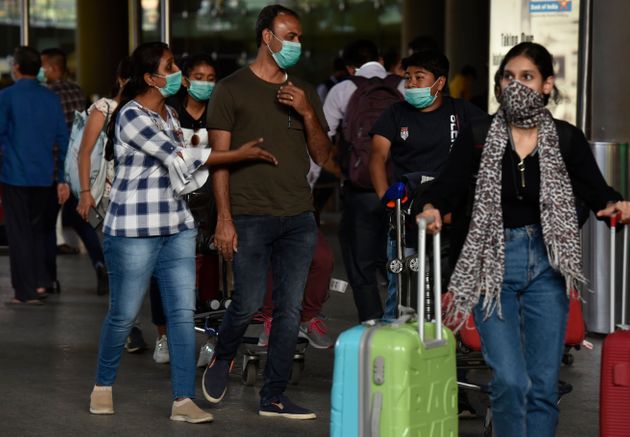
New Delhi (NVI): Universal screening of all passengers coming from Australia, United Kingdom and the United States will be done at 30 designated airports in India and assess their risk profile for their quarantine or isolation, the Union Health Ministry has announced.

The Health Ministry has released a directive in this regard to all the chief secretaries, airport health organisations and officers concerned, saying universal screening is being expanded in view of rise in number of cases and deaths being reported in these countries.

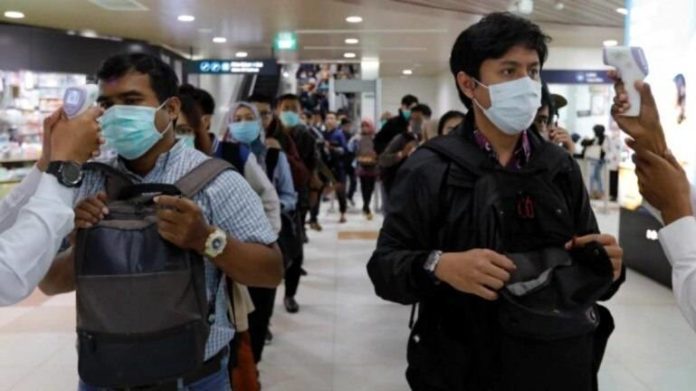
Passengers arriving from 12 countries including China, South Korea, Japan, Italy, Iran, Singapore, Thailand, Malaysia, Hong Kong, Vietnam, Nepal, and Indonesia are already being screened.

Till now, a total of 271 positive cases of coronavirus have been reported in India, according to Indian Council of Medical Research.

Whatsapp helpdesk set up for COVID-19

Prime Minister Narendra Modi

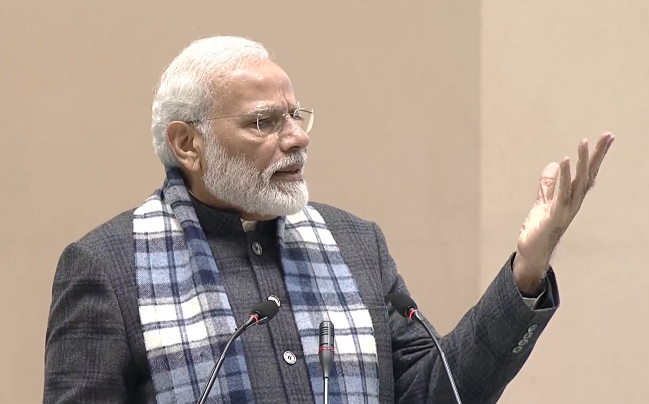
New Delhi (NVI): Prime Minister Narendra Modi today shared a link to the government’s Whatsapp MyGov Corona Help Desk, which has been set up to check misinformation about coronavirus.

“Sharing correct information, avoiding incorrect panic. Here is an effort by WhatsApp and government to ensure you receive accurate and verified information on Coronavirus,” PM Modi tweeted.

In a series of tweets, he also praised Twitter and Google for taking their initiative to curb fake news and spread awareness about coronavirus and its related updates among the people.

Twitter India launched a dedicated COVID-19 page where it shows all the tweets about Coronavirus from the Indian authorities.

While Google has initiated a new campaign called “Do the Five”, which suggests people should wash hands often, use elbow while coughing, keep a safe distance from other people, should not touch face and stay at home if possible.

3 Kashmiri scholars fled from AMU quarantine; traced in Kashmir

Aligarh Muslim University

Mubashir Bukhari

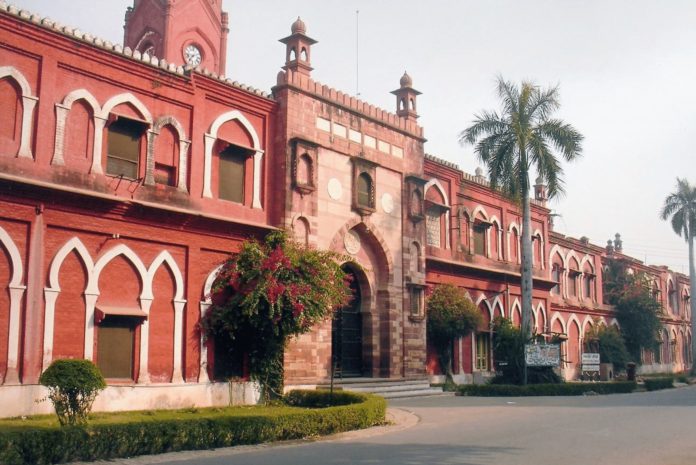
Srinagar (NVI): Jammu and Kashmir administration today traced three out of four Ph.D scholars who had escaped during quarantine from Aligarh Muslim University.

On March 18, four Ph.D. scholars from Kashmir had escaped from the quarantine ward in Aligarh. These scholars had returned to India from the UAE and their university had kept them  in quarantine.

A letter issued by the medical authorities at the AMU had said three scholars fled the isolation wards without informing the authorities

While three of them have been traced, the fourth Kashmiri scholar is still untraced.

Two scholars were traced in north Kashmir’s Baramulla district, while one was traced in Anantnag district. They have been shifted to Health Centres for examination.

Deputy Commissioner Srinagar, Shahid Choudhary said in a tweet said, “Unfortunate. Anyone hiding travel history/avoiding screening/facilitating exits could be guilty of culpable homicide. Threat is at doorsteps. Let’s behave.”

Jammu and Kashmir Students Association spokesperson Nasir Khuehami claimed these scholars were denied proper quarantine facility at AMU and compelled to seek refuge in isolation at home. “AMU administration, in order to save its skin, released the notice shortly after the said scholars returned home,” he said in a tweet.

He further said, “The interesting point is that one of the AMU research scholars from Department of Botany with a recent travel history to Spain, attended his Lab as usual without being quarantined or self-isolating himself.”

COVID-19 positive people found traveling in trains, Indian Railways warns

New Delhi (NVI): A number of passengers who travelled by various trains in India over the last few days have been tested positive, prompting the Indian Railways today to advise people not to travel by passenger and long-distance trains unless absolutely necessary.

“Passengers are advised to avoid non essential travel for the safety of fellow citizens,” said a tweet by Ministry of Railways.

“8 passengers who had travelled on AP Sampark Kranti Express from Delhi to Ramagundam on March 13 have tested positive of COVID-19 yesterday,” said a tweet by the Ministry of Railways.

In another tweet, the ministry said, ”4 passengers travelling on Godan Express (Train 11055) from Mumbai to Jabalpur on March 16 in B1 Coach have been tested positive for COVID-19 yesterday. They came to India from Dubai last week. All concerned have been alerted to take necessary action.”

It added, “Such cases are being found on Railways. Public is requested not to travel on passenger and long distance trains unless absolutely necessary. Be safe and keep others safe.”

Microplastics are present everywhere: UNEP report

Representational image

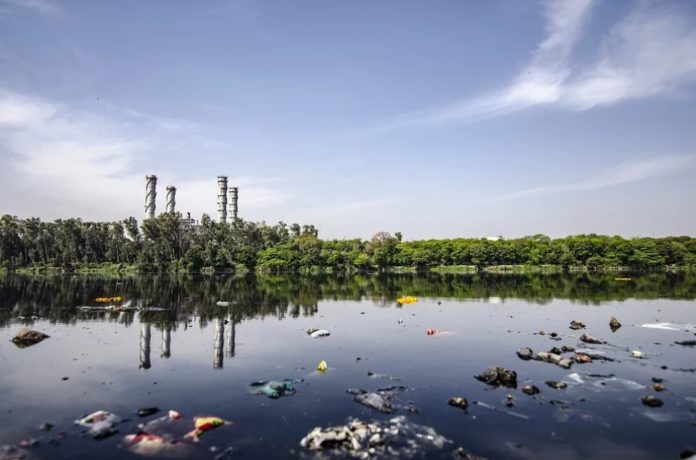
New Delhi (NVI): Microplastics are present everywhere, be it in fresh water, marine ecosystems and soils, according to analysis of water and sediment worldwide, conducted by the United Nations Environment Programme (UNEP).

Protecting water bodies and the landscape from microplastics is a major issue.

Microplastics are very small pieces of plastic that pollute the environment, defined as less than 5mm in size.

The demand for plastic and its produce is rising for more and more every year, much of which eventually finds its way into rivers, lakes and the ocean. Many plastic products are essential, but there is a need to consider the trade-offs which include microplastic pollution and global heating, according to a UNEP report.

In Europe and North America, hundreds of thousands of tonnes of microplastics are added to soil annually through sewage sludge.

Microplastics are directly released into the environment in the form of small particulates. These enter water bodies through different pathways, including atmospheric deposition, run-off from contaminated land or through municipal wastewater.

This is a major concern as they not only create water pollution and remain in the atmosphere for millions of years, but also causes gut blockage and starvation for many marine species like zooplankton, river-bed organisms, and mussels through their intestinal tract.

Over time, plastic products tend to shed smaller particles through natural weathering processes, creating microplastics.

These come in a large variety of sizes, colours and chemical compositions, and include fibres, fragments, pellets, flakes, sheets or foams.

Microfibres, which have been reported as the most abundant type of microplastics in wastewater and freshwaters, are of particular concern.

“Water pollution by microplastics is complex and multidimensional, and managing it effectively requires a range of responses,” says Birguy Lamizana, a wastewater expert with the United Nations Environment Programme (UNEP) and co-author of a study on microplastics in wastewater.

“Around 35 per cent of microplastics in the oceans are believed to originate from the washing of synthetic textiles,” says Javier Mateo-Sagasta, the water quality coordinator with the International Water Management Institute and a co-author of the study.

He added that, “One possible solution is to develop household-based systems to prevent microplastics from being released into sewer lines or the environment. Technologies exist, for instance, which are able to remove 97 per cent of microfibres.”

Three more test positive in Ladakh; strict restrictions in Kashmir

Mubashir Bukhari

Srinagar (NVI): Three more women have tested positive for coronavirus in Ladakh, raising the number of such patients in the Union Territory to 13, officials said today.

These three women have no travel history to any coronavirus-affected country, officials at Leh-based Chief Medical Officer (CMO) said.

“These patients were in contact with the affected,“ officials said.

In Jammu and Kashmir, four cases have tested positive while 3330 travellers and other people in contact with suspected cases have been enlisted for observation.

At least, 2465 people have been kept under home quarantine while 44 are in hospital quarantine.

People, who are under home surveillance, stand at 416 while as 405 people have completed their 28-day surveillance period.

Meanwhile, strict restrictions on movement and assembly of people continued in Kashmir for the third consecutive day as part of efforts to contain the spread of the coronavirus.

Adequate security forces had been deployed and barricades put up at several places in Srinagar.

Markets across the Valley are shut, public transport is off the roads and train services too are suspended.

Educational institutes and public places such as gymnasiums, parks, clubs and restaurants have been shut down.

Coronavirus cases surge to 271 in India

New Delhi (NVI): The total number of coronavirus cases in India has climbed to 271 positive cases were reporetd from various parts of the country, according to Indian Council of Medical Research.

Several new cases were reported from Madhya Pradesh, Kerala, Maharashtra, Gujarat and various other parts of the country.

Four deaths have been reported so far due to coronavirus, one each from Punjab, Maharashtra, Delhi and Karnataka.

A total of 63 cases have been reported in Maharashtra, with as many as 11 new cases been reported on Friday, according to Maharashtra government officials.

In Uttar Pradesh, the total number of COVID-19 cases has risen to 23, Chief Minister Yogi Adityanath said.

Rajasthan has also reported 6 positive cases taking the total number of cases to 23.

The country will be observing ‘Janata Curfew’ tomorrow in pursuance to appeal made by Prime Minister Narendra Modi.

Furthermore, India’s week-long ban on international commercial flights comes into effect from tomorrow.

Globally, an estimated 2,35,000 people have been infected by the coronavirus and close to 10,000 have died, according to the World Health Organization (WHO).

Rains expected in North India

New Delhi (NVI): Rains and thundershowers are expected in some parts of North India by March 25, according to weather forecasters.

These rains will lead to a marginal drop in temperature in Delhi and NCR and also in Punjab and Haryana.

Light rains were recorded during the last 24 hours in multiple cities such as Amritsar, Churu, Bikaner, Jaipur and Delhi NCR, the Skymet weather forecaster said today.

Now, the Western Disturbance is moving away but its impact will be seen today over parts of Punjab, Haryana, Delhi and West Uttar Pradesh. Although rains will be patchy and light in nature and will be observed only for a short duration.

According to skymet, the weather will clear up on March 22 and 23.

Meanwhile, in Delhi, the minimum temperature today was recorded at 18 degrees Celsius.

However, the maximum and minimum temperatures are expected to rise over the next few days, according to IMD.

MUST READ