
Thursday, April 2, 2026
Home Blog Page 1337

Corona lessons: Zoonoses on rise due to destruction of wild habitats

New Delhi (NVI): As the world continues to see unprecedented destruction of wild habitats by human activity, diseases passed from animals to humans are on the rise.

According to WHO, an animal is the likley source of the 2019 coronavirus (COVID-19). The virus has infected lakhs of people worldwide and has affected the global economy.

Scientists suggest that degraded habitats may encourage more rapid evolutionary processes and diversification of diseases, as pathogens spread easily to livestock and humans.

Coronaviruses are zoonotic, meaning they are transmitted between animals and people. Previous investigations found that the Severe Acute Respiratory Syndrome (SARS) was transmitted from civet cats to humans, while the Middle East Respiratory Syndrome passed from dromedary camels to humans.

UNEP’s Frontiers 2016 Report on Emerging Issues of Environment Concern shows zoonoses – diseases which can be transmitted to humans from animals – threaten economic development, animal and human well-being, and ecosystem integrity.

In the past few years, several emerging zoonotic diseases made world headlines as they caused, or threatened to cause, major pandemics. These include Ebola, bird flu, Rift Valley fever, West Nile virus and Zika virus disease.

Diseases passed from animals to humans are on the rise, as the world continues to see unprecedented destruction of wild habitats by human activity. Scientists suggest that degraded habitats may encourage more rapid evolutionary processes and diversification of diseases, as pathogens spread easily to livestock and humans.

According to the World Health Organization, bats are the most probable carrier of the COVID-19 but added that it is possible that the virus was transmitted to humans from another intermediate host, either a domestic or a wild animal.

“Therefore, as a general rule, the consumption of raw or undercooked animal products should be avoided,” said the World Health Organization in a statement. “Raw meat, raw milk or raw animal organs should be handled with care to avoid cross-contamination with uncooked foods.”

“Humans and nature are part of one connected system, and nature provides the food, medicine, water, clean air and many other benefits that have allowed people to thrive,” said Doreen Robinson, Chief of Wildlife at the United Nations Environment Programme (UNEP).

According to the report, in the last two decades, emerging diseases have had direct costs of more than USD100 billion, with that figure jumping to several trillion dollars if the outbreaks had become human pandemics.

From the point of view of the environmental community, it is important to address the multiple and often interacting threats to ecosystems and wildlife to prevent zoonoses from emerging, including habitat loss and fragmentation, illegal trade, pollution, invasive species and, increasingly, climate change.

Taiwan says it has started clinical trials of drug for treatment of COVID-19

Taipei (NVI): As coronavirus continues spread across the globe, Taiwan has said it has started clinical trials of the antiviral drug remdesivir for the treatment of COVID-19.

Taiwan’s Central Epidemic Command Center (CECC) expert Chang Shang-chun has said remdesivir is a highly anticipated drug that many believe could be a potential treatment for COVID-19 patients, according to Taiwan’s Central News Agency (CNA).

Chang did not elaborate which COVID-19 patients would be included in the trials, except to say that they have already begun in Taiwan.

In addition to remdesivir, he revealed that anti-HIV drugs, combined with interferons, are among the drugs that are been tested on coronavirus patients in the country. Chang said local medical experts are also continuing to assess other options for the treatment of COVID-19, the CNA reported.

Originally developed by the American drugmaker Gilead Sciences for use against the Ebola virus, remdesivir has been widely discussed as a possible coronavirus treatment, following positive results from Chinese and American doctors who have administered the drug experimentally, it said.

Gilead, in a statement on January 31, had said it was working with the Chinese authorities to conduct a clinical trial involving the use of remdesivir on coronavirus patients.

In late February, the CECC announced Taiwanese research teams had successfully synthesized the investigational antiviral drug, and were preparing to carry out clinical trials on COVID-19 patients in Taiwan.

Health Minister Chen Shih-chung, who also heads the CECC, said at the time that Taiwan will set up strict standards for the selection of potential participants in the trials. However, the details were not disclosed.

COVID-19: CISF sensitised at airports

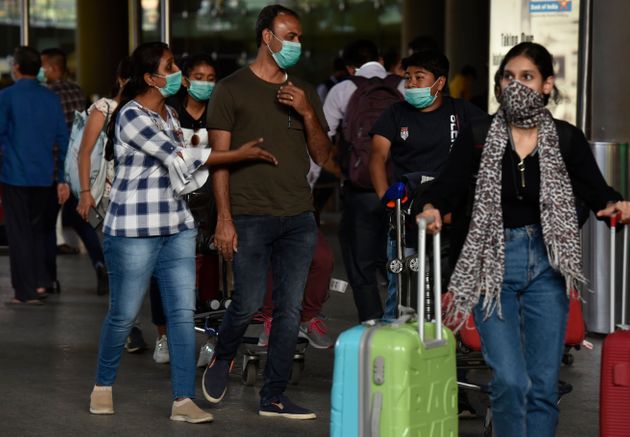
New Delhi (NVI): In a bid to extend help passengers arriving from coronavirus-hit countries, additional CISF personnel have been deployed at ‘Triage areas’ of airport arrival terminals in the country.

The CISF personnel have been sensitised on frisking norms and have been equipped with infrared thermometers to check passengers as well as their own staff.

The force personnel, who have been deployed to at least 63 airports in the country, have also been sensitised to maintain minimum distance from a passenger but ensuring proper screening at the same time.

37 central laws extended to J&K

New Delhi (NVI):  Eight months after abolition of the special status of Jammu and Kashmir, the Union government has issued a notification extending to the Union Territory 37 central laws, including Goods and Services (GST) Act, Prevention of Corruption Act, Representation of People Act and Census Act.

The order, notified by the Ministry of Home Affairs (Department of Jammu, Kashmir and Ladakh in the Gazette of India, will come into force with immediate effect.

Issued after the nod of Union Cabinet, the order  will allow these central laws in the Concurrent List to be implemented in the Union Territory of Jammu and Kashmir.

This Order will be called the Jammu and Kashmir Reorganisation (Adaptation of Central Laws) Order, 2020.

The provisions will come into force with immediate effect in the Union Territory of Jammu and Kashmir, which came into being on October 31, 2019, after the Centre, on August 5, 2019, announced the abrogation of Article 370 provisions for erstwhile Jammu and Kashmir State. The state was bifurcated into two Union territories of Jammu and Kashmir, and Ladakh.

The adaptation of the central laws in the Concurrent List, with required modifications and amendments, will ensure administrative effectiveness and smooth transition with respect to the Union Territory of Jammu and Kashmir thereby removing any ambiguity in their application in line with the Constitution of India.

The Central laws applied to J&K with modification are;

  1. The Advocates Act, 1961 (25 of 1961);
  2. The All India Services Act, 1951 (61 of 1951);
  3. The Ancient Monuments and Archaeological Sites and Remains Act, 1958 (24 of 1958); 4. The Arbitration and Conciliation Act, 1996 (26 of 1996);
  4. The Census Act, 1948 (37 of 1948);
  5. The Central Goods and Services Tax Act, 2017 (12 of 2017);
  6. The Cinematograph Act, 1952 (37 of 1952);
  7. The Code of Civil Procedure, 1908 (5 of 1908);
  8. The Code of Criminal Procedure, 1973 (2 of 1974);
  9. The Collection of Statistics Act, 2008 (07 of 2009);
  10. The Commissions of Inquiry Act, 1952 (60 of 1952);
  11. The Court-Fees Act, 1870(7 of 1870);
  12. The Dentists Act, 1948 (16 of 1948);
  13. The Family Courts Act, 1984 (66 of 1984)
  14. The Government Securities Act, 2006 (38 of 2006);
  15. The High Court Judges (Salaries and Conditions of Services) Act, 1954 (28 of 1954); 17.The Homeopathy Central Council Act, 1973 (59 of 1973);
  16. The Immoral Traffic (Prevention) Act, 1956 (104 of 1956);
  17. The Income-Tax Act, 1961 (43 of 1961);
  18. The Indian Forest Act, 1927 (16 of 1927);
  19. The Indian Medicine Central Council Act, 1970 (48 of 1970);
  20. The Indian Penal Code, 1860 (45 of 1860);
  21. The Insolvency and Bankruptcy Code, 2016 (31 of 2016);
  22. The Limitation Act, 1963 (36 of 1963);
  23. The National Co-Operative Development Corporation Act, 1962 (26 of 1962);
  24. The Official Languages Act, 1963 (19 of 1963);
  25. The Press and Registration of Books Act, 1867 (25 of 1867);
  26. The Press Council Act, 1978 (37 of 1978);
  27. The Prevention of Corruption Act, 1988 (49 of 1988);
  28. The Protection of Human Rights Act, 1993 (10 of 1994);
  29. The Public Debt Act, 1944 (18 of 1944);
  30. The Railway Property (Unlawful Possession) Act, 1966 (29 of 1966);
  31. The Real Estate (Regulation and Development) Act, 2016 (16 of 2016);
  32. The Representation of People Act, 1950 (43 of 1950)
  33. The Right to Fair Compensation and Transparency in Land Acquisition, Rehabilitation and Resettlement Act, 2013 (30 of 2013);
  34. The Securitisation and Reconstruction of Financial Assets and Enforcement of Security Interest Act, 2002 (54 of 2002) and
  35. The Textiles Committee Act, 1963 (41 of 1963).


These central laws could not be implemented in J&K earlier because of Article 370.

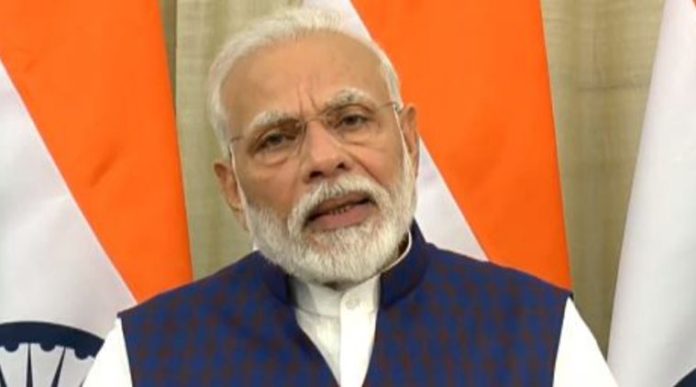
Justice has prevailed: PM

(Pic courtesy: DD News)

New Delhi (NVI): Hours after all the four convicts in Nirbhaya gangrape and murder case faced gallows today, Prime Minister Narendra Modi said that it is important to ensure the dignity and safety of women in the country.

“Justice has prevailed. It is of utmost importance to ensure dignity and safety of women. Our Nari Shakti has excelled in every field. Together, we have to build a nation where the focus is on women empowerment, where there is emphasis on equality and opportunity,” he said in a tweet.

Mukesh Singh (32), Pawan Gupta (25), Vinay Sharma (26) and Akshay Kumar Singh (31) were executed at 5.30 am. They were sentenced to death for the rape and brutal assault of a 23-year-old woman in a moving bus in the national capital on December 16, 2012.

International Day of Happiness 2020

New Delhi (NVI): Even as the coronavirus outbreak casts a long shadow over the well-being of people worldwide, the International Day of Happiness aims at recognizing the need to celebrate life and remain calm in times of crisis.

March 20 is observed as International Day for Happiness every year globally. The day was initially founded and carried by United Nations New World Order project.

The campaign theme of International Day of Happiness 2020 is “Happiness For All, For Ever”. It mainly focuses on what we have in common, rather than what divides us.

On the occasion, Lok Sabha Speaker Om Birla tweeted extended his greeting to the people and said the world is facing a grave health challenge in the coronavirus today.

“Greetings & best wishes on World Happiness Day. Today, when humanity globally is facing a grave challenge to health & well being, let us commit ourselves to spreading happiness, a healthy lifestyle & public hygiene,” he tweeted.

The very first International Happiness Day was celebrated on March 20 in the year 2013 and since then, it is being celebrated every year worldwide.

The International Day of Happiness was founded by Jayme Illien, CEO of the United Nations New World Order project in 2006.

The UN in 2015 launched 17 Sustainable Development Goals, which seek to end poverty, reduce inequality, and protect our planet.

There are many ways in which you can lift up your spirits and celebrate the happiness on your very own, like getting good sleep, eating healthy, physical activity, reading a book, etc.

Italy’s coronavirus death toll surpasses China’s 

New Delhi (NVI): It seems like the pandemic that originated in China has now engulfed other parts of the world with several countries in Europe facing the devastating effect.

The death toll due to the coronavirus in Italy has surpassed that of China after deaths in the European country rose by 427 in a day.

The total number of deaths due to COVID-19 in Italy now stands at 3,405, while China has reported 3,245 deaths to date.

However, Italy has reached its bleak milestone of recording no new infections, just like Wuhan, the Chinese city where the coronavirus first emerged three months ago. This is a sign that the efforts put in place are working.

Meanwhile, officials reported deaths had jumped by more than a third in Spain to 767, while the number of cases rose by a quarter to 17,149, making Spain the second worst-hit country in Europe after Italy.

Washington in the US reported eight more deaths from the coronavirus, bringing the death toll there to 74, the most of in any American state, according to the media reports.

In another development, David Beasley, UN world food programme director, had tested positive for coronavirus after a trip to Canada. The former governor of South Carolina said his symptoms were mild and he was in good spirits.

At the United Nations in New York, Secretary-General Antonio Guterres said the world is “at war with a virus” and warned that “a global recession, perhaps of record dimensions, is a near certainty.”

“If we let the virus spread like wildfire – especially in the most vulnerable regions of the world – it would kill millions of people,” he said.

The number of global deaths due to the pandemic has cross 10,000 while at least 2,44,500 people have been infected.

COVID-19: 195 cases in India, four dead so far

New Delhi (NVI): The total number of coronavirus cases in India has climbed to 195 after 35 new cases were reported from various parts of the country.

Several new cases were reported from Punjab, West Bengal, Uttar Pradesh, and Andhra Pradesh, according to reports.

In another case, 69-year-old Italian tourism has died in Jaipur. As per some news reports, the elderly tourist had recovered from COVID-19 and tested positive. He died of cardiac arrest at a private hospital later. However, an official word in this regard is still awaited.

At present, there are 171 active coronavirus patients in the country, according to the data released by the Ministry of Health and Family Welfare.

Meanwhile, Prime Minister Narendra Modi addressed the nation yesterday and urged people to stay indoors and called for a ‘janata curfew’ on March 22, asking citizens to voluntarily stay indoors from 7 am to 9 pm.

In another development, as India continues to reel under the threat of COVID-19, the government yesterday decided to not allow any international commercial passenger aircraft to land during March 22-29.

The number of global deaths due to the pandemic has cross 10,000 while at least 2,44,500 people have been infected. The most deaths have been reported from Italy, where more than 3,400 people have died, followed by China with 3,132 fatalities.

Rains, thundershowers expected in Pb, Hry, Delhi-NCR

Representational image

New Delhi (NVI): With the western disturbance reaching northern parts of Jammu and Kashmir, rains and thundershowers may occur in Punjab, Haryana, and Delhi-NCR over the next 24 hours.

Apart from this, light to medium rains are also expected in some parts in J&K and Himachal Pradesh. This has also raised hopes for light snowfall in some higher areas in the region.

Meanwhile, in Delhi, the maximum temperature today was recorded at 31 degrees Celsius and the minimum at 16 degrees Celsius. The national capital witnessed light to medium rains late last night as Delhiites woke up to a cool breezy morning.

However, the maximum and minimum temperature is expected to rise over the next few days, according to IMD. rain activities may see another surge from March 22 in Delhi-NCR.

Apart from that, many parts of east Madhya Pradesh and Chhattisgarh will continue to witness rains and thundershowers today while isolated pockets of the Vidarbha region may also observe similar weather activities.

The phenomenon is expected to continue till tomorrow in the region. Thereafter, the rainfall activities will subside from the Vidarbha region but East Madhya Pradesh will continue to receive isolated rains.

Since last 24 hours, the eastern parts of Madhya Pradesh and South Chhattisgarh have been experiencing intense showers.

According to SkymetWeather, the reason for these rains can be attributed to the strengthening of an anti cyclonic circulation over the Bay of Bengal that is feeding moisture towards the central and eastern parts of the country so far.

Meanwhile, the state of Chhattisgarh will continue with light to moderate rain and thundershowers.

The unseasonal rains that started at the beginning of winters are still continuing in the month of March.

For now, rains are expected to continue for the next 24 to 48 hours in many parts of Chhattisgarh, Vidarbha, and East Madhya Pradesh.

Nirbhaya case: All 4 convicts hanged in Tihar jail

New Delhi (NVI): The four convicts in Nirbhaya gangrape and murder case were finally hanged to death today. They were hanged just before the crack of the dawn at Tihar Jail in New Delhi after their petitions filed before a lower court, the Delhi High Court and the Supreme Court were rejected in late-night hearings.

Mukesh Singh (32), Pawan Gupta (25), Vinay Sharma (26) and Akshay Kumar Singh (31) were executed at 5.30 am. They were sentenced to death for the rape and brutal assault of a 23-year-old woman in a moving bus in the national capital on December 16, 2012.

This is also the first time that four convicts have been simultaneously executed in the history of Tihar jail. It is South Asia’s largest prison complex that houses more than 16,000 inmates.

The horrific crime shocked the nation as many people, including Nirbhaya’s parents waited for justice for the past seven years. The incident had sparked massive nation-wide protests, calling for stricter laws for crimes against women and tighter security.

After the execution today, Nirbhaya’s mother said the justice was delayed but finally delivered. As per media reports, she has also said the top court must lay guidelines for dealing with delaying tactics in such cases and ensure speedy trial and justice.

MUST READ