Thursday, April 2, 2026
Home Blog Page 1339

J&K: Doctors helping patients through phone calls

Mubashir Bukhari

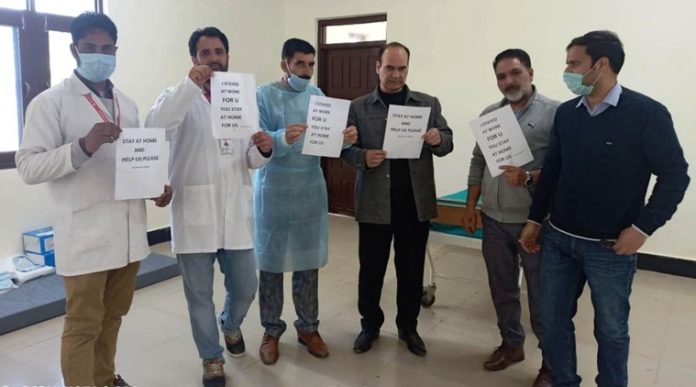
Srinagar (NVI): As the coronavirus fear has gripped the whole country including Kashmir, Valley-based doctors have now come to the rescue of people, and asking them to contact them through Whatsapp or phone calls, instead of visiting hospitals.

To restrict the infection, the doctors have suggested people to avoid visiting the hospitals unless they are in dire and serious need of medical aid.

“I request parents/people to call me or text on 9796337171,” the President of Doctors Association of Kashmir (DAK), Suhail Naik posted on his Facebook page.

Another doctor from SMHS Hospital also asked people to “Stay at home and stay safe. My private OPDs stand cancelled. In case of an emergency, contact me on 9070888000.”

Despite restrictions and advisories, huge inflow of patients in the outpatient departments of government hospitals was giving sleepless nights to doctors and administration in Kashmir.

Authorities today decided to close OPD section at SMHS hospital also.

The decision to close Out Patient department (OPD) section at SMHS hospital has been taken to stem the spread of coronavirus.

Irfan Gul, Government Medical College, Anantnag, also took to social media to convey his message. “In case of medical emergency call on 7889927958,” he posted.

Besides this, Sheri-Kashmir Institute of Medical Sciences has cancelled the leave of all its doctors and support staff.

The Doctors Association Kashmir (DAK) on Sunday held an emergency meeting in this regard and discussed the issues concerning doctors in treating and screening of people with coronavirus symptoms.
Half of the world’s students miss school due to COVID-19: UNESCO

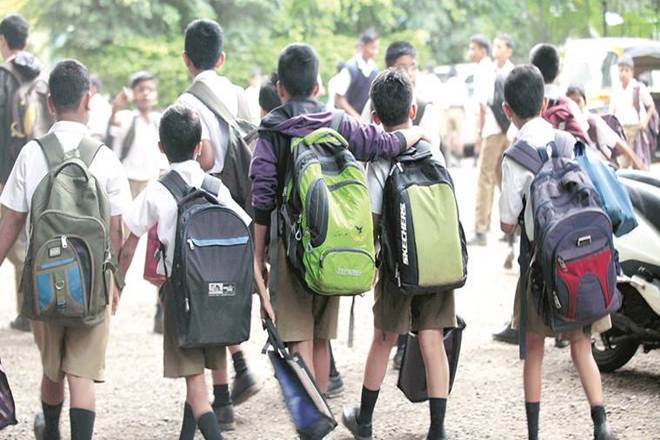
Representational image

New Delhi (NVI): More than 850 million children and youth, or about half of the world’s student population, are not attending schools and universities due to coronavirus pandemic, says a UNESCO report.

These students had to stay away from their schools and colleges to prevent themselves from the deadly infection that has claimed more than 8,700 lives globally, so far.

Nationwide closures are in force in 102 countries and local shut-downs in 11 others, according to the report. UNESCO called it an “unprecedented challenge”.

This represents more than a doubling in the number of learners prevented from attending educational institutions, with further increases expected.

Countries around the world are racing to fill the void with distance learning solutions but the uncertain duration of the closures adds further complications to their efforts.

UNESCO also said that countries worldwide were rushing to fill the void by offering real-time video classes and other high-tech solutions.

As a response to the global crisis, UNESCO is also launching a Global COVID-19 Education Coalition that brings together multilateral partners and the private sector, including Microsoft and the Global System for Mobile Communications (GSMA), to help countries deploy remote learning systems so as to minimize educational disruptions and maintain social contact with learners.

“The current situation imposes immense challenges for countries to be able to provide uninterrupted learning for all children and youth in an equitable manner. We are stepping up on our global response by creating a coalition to ensure a fast and coordinated response. Beyond meeting immediate needs, this effort is an opportunity to rethink education, scale-up distance learning and make education systems more resilient, open and innovative,” UNESCO Director-General Audrey Azoulay said.

UNESCO mentioned that the current situation imposes immense challenges for countries to be able to provide uninterrupted learning for all children and youth in an equitable manner. Some of these problems include:

Interrupted learning: The disadvantages are disproportionate for underprivileged learners who tend to have fewer educational opportunities outside school.

  1. Nutrition: Many children and youth rely on free or discounted school meals for healthy nutrition. When schools close, nutrition is compromized.
  2. Protection: Schools provide safety for many children and youth and when they close, young people are more vulnerable and at risk.
  3. Parents unprepared for distance and homeschooling: When schools close, parents are often asked to facilitate the children’s learning at home and can struggle to perform this task. This is especially true for parents with limited education and resources.
  4. Unequal access to digital learning portals: Lack of access to technology or good internet connectivity is an obstacle to continued learning, especially for students from disadvantaged families.
  5. Gaps in childcare: In the absence of alternative options, working parents often leave children alone when schools close and this can lead to risky behaviors, including increased peer pressure and substance abuse.
  6. High economic costs: Working parents are more likely to miss work to take care of their children when schools close. This results in wage loss and decreased productivity.
  7. Increased pressure on schools and school systems that remain open: Localized school closures place an additional burden on schools as parents and officials redirect children to schools that are open.
  8. Rise in dropout rates: It is a challenge to ensure children and youth return and stay in school when schools reopen, especially after protracted closures.
  9. Social isolation: Schools are hubs of social activity and human interaction. When schools close, many children and youth miss out on social contact that is essential to learning and development.

Nirbhaya convicts to be hanged tmrrw

New Delhi (NVI): The Supreme Court today dismissed a curative petition filed by Pawan Kumar Gupta, one of the convicts in the Nirbhaya gangrape and murder case, a day before the scheduled hanging of all four convicts is to take place.

Pawan had filed the plea to commute his death sentence into life imprisonment claiming that he was a minor at the time of the incident in 2012.

The decision was taken by a six-member bench of the Supreme Court.

Earlier, three of four convicts in the case approached the International Court of Justice (ICJ) seeking a stay on the execution of their death sentence.

All the four convicts are scheduled to be hanged on March 20 at 5.30 am after a trial court in Delhi issued fresh death warrants for the fourth time.

COVID-19: Restrictions imposed in Srinagar, markets shut

Mubashir Bukhari

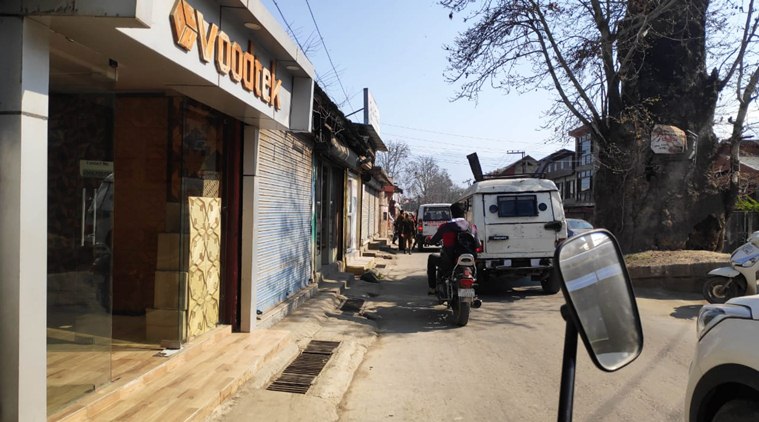
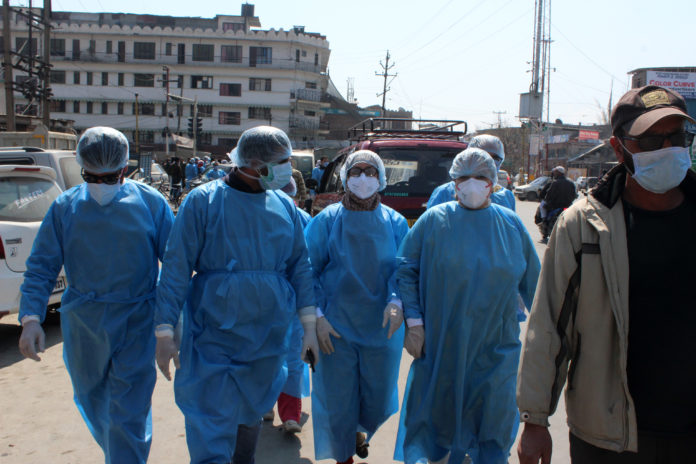
Srinagar (NVI): Strict restrictions have been imposed in Srinagar to prevent the spread of coronavirus after an elderly woman was tested positive yesterday.

The area within a 300-metre radius from the house of the 67-year-old COVID-19 patient in Khanyar locality has been sealed.

Police and paramilitary forces have erected barricades and laid barbed wires in different parts of the city to prevent the movement of people.

Minimal traffic movement can be seen plying on the city as well as inter-district roads.

Besides, police have asked the shopkeepers to shut the shops to ensure no movement of public on roads.

“We were asked to shut the shops as a preventive measure,” said a shopkeeper from Lal Bazaar area of old Srinagar.

From City Center Lal Chowk to busy downtown markets, authorities have asked all the shopkeepers and vendors to remain shut.

Police deployment can be seen on all the important junctures to prevent the gathering of people.

Deputy Commissioner, Srinagar, Shahid Iqbal Chaudhary in a tweet said that restrictions on the movement and assembly of people were to prevent the spread of the virus.

“Restrictions imposed in Srinagar for containment of any likely spread of coronavirus. Medical teams are following SOP. There will be initial problems for a day or so. Administration will ensure effective services and supplies. Please stay at home. Contact district control room for any help,” DC said in a tweet.

Chaudhary also urged all the people, who might have come in contact with the coronavirus positive patient after her return from Saudi Arabia on Monday, to report at the nearest health facility or contact the control room.

Meanwhile, Section 144 of the Code of Criminal Procedure (CrPC) has been imposed in Anantnag district to avoid the spread of novel coronavirus in the region.

The district magistrate of Anantnag, Bashir Ahmad Dar, has banned the assembly of five or more people in any public place till March 31.

The administration has also imposed section 144 in north Kashmir’s Baramulla district and Ganderbal to stop the spread of Coronavirus.

District Magistrate Baramulla imposed the ban on the assembly of five or more people in any public place.

Unseasonal rains expected in Odisha, Jharkhand

New Delhi (NVI): Rainfall activities are expected to increase in Odisha from today while many other parts in Jharkhand may also observe light to moderate rain.

Odisha has received light rains in the past 24 hours as well. These weather activities will continue till March 22.

At present, an anti-cyclonic circulation is already persisting over the west-central Bay of Bengal and it is feeding moisture towards the eastern parts of the country.

Therefore, rainfall activities will also cover many parts of West Bengal, as well as, South Bihar from tomorrow.

In Delhi, the maximum temperature today was recorded at 30 degrees Celsius and the minimum at 16 degrees Celsius.

According to IMD, the maximum and minimum temperature is expected to rise in the next few days.

Minimise travel by public: Road Ministry

New Delhi (NVI): Ministry of Road Transport and Highways has urged all the States and Union Territories to take necessary steps for containing novel coronavirus outbreak in the means of public transport.

In a letter written to all states and UTs, the ministry has highlighted the importance of social distancing among public for controlling the disease.

The Ministry has also requested to minimise transport numbers among the people. If it is not unavoidable, refund of fare may be considered against advance bookings, the ministry said in a statement.

Further, the States/UTs have been requested to make arrangements for sending SMSs to the passengers for making them aware of these steps. As per latest reports, the total number of positive cases of coronavirus was at 147 in Indian. Three people have died of the disease so far.

PM to address nation on COVID-19 tmrw

Prime Minister Narendra Modi

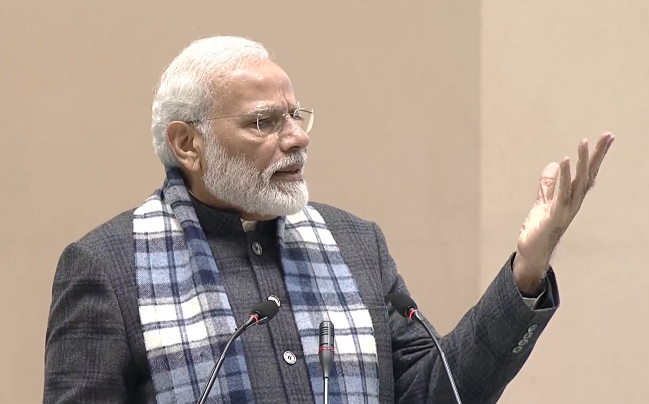
New Delhi (NVI): Prime Minister Narendra Modi will address the nation tomorrow at 8 PM and will talk about issues related to coronavirus and efforts to combat it.

Earlier today, PM Modi chaired a high-level meeting to review the ongoing efforts to contain the virus. “Ways to further strengthen India’s preparedness were discussed,” the PMO said in a tweet.

During the meeting today, the PM emphasised on actively engaging with individuals, local communities and organisations in chalking our mechanisms to fight the COVID-19 menace. He also urged officials and technical experts to deliberate on the steps to be taken next. ‬

First coronavirus case confirmed in Kashmir division

Srinagar (NVI): A Saudi returned woman was tested positive for coronavirus in Srinagar today, making her the first confirmed case in the Kashmir division.

Confirming the development, District Development Commissioner, Srinagar Dr Shahid Choudhary wrote on his Twitter handle: “There will be restrictions on public transport, assembly of people and some other measures, in Srinagar from tomorrow. Steps are being taken in view of a positive case detected. Further updates to follow.”

He added that the woman had recently arrived from Saudi Arabia.

Government spokesperson Rohit Kansal added more details about the case: “First positive case in Kashmir- Khanyar, Srinagar.  History of foreign travel. Arrived on 16/3/2020.  Put in Isolation. Surveillance started in 300m area. Request all to cooperate. Also immediately self-report any symptoms.”

In Jammu and Kashmir, three cases were tested positive earlier, with this new case, the number has gone to four in this UT.

Study claims Type 1 diabetes is ‘two separate conditions’

Representational image

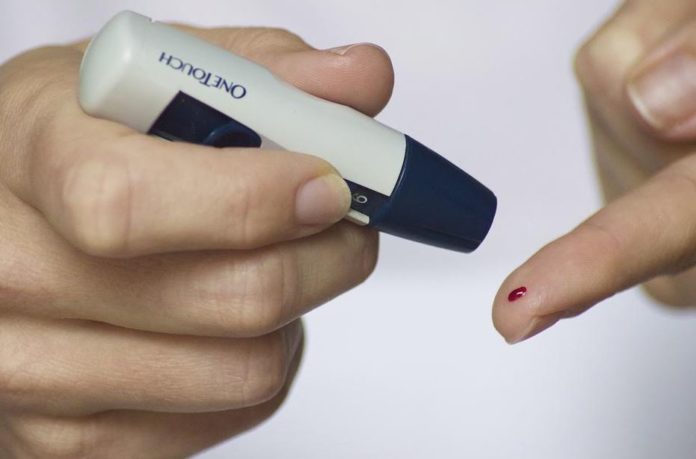
New Delhi (NVI): Type 1 diabetes itself comprises two distinct sub-types depending on age, a new study has found.

Research conducted at the University of Exeter in the UK found that children who were diagnosed with diabetes under seven years of age do not process insulin properly and the cells that make it are quickly destroyed.

On the other hand, those who are diagnosed over 13 often continue to produce normal insulin, scientists said.

The findings have, however, reignited an important question that whether these “dormant” insulin-producing cells could be reinvigorated to work more effectively.

The study has been published in Diabetologia – the journal of the European Association for the Study of Diabetes. It suggests new names for the two distinct forms – endotypes – of the condition.

Type 1 diabetes diagnosed in youngest children was identified as endotype 1 (T1DE1) while type 1 diabetes in older children was identified as endotype 2 (T1DE2).

In the case of Type 2 diabetes, which is far more common and largely preventable, it is usually identified in adults and is influenced by both lifestyle and genetic factors.

MUST READ