Thursday, July 30, 2026
Home Blog Page 1348

COVID-19 deaths exceed 1,000 in Pakistan; tally rises to 46,915

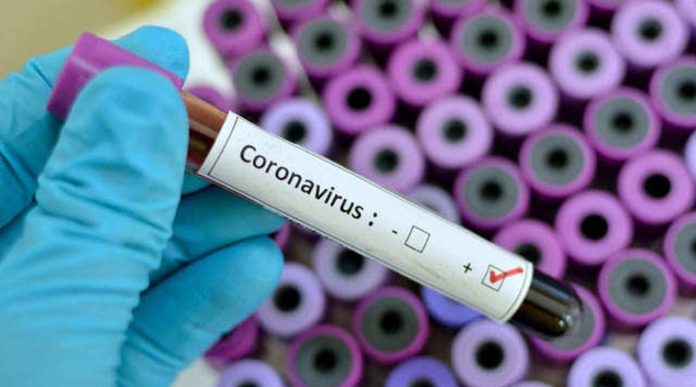
New Delhi (NVI): The total number of positive coronavirus in Pakistan has increased by more than 2,000 cases, taking the overall tally to 46,915 with at least 1,003 fatalities recorded so far.

Looking at the breakdown of cases, Sindh province has reported 18,964 coronavirus cases, highest among all the provinces, while Punjab has 16,685 positive cases.

On the other hand, Khyber-Pakhtunkhwa has recorded 6,554 cases, Balochistan is at 2,885, Gilgit-Baltistan at 556, Islamabad at 1,138 and Pakistan-occupied Kashmir is at 133 cases so far, according to Geo News.

So far 13,101 patients have recovered from the virus, according to the country’s Health Ministry.

Pakistan has started easing in phases the coronavirus lockdown and partially resumed its domestic air services.

Nepal’s COVID-19 tally rises to 427 with 25 new cases

New Delhi (NVI): 25 new COVID-19 cases have been registered in Nepal today, taking the total number of confirmed cases to 427, local media reports said.

According to the country’s Ministry of Health and Population, Kapilvastu district alone has witnessed 13 new cases today.

Likewise, six new cases were identified in Banke district aged between 17-27 years, five in Dhankuta including a woman aged 24 and one in Nawalparasi (west). Among the newly infected cases, 18 are males while seven are females.

Meanwhile, eight coronavirus patients from Udayapur of Province 1 have recovered and have been discharged from the Koshi Hospital in Biratnagar, the reports said.

With this, the number of recovered cases in the country has reached 45, as per media reports.

Apart from this, 2,280 samples have been tested through the PCR method in the last 24 hours, the Nepal ministry has said.

So far, two persons have died of the disease in the country.

Domestic flights to resume from Monday: Hardeep Singh Puri

New Delhi (NVI): Domestic flight operations will resume in a calibrated manner from May 25, Union Civil Aviation Minister Hardeep Singh Puri said today, adding that SOPs for passenger movement are being separately issued.

Taking to Twitter, the minister said that all airports and air carriers are being informed to be ready for operations from May 25. Anticipating the gradual resumption of domestic flight operations, airports across the country have already taken necessary measures regarding maintaining social distancing norms on their premises.

“Domestic civil aviation operations will recommence in a calibrated manner from Monday 25th May 2020. All airports & air carriers are being informed to be ready for operations from 25th May. SOPs for passenger movement are also being separately issued by @MoCA_GoI,” Puri tweeted.


With this, the domestic flights will be resuming after around two months, since their suspension on March 25. Only cargo flights, medical evacuation flights and special flights approved by the DGCA were allowed to operate after the lockdown.

However, no announcement has been made regarding international flight operations and they remain suspended till further orders.

Cabinet approves ‘Atma Nirbhar Bharat Package’ for stranded migrants

Capital Expenditure
Finance Minister Nirmala Sitharaman (File)

New Delhi (NVI): The Union Cabinet, chaired by Prime Minister Narendra Modi, today gave its approval for the allocation of foodgrains to approximately 8 crore migrants or stranded migrants free of cost for the next two months.

Under the package, the migrants will get 5kg foodgrains per person per month for May and June. “It would entail an estimated food subsidy of about Rs 2,982.27 crore,” the Government said in a statement.

The total subsidy provided by the Government is estimated at about Rs.3,109 crore, which includes an estimated food subsidy of about Rs. 2,982 crore. Furthermore, the expenditure towards intra-state transportation and handling charges will account for about Rs 127 crore, which will be borne fully by the Centre, the Government said.

The allocation will ease the hardships faced by the stranded migrant workers due to economic disruption caused by the nationwide coronavirus lockdown.

Cyclone Amphan begins landfall in Bengal

New Delhi (NVI): Cyclone Amphan has started entering the West Bengal coast near the Sunderbans, the IMD said today, as lakhs of people have been evacuated from the region to safer places.

The IMD has said that the landfall process commenced at 2.30 pm and would continue for four hours. The department is closely monitoring the situation along with NDRF and local authorities.

About 4.5 lakh people have been evacuated from the vulnerable areas in West Bengal and Odisha by the NDRF teams.

Amphan slightly weakened from a “super cyclone” to an “extremely severe cyclonic storm” last evening causing heavy rains and strong winds in parts of Odisha and West Bengal.

Indian Navy has also been put on “high alert” on the east coast for relief efforts, according to an official statement.

The cyclone is very likely to move north-northeastwards after it makes landfall and cross West Bengal – Bangladesh coasts between Digha in West Bengal and Hatiya Islands in Bangladesh close to Sundarbans till today evening with maximum sustained wind speed of 155-165 kmph gusting to 185 kmph.

Pak shells forward areas along LoC in J&K’s Poonch district

Ceasefire
Representational image

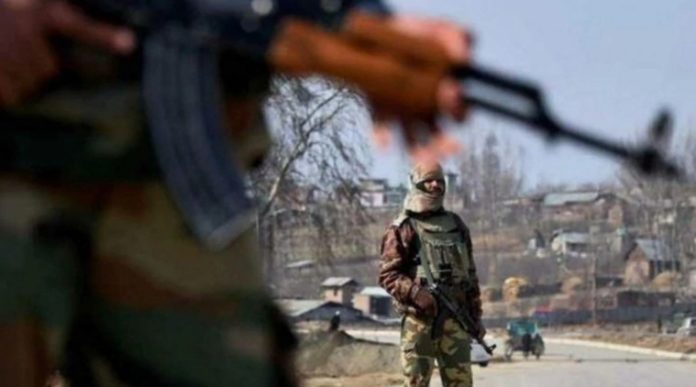
Jammu (NVI): Pakistani troops today violated ceasefire along Line of Control (LoC) in Poonch district of Jammu and Kashmir, defence officials said.

The first ceasefire took place in the morning at around 9.30 am when the Pakistan army targeted Kirni and Degwar sectors along LoC in the district.

“At about 0930 hours, Pak initiated unprovoked ceasefire violation by firing with small arms & shelling with Mortars along LoC in Kirni & Degwar sectors in District Poonch (J&K),” they said.

The second ceasefire took place in the afternoon around 1.50 pm as Pakistani troops shelled forward areas along LoC in Kirni and Qasba sectors, they said.

“After ceasefire violation in the morning, again at about 1350 hours, Pak initiated unprovoked ceasefire violation by Small arms firing & intense shelling with Mortars along LoC in Kirni & Qasba sectors in District Poonch (J&K),” defence officials, adding that the Indian Army was giving a befitting response.

Pakistan army has been repeatedly violating ceasefire along LoC in J&K over the past few days. Yesterday also, it violated ceasefire in Balakote sector of Poonch.

Researchers trying to find out whether dogs could sniff out coronavirus

New Delhi (NVI): Dogs have up to 300 million olfactory receptors in their noses, compared to about six million in human beings. On the basis of this unique capability, researchers at Helsinki University in Finland are investigating whether dogs can detect people infected with Covid-19 by the smell of their urine.

The researchers at the University are examining whether dogs’ sense of smell could be a faster and more accurate test for coronavirus, reports News Now Finland.

Scientists from the university’s medical and veterinary science departments are conducting the research and preliminary studies have shown that trained dogs have been able to differentiate between urine from someone infected with coronavirus, and a healthy person.

One of the researchers told News Now Finland that they started with two dogs to make sure that they don’t get sick and it might be dangerous for the handlers as well.

Anna Hielm-Björkman, Associate Professor of Animal Clinical Research at the Faculty of Veterinary Medicine said that the dogs involved in the research had previously been trained to detect breast cancer and prostate cancer based on scent profiles.

She further added that at the start of each day they just need to be ‘calibrated’ with treats to know which puzzle they’re working on that session: cancer or coronavirus.

“Dogs are very good at learning new things, and it really seemed the dogs we re-trained were happy to learn something new, that cancer seemed for them to be a bit deja vu already,” she told News Now Finland.

In the preliminary tests done at the university, it was found that dogs were able to identify someone with coronavirus before they showed any clinical symptoms, and even before a normal test would come back with a positive result.

Interestingly, scent dogs in Finland are usually trained to identify mold in buildings. They are also used to sniff out cockroaches, bed bugs or other insect infestations.

Similar researches are being done in the UK and at Penn State University in the US to find out if dogs can be trained to detect coronavirus in humans.

According to scientists at the University of Pennsylvania’s School of Veterinary Medicine (Penn Vet) in the US, dogs could be in possession of a unique capability to sniff out disease in saliva and urine samples.

Global CO2 levels at record high despite COVID-19 crisis: Report

climate change

New Delhi (NVI): High levels of carbon dioxide have been recorded globally despite reports of improvements in air quality in some parts across the world due to the coronavirus lockdown, according to a study.

The recent data from the United States National Oceanic and Atmospheric Association (NOAA) shows global carbon dioxide (CO2) levels rising sharply. The data shows that the climate crisis is far from over despite the coronavirus crisis.

In April 2020, the average concentration of CO2 in the atmosphere was 416.21 parts per million (ppm). It is the highest since measurement records began in Hawaii in 1958, according to the report.

Furthermore, UNEP’s World Environment Situation Room shows a sharp increase of more than 100 ppm since March 1958.

Apart from this, ice core records indicate that such levels of CO2 concentrations in the atmosphere have not been seen in the last 800,000 years.

Using ice-core records, it is possible to measure CO2 trapped in deep Antarctic ice going back 800,000s years. We have never in the last 800,000 years reached 416 ppm, UNEP said in its report.

According to the data, not only are CO2 concentrations increasing but they are accelerating at an alarming rate. During the 1960s, the increase over a year was an average of 0.9 ppm which has risen to an average 2.4 ppm a year in the past decade.

During the pandemic, satellite data had shown reductions in nitrogen dioxide levels over urban areas in China, Europe and the US but overall, global emissions are climbing.

“This is, of course, of great concern for our climate, and demonstrates yet again that urgent action is needed to reduce greenhouse gas emissions. To keep average global warming to 1.5 degress Celsius, we need to achieve net zero emissions by 2040,” says director of UNEP and programme manager of the WESR Pascal Peduzzi.

While air and land traffic and industrial activity have taken a significant hit due to the pandemic, which has led to a decline in carbon emissions, enough action is still not being taken.

Forest fires and wildfires that are increasing in likelihood and severity due to climate change continue to affect swathes of Brazil, Honduras, Myanmar, Thailand, and Venezuela, each fire emitting large amounts of additional CO2.

According to the World Energy Outlook data, the global electricity mix is still predominantly sourced from fossil fuels. 64 per cent of our electricity supply comes from dirty energy sources, with 38 per cent coming from coal, 23 per cent from gas and 3 per cent from oil.

UNEP climate change expert Niklas Hagelberg says, “Without fundamental shifts in global energy production, we should have no reason to expect a lasting reduction in emissions.”

Hagelberg says that Covid-19 has provided the whole world a chance to take stock of the risks it is taking in its unsustainable relationship with the environment and seize the opportunity to rebuild the economies in more environmentally responsible ways.

“We must take serious account of global threats such as pandemics and climate disaster in order to build resilient markets, companies, countries, global systems and a healthy, sustainable future for everyone,” he says.

“Supporting fiscal stimulus and finance packages to take advantage of decarbonization and the accelerating renewable and clean energy transition will not be just a short-term economic win but a win for future resilience too,” he adds.

State-wise details of Covid-19 cases in India

New Delhi (NVI): India has entered into the fourth phase of nationwide lockdown which will be in force till the end of this month. After the first confirmed coronavirus case in India, which was reported in the state of Kerala on January 30, the virus has tightened its grip across the country, with Maharashtra, Gujarat and Madhya Pradesh being the most affected states.

The total number of confirmed cases at present is 1,06,750 with 3,303 deaths so far, according to the Union Health Ministry.

Total positive cases in States/UTs:

Andaman and Nicobar Islands- 33

Andhra Pradesh- 2,532

Arunachal Pradesh- 1

Assam- 142

Bihar- 1,498

Chandigarh- 200

Chhattisgarh- 101

Dadar Nagar Haveli- 1

Delhi- 10,554

Gujarat- 12,140

Goa- 46

Haryana– 964

Himachal Pradesh- 92

Jammu and Kashmir- 1,317

Jharkhand- 231

Karnataka- 1,397

Kerala- 642

Ladakh- 43

Madhya Pradesh- 5,465

Maharashtra- 37,136

Manipur- 9

Meghalaya- 13

Mizoram- 1

Odisha- 978

Puducherry- 18

Punjab- 2,002

Rajasthan- 5,845

Tamil Nadu- 12,448

Telangana- 1,634

Tripura- 173

Uttarakhand- 111

Uttar Pradesh- 4,926

West Bengal – 2,961

State/UT wise total death toll:

Andhra Pradesh- 52

Assam- 4

Bihar- 9

Chandigarh- 3

Delhi- 168

Gujarat- 719

Haryana- 14

Himachal Pradesh- 3

Jammu and Kashmir- 17

Jharkhand- 3

Karnataka- 40

Kerala- 4

Madhya Pradesh- 258

Maharashtra- 1,325

Meghalaya- 1

Odisha- 5

Puducherry- 1

Punjab- 38

Rajasthan- 143

Tamil Nadu- 84

Telangana- 38

Uttar Pradesh- 123

Uttarakhand- 1

West Bengal- 250

A total of 42,298 people have been cured or discharged from hospitals in India. There are around 61,149 active cases currently, according to the Health Ministry.

‘Ayushman Bharat’ beneficiaries cross 1 crore mark, says PM

New Delhi (NVI): Prime Minister Narendra Modi today said that the number of people who have benefitted from the ‘Ayushman Bharat’ scheme has crossed the one crore mark.

The Pradhan Mantri Jan Arogya Yojana – Ayushman Bharat was launched in September 2018 by Prime Minister Narendra Modi. It has been termed as the biggest government-sponsored healthcare scheme in the world.

PM Modi took to twitter in this regard and said, “It would make every Indian proud that the number of Ayushman Bharat beneficiaries has crossed 1 crore. In less than two years, this initiative has had a positive impact on so many lives.”

“I congratulate all the beneficiaries and their families. I also pray for their good health,” PM added.

In a series of tweets, he also appreciated all the doctors and health care workers who are associated with this program.

“I appreciate our doctors, nurses, healthcare workers and all others associated with Ayushman Bharat. Their efforts have made it the largest healthcare programme in the world. This initiative has won the trust of several Indians, especially the poor and downtrodden,” PM Modi wrote.

The Prime Minister stressed that one of the biggest benefits of the scheme is portability, and said, “Beneficiaries can get top quality and affordable medical care not only where they registered but also in other parts of India. This helps those who work away from home or have registered at a place where they don’t belong.”

PM Modi also talked about the 1 croreth beneficiary Pooja Thapa from Meghalaya.

“During my official tours, I would interact with Ayushman Bharat beneficiaries. Sadly, that is not possible these days but I did have a great telephone interaction with Pooja Thapa from Meghalaya, the 1 croreth beneficiary. Here is what we discussed,” PM tweeted.

He also shared an audio clip of the conversation in which Thapa, a soldier’s wife, explained about the surgery she underwent in Shillong using the Ayushman Bharat facility.

MUST READ