Tuesday, February 3, 2026
Home Blog Page 1370

China plans to build 1,000 bed coronavirus hospital in Wuhan

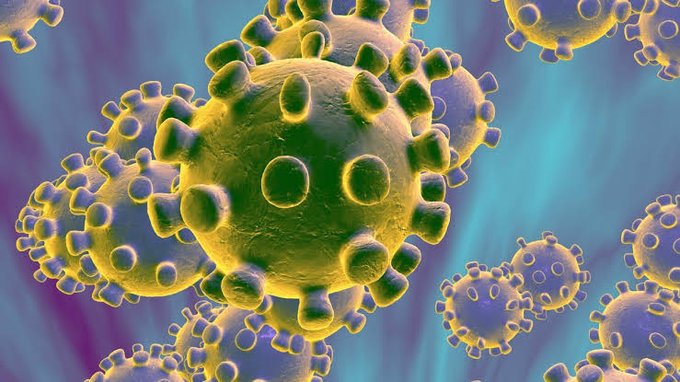
Representative image

New Delhi (NVI): The Chinese city of Wuhan, the centre of the coronavirus outbreak, has begun the task of building a 1,000-bed hospital in just 10 days to treat victims of the epidemic.

The facility, built specifically to contain and treat the virus, will be a prefabricated structure on a 25,000- square-metre (270,000-square-foot) lot, slated for completion by February 3, Xinhua news agency reported.

Authorities said the facility would be based on the Xiaotangshan hospital site near Beijing, which began as a 1,000-bed field hospital during the SARS outbreak in 2002-2003 which killed some 800 people.

Building machinery, including 35 diggers and 10 bulldozers, arrived at the Wuhan site, with the aim of getting the new facility ready by February 3, state media reported.

Currently, novel coronavirus patients are being treated in several designated hospitals and 61 fever clinics in Wuhan.

Delhi shivers as temperature dips

New Delhi (NVI): The national capital observed a fog-free morning today but freezing winds added to the chill in the city. Clear weather and sunshine also led the temperature to dip. The overall temperature in the city today is around 19 degrees Celsius. Minimum temperature in Delhi today dropped to 7.7 degrees Celsius from 8.2 degrees Celsius recorded yesterday.

It is expected to hover around 21 degrees at maximum. The maximum temperature on Friday was around 20 degrees celsius, according to India Meteorological Department (IMD).

The weatherman has forecast that a spell of showers is likely to hit Delhi on January 28 onwards due to fresh western disturbance.

Meanwhile, in the last few days, the overall air quality in the national capital has improved a notch from “very poor” to “moderate” category.

According to System of Air Quality and Weather Forecasting And Research (SAFAR), the Air Quality Index (AQI) in the national capital on Friday stood at  112 which falls in the  “moderate” category.

Apart from this, due to cold northerly winds, many cities in the western state of Rajasthan observed a dip in mercury. According to the weatherman, Churu recorded a minimum of 3.2 degrees Celsius, Bikaner 6 degrees, Kota 7.2 degrees, Ajmer and Jaipur 7.4 degrees and Jaisalmer 9.2 degrees. Churu becomes one of the coldest places in the region in winters with extreme cold conditions.

Being forgetful means your brain is working properly: Study

(Image credit: Getty Images)

New Delhi (NVI): Do you keep forgetting things? Research has marked it as a sign of ‘sharp mind’! Sometimes, forgetting our belongings, vehicle keys or forgetting the birthday of our loved ones can get us in a bad situation. Often people forget to keep things here and there by themselves and later, after looking for them they become so upset that they spoil their other works too. It happens to almost everyone and hence, there is no need to be disturbed by it (habit of forgetting small things). It is common for any person and therefore, it is a sign that your brain is working properly. Yes, it is beneficial for you to forget the small things. So let us tell you how.

Why we forget things?

According to a study published in the journal Neuron, forgetting small things is not a sign that your brain is not working properly. It happens that your mind is making room for new information by forgetting some information against it. Due to the continuous compilation of new information, your brain starts saving more and more information, due to which you get entangled in things and often forget about small things, which is a sign of your brain working properly.

Forgetting things is better for the future

The researchers concluded in their study that the goal of our brain is not to remember everything but to be able to save your beautiful memories, which help you make good decisions for the future… To make smart and better decisions, you must remove thousands of useless information from your mind and make space in your brain for new information.

No need to worry

Therefore, you do not have to worry that you forgot the important meeting with the client in the office or forgot the things you had studied in school as soon as you came home. So, don’t whine about forgetting things. This is normal and you don’t have to worry about anything.

Ways to keep your mind sharp:

Food

Your brain can differentiate between aroma and taste among millions of food and recognize it. A new taste can create a new feeling in you. So taste new dishes. By doing this you will remember things and your mind will be sharper.

Read differently

Our brain circuit works in different ways when we read slowly in our mind or when we read aloud with a partner. This method provides a new way for the brain to function by replacing its old routine.

Look out of the car while walking

Hippocampus, the part where memories are preserved in the brain, is associated with identifying sounds, smells, and spaces in the brain. Whenever you go for a walk, roam in new areas or visit places that you are not familiar with. You should give your brain a chance to see new things and recognize new places.

Close your eyes while bathing

By doing this, your inner feelings are more active. Close your eyes while taking a shower, and try to find your shower tap as it increases the tactile sense. By doing this your hands feel various things and send their signals to your brain.

Centre committed to reform education sector in J&K: Pokhriyal

Srinagar (NVI): Union HRD Minister Ramesh Pokhriyal Nishank today reiterated the Central government’s commitment to bring about major reforms to revamp the education sector of Jammu and Kashmir.

The minister who visited Srinagar today as part of the Centre’s outreach programme in J&K, also termed the newly formed Union Territory as the ‘Crown of India’ in terms of the potential and talent pool.

The Union Minister made these remarks while inaugurating National Initiative for School Heads & Teachers’ Holistic Advancement ‘NISHTHA’, besides e-inauguration of 45 projected under education sector at a cost of Rupees 180 crore here today.

The projects include Indian Institute of Management (IIM) Srinagar, 25 Smart Model Schools, and Sheikh-ul-Alam Chair at Center for Sheikh-ul-Alam Studies (Markaz-i Noor) and Laboratory Block (PEB) at University of Kashmir, besides Government College of Engineering Safapora and Government Degree College Zakura.

The Smart Model Schools project is aimed at transforming government schools on modern lines. The initiative has been envisaged by Divisional and District Administration Srinagar.

Pokhriyal e-inaugurated Indian Institute of Management Srinagar off-campus which will offer programmes like Management Development, Leadership Development, Faculty Development, Online Executive Development, Entrepreneurship Development, and Certificate programmes.

He also inaugurated two blocks of NIT Srinagar hostel named after Mansar and Mansabal–two famous lakes of Jammu and Kashmir.

Apart from this, the Union Minister inaugurated 16 projects under School Education Department at a cost of Rupees 2,468.06 lakh.

Under Higher Education Department, the Minister inaugurated Government Degree College for Women Zakura, Srinagar established at a cost of Rupees 1148 lakh and Government College of Engineering and Technology, Safapora at a cost of Rs 2600 lakh.

The Union Minister also inaugurated Center for Interdisciplinary Research & Advanced Instrumentation established University of Kashmir at a cost of Rupees 9.19 crore and Sheikh-ul-Alam Chair at Center for Sheikh-ul-Alam Studies (Markaz-i Noor) University of Kashmir.

Northern Army Commander visits LoC

Srinagar (NVI): Northern Army Commander Lt Gen Ranbir Singh today visited forward posts on the Line of Control (LoC) with Pakistan and reviewed the overall security scenario in the Kashmir Valley.

​The Army Commander visited formations in forward areas of Kupwara district.

He was briefed on development works, the counter infiltration grid and operational preparedness.

Gen Singh was appreciative of the measures and Standard Operating Procedures instituted by the units and formations to meet the challenges posed by the inimical elements, Army spokesman said.

During his interaction with the troops, he spoke about their selfless service and applauded their motivation and high spirits in such difficult and challenging climatic conditions.

He also applauded the Army’s efforts towards providing assistance to the common people of Kashmir in such rough weather conditions.

K-4 submarine-launched missile successfully test-fired

New Delhi (NVI): In another shot in the arm For Indian Navy, the K-4 submarine-launched ballistic missile was successfully test-fired off the coast of Visakhapatnam for second time this week.

The feat could be seen as a major milestone to augment India’s naval prowess. With today’s test, India has further strengthened its capability to hit enemy targets from submarines.

Developed by DRDO, the missile which has a range of 3,500 km can bring almost all parts of Pakistan and several areas of China within its reach.

The missile is being developed by the DRDO to be integrated with India’s Arihant class nuclear submarine.

K-4 is one of the two underwater missiles that are being developed by India for its submarine force.

Govt to focus on demand-side water management

Gajendra Singh Shekhawat addressing the ceremony organised by FICCI and Ministry of Jal Shakti

New Delhi (NVI): To efficiently manage the consumption of water and prevent its wastage in any form, the government will focus on the demand-side of water management, Union Minister for Jal Shakti Gajendra Singh Shekhawat said today.

“Now the time has come to focus on demand-side management of water conservation instead of just supply-side management,” he said at an event by FICCI in Delhi.

Demand-side management, also known as DSM or demand-side response (DSR) is the modification of consumer demand of a resource through various methods such as financial incentives and behavioral change through education.

Speaking at ‘5th edition of India Industry Water Conclave’ and ‘7th edition of FICCI Water Awards’, organised by FICCI,  Shekhawat said that the government has already started adopting latest technologies in water management.

He said that rural areas are getting covered with 3D aquifer mapping to ensure the exact water level in the area. “We have to ensure as to how we can reduce the water usage, recycle it and re-use it,” the Union Minister said.

He said that the National Groundwater Management Improvement Scheme, (worth Rs 6,000 crore), will be supported with financial assistance from World Bank, Rs 3,000 crore and remaining by the government through budgetary support.

He further said that the government has recently launched ‘Atal Bhujal Yojna’ which is a groundwater management scheme and it is based on the participation by all concerned stakeholders. “First time we have initiated a pilot scheme for demand-side management which will cover 400 districts in 7 states”, he added.

The Union Minister said that state participation is key in solving the issue of water management and emphasised on the need of adopting best practices which states have already implemented in water conservation. “There is a need to expand the time-tested proven technologies and government is working in that direction,” he said.

Highlighting the role of corporate sector in water management, Shekhawat said that the government alone cannot solve the issue and all stakeholders including corporate sector need to come forward. “I urge the industry to come forward and invest in hydrological system and can play an active role in promoting wastewater use,” he said.

DRDO to exhibit more than 500 products at Def-Expo 2020

File photo

New Delhi (NVI): Defence Research and Development Organisation (DRDO) will showcase more than 500 products from all technology clusters in the 11th edition of Def-Expo to be held in Lucknow next month.

The five-day mega event will be held from February 5-8, amid a huge security cover. DRDO will exhibit its products in line with the theme of the event “Digital Transformation of Defence”.

The display of various ingeniously-developed military systems and technologies by DRDO will bring alive the spirit of self-reliance and national pride at the forthcoming expo.

DRDO will also showcase over 23 products in the India Pavilion at DefExpo, which has been set up to display the combined strength of DRDO, public and private sector in defence manufacturing.

DRDO’s participation at the expo is marked with live demonstration of Advanced Towed Artillery Gun System (ATAGS), Main Battle Tank (MBT) Arjun MK IA, Wheeled Armoured Platform (WhAP), Counter Mine Flail, 15m Advanced Composite Modular Bridging System (ACMBS) and modular bridge.

Tight security ahead of R-Day

New Delhi (NVI): In view of the Republic Day celebrations on January 26, security has been beefed across the national capital with heavy deployment of security personnel and mounting of CCTV cameras at strategic locations in Delhi.

At least 150 CCTV cameras have been installed in areas covering Red Fort, Chandni Chowk and Yamuna Khadar to keep extra vigilance on the parade route from Rajpath to Red Fort on Sunday.

Multi-layered security arrangement has been made at highrises. Sharpshooters and snippers will also be deployed in highrise buildings to keep a watch on parade, according to officials. Apart from this, Police have been directed to stay alert since Delhi polls are also around the corner.

The Delhi Police has also issued a traffic advisory to elaborate arrangement for route diversions for the Republic Day. No traffic will be allowed on Rajpath from Vijay Chowk to India Gate from 6 pm on January 25 till the parade gets over (on Jan 26).

Lt Gen SK Saini to take over as Vice Chief of Army tomorrow

Lt Gen Saini at National War Memorial in Pune on Friday. (Source: @adgpi Twitter)

New Delhi (NVI): Southern Army Commander Lieutenant General SK Saini will take over as the new Vice Chief of Army Staff tomorrow.

Ahead of taking up the new role, General Saini relinquished the command of the Southern Command at a ceremony in Pune. The officer also paid tributes to the martyrs at National War Memorial Pune.

Notably, this is also the first order of a senior military appointment issued through the Department of Military Affairs headed by Chief of Defence Staff (CDS) General Bipin Rawat.

The post of Vice Chief of Army Staff fell vacant after Lt Gen MM Naravane, then vice chief, was elevated as the Chief of Army Staff.

Commissioned into the Jat Regiment in June 1981, General Saini is an alumnus of Sainik School Kapurthala (Punjab), National Defence Academy (NDA) in Pune and Indian Military Academy in Dehradun.

His previous assignments and roles include his deputation as Deputy Chief Military Personnel Officer in the Iraq-Kuwait UN Mission, Global Peace Operations Initiative’s peacekeeping exercise in Mongolia, and a counter-terrorism exercise in Australia.

Apart from this, General Saini has been honoured with Ati Vishisht Seva Medal (AVSM), the Yudh Seva Medal (YSM), the Vishisht Seva Medal (VSM), the Chief of Army Staff Commendation and the Army Commander Commendation for his service.

MUST READ