Thursday, March 5, 2026
Home Blog Page 1409

Economy will rebound: VP

Raipur (NVI):  Vice President M Venkaiah Naidu has expressed confidence that the Indian economy would rebound in the near future, saying the current slowdown was cyclical.
Inaugurating the 102nd annual conference of the Indian Economic Association, Naidu said it was true that the Indian economy was facing some challenges due to the decline in growth this fiscal.
“However,  the country had faced similar slumps in the past in the wake of the East Asian financial crisis and global slowdown but bounced back with a higher growth rate every time,” he said.
Referring to the reforms initiated by the government including the introduction of the revolutionary GST to usher ‘ one nation, one tax, one market’, the Insolvency and Bankruptcy Code and the steps taken to curb black money, Naidu asserted that they were aimed at making the economy more robust and more resilient.
Observing that agriculture was the mainstay of Indian economy, the vice president cautioned that various waivers and subsidies would be unsustainable in the longer run.
Stressing the need to diversify the rural economy, he said that rural non-farm activities are equally crucial for the growth of the rural economy.

Temperature dips to 2.4 degree Celsius in Delhi 

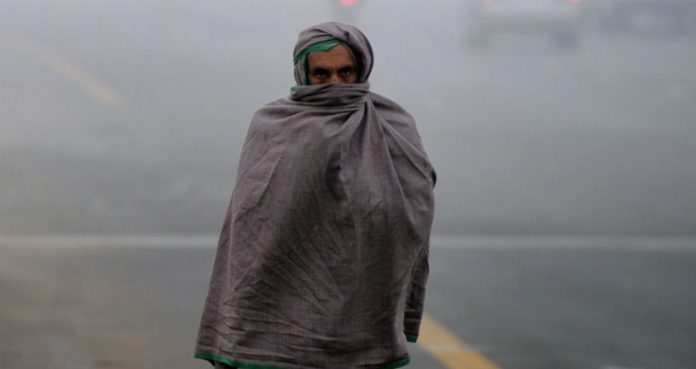
New Delhi (NVI): The minimum temperature in Delhi dropped to 2.4 degree Celsius today from 4.2 degree Celsius recorded yesterday, bringing further chill in the weather in the national capital.
The minimum temperature of 2.4 degree Celsius is five degrees below normal, according to the India Meteorological Department (IMD).
The maximum temperature today is expected to be around 14.0 degree Celsius, it said.
The weather forecast department said Delhi and its neighbouring cities have been facing a severe winter chill this December.
“Not just Delhi, but neighbouring Noida, Ghaziabad, Gurgaon, and Faridabad are also facing severe cold conditions,” IMD stated.
‘Cold day’ conditions are declared when the day’s maximum temperature is below normal by more than 4.4°C.  A ‘severe cold day’ is when mercury remains more than 6.4°C below normal through the day.
Meanwhile, the air quality in national capital today remained in the “very poor” category for the sixth consecutive day.
According to System of Air Quality and Weather Forecasting And Research (SAFAR),the Air Quality Index (AQI) in the national capital stood at  391 which falls in the “very poor” category.
The worst affected areas are Dhirpur, Delhi University, Chandni Chowk, Pusa, Lodhi Road, Mathura Road, IGI Terminal 3 and the neighbouring Noida.

IIT-B starts Air Quality Research Facility in partnership with US Univ

Mumbai (NVI): Indian Institute of Technology, Bombay (IIT-B) has launched the Aerosol and Air Quality Research Facility in partnership with the McKelvey School of Engineering of Washington University for the on-the-ground air quality and short & long term action plans to curb the problem of air pollution.
More than 129 Indian cities have been declared as non-attainment status, with Mumbai and Delhi recording the worst Air Quality Index (AQI) of 2019.
The new research facility will bring in high-tech instrumentation for fundamental research in aerosol science and engineering, as well as new equipment for on-the-ground air quality monitoring and characterization to take the research to next level and set up systems and structures for sustaining the air quality. .
“This will provide an opportunity for students to engage in cutting-edge research that is very relevant, guided by world leading faculty members from the two institutions. The work will be relevant to both India and the US,” Professor Pratim Biswas, the Lucy and Stanley Lopata Professor in the McKelvey School of Engineering, WUStL said in an official statement.
The research facility will offer great potential to rapidly advance understanding of air quality in India, which is of high importance given the elevated concentrations of fine particulate matter that have been observed in the region, the statement addded.
IIT Bombay has been engaged in air quality and aerosols related research with other IIT’s, CSIR-NEERI, Pollution Control Boards and industry.

UNDP trained nearly 7,000 children in Visakhapatnam to be tsunami ready

15 years after the Indian Ocean Tsunami, students across Asia are now better equipped to respond to tsunamis.

Here’s how Greater Visakhapatnam Municipal Corporation, UNDP and Japan government support, trained nearly 7,000 children in Visakhapatnam to be tsunami ready.

Allow higher education institutions to invest surplus in alternative asset classes: FICCI

New Delhi (NVI): Industry body FICCI has suggested to the Finance Ministry that higher education institutions should be allowed to invest their surpluses in a wider range of asset classes.

In its pre-Budget recommendations to the ministry, the body said allowing university endowments to invest in alternative investment funds and other asset classes will bring in greater transparency and better governance practices in the system.
According to co-chair of FICCI for Higher Education Committee for international institutions
Dr Rupamanjari Ghosh, drawdowns from endowments contribute significantly to the operating revenue of these institutions, thereby allowing them to undertake quality enhancement initiatives such as scholarships, professorships and research investments.
She also mentioned that with respect to Indian institutions, allowing university endowments to invest in alternative investment funds and other asset classes will bring in greater transparency and better governance practices in the system.
Hide quoted text
The Gross Enrolment Ratio (GER) in India is still only around 26%. The draft National Education Policy (NEP) 2019 aims to achieve an ambitious GER of 50% by 2035, which would mean doubling student enrolment to 7 crore and beyond.
With the evolving need for a knowledge economy along with internationalization and massive human capital, the higher education sector in India is set to witness a host of reforms.
A KPMG working paper on ‘Alternative Investment Financing for Higher Education Institutions in India’ in this regard captures some of the national and the international trends in the financing of higher education institutions and discusses ways to appropriately channel surplus funds existing in the system to enable the growth of both public and private higher education institutions.
National Head (Education) of KPMG India  Narayanan Ramaswamy said that there is a clear demand to formulate strategies for innovative sources of funds to meet the GER target and enhance the quality of higher education institutions,
The operating revenue generated by higher education institutions in India is estimated to be upwards of Rs 1 lakh crore.
This would constitute around 20% of the overall size of charitable institutions, in which the total operating expenditure is estimated to be around Rs 5 lakh crore as of 2017-18.
Clearly, there is a significant surplus being generated in the higher education system annually. It amounts to around Rs 15,000 crore.
However, there are constraints around investing surplus funds generated in the higher education system in India.
Currently, these funds are invested in real estate and there are transparency issues in these investments.
Debt and related instruments constitute another significant asset class in which surplus funds are invested.
 The returns generated by investing in these asset classes are not high and, in some cases, even lesser than education inflation.
Globally, higher education institutions have been investing in various asset classes such as domestic and foreign equity, alternative investment funds, real estate, and infrastructure investment trusts to generate additional income.
 These investments have generated higher returns and have contributed to the growth of endowment funds of these institutions.
While in the long run, fundamental changes such as allowing for-profit entities to operate higher education institutions can be explored, as an immediate measure, allowing higher education institutions to invest their surpluses in wider asset classes such as alternative investment funds will help to generate additional funding.
Apart from benefiting the higher education ecosystem, this will also provide capital to sectors such as infrastructure where there is a shortage of funds.

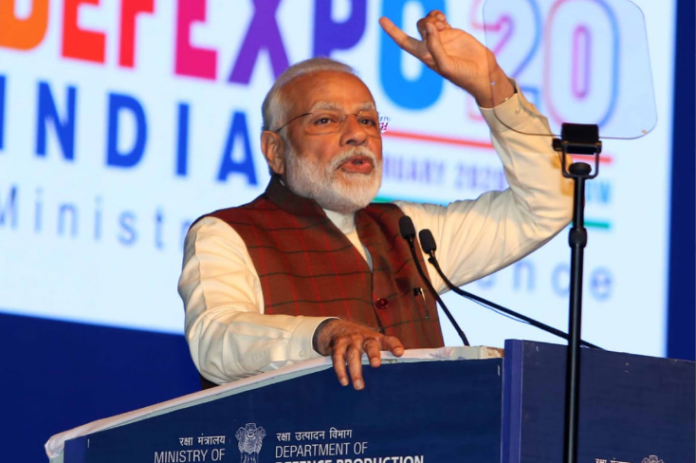
Rajnath launches DefExpo2020 app

New Delhi (NVI): Defence Minister Rajnath Singh today launched a mobile application to assist those who visit the DefExpo 2020, the 11th edition of biennial mega defence exhibition, to be held in Lucknow in February.
The app has been developed by Department of Defence Production, Ministry of Defence (MoD) with the aim of engaging with the visitors as well as exhibitors.
It provides detailed information about the day-to-day events, participating exhibitors, Defence Public Sector Undertakings (DPSUs), guest speakers of seminars or webinars,  publications that is electronic brochures and e-books, maps and directions of the venues and city weather.
The Defence Minister also reviewed the preparations of DefExpo 2020.
During the review meeting, senior officials informed him that a record number of over 880 exhibiters, including foreign companies, have registered so far, making it the largest ever defence exhibition surpassing the numbers of DefExpo 2018.
Foreign delegations at the level of Defence Minister and Service Chief are confirmed from 18 countries.
Dozens of MoUs are also expected to be inked during the Expo.

Severe cold to continue in North India

New Delhi (NVI):  Severe cold conditions are very likely to be witnessed in most pockets of Delhi, Punjab, Haryana, Chandigarh, north Rajasthan and Uttar Pradesh, according to the Indian Meteorological Department (IMD).

A fresh Western Disturbance is very likely to affect Western Himalayan region from 30th December night onwards and under its influence and interaction with lower level easterlies, major parts of Northwest & Central India are very likely to experience fairly widespread to widespread rainfall accompanied with hailstorm at isolated places during 31st December-01st January 2020, it said.

Due to persistence of cold north westerly winds in lower levels over northwest India and other favourable meteorological conditions Cold day to severe cold day conditions in many pockets very likely over Punjab, Haryana, Chandigarh & Delhi, north Rajasthan and Uttar Pradesh during next 2 days.

Such conditions will also continue in some pockets for subsequent 2 days and very likely to abate from these regions from 31st December onwards.

Dense fog at isolated pockets also very likely over Punjab, Haryana, Chandigarh & Delhi, north Rajasthan and Uttar Pradesh during next 3 days and over north Madhya Pradesh, Bihar Jharkhand, Sub-Himalayan West Bengal & Sikkim and Odisha during next 2 days and over northeastern India during next 4-5 days and abate thereafter.

Slowdown a temporary phase: Shah

Shimla (NVI): Union Minister of Home Affairs Amit Shah today said that the slowdown is a temporary phenomenon and expressed hope that India will soon come out of it.
Addressing the 1st Ground Breaking Ceremony of Himachal Pradesh Global Investors’ meet here, Shah said that by 2024, India would become 5 trillion dollar economy and be placed among the top three global economies.
He said that in 2014, in the list of world economy, India stood at 11th with the size of the economy being 2 trillion dollars and after five years, India has moved to 7th position and reached 3 trillion dollar mark.
“Focus on Renewable Energy (RE) by the union government has ensured that India is the largest emerging market for the RE sector today,” he said.
“The results of Prime Minister Narendra Modi’s “reform, perform and transform” approach was clearly visible in global indices, all of which showed improvement in India’s rank over the five years between 2014-2019,” he said.

Army has itself diluted application of AFSPA: Gen Rawat

New Delhi (NVI): Asserting that the Indian armed forces have utmost respect for human rights, Army Chief Gen Bipin Rawat today said his force has diluted in its own way the application of the Armed Forces Special Powers Act (AFSPA) and the Supreme Court guidelines are strictly followed by every soldier in the anti-insurgency areas.

He said “Insaniyat” (Humanity) and “Sharafat” (Decency) are the driving ethos of the Indian armed forces but their task becomes challenging and difficult when they have to counter terrorism and insurgency by winning the hearts of the people and alienating the insurgents without any collateral damage.

Addressing the interns and senior officers of the National Human Rights Commission (NHRC) on the topic “Preserving Human Rights in times of War and Prisoners of War” here, Gen Rawat said the Indian armed forces not only ensure protection of human rights of own people but also of adversaries and deal with the prisoners of war as per the Geneva Convention.

‘They are extremely secular. The challenge is the changing warfare tactics with the advent of technology,” he said.


“Unlike the attack by any armed forces, the terror attacks remain unaccountable in international law,” he said.


“Hence, the counter terrorism and anti insurgency operations have to be dealt in a manner of winning the hearts of the people by identifying and alienating the insurgents among them without collateral damage, which becomes very challenging and difficult,” he added.


Referring to the AFSPA, which has often come under criticism, Gen Rawat said the law gives almost the same powers to the Army, which are exercised by the Police and CRPF in connection with search and inquiry operations.

“However, over the years the Army itself has diluted its application in its own way under the ten commandments issued by the Chief of Army Staff, which are to be strictly adhered by every soldier, and particularly those deployed for operations in anti-insurgency areas,” he added.

“The Supreme Court guidelines on this are also being strictly followed by soldiers, who are all given special training before their deployment in counter-insurgency and counter-terrorism operations,” he added.

Gen Rawat said the Army Headquarters created a human rights cell in 1993, which now is being upgraded to the level of a Directorate to be headed by an Additional Director General.


“This will also have police personnel to address the complaints of human rights violations against the armed forces and facilitate related enquiries,” he said.


“A new initiative has been taken in October this year by recruiting women Jawans in Military Police Force,” the Army Chief said.

“The Army takes along with it several police personnel in search operations, but keeping in view the concerns of women during such operations, the Army has now decided to deploy its lady Jawans of its Military Police Force also,” he said.

“Keeping in view the provisions of human rights law and importance of the protection of human rights, now a Court of Inquiry is being held after every anti- insurgency operation and all records are maintained related to such operations,” he added.

MiG-27 fighter flies into history

Jaipur (NVI) : Russia-made MiG-27 fighter plane, which has the backbone of the Indian Air Force and played a key role in the 1999 Kargil war with Pakistan, flew into history today.

The swing-wing fleet of the upgraded version of the aircraft, which has been part of the IAF for the last four decades, had its last flying day today.

To mark the occasion of the fighter plane’s retirement, a five-aircraft ‘Arrowhead’ formation flanked by Sukhoi 30 was flown.

The IAF’s No. 29 Squadron — ‘SCORPIOS’ — had the proud privilege of flying the aircraft into the sunset.

The event was befittingly graced by IAFs ‘Akash Ganga’ parachutists who painted the sky with their magnificent colourful parachutes flying the national flag and the Indian Air Force ensign.

The Air Warriors Drill Team thrilled the audience with their synchronized drill movements.

The grand finale was marked by scintillating formation aerobatic display by the Surya Kiran Aerobatic Team of Indian Air Force.

The event was witnessed by Air Marshal SK Ghotia, Air Officer Commanding-in-Chief South Western Air Command.

Among the dignitaries who graced the occasion include, Air Marshal B Suresh, Air Officer Commanding-in-Chief Western Air Command, Air Marshal Amit Tiwari, Air Officer Commanding-in-Chief Southern Air Command along with numerous serving and retired officers who were part of 29 Squadron or had flown the swing- wing fighter aircraft during their stint with Indian Air Force.

The aircraft became part of the IAF’s glorious past, joining other variants, such as MiG-23 BN & MiG-23 MF and the pure MiG-27 which have already retired.

These aircraft have made immense contribution to the nation, both during peace and war.

The fleet of MiG-27 earned its glory in the historic Kargil conflict when it delivered rockets & bombs with accuracy on enemy positions.

The fleet also took active part in Op-Parakram in 2001-02, when India mobilised its troops along the Pakistan border in the wake of attack on Parliament by Pakistan-backed terrorists on December 13, 2001. There was an eyeball-to-eyeball situation along the entire border for months.

The upgraded version, because of its survivability, have also participated in numerous national and international exercises.

As of now, Number 29 Squadron was the only unit in the Indian Air Force operating MiG-27 Upgrades.

The Number 29 Squadron was raised on March 10, 1958 at Air Force Station Halwara with Ouragan (Toofani) aircraft.

Over the years, the Squadron has been equipped with numerous types of fighter aircraft such as MiG-21 Type 77, MiG-21 Type 96, MiG-27 ML and MiG-27 Upgrade.

The Squadron is now slated to be number plated on Mar 31, 2020, with December 27, 2019 being its last flying day, thereby making the swing-wing fleet a part of IAFs glorious past.

MUST READ