
Tuesday, April 7, 2026
Home Blog Page 1450

Govt sanctions 2636 EV charging stations in 62 cities

New Delhi (NVI): In an effort to give a further push to clean mobility in road transport sector, the Department of Heavy Industries has sanctioned 2636 Electric Vehicle charging stations in 62 cities.
These charging points have been submitted by 19 public entities for 24 States and UTs under FAME India (Faster Adoption and Manufacturing of Electric Vehicles in India) scheme phase II.
“By installing all these charging stations, it is expected that at least one charging station will be available in most of the selected cities in a grid of 4 Km X 4 km, which will boost the confidence of users of Electric Vehicles in terms of Range Anxiety and also this will encourage the OEMs to launch the new Electric vehicle Models which they were hesitant because of lack of Charging infrastructure,” Minister of Heavy Industries & Public Enterprises Prakash Javadekar said.
As many as 317 EV charging stations have been allotted in Maharashtra, 266 in Andhra Pradesh, 256 in Tamil Nadu, 228 in Gujarat, 205 in Rajasthan, 207 in Uttar Pradesh, 172 in Karnataka, 159 in Madhya Pradesh, 141 in West Bengal, 138 in Telangana, 131 in Kerala, 72 in Delhi, 70 in Chandigarh, 50 in Haryana, 40 in Meghalaya, 37 in Bihar, 29 in Sikkim, 25 each in Jammu & Srinagar and Chhattisgarh, 20 in Assam, 18 in Odisha and 10 each in Uttarakhand, Puducherry and Himachal Pradesh.
The sanction letters to the selected entities will be issued in phases after ensuring the availability of land for Charging Stations, signing of necessary agreements with concerned partner organizations like city municipal corporation, Discom, Oil companies etc.
Subsequently, each selected public entities are required to initiate the procurement process in a time bound manner for deployment of sanctioned Charging Stations.
Department of Heavy Industry had invited the Expression of Interest (EoI) from million-plus cities, smart cities, State and UT capitals and cities from special category states for submission of proposal for availing incentives under FAME India Scheme Phase II for deployment of EV charging infrastructure within Cities.
In response thereof, about 106 proposals from Public and Private Entities for the deployment of about 7000 EV charging stations were received.
After evaluation of these proposals as per EoI, on the advice of Project Implementation and Sanctioning Committee (PISC) the Government sanctioned 2636 charging stations to 62 cities submitted by 19 public entities for 24 states.
Out of these 2636 charging stations, 1633 Charging Stations will be Fast Charging Stations and 1003 nos will be slow charging stations.
 With this, about 14000 no of chargers will be installed across the selected cities.
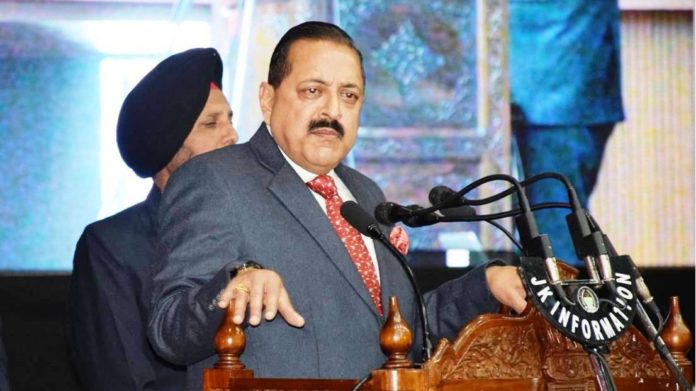
J&K will soon emerge as a model of transformation: Jitendra Singh

Jammu (NVI): Union Territory of Jammu and Kashmir would soon emerge as a model of transformation for the rest of the country, Minister of State in PMO Jitendra Singh said today.

Speaking while inaugurating the first Capacity Building Programme on General Financial Rules-2017, e-Procurement and Government e-Marketplace (GeM) here, he said this was the third major conference being organized in the union territory within a span of two months.

“Since every central law is now applicable to the union territory of Jammu and Kashmir, it was necessary to unlearn the things that were learnt in the past in order to adopt to the new system,” said Singh, who hails from Jammu.

The Minister reiterated that all the Central laws like the Right to Information Act, Land Registration Act, Prevention of Corruption Act and the like, had become applicable to the Union Territory of Jammu and Kashmir right from October 31, 2019.

While referring to a series of workshops and conferences being organised in J&K and cities other than Delhi, Singh said a bamboo workshop-cum-exhibition and a pension adalat would also be organised within this month.

Speaking on the sidelines of the launch of Monitoring Dashboard of Grievance Portal of Government of Jammu and Kashmir, Singh said the increase in the number of complaints was not a negative development but instead showed an increase in people’s faith on the administration and implied improvement in the response and redressal mechanism of the government.

He also mentioned that a central administrative tribunal bench would be established in J&K apart from a law university and a state-of-the-art
sports stadium that were under consideration at various levels.

DARPG Additional Secretary
V. Srinivas said the department had been engaging extensively with the government of Jammu and Kashmir for organising the conference which was the third major conference of its kind in a span of two months in J&K.

He said the conference sought to take forward the commitment to apply all the central laws to the Union Territory of Jammu and Kashmir through proper training and capacity building.

The conference witnessed huge participation of officials from various departments of UT of J&K.

Earlier during the conference, a five-year vision document of Department of Administrative Reforms and Public Grievances was released besides launching a monitoring dashboard of the grievance portal of government of Jammu and Kashmir.

A Memorandum of Understanding and exchange of documents was also done between DARPG, NCGG and IMPARD for the capacity building of 1000 officials of the government of Jammu and Kashmir.

The capacity building program is being conducted by the Department of Administrative Reforms and Public Grievances, government in collaboration with government of Jammu & Kashmir, National Centre for Good Governance (NCGG), National Institute of Financial Management (NIFM) and Institute of Management, Public Administration and Rural Development (IMPARD) for 385 officials of the government of Jammu and Kashmir.

India advocates restraint after US killed Iranian General

New Delhi (NVI): India today cautioned against escalation of tensions after the US air strike killed a top Iranian General, saying peace, stability and security in the West Asian region is of utmost importance.

“We have noted that a senior Iranian leader has been killed by the US. The increase in tension has alarmed the world,” External Affairs Ministry  said in a statement here.

“Peace, stability and security in this region is of utmost importance to India. It is vital that the situation does not escalate further. India has consistently advocated restraint and continues to do so,” it added.

Tensions are high in West Asia after Qassem Soleimani, a top military commander of Iran’s Revolutionary Guards, was killed in Baghdad in a US air strike last night authorised by President Donald Trump.

The US said he was involved in activities that endangered the lives of American forces in Iraq.

India’s growth depends on achievements in S&T: PM

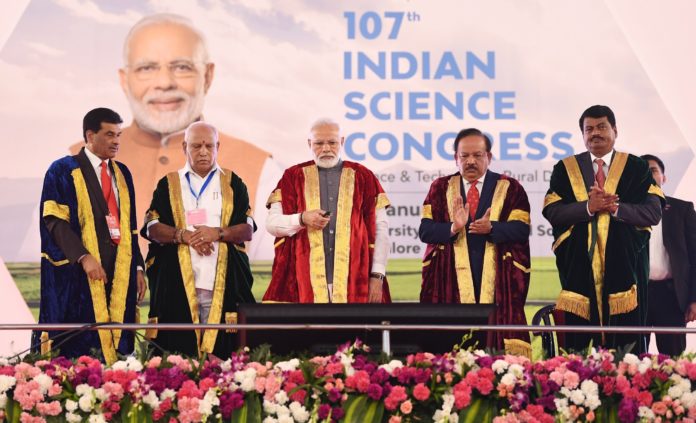
Bengaluru (NVI): Prime Minister Narendra Modi today pitched for revolutionising the landscape of Indian science technology and innovation, saying the growth story of India depends on its achievements in this sector.

He emphasized that science and technology has a major role in contributing towards making India a $5 trillion economy.

Inaugurating the 107th Indian Science Congress (ISC) here, he said the motto of ‘Innovate, Patent, Produce and Prosper’ for the young scientists will lead India towards a faster development.

“Innovation for the people and by the people is the direction of our ‘New India’.. ‘New India’ needs technology and also a logical temperament, so that we can give a new direction to our social and economic sectors,” the Prime Minister said.


“Science and technology provides a level playing field in making opportunities accessible to all and that it also plays a unifying role in the society,” he added.


“Now the developments in information and communication technology are able to provide cheaper smart phones & cheaper data and that has made it accessible to everyone in the country, where it was seen as a privilege of the few earlier,” he said.

“This made the common man now believe that he is not distantly separated from the government. Now he can directly connect with the government and make his voice heard,” he added.


Prime Minister exhorted the young scientists to work in the field of rural development where there are several opportunities for cheaper and better innovations.


Referring to the theme of 107th ISC – “Science and Technology: Rural Development”, the Prime Minister said that it is only due to Science & Technology, that Government Programmes have reached the needy.


He highlighted that India now stands at 3rd position globally, in the number of Peer-reviewed Science and Engineering Publications.


“I have been told that India has climbed to third position globally in the number of peer reviewed science and engineering publications. It is also growing at a rate of about 10% as compared to global average of 4%,” the Prime Minister said.


He also mentioned about Improvement in India’s ranking at Innovation Index to 52. He highlighted that Government programmes have created more incubators in the last 5 years than in previous 50 years.


“Technology is being harnessed at a large scale to achieve the objective of Good Governance,” he said.


He also added that owing to the technology of Geo Tagging and Data Science, many of the projects in rural and urban areas could be completed in a timely manner.


“We are continuing our efforts to ensure the ‘Ease of doing Science’ and effectively using information technology to reduce red tape,” he said.


He emphasized that Digitalisation, E Commerce, Internet Banking and Mobile Banking services are assisting rural population significantly.


“Technology can be harnessed for several rural development initiatives, particularly in the area of cost effective Agriculture and Farm to Consumer supply chain network,” he said.


He also urged everyone to find technological solutions for – stalk burning, maintenance of Ground water tables, prevention of communicable diseases, environment friendly transportation etc.

Reptiles too suffered due to Delhi’s biting cold 

New Delhi (NVI): The severe cold in Delhi, experienced over the last few days, affected not only the humans but the reptiles too.
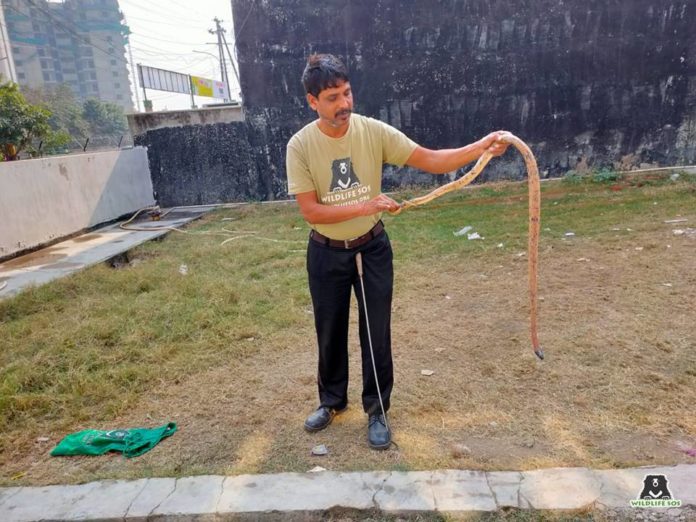
According to NGO Wildlife SOS, at least seven snakes were detected in residential areas at various places across the national capital where they had gone to escape the biting cold.
Six cobras have been rescued from Delhi since last Friday – one was curled up inside a farmhouse in DLF Chattarpur, another from a makeshift kitchen in a shanty, one was found sunbathing on a sunny day in a park in Dwarka sector 22, it said.
 Apart from this, the NGO also rescued a couple of royal snakes from warm spots – engines, motors and empty spaces within house walls.
All the snakes were kept under temporary observation and later released into safer habitats once deemed fit.
It said a team of expert Wildlife SOS rescuers is ready 24 hours seven days a week with the required thermal equipment to ensure no animal suffers from the cold.
Wildlife SOS, Co-founder and CEO Kartick Satyanarayan said, “Our Rapid Response teams have been kept constantly busy because of the rising number of rescue calls. The most number of calls we are getting are for snakes. As they are cold-blooded animals, they are extremely vulnerable to the cold.”
He noted that snakes cannot modulate their body temperature like other mammals and need external heat sources to survive.
Wildlife SOS Conservation Projects Director, Baiju Raj M.V said, “There’s an unusually severe cold wave running through the northern part of India at the minute that has claimed the lives of many animals around the country.”
With Delhi in the throes of the coldest winter witnessed in over a century, the rise in the number of rescue calls is attributed to the paralyzing effects of the biting chill, he said.
“Snakes don’t perceive humans as food and they don’t aggressively bite things out of malice, so they were just looking for some warmth and comfort,” he added.

J&K fares badly on SDG index

By Mubashir Bukhari

Srinagar (NVI): Jammu and Kashmir has performed poorly in achieving the Sustainable Development Goals (SDG) and figures at the bottom of the list of Union Territories with a score of 59 out of 100.

NITI Aayog, with the support of United Nations, has developed SDG India index, a comprehensive index to measure progress of states and union territories, through a single measurable index and the first baseline report for 2018.

These rankings are based on 169 targets and the 17 goals, including healthcare, gender equality, clean energy, infrastructure, education, peace and building strong and accountable institutions.

The composite score ranges from 0 to 100 and denotes the overall achievement of the State/ UT in achieving the targets under the goals. States with 100 per cent score are categorized as achievers.

A state with a score between 65 and 99 are front-runners, 50 and 64 performers and 0-49 score as aspirants.

Like in 2018, the UT of Jammu and Kashmir has remained stagnated at 20th spot in 2019 as well and surpassed only Ladakh, which too got 59 rank.

As per the report, Jammu and Kashmir was leading in only two categories – No Poverty with 58 score and Gender Equality with 53 score. The erstwhile state has been listed a “performer” after achieving a rank of 59 against national average of 60.

In categories zero hunger, good health and well-being, quality education,clean water and sanitation, affordable and clean energy, decent work and economic growth, J&K scored 55, 62, 54, 65, 76 and 48 points respectively.

In industry innovation and infrastructure, reduced inequalities, sustainable cities and communities, sustainable consumption and production, climate action, life below water, life on land, peace justice and strong institutions and partnership, J&K scored 49, 47, 33,61,59,0,74,69 and 0 points respectively.

As per index, Kerala has topped the list after earning a score of 70 against national average of 60. It is followed by Andhra Pradesh, Tamil Nadu, and Telangana,which got a score of 69, 67 and 67 respectively.

On the other hand, UP, Sikkim and Odisha were among maximum improved states.

Uttar Pradesh has improved its overall score from 42 in 2018 to 55 in 2019, and is the highest gainer.Odisha stands second in overall improvement, with an increase of 7 points, from 51 to 58.

Sikkim is the third best State in overall improvement: from a score of 58 to that of 65, indi­cating an increase by 7 points

A score of 100 implies that the State/ UT has achieved the targets set for 2030; a score of 0 implies that the particular State/ UT is at the bottom of the table.

US kills top Iranian General

Washington/Tehran (NVI): Tensions mounted today between the US and Iran after an American air strike killed Iranian Army’s top General Qassem Soleimani near Baghdad airport, evoking a sharp reaction from Tehran, which vowed revenge.

The Pentagon announced that the air strike, targeting Soleimani of the Iranian Revolutionary Guards, was carried out on the directions of US President Donald Trump.

Popular Mobilization Forces Abu Mahdi Almuhandis was also killed after at least three rockets were fired towards the location, according to Iraq state TV.

Reacting to the development, an angry Iranian President Hassan Rouhani said his country and “free nations of the region” would avenge Soleimani’s killing.

45 countries commit to advance women’s rights

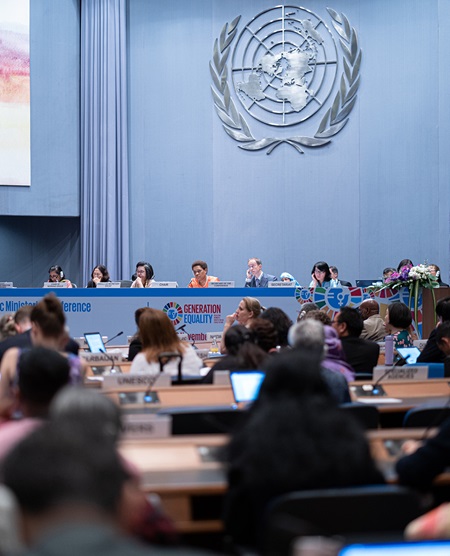
Bangkok (NVI): At least 45 countries of the Asia-Pacific region have committed to intensify priority actions towards realizing women’s rights and fundamental freedoms for an equal future.

Ministers and senior officials of these countries affirmed the commitment through the ‘Asia-Pacific Declaration on Advancing Gender Equality and Women’s Empowerment: Beijing+25 Review’, adopted after intense negotiations at a three-day conference here.

The conference was organized by the United Nations Economic and Social Commission for Asia and the Pacific (ESCAP) and the UN Women Regional Office for Asia and the Pacific.

The Declaration recognizes women as key contributors and vital agents in combating poverty and inequalities, and calls upon governments to ensure inclusive social protection systems, public services and infrastructure.

With its adoption, countries also committed to ensure women’s economic empowerment and the integration of women into the formal economy.

Governments agreed to take appropriate measures and extend legal and social protections to ensure that all women and girls have equal opportunities for education, decent work, favourable conditions of work and financial inclusion.

Countries further committed to work together with key stakeholders to transform negative gender norms, discriminatory social attitudes and to eliminate structurally unequal power relations that persist between women and men.

They additionally highlighted the need to strengthen gender-responsive national statistical systems and data collection for an enhanced understanding of gender gaps in the region.

Governments also called upon ESCAP to continue serving as a regional and sub-regional platform to promote greater dialogue and cooperation among countries.

The Declaration mandates ESCAP, in collaboration with other UN agencies, to support relevant national institutions in monitoring and implementing the global Beijing Platform for Action commitments.

The Declaration will serve as the regional input to the 64th session of the Commission on the Status of Women on the global review of the implementation of the Beijing Declaration and Platform for Action in New York next March.

“The 25th anniversary of the Beijing Declaration and Platform for Action is an opportunity for us to take stock of our progress and accelerate efforts. I am delighted member States from across Asia-Pacific have seized it and agreed an ambitious forward-looking Declaration which strengthens the region’s commitment to action on gender equality and women’s empowerment,” said United Nations Under-Secretary-General and Executive Secretary of ESCAP Armida Alisjahbana.

“The significance of this region being able to adopt this Declaration today, articulates clear and strategic actions to be taken to address the gender agenda, cannot be overstated,” highlighted United Nations Assistant-Secretary-General and Deputy Executive Director of UN Women, Anita Bhatia.

While Asia and the Pacific have made remarkable advancements so far, the Declaration notes several emerging megatrends slowing the progress of gender equality and women’s empowerment in the region, such as climate change, intensifying disaster risks, growing digital divide, rapid urbanization, rising inequalities within and between countries, and increasing acts of violence and extremism against women and girls.

Delhi sees more respite from chill

New Delhi (NVI): Delhi witnessed further respite from chill today as the minimum temperature rose to 7.6 degrees celsius from 5.8 degrees Celsius recorded yesterday.

The maximum temperature today is expected to be around 23.0 degrees celsius, according to the India Meteorological Department (IMD).

The weatherman stated that the flow of chilly northwesterly winds stopped due to the easterlies which are comparatively warm and humid in nature.

It also forecast that there are chances of rainfall in Delhi in the next 72 hours due to which mercury may fall further. It may also lead to a slight reduction in pollution.

“Not just Delhi, but neighbouring Noida, Ghaziabad, Gurgaon, and Faridabad are also facing severe cold conditions,” IMD stated.

‘Cold day’ conditions are declared when the day’s maximum temperature is below normal by more than 4.4°C. A ‘severe cold day’ is when mercury remains more than 6.4°C below normal through the day.

Meanwhile, the overall air quality in the national capital today improved a notch from“severe”to “very poor” category.

According to System of Air Quality and Weather Forecasting And Research (SAFAR),the Air Quality Index (AQI) in the national capital stood at 393 which falls in the “very poor” category.

The worst affected areas are Dhirpur, Delhi University, Chandni Chowk, Pusa, Lodhi Road, Mathura Road, IGI Terminal 3 and the neighbouring Noida.

‘Measures underway to catalyze industrial scenario of J&K’

Srinagar (NVI): The Jammu and Kashmir government has initiated several measures which would effectively catalyze the industrial scenario in the newly-formed Union Territory, the Lt Governor’s Advisor KK Sharma said here today.

He asked officers to undertake a comprehensive marketing strategy for competing at national and global level so that the pristine glory of the UT’s heritage units and the products being manufactured here is restored.

Sharma made the comments during his visit to Raj Bagh Silk factory, Solina Silk Filature and Shoddy plants to get a first hand input about the interventions done in order to carry out the revival of these historical units.

While inspecting the revival measures being undertaken by the government, the Advisor was informed about the role of these units in contributing to economy as well as employment generation since last so many decades.

It was also given out that the silk produced in these units is of world class quality and has created a niche for itself in markets both at national and global level.

Sharma was also informed that the Solina Silk Factory revival has been done under the World Bank-aided project.

He was also told that Jammu & Kashmir is one of the leading producers of wool in the country and now the wool processing is being done at Bemina Woolen Mill which was otherwise being done in other states.

He also visited the showrooms of JK Silk Factory, Bemina Woolen Mills and inspected the different items of silk, tweed and wool being produced by these units.

MUST READ