Monday, April 13, 2026
Home Blog Page 1465

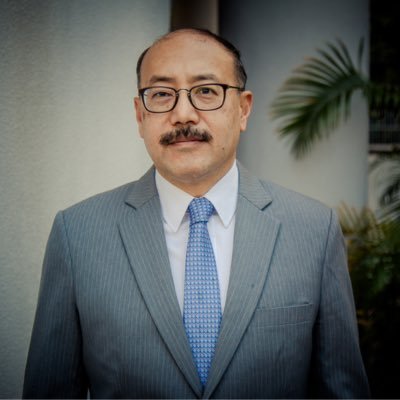
Shringla named new Foreign Secretary of India

New Delhi (NVI) : India’s Ambassador to the US Harsh Vardhan Shringla was today named the new Foreign Secretary of India.
He will succeed Vijay K Gokhale and will take over from him on January 29, according to a government order.

Shringla is a senior Indian Foreign Service (IFS) officer who has served in the External Affairs Ministry in various capacities.

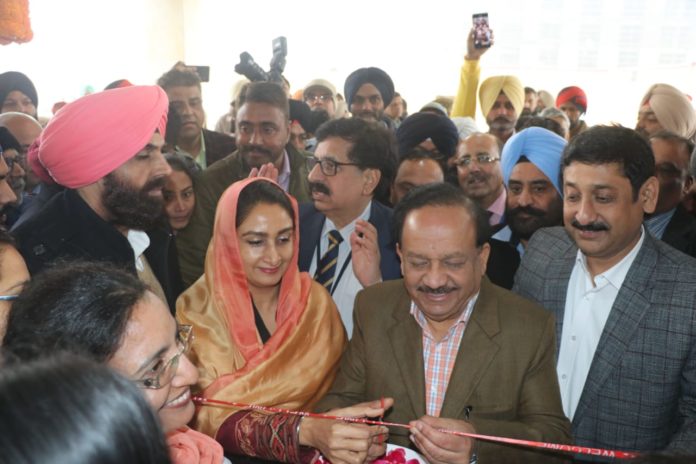
AIIMS Bathinda OPD services inaugurated

Bathinda (NVI): OPD services were started at the All India Institute of Medical Sciences (AIIMS) here in Punjab which will provide world class subsidised healthcare in the government sector to the people of the Malwa region  for the first time since independence.
While inaugurating the facility, Union Health Minister Harshvardhan said work was underway on 22 AIIMS in the country and six had been completed.
Besides this, 157 new Medical Colleges are coming up in the country and are in various stages of completion, he said.
Services are also being upgraded in the Patiala and Faridkot Medical Colleges in Punjab, he added.
Describing the start of AIIMS, Bathinda, as one of the most important events of her life, Akali Dal leader and Union Minister Harsimrat Kaur Badal said Punjabis are now assured of world class medical facilities and specialised treatment for deadly diseases like cancer and hepatitis.
“I am sure with the establishment of AIIMS, Bathinda, the Cancer Express, which used to ferry patients from here to Bikaner, will be a thing of the past,” she said.
Speaking about the project, Badal said she was thankful to former Finance Minister Arun Jaitely who “first planted the seed of the institute and Prime Minister Narendra Modi and former Chief Minister S Parkash Singh Badal who nurtured it. “
She also recounted how she had to strive to get all requisite permissions to ensure it was among the first functioning new AIIMS in the country.
She also said that the city would receive a tremendous boost with the start of the AIIMS institute. Earlier Atal Behari Vajpayee gave us the Bathinda refinery. Sardar Badal brought in the Central University.
“Now AIIMS has taken ground. I am sure this mix of industry, education and health land marks will also boost the economy of the city,” she added.

ADB gave $ 2mn for clean energy

asain development bank
Asain Development Bank
Mumbai (NVI): Asian Development Bank (ADB) has provided an aid of $2 million to the government of India to enable it to adopt clean energy measures like ethanol and biomass supply chain.
Vijay Sharma, Director in the Ministry of Petroleum and Natural Gas, said there is a need to save future generations from increasing pollution of air and water, and the increasing global heat which has caused rise in sea water level.
“Percentage of carbon emission of developed countries is more than the developing countries, but the need of the hour is to adopt security norms by developing countries too,” he said.
“Compressed Natural Gas (Methane produces from west of sugar cane) is a fuel that can be used in place of gasoline, diesel fuel and liquefied petroleum gas (LPG),” he informed.
 He said the Sustainable Alternative Towards Affordable Transportation (SATAT) scheme has provided facilities to recreate power from waste substances like cow dung, waste of sugar and food waste.
“Biogas is produced naturally through a process of anaerobic decomposition from waste andbio-mass sources like agriculture residue, cattle dung, sugar cane press mud, municipal solid waste, sewage treatment plant waste, etc,” Sharma said.
“After purification, it is compressed and called CBG, which has a pure methane content of over 90%,” he added.
“SATAT was launched with a four-pronged agenda of utilizing more than 62 million metric tonnes of waste generated every year in India, cutting down import dependence, supplementing job creation in the country and reducing vehicular emissions and pollution from burning of agricultural and organic waste. Since 2018, 67 SATAT were launched all over the country,” he further added.

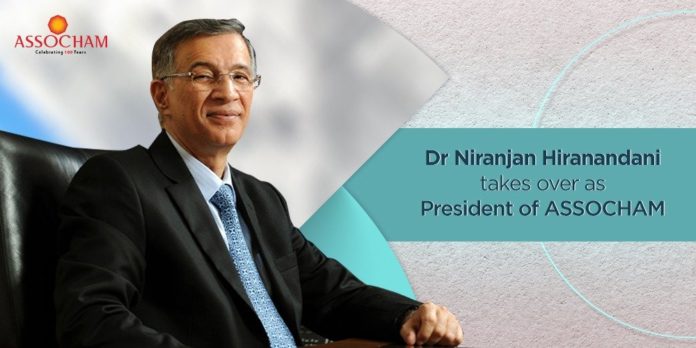
Hiranandani takes over as ASSOCHAM President

New Delhi (NVI): Hiranandani Group Co-Founder and Managing Director, Dr. Niranjan Hiranandani has taken over as the new President of the Associated Chambers of Commerce & Industry of India (ASSOCHAM), the country’s apex organisation of industry and trade.
Presiding over as the ASSOCHAM Centenary as President, Hiranandani said new India is a centre of the vortex to achieve an ambitious mission of $5 trillion economy.
“We are fully aligned with the goal set to achieve in tandem with double digit GDP growth rate inclusive of employment generation,” he said.
“The Chamber shall ‘Walk–the–Talk’ its centenary vision of ‘Looking Beyond 100’  with emphasized focus on activating key sectors like MSME, Housing, Roads and Urban Infrastructure, Tourism , Skilling and Education at its core,” he added.
“ASSSOCHAM will be always at the forefront when it comes to serving the nation as a podium to voice their opinions and play their part in ushering new dawn of Rising India,” he further added.

5,000 plants being set up for bio-energy generation: Pradhan 

New Delhi (NVI): Government is planning to facilitate setting up of 5000 plants for bio energy generation, Minister of Petroleum and Natural Gas & Steel  Dharmendra Pradhan said today.
Speaking at the 33rd National Conference of All India Induction Furnace Association of India (AIIFA) on secondary steel sector here, Pradhan urged the industry to focus on development of new technologies and work towards exporting indigenous technologies to ensure more value addition and making Indian steel sector more competitive.
“Almost half of country’s steel production is done by the secondary steel sector. We are making our policy framework more inclusive,” Pradhan said.
“Our Government has made raw material even more accessible to the secondary steel sector.Industry must reciprocate by producing more value added products,”he added.
Speaking about importance of energy availability and affordability for the steel sector, the Minister said, “Steel industry needs more affordable energy. We are exploring new sources of energy. We are moving towards a gas based economy.”
He went on to add, “We are laying a big network through Urja Ganga Yojana.We have 600 Million MT biomass in the country. Through use of technology, uptake guarantee we are planning to facilitate setting up of 5000 plants for bio energy generation.”
Talking about India’s ambition to become a net steel exporter, Pradhan said, “India still imports high quality steel. We have a large market with skilled workforce. We must create an ecosystem to develop more high quality steel in the country and move towards becoming a net exporter.”
Referring to the importance of MSMEs, the minister stated that while economies of scale has its own benefits, large industries alone cannot cater to the huge population in terms of jobs creation.
“Our MSMEs play an important role in large scale employment creation.The nation cannot prosper without wealth creators,” he said.
“Guided by the mantra of “Minimum Government, Maximum Governance” we are committed to facilitate growth of wealth creators,”  he added.
The theme of the Conference was “Most advantageous route of Environment friendly steel making through Electric Induction Furnace (EIF) and its global acceptance”

USAID partners with IFMR to test innovative approach to conserve power, water

New Delhi(NVI): The United States Agency for International Development (USAID) has awarded the Institute for Financial Management and Research approximately $800,000 through the Development Innovation (DIV) program to test a policy to replace electricity subsidies for farmers with lump sum cash transfers as an incentive to conserve power and water.

The pilot project is being rolled out in Punjab and Rajasthan.

State and National governments in India provide electricity subsidies to rural farmers to help defray the cost of pumping water for irrigation.
However, the subsidy can also result in unsustainable water pumping in areas already facing severe water shortages.
Government think tank Niti Aayog has estimated that water levels are declining in 52 percent of India’s 20 million wells, with 820 million people across India facing water scarcity.
With support from USAID, the Poverty Action Lab of South Asia at the Institute for Financial Management and Research is testing a new win-win policy to replace electricity subsidies for farmers with a lump-sum cash payment.
The farmer can choose to spend the payment on electricity, the equivalent of the status quo, or reduce their electricity consumption and keep the money.
This new approach gives farmers an incentive to conserve power and water, and if found to be effective could be scaled across India to improve conservation or reduce the negative impacts of other subsidies.
Through DIV, USAID supports evidence-driven solutions that transform millions of lives at a fraction of the usual cost. Grant applications are accepted on a rolling basis.

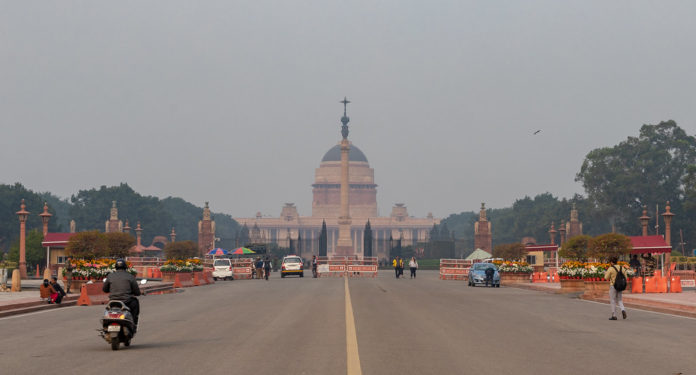
Delhi air quality remains “very poor”

New Delhi(NVI): The air quality in national capital today remained in the “very poor” category for the second consecutive day.

According to System of Air Quality and Weather Forecasting And Research (SAFAR),the Air Quality Index (AQI) in the national capital stood at 347 which falls in the “very poor” category.

The worst affected areas are Dhirpur, Delhi University, Chandni Chowk, Pusa, Lodhi Road, Mathura Road, IGI Terminal 3 and the neighbouring Noida.

Meanwhile, the India Meteorological Department (IMD) said that cold to severe cold conditions will prevail over the entire north India for the next few days.

The weatherman said that in Delhi, the minimum temperature will be around 8.3 degree Celsius today. The maximum temperature recorded yesterday was 14.6 degree Celsius.

“Haryana, Chandigarh, Punjab, Uttar Pradesh and Delhi will remain under the ambit of the cold wave,” the IMD stated in its All India Weather Warning Bulletin.

No change in GST rates till revenue stabilizes: Sushil K Modi

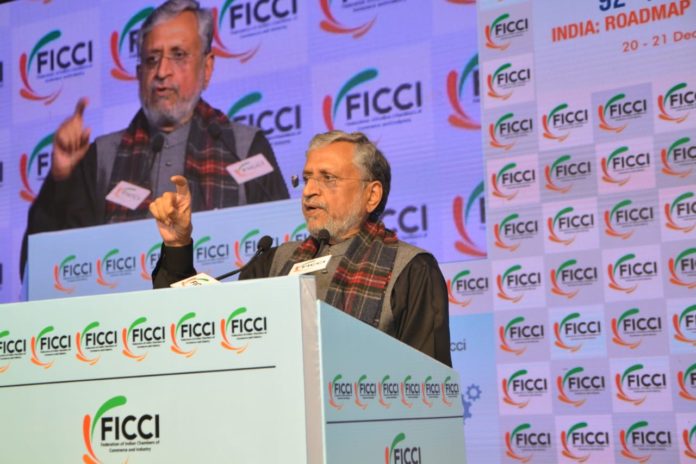
New Delhi (NVI): There is no possibility of any change in Goods and Services Tax (GST) rates till the revenue stabilises, Deputy Chief Minister of Bihar and Convenor of Group of Ministers on IGST Sushil Kumar Modi said.

Speaking at 92nd Annual Convention of FICCI on the theme ‘India: Roadmap to a $5 Trillion Economy’, Modi allayed the fears of any hike in GST tax rate saying the media reports have been wrong in predicting an increase in the rates.

“I want to assure you that not a single state including the Union Government is ready to raise the tax rates,” he said.
“At a time when the economy is in a slowdown, if you cannot cut the tax rate, do not increase the rates to boost consumption. At these times you cut the duties and tax rates, and not increase them,” Modi said.

On the chances of any reduction in GST rates, he said that till the time GST revenue does not stabilise, we cannot think of decreasing the tax rates. In fact, there is no possibility of any change in slabs and tax rates, hike or cut, in the near future.

“The GST Council, in its last meeting, decided to consider any change in tax rates only once in a year and not in each and every meeting,” he further said.

“Compared to the pre-GST period, 99% of the goods and services have less taxes levied on them post-GST,” he added.

“However, Fake invoicing has become a major issue and the government is looking for ways to check the menace,” he further added.

India, China agree to respect each other’s sensitivities

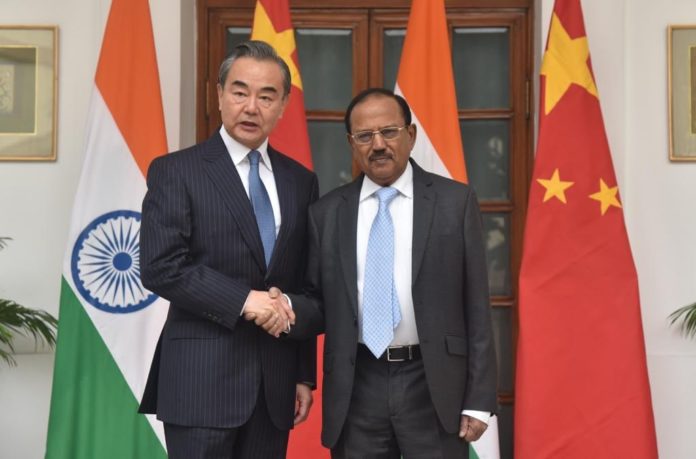
New Delhi (NVI) India and China today agreed that both sides should respect each other’s sensitivities and concerns in order to build mutual trust, as this was important for the future development of the bilateral relations.
The consensus was expressed during the 22nd meeting of the Special Representatives of India and China held here, according to a press release issued by the External Affairs Ministry.
The Indian side was led by National Security Advisor Ajit Doval while the Chinese side was led by State Councillor and Minister of Foreign Affairs Wang Yi.
“The talks were constructive with focus on taking forward the India-China Closer Developmental Partnership as per the guidance provided by Prime Minister Narendra Modi and President Xi Jinping at the 2nd Informal Summit at Chennai in October 2019, and reviewed the progress made since the 2nd Informal Summit in Chennai,” the release said.
The Special Representatives shared the view that stable and balanced development of India-China relations is a positive factor for peace and prosperity in the region and the world.
Both the Special Representatives underlined the importance of approaching the boundary question from the strategic perspective of India-China relations and agreed that an early settlement of the boundary question serves the fundamental interests of both countries, the release said.
“The Special Representatives resolved to intensify their efforts to achieve a fair, reasonable and mutually acceptable solution to the India-China boundary question in accordance with the directives provided by PM Modi and President Xi Jinping,” it said.
Both sides agreed that it is important to maintain peace and tranquility in the border areas for the overall development of the bilateral relationship, pending final settlement of the boundary question.
“In this context, they recognized the importance of existing Confidence Building Measures (CBMs) to promote exchanges and communication between the border personnel and to ensure predictability in border management as well as strategic communication. They also agreed to work together for more CBMs in this regard,” the release said.
 The Special Representatives also exchanged views on important bilateral, regional and global issues of mutual interest.
The next meeting of the Special Representatives will be held in China as per mutual convenience.

Enough cash available in banks, industry should take advantage: SBI Chairman 

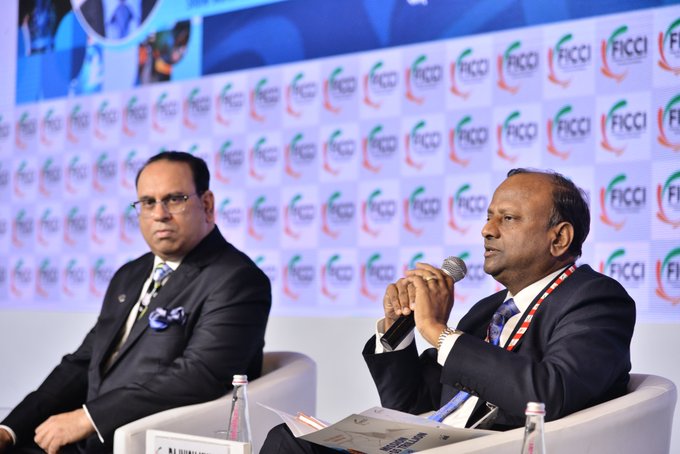
New Delhi (NVI): There is enough cash available in the banking system and it is now for the industry to take advantage of this, SBI Chairman Rajnish Kumar said today.

Speaking at the 92nd Annual Convention of FICCI– ‘India: Roadmap to a $5 Trillion Economy’, Kumar said there is no problem of liquidity or availability of the funds with the banking system but the banking system today is more cautious than what it used to be.

“Currently three sectors, solar, city gas projects and roads, are seeing demand for credit,” he said.

On the issue of loan monitoring, Kumar said that the method of lending itself would need to undergo a change.

“Asset-based lending will continue to work for term loans but for working capital, we will have to move to cash flow-based lending,” he said.

Commenting on the issue of interest rates, he said that in banking system, dependence for borrowing in India is largely depositors.

“We can’t lower the interest rates without lowering the interest rate for depositors and there is a threshold below which we cannot reduce the interest rate for deposits,” he added.

FICCI President Sandip Somany said the global economy is going through a phase of synchronised slowdown and more than 90% of the world will see a reduction in growth in the year 2019.

“To boost consumption, support has been given to NBFCs and HFCs to improve retail credit, payments that have been held up in the government system are being expedited,” he said.

“The banking system itself is changing at an unprecedented pace given the advent of technology. Digitisation is the new mantra and data is the new source of revenue. Digital financial inclusion is now in vogue and the partnerships being worked out between banks and fintechs are yielding some very good results,” he added.

MUST READ