Thursday, March 19, 2026
Home Blog Page 28

Civil Enclave to be developed at Srinagar Airport operational at IAF base

New Delhi, Feb 24 : A Civil Enclave will be developed at the Srinagar International Airport which is operated by the Airports Authority of India (AAI) within an Airbase of the Indian Air Force (IAF).

A proposal, worth an estimated amount of Rs 1,677 crore, was approved by the Union Cabinet Committee on Economic Affairs (CCEA) at a meeting chaired by Prime Minister Narendra Modi here on Tuesday.

The project scope also includes construction of barracks for security personnel, said an official statement.

The new Civil Enclave project, spread over 73.18 acres, will feature a state-of-the-art terminal building spanning 71,500 square meters (including 20,659 square meters of existing structure), designed to serve 2,900 passengers during peak hours and an annual capacity of 10 million passengers per annum (MPPA), the statement said.

The expanded apron will accommodate 15 aircraft parking bays including 1 widebody (Code E) (9 existing and 6 proposed), while the 3,658m x 45m runway continues to be operated by the IAF.

The project will also include the construction of a multi-level car parking facility for 1,000 cars.

Architecturally, the new terminal will reflect a harmonious blend of modern design and the rich cultural heritage of Kashmir, incorporating traditional elements such as intricate woodwork and locally inspired craftsmanship while maintaining operational efficiency through streamlined passenger processing areas, spacious lounges, and advanced security and check-in facilities, the statement said.

Sustainability remains a cornerstone of the development, with features such as advanced water harvesting systems, maximized natural lighting to reduce energy consumption, and the use of locally sourced eco-friendly materials to minimize the carbon footprint.

This project is targeted to achieve a prestigious 5-star GRIHA rating, it said.

Beyond infrastructure enhancement, the project is expected to significantly boost tourism and economic growth by improving connectivity to iconic attractions including Dal Lake, Shankaracharya Temple, and the Mughal Gardens, thereby generating employment opportunities, stimulating investment, and reinforcing Srinagar’s position as a premier tourist and economic destination, it said.

The development of the Civil Enclave thus represents a transformative step toward delivering world-class infrastructure, offering better facilities for passengers and enhanced connectivity, while showcasing the cultural and natural splendour of Kashmir to the world, the government said.

Injured during Kishtwar encounter, dog Tyson is recovering well

Kishtwar (Jammu), Feb 24 : Meet ‘Tyson’, the fearless and valiant assault dog of the Indian Army, who played a critical role in the elimination of three dreaded Pakistani terrorists in Kishtwar in Jammu two days back.

The German Shepherd was injured in firing by the terrorists when he exposed their presence in a hideout, a ‘dhok’ (kutcha mud house), located on a slope of a mountain range in Chhatroo village of Kishtwar.

Tyson was the first to charge at the hideout when a joint team of the Army, CRPF and Jammu and Kashmir Police launched an operation against the terrorists following inputs about there presence there.

After being hit by a bullet in a leg, the dog was airlifted to the Army Base Hospital for treatment and is recovering well now.

The namesake of legendary heavyweight boxer Mike Tyson was trained at the prestigious Dog Breeding & Training School of CRPF at Taralu in Karnataka from February 2, 2022 to December 22, 2022.

“In the recent Operation Trashi-I at #𝗞𝗶𝘀𝗵𝘁𝘄𝗮𝗿, 𝗔𝘀𝘀𝗮𝘂𝗹𝘁 𝗗𝗼𝗴 ‘𝗧𝘆𝘀𝗼𝗻’, displayed extraordinary courage by taking the first bullet while leading the entry into the terrorists’ hideout,” said a post on X by Jammu-based White Knight Corps of the Indian Army.

“Undeterred by his injuries, he pressed forward and launched a fierce assault, compelling the terrorists to open fire and thereby confirming their presence. His fearless action enabled the troops of #𝗪𝗵𝗶𝘁𝗲𝗞𝗻𝗶𝗴𝗵𝘁𝗖𝗼𝗿𝗽𝘀, and #CRPF to precisely engage and neutralise three 𝗣𝗮𝗸𝗶𝘀𝘁𝗮𝗻-𝘀𝗽𝗼𝗻𝘀𝗼𝗿𝗲𝗱 𝘁𝗲𝗿𝗿𝗼𝗿𝗶𝘀𝘁𝘀,” the post added.

“Wounded yet in high spirits, 𝗮𝗹𝗲𝗿𝘁 𝗮𝗻𝗱 𝗿𝗲𝗰𝗼𝘃𝗲𝗿𝗶𝗻𝗴 𝘄𝗲𝗹𝗹, Tyson exemplifies unwavering devotion to duty — a 𝘁𝗿𝘂𝗲 𝘄𝗮𝗿𝗿𝗶𝗼𝗿 𝗮𝗻𝗱 𝗮 𝘀𝗼𝗹𝗱𝗶𝗲𝗿 in every sense,” the White Knight Corps post said.


The operation in an inhospitable terrain resulted in the neutralization of 3 Pakistani terrorists of Jaish-e-Mohammad (JeM) outfit, including a commander codenamed Saifullah.


India and Israel: Cultural Ties, Shared Civilisational Resilience and Historical Memory
PM Narendra Modi to visit Israel

Maulana Shahabuddin Razvi

Column

By Maulana Shahabuddin Razvi Bareilvi

Prime Minister Narendra Modi’s visit to Israel is frequently interpreted through the prism of contemporary geopolitics defence cooperation, strategic alignment, and technological collaboration. Yet beneath these visible dimensions lies a far deeper and more enduring bond: a civilisational connection shaped by memory, resilience, and a shared determination to preserve identity against formidable odds.

The India Israel relationship is not only strategic; it is profoundly historical and cultural.

Both India and Israel trace their civilisational origins back several millennia. India’s ancient civilisation took shape along the Indus Valley and later flourished across the Gangetic plains, while Israel’s historical consciousness is inseparably linked to ancient Judea and Jerusalem. What sets both societies apart is not merely their antiquity, but their extraordinary continuity across time.

Despite repeated invasions, foreign domination, and constantly shifting political landscapes, both nations succeeded in safeguarding their essential civilisational markers language, faith traditions, rituals, and collective memory.

Sanskrit and Hebrew, sacred texts, oral traditions, and revered geographies survived centuries of upheaval. This unbroken continuity instills in both societies a powerful sense of historical responsibility, where the past is not a distant inheritance but a living force shaping contemporary national identity.


A striking parallel between India and Israel lies in their shared memories of displacement and subjugation. Jewish history is deeply marked by exile from the Babylonian captivity to centuries of diaspora across continents.

India, too, endured prolonged periods of foreign rule, colonial exploitation, and cultural disruption.

In both experiences, identity became something that had to be consciously defended and nurtured. Faith, customs, and community institutions emerged as anchors during times when political sovereignty was absent.

This shared historical experience forged a deep civilisational resilience an understanding that survival is not only territorial or political, but cultural and moral as well. The ability to endure without losing one’s essence became a defining feature of both societies.

Modern Israel and independent India emerged in the mid-twentieth century carrying the weight of historical trauma alongside renewed hope. Their nationhood was shaped by remembrance of loss and struggle, but also of the immense sacrifices made to reclaim dignity, self-rule, and collective purpose.

Historical memory continues to play a central role in how both nations understand themselves today. India’s civilisational narrative emphasises pluralism, continuity, and synthesis, while Israel’s national ethos draws strength from remembrance, particularly the lessons of persecution and survival.

This consciousness influences policy choices, security thinking, and cultural diplomacy, and explains why the India Israel partnership resonates beyond immediate interests. Both societies value self-reliance, innovation born out of necessity, and the protection of national identity in an uncertain and volatile world.

An often-overlooked dimension of this relationship is the Muslim civilisational connection to both India and Israel. India is home to one of the world’s second largest Muslim populations, whose history is deeply interwoven with the subcontinent’s culture, arts, scholarship, and freedom struggle.

Indian Islam especially its rich Sufi traditions embodies pluralism, coexistence, and spiritual humanism.

Likewise, the land of Israel and Palestine holds deep significance in Islamic history.

Jerusalem, revered as Al-Quds, is Islam’s third holiest city, and centuries of Muslim presence in the region enriched its cultural, architectural, and intellectaual heritage.

Historical examples of Jewish–Muslim coexistence from medieval Spain and the Ottoman world to parts of South Asia offer enduring lessons in shared spaces and mutual respect.

India’s engagement with Israel does not diminish its historic ties with the Muslim world or its commitment to the dignity and well-being of Muslims globally. Rather, it reflects India’s broader civilisational approach one that privileges dialogue over dogma and bridges over binaries.

Indian Muslims, shaped by centuries of coexistence, are well placed to contribute to people-to-people understanding and to counter extremist narratives rooted in historical amnesia.

As Prime Minister Modi’s visit underscores, India and Israel are building a future-oriented partnership in technology, innovation, and security.

Yet the true strength of this relationship lies in its deeper layers: shared civilisational resilience, respect for historical memory, and the resolve to preserve identity while engaging confidently with the modern world.

In an era marked by rapid change and a fragile global order, India and Israel stand as living examples of ancient civilisations that refused to fade. Their partnership is ultimately not just about interests or alliances; it is about memory, survival, and the enduring human quest to remain rooted while moving forward.

(The Author is the National President of the All India Muslim Jamat, Bareilly)

Pakistani airstrikes hit Madrassa, Mosque in Afghanistan; killed civilians: UN body
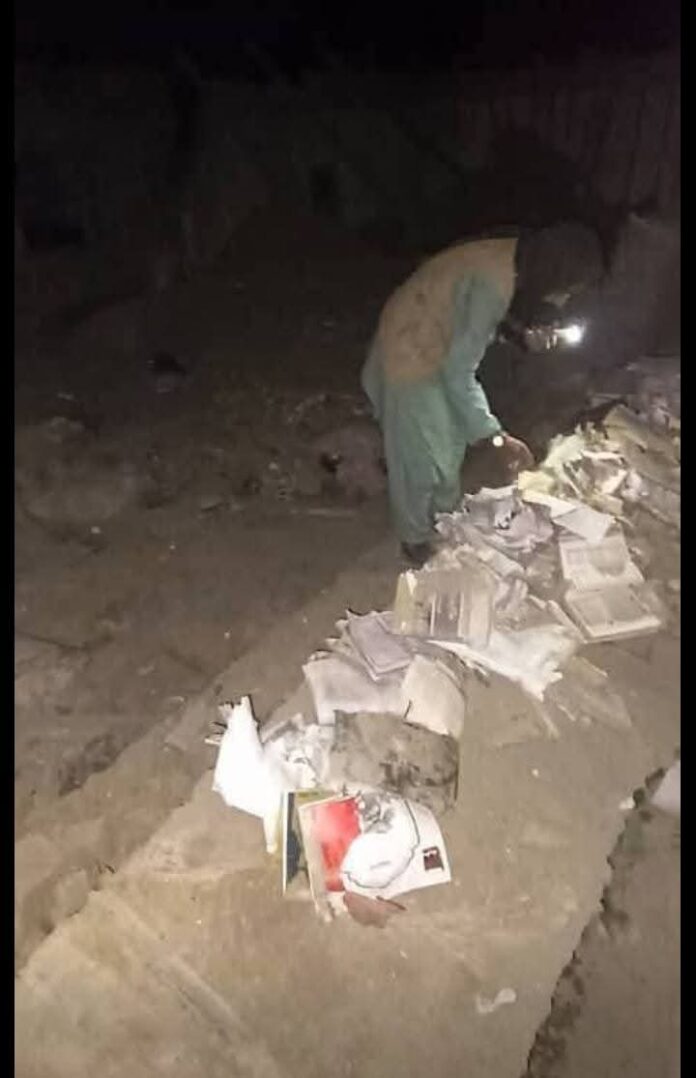
Afghan government says copies of Holy Quran were burnt due to Pakistani air raids on Madrassa

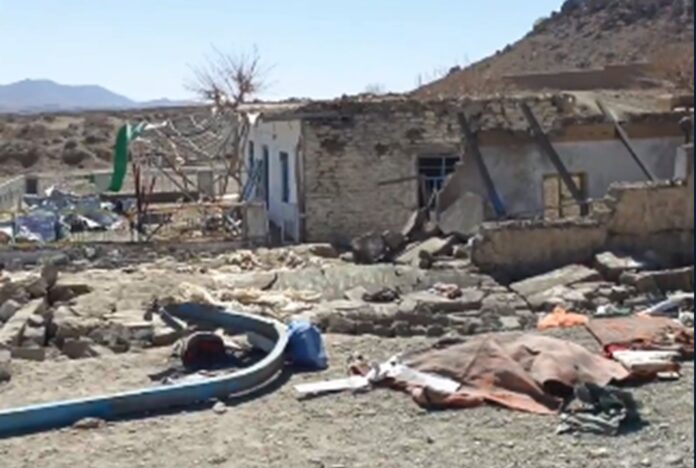
Condition of a Madrassa in Afghanistan after bieng hit by Pakistani airstrikes on Feb 21-22 night

Kabul, Feb 23 : The Pakistani air strikes in Afghanistan during the February 21-22 night hit a Mosque and a Madrassa, killing civilians, including children, a UN body said today, confirming the assertion of the Taliban regime which said even the copies of Holy Quran were burnt due to the “barbaric” attacks.

The government of Afghanistan said “the Pakistani military regime demonstrated that it is hostile not only to the lives of Afghans, but also to Afghans’ religion, education, educational centers and cultural institutions.”

Pakistan’s military regime “openly violated all Islamic and human principles” as it “brutally attacked the Farooqi Madrassa in the Margha village of Barmal district of Paktika and Gardi Street of Nangarhar Behsud district near the Durand Line,” said the Ministry of Education of Afghanistan.

The spokesperson of the Ministry said that the attacks resulted in killing of 8 students of Farooqui Madrassa — 5 boys and 3 girls — and injury to one.

Dozens of other innocent Afghans, including children and women, were killed or injured in these attacks, he said.

The Madrassa was destroyed and copies of the Holy Quran and religious books were burnt in the air raids by the Pakistani military regime, the spokesperson said.

“These unforgivable barbaric actions show that Pakistan’s military regime is hostile not only to the lives of Afghans, but also to Afghans’ religion, education, educational centers and cultural institutions,” he added.

Meanwhile, the UN Assistance Mission in Afghanistan (UNAMA) issued a statement, saying it has received “credible reports of civilian casualties as a result of the overnight airstrikes carried out by Pakistan inside Afghanistan late on 21 February and into the early hours of 22 February.”

It said: “On 21 February, at approximately 22.45 to 00.15 on 22 February, Pakistani military forces conducted airstrikes in Behsud and Khogyani districts in Nangarhar Province. Preliminary civilian casualty figures indicate at least 13 civilians were killed and seven others injured, including women and children.”

It added that Pakistani military forces also conducted airstrikes in Barmal and Urgun districts of Paktika Province of Afghanistan.

“In the first reported incident, on 21 February, at approximately 12:15, in Barmal district, Marghai area, an airstrike impacted a madrassa, and partially damaged a nearby mosque.

“In the second reported incident, at approximately 23:30 in Urgun district, Dahna area, an airstrike impacted and partially destroyed a vacant private residential house. No civilian casualties have been reported so far,” UNAMA said.

In an obvious message to Pakistan, the UN body said it “reminds all parties of their obligations under international law to comply with the key principles of distinction, proportionality and precaution to prevent civilian casualties.”

Kishtwar encounter marks end of 7-member Pakistani terror module
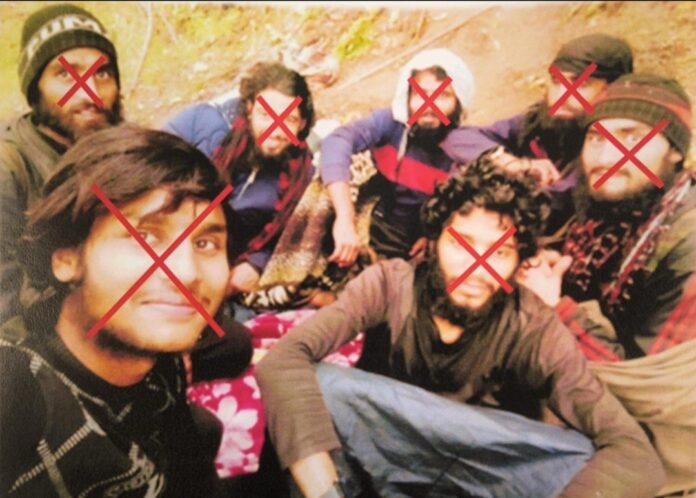
JeM terror module called itself 'Israel Group'

Kishtwar (J&K), Feb 23: With yesterday’s killing of 3 hardcore Pakistani terrorists, including a so-called ‘Commander’, the security forces have eliminated an entire 7-member module of Jaish-e-Mohammad (JeM) outfit active in Kishtwar district of Jammu after a sustained pursuit lasting 326 days.

Significantly, a dog of the Indian Army, named ‘Tyson’, played a critical role in the success of yesterday’s operation and was injured.

The seven terrorists had infiltrated into Jammu and Kashmir in April 2024 and during the last one-and-a-half years, the security forces established contact with them 17 times.

In three such armed engagements, the entire module, which called itself ‘Israel Group’, was neutralised by the security forces.

Officials said the killed terrorists were well-trained and equipped with a number of weapons, military-trade equipment and a large quantity of ammunition.

The security forces pursued this terror group since April last year following intelligence reports about their presence in Kishtwar region.

The hunt, jointly involving the Army, Jammu and Kashmir Police (JKP) and CRPF, was sustained in the inhospitable region through difficult conditions like snow and rains, besides the extreme winter cold.

In the initial phase of the 10-month-long hunt, three hardcore terrorists were killed in a fierce encounter in April 2025.

Other 4 members, including Commander Saifullah, of the terrorist group, however, remained at large but the security forces remained determined to track them down.

In January this year, there were intelligence inputs from JKP, IB and Indian Army sources regarding the movement of the remaining 4 terrorists of the group.

Acting on these, a Joint Counter Terrorist (CT) Operation was launched by the Indian Army along with JKP and CRPF, codenamed ‘Operation Trashi-I’, in the Chhatroo area of Kishtwar region to track and neutralise the terrorists.

On January 18, contact was established with the terror group and their well-prepared and stocked hideout was busted by the security forces, the Indian Army said.

On February 4, the fourth terrorist of the group, code named Adil, was killed by the security forces during their relentless pursuit.

Finally, the remaining three terrorists were tracked down to a ‘dhok’ (a mud house usually found in mountains) located on a set of steep slopes of a mountain unit and it was surrounded during the intervening night of February 21 and 22.

They were engaged by the security forces at around 11 AM yesterday and within a few hours, all the three were neutralised.

“The troops displayed exceptional tactical precision and swiftness, ensuring zero casualties among their own personnel,” said an Army statement.

The role of ‘Tyson’, an Army-trained dog, needs a special mention in the context of the successful operation.

It entered the Dhok to ascertain the presence of terrorists, who fired at it and injured it.

During the subsequent search of the area, war-like stores, including three AK-47 rifles, have been recovered along with bodies of the slain terrorists.

“Displaying high standards of tactical precision, seamless inter-agency coordination and resolute operational efficiency, Security Forces including JKP and CRPF, rigorously pursued the terrorist group in the challenging and rugged terrain and harsh weather conditions. The persistent actions of the security forces in this long duration large scale operation spanning over a month, the security forces have neutralised all four hard core terrorists,” the Army said.

“The operation reflected seamless coordination between the Army, CRPF and the Jammu and Kashmir Police, notably the SOG (Special Operations Group). Reinforcements, including special forces, were quickly mobilized. The Army utilized real-time surveillance drones and night vision equipment to track and contain terrorist movement, preventing any potential escape,” it added.


Taliban regime angry at Pakistan over airstrikes, vows adequate response
Tensions escalating as Pakistan kills dozens of civilians, including infants and women, during Holy Ramadan

An Afghan man looks at the remains of a building which was destroyed in Pakistani airstrikes on Feb 21-22 night

Kabul, Feb 23: The Taliban regime is seething with anger against Pakistan which carried out cross-border airstrikes at multiple places in Afghanistan soil last night, killing dozens of innocent civilian Afghans, including infants, children and women, that too during the ongoing holy month of Ramadan.

The Taliban regime said the Pakistani military air strikes in Paktika and Nangarhar provinces were against the Islamic values, neighbourly principles and international laws as it violated Afghanistan’s sovereignty

The Afghan regime vowed appropriate response at an appropriate time against Pakistan.

The airstrikes hit civilian houses and even mosques, reducing those to rubble which buried many innocent people, including infants and women.

“The Pakistani military regime has once again carried out air attacks on several civilian areas in Afghanistan’s Nangarhar and Paktika provinces, in which dozens of innocent civilians, including women and children, have been killed or injured,” said an angry Maulvi Siddiqullah Nusrat, Deputy Spokesman of Taliban regime’s Ministry of National Defense in a video statement.

He said the air strikes amounted to invasion of Afghan territory and it gave clear evidence of the intelligence and security failure of the Pakistani army which made the contentious claim about conducting the action against militants of Tehreek-e-Taliban Pakistan (TTP).

He said the Ministry of National Defense saw the Pakistani action as a “flagrant violation of Afghanistan’s national territory” and an abhorrent crime, which went against the international laws, neighborly principles and Islamic values.

Emphasising that the Taliban regime considers the protection of the country’s sovereignty and security of its people as its legitimate and national responsibility, Nusrat promised “an appropriate and calculated response at the appropriate time.”

The Taliban regime stressed that the air strikes were an attempt by the Pakistani military to hide its failures on internal security front.

The Pakistani action has also been slammed by India, which expressed its support to Afghanistan’s sovereignty, territorial integrity and independence.

“India strongly condemns Pakistan’s airstrikes on Afghan territory that have resulted in civilian casualties, including women and children, during the holy month of Ramadan,” said External Affairs Ministry spokesman Randhir Jaiswal in a statement.

He said the action was “another attempt by Pakistan to externalise its internal failures”.

TTP kills 24 Pakistani soldiers in multiple attacks

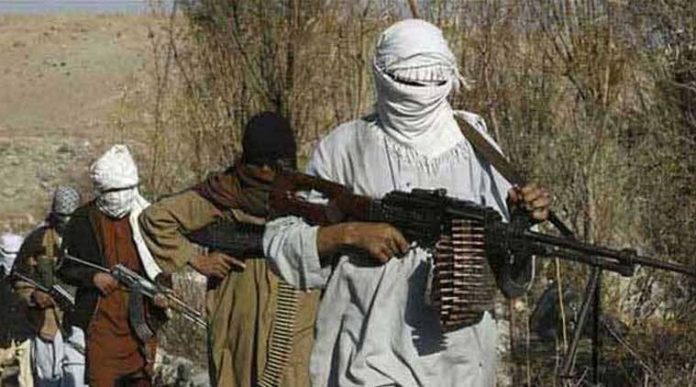
Cadres of Tehreek-e-Taliban Pakistan (TTP) - File Pic

Peshawar, Feb 22: At least 24 personnel of Pakistani military and affiliated agencies have been killed, several others injured and a large amount of military assets destroyed in multiple attacks by Tehreek-e-Taliban Pakistan (TTP) in Khyber Pakthunkhwa during the last two days, according to the outfit.

Among these operations, the highest casualty was suffered by the Pakistan Army in Orakzai district of Khyber Pakhtunkhwa, where TTP ambushed a military patrol party in Feroz Khel area, killing 9 soldiers and injuring 5 others.

In Bannu district, TTP killed 8 personnel of Pakistani forces in a mortar attack on the police lines in Daryoba area, the outfit said in a statement.

In Bajaur district, a Pakistani military officer was killed in a laser gun attack on a check post in Safri in Mahmond.

In North Waziristan, two Pakistani soldiers were killed in a Grenade Launcher attack on the Shash Kruz military post.

In South Waziristan, two Pakistani soldiers were killed in an ambush on a military convoy in Torah Gola area of Azam Warsak, the TTP said, adding one vehicle was partially damaged in the attack.

One more Pakistani soldier was killed in an attack on a military post in Sarkhani in Shawa, it said.

Another soldier was killed in a laser-gun attack by TTP on a check post in Safari area of Wara Mahmond in Bajaur district, the outfit said.

Delhi Police arrests 8 Bangladeshis for plotting terror acts at behest of Pakistan’s LeT
Two suspects were arrested from West Bengal and 8 from Tamil Nadu

New Delhi, Feb 22: Delhi Police today claimed to have foiled a plan of Pakistan-based Lashkar-e-Taiba (LeT) terror outfit to carry out attacks as it arrested eight Bangladeshi nationals in an operation in West Bengal and Tamil Nadu.

Delhi Police’s Special Cell, which specifically deals with terrorism-related cases, said the arrested suspects were part of a terror module getting directions from a Bangladesh-based operative of LeT, identified as Shabbir Ahmed Lone of Kashmir.

Additional Commissioner of Police (Special Cell) P.K Kushwaha told a press conference here that two of the suspects, Umar Farooq and Robil-Ul Islam, were arrested from Kolkata in West Bengal and six others were arrested in Tamil Nadu.

Kushwaha said Lone had constituted this module as part of plans to carry out terrorist activities in India.

These suspects had even conducted dry runs, he said.

“A team from the Special Cell busted a module that was being handled by a Lashkar handler based in Bangladesh. A major untoward incident has been prevented,” he said.

Investigation began after anti-national and pro-terrorist posters surfaced at Metro Rail Stations in Delhi, including at Kashmiri Gate Station, on February 7.

Subsequently, Delhi Police arrested Umar Farooq and Islam in Kolkata with the help of local police, Kushwaha said.

The suspects revealed that they were directed by Shabbir Lone, a Kashmiri terrorist based in Bangladesh, who has a history of terrorist activities.

“They revealed that anti-India posters were put up at many places in Delhi…It was found out through interrogation and investigation that the direction to them was being given by Shabbir Ahmed Lone, from Bangladesh,” Kushwaha said.

Lone, hailing from Ganderbal district of Kashmir, was arrested in 2007 with AK-47 and grenades, when he planned to carry out a suicide attack on a senior political leader, the police officer said.

“He (Lone) remained in jail for many years and was released in 2019. After his release, he again fled to Bangladesh…. Initial investigations have revealed that he reconnected with the LeT leadership and re-established his organisation to carry out terrorist activities,” Kushwaha added.

Further investigation led to the arrest of six more Bangladeshi nationals in Tamil Nadu, who were allegedly part of the plot, he said.

“He (Lone) re-assembled his men and conducted dry runs with these men. He had posters put up in various locations. He did so not just in Delhi, but also in Kolkata.

“On February 10th, he put up anti-India posters at several metro stations and other locations in Kolkata. He also rented a house in Kolkata,” the Delhi Police officer said.

“Investigation revealed that some individuals who are Bangladeshi nationals were in Tamil Nadu. They were going to take them back to Kolkata and plant them in a terrorist activity before they could do anything. The team then went to Tamil Nadu and, with the help of the Tamil Nadu police, arrested six more people, all of whom are Bangladeshi nationals,” Kushwaha said.

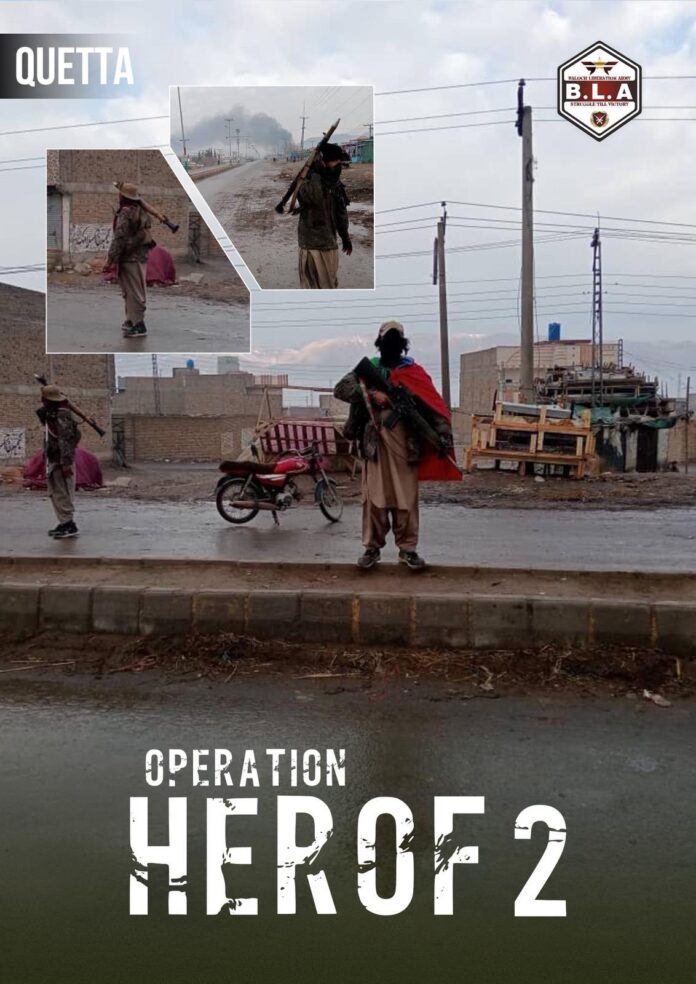
Balochistan: BLA releases fresh video about ‘Operation Herof 2’
The video shows how BLA fighters captured Pakistani aasets

Image released by Baloch Liberation Army (BLA) during Operation Herof 2

Quetta, Feb 20: Baloch Liberation Army (BLA) tonight released a new video showing how its fighters, during the recent ‘Operation Herof 2’, took control of Pakistani military posts as well as the railway station, a train, and other government offices in Ahmad Wal in Noshki district of Balochistan.

After control was established, these sites were set on fire and destroyed, BLA said in a statement.

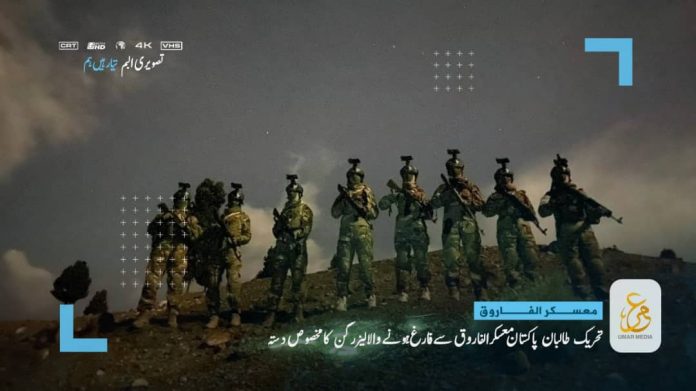
Big hit on Pakistani forces: TTP claims killing of 61 soldiers

Tehreek-e-Taliban Pakistan (TTP) cadre in specialised gear. File pic released by TTP

Peshawar, Feb 18 : In a huge hit at the Pakistani forces, Tehreek-e-Taliban Pakistan (TTP) has claimed to have killed more than 61 personnel and destroyed substantial assets of the military in Khyber Pakhtunkhwa Province.

In a statement, it said the TTP carried out an attack on a camp of Pakistani paramilitary force Frontier Corps (FC) in Malangi in Loi Mahmond in Bajaur district.

In this attack, 40 FC personnel were killed and the building was destroyed, the statement said.

The FC had set up the camp on the premises of a former Madrassa, the TTP said.

While the attack was underway, more Pakistani military personnel attempted to come to their help. That convoy was attacked by the TTP, killing and wounding over a dozen personnel, the statement said.

The TTP also carried out a mortar attack at a post of the Pakistan Army Scouts in Damangi area of Loi Mahmond in Bajaur district, the statement said, adding there is a strong possibility of casualties and material losses.

In another attack, a Pakistani Army man and two police personnel were killed in Kabulgram Sulemani Banda area of Martung in Bajaur district, the TTP said.

During this clash, TTP lost two fighters — Commander Khog Bacha and Sohaib, it said.

After the clash, the TTP targeted the vehicles of the Pakistani forces which were leaving the site.

In that ambush, three vehicles of Counter-Terrorism Department (CTD) and police were destroyed and all the personnel aboard were killed or wounded, the statement said.

Afterwards, two additional police vehicles were set on fire and reduced to ashes, it added.

In Dera Ismail Khan district, an agent of the Pakistani military was killed in Prova area, it said.

The TTP also killed 5 Pakistani military personnel in an ambush in Tanga area of Sarwekai in Dera Ismail Khan three days back, the statement said.

MUST READ