
Wednesday, September 2, 2026
Home Blog Page 4

Indian forensics team, army personnel helping in Nepal operations

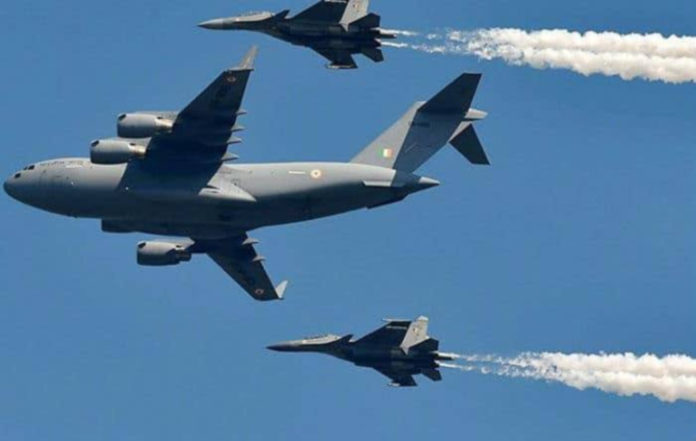
Essential items airlifted by India to flood-hit Nepal today

Kathmandu, Aug 30 (NVI) India has sent a 19-member forensics team and 3 military personnel, along with its latest consignment of emergency supplies to flood-hit Nepal to assist in the search, identification and rescue operations.

India also sent the fourth flight today with a consignment of of 11 tonnes of materials, including search-and-rescue equipment, tarpaulins, plastic sheets, sleeping bags, blankets and sanitary kits.

With this, India has provided about 57.5 tonnes of relief materials since the disaster.

The Bhotekoshi and Trishuli river corridors were devastated by flash floods on August 26, causing heavy loss of life and property and leaving people trapped in hydropower project tunnels.

The 19-member specialised forensics team from India began functioning in Kathmandu today, India’s Ministry of External Affairs (MEA) said in a statement.

This team will help augment the analysis of DNA samples in Nepal for identification of the mortal remains of the victims, it said.

Ascertaining the identity of the deceased is very crucial to provide a closure to their families who are groping in the dark about the fate of their loved ones.

Meanwhile, search and rescue operations by a team of Indian Army personnel along with the Nepal Army continued at the hydropower sites in Chilime and Langtang.

A team of army personnel was able to enter a tunnel near the Langtang hydroelectric project despite inclement weather and retrieve the mortal remains of one person, the MEA said.


Pakistan: 5 attacks by TTP kill, injure several soldiers

TTP
Cadres of Tehreek-e-Taliban Pakistan (TTP) - File Pic

Peshawar, Aug 30 (NVI) Tehreek-e-Taliban Pakistan (TTP) tonight claimed to have conducted 5 operations against the Pakistani military in Khyber Pakhtunkhwa Province of Pakistan since last night, in which 3 soldiers were confirmed killed and several others possibly slain or injured.

In one attack in South Waziristan, TTP cadres ambushed two military trucks carrying soldiers and supplies.

The attack in Makin area resulted in the killing of 3 soldiers and injuries to two, TTP spokesman Mohammad Khorasani said in a statement.

One truck was severely damaged in the attack, he said adding there is a strong possibility of more casualties.

In a separate attack in Shaktoi area of South Waziristan district, a Pakistani soldier was injured in a laser gun attack on a post located in Re Pange last night.

Another attack was carried out in Karak district, where a security post was hit, as a result of which soldiers were possibly killed and injured, according to the spokesman. (NVI)

Nearly 4.8 Lakh Pilgrims Pay Obeisance During 57-Day Amarnath Yatra: J&K LG Sinha

Holy Cave Shri Amarnath Ji

Srinagar, Aug 30 (NVI): Jammu and Kashmir Lieutenant Governor Manoj Sinha on Sunday felicitated officers and personnel involved in the successful conduct of the Shri Amarnath Ji Yatra 2026.

Sinha felicitated officials of the Shri Amarnath Ji Shrine Board, administration, Jammu and Kashmir Police, Army, Central Armed Police Forces, Border Roads Organisation, medical teams and service providers for their contribution to the smooth conduct of the annual pilgrimage.

“Nearly 4.8 lakh pilgrims had darshan of Baba Barfani over 57 days. This success belongs to Team Jammu and Kashmir, who turned duty into devotion,” Sinha said in a post on X.

He expressed gratitude to all those involved in the arrangements, saying their spirit of service reflected the “true soul of Jammu and Kashmir”.(NVI)

Recognise your real enemy, Iran’s Supreme Leader to West Asian nations

Iran's Supreme Leader Ayatollah Mojtaba Khamenei

New Delhi, Aug 30 (NVI) “Recognise your real enemy, understand its plan, and confront it.”

This message has been issued by Iran’s Supreme Leader Mojtaba Khamenei to countries in the Gulf region, in an apparent reference to the United States and Israel.

In a written message issued six months after the start of the war in West Asia began, Mojtaba said solutions to challenges faced by the Islamic nations lay in “friendship” and “cooperation.”

Mojtaba was made the Supreme Leader of Iran shortly after his father Ayatollah Ali Khamenei was killed in joint airstrikes by the US and Israel in the initial phase of the war launched on February 28.

“Anyone, in any position, who does anything that leads to division among Muslims and creates conflict in the Muslim community, knowingly or unknowingly, intentionally or unintentionally, has served the purpose of the enemies of Islam,” he said, according to his official website.

He further added, “The solution to the problems of the Islamic nations is unity of words, friendship, and cooperation on the path of goodness.”

Apart from the call to Islamic nations, Khamenei also addressed citizens of Iran, urging them to set aside their differences and come together. “Again, this servant’s advice to the Iranian people is to not allow any differences to arise among themselves in any way,” he said, in remarks similar to those made by him on Friday.

“I firmly declare that doing anything detrimental to social cohesion is prohibited,” he had said on Friday. He had further called for the gradual de-dollarisation of Iran’s economy and boosting economic production to support growth. (NVI)

Uzbekistan announces 30-day visa-free system for Indian citizens

PM Modi and Uzbekistan President Shavkat Mirziyoyev after planting a tree at the Presidential Palace garden by Tashkent

New Delhi, Aug 30 (NVI) Uzbekistan today announced introduction of a 30-day visa-free system for Indian citizens.

Uzebekistan President Shavkat Mirziyoyev said the move will make a significant contribution to strengthening people-to-people contacts, tourism and business exchanges between the two countries. 

Mirziyoyev made the announcement during the delegation-level talks with Prime Minister Narendra Modi in Tashkent, as part of the latter’s two-day State visit to Uzbekistan.

Highlighting the growing momentum in India-Uzbekistan relations, the Uzbek President described India as a “reliable strategic partner” and pointed to rising bilateral trade, joint ventures and connectivity between the two countries.


The Uzbek President noted that the philosophy and practice of Yoga have become increasingly popular in Uzbekistan, with a dedicated Yoga Federation operating in the country since 2018.

He also said that a nationwide Yoga Festival was held across Uzbekistan in June this year.

“The introduction of a 30-day visa-free regime for Indian citizens will make a significant contribution to the development of people-to-people contacts, tourism, and business exchanges,” Mirziyoyev added.

The announcement comes during PM Modi’s two-day State visit to Uzbekistan, aimed at further deepening bilateral ties and expanding cooperation across multiple sectors.

India and Uzbekistan established diplomatic relations on March 18, 1992, when the protocol establishing diplomatic ties was signed in Tashkent. India was among the first countries to recognise Uzbekistan’s sovereignty following its independence.

The two countries elevated their relationship to a Strategic Partnership in 2011. The partnership is supported by several institutional mechanisms at the political and official levels to ensure regular engagement.

PM Modi’s current visit, from August 29 to August 30, follows his previous visit to Uzbekistan in 2015, as well as his visits in 2016 and 2022 to attend the Shanghai Cooperation Organisation (SCO) Summits.

The bilateral relationship has also been marked by high-level exchanges, including President Mirziyoyev’s State Visit to India in 2018 and his participation in the Vibrant Gujarat Global Summit in 2019.

Following his visit to Tashkent, PM Modi will travel to Bishkek at the invitation of Kyrgyz President Sadyr Zhaparov to participate in the 26th SCO Summit, which will mark 25 years of the organisation.

The new visa-free regime is expected to further facilitate travel between India and Uzbekistan and provide a boost to tourism, business interactions and broader people-to-people exchanges. (NVI)

India, Uzbekistan to have pact on uranium supplies as they deepen ties

PM Modi with Uzbekistan President in Tashkent today

New Delhi, Aug 30 (NVI) In a boost to their bilateral ties, India and Uzbekistan today elevated their relationship to the level of Comprehensive Strategic Partnership, encompassing longe-term cooperation in nuclear field and expansion in the areas of trade and commerce.

At a meeting between Prime Minister Narendra Modi and Uzbekistan President Shavkat Mirziyoyev in Tashkent, the two nations set a target of $5 billion in annual trade by 2030.

“Uzbekistan is at the heart of Central Asia and is at the heart of India’s engagement in the region,” PM Modi said at the meeting with Mirziyoyev.

“A stronger India-Uzbekistan partnership will be a powerful force for peace, progress and prosperity in Central Asia,” he added.

PM Modi shared the key outcomes of the meeting with President Mirziyoyev in Tashkent in a post on X (formerly Twitter).

“Elevation of India-Uzbekistan relations to a Comprehensive Strategic Partnership. Boost trade to over 5 billion dollars by 2030. Increase cooperation in infrastructure, DPI, AI, critical minerals, energy, space and more. Enhance market access, connectivity, banking and payments,” the PM posted.

India and Uzbekistan set a bilateral trade target of $5 billion annually by 2030, up from the present of over $1 billion.

Speaking about trade and investment, the Prime Minister said that matters including market access, connectivity, banking, and payment systems will be addressed in a structured manner.

The discussions between the two leaders focused on trade, investment, infrastructure, digital public infrastructure (including UPI), information technology, critical minerals, defence and security, education, pharmaceuticals, and agriculture.

The two nations agreed to establish a framework for long-term supply of uranium from Uzbekistan to India in line with cooperation in the civil-nuclear energy sector.

After the meeting, Secretary (West) in the Ministry of External Affairs Sibi George told media persons that the two nations are close to signing an agreement.

“Positive discussions have happened on a long-term arrangement for the supply of uranium to India. We are close to signing an agreement very shortly,” George said.

“The level of bilateral ties between the two countries has been raised to a Comprehensive Strategic Partnership, which includes a Foreign Minister-level Coordination Group and raising the level of the Joint Commission Meeting, or the Intergovernmental Commission, from the Secretary level to the Ministerial level,” the official said.


“The close defence and security cooperation between our two countries reflects our deep mutual trust. In the future, we will promote direct linkages, co-production, and co-development between our defence industries,” PM Modi said.

“We believe that terrorism, extremism, and separatism pose serious challenges to the entire region,” he emphasised.

“Maintaining a policy of zero tolerance against these threats has been, and will continue to be, our shared resolve,” the prime minister added.

The leaders announced the elevation of strategic ties to a Comprehensive Strategic Partnership to reflect the expanding scope and depth of bilateral cooperation.


“We will establish a Coordination Council at the level of foreign ministers to provide direction to all aspects of our cooperation through close coordination,” PM Modi also said.

Furthermore, he said that both sides will also elevate their existing joint commission from the level of secretaries to the ministerial level.

The two nations will also organise a bilateral business summit featuring industry leaders from both sides.

“Both sides will jointly organise a business summit featuring business leaders from both nations,” he continued.

Modi landed in Tashkent yesterday morning on a two-day visit.

Nepal Floods death toll rises to 734, Indian Army team lands for help

Representative pic

Kathmandu, Aug 30 (NVI) As the extremity of the Nepal floods unfolds further, the death toll has risen to 734 while 2,494 people are still untraceable, including 275 Indian nationals and 128 Persons of Indian Origin (PIOs).

Meanwhile, a 22-member team of Indian Army has reached Rasuwa to assist in the search and rescue operations, particularly around the hydroelectric plant where several Indians were working.

According to the latest update from Nepal’s National Disaster Risk Reduction and Management Authority (NDRRMA), 734 bodies have been recovered from eight districts.

At least 2,494 people remain untraceable. They include 933 hydropower project workers, 562 people in Rasuwa and 115 in Nuwakot, along with 27 Nepal Police personnel, 45 Nepal Army personnel, 13 Armed Police Force personnel, 15 customs officials and four immigration officials.

Foreign nationals account for 589 of those missing, while 127 Nepalis travelling with foreign tourists are also unaccounted for.

The missing people include more than 275 Indian nationals and 128 Persons of Indian Origin (PIOs)

In a statement last night, Ministry of External Affairs (MEA) said 108 Indian nationals have been rescued in Nepal and contact was re-established with around 50 Indian nationals who were earlier uncontactable.

Rescue operations have so far brought 8,186 people to safety, including 2,974 rescued by the Nepal Army, 2,699 by Nepal Police and 2,513 by the Armed Police Force.

A total of 279 people trapped inside hydropower tunnels were airlifted over two days, while 227 foreign nationals have been evacuated.

The disaster that hit Nepal’s central parts on August 26 has left 242 people injured, with surgical medical teams deployed in affected areas.

Unidentified bodies are being kept at 21 hospitals across districts as authorities work to establish identities. (NVI)

India’s IIP growth slowed down in July

Energy efficiency
Representational image

New Delhi, Aug 29 (NVI) India’s Index of Industrial Production (IIP) has recorded a  year-on-year growth of 6.7 per cent in July 2026, which is slower than 7.3 per cent registered in June, according to quick estimates released by the Ministry of Statistics and Programme Implementation (MoSPI).

The IIP stood at 124.8 in July, compared with 117 in July 2025.

The July figures are quick estimates and will be revised in subsequent releases as more production data becomes available.

Manufacturing output grew 7.3 per cent in July, providing the main support to industrial production.

Electricity and gas supply recorded stronger growth of 8.7 per cent, while water supply, sewerage and waste management grew 7.4 per cent.

Mining and quarrying, however, contracted 0.9 per cent during the month.

Within manufacturing, 19 of 23 industry groups recorded positive growth over July 2025.

Electrical equipment recorded the highest growth among the leading industry groups at 28.3 per cent.

It is followed by motor vehicles, trailers and semi-trailers at 22.2 per cent and machinery and equipment at 12.1 per cent.

The use-based classification shows strong growth across capital and intermediate goods.

Capital goods output rose 16.1 per cent year-on-year in July, while intermediate goods grew 10 per cent.

Consumer durables increased 10.5 per cent, and infrastructure and construction goods rose 6.9 per cent. Primary goods recorded growth of 4.1 per cent.

Consumer non-durables are the only major category to contract, declining 1 per cent during the month.

Intermediate goods, capital goods and primary goods are the top three positive contributors to overall IIP growth in July.

During April-July 2026-27, IIP grew 6.3 per cent compared with the corresponding period of the previous financial year.

Manufacturing grew 7 per cent, while electricity and gas supply expands 8.7 per cent. Mining and quarrying contracted 1.1 per cent during the four months.

The July data showed continued strength in manufacturing and capital goods, although the contraction in mining and consumer non-durables remains a drag on overall industrial activity. (NVI)

Nepal floods: 275 Indians, 128 PIOs remain missing

India Responds to Trump’s ‘Hell-Hole’ Remark: MEA Issues Statement
External Affairs Ministry spokesman Randhir Jaiswal (file pic)

New Delhi, Aug 29 (NVI) Providing the latest update, the government tonight said more than 275 Indian nationals and 128 Persons of Indian Origin (PIOs) still remain missing or non-contactable since the devastating floods hit Nepal three days back.

In a statement, Ministry of External Affairs (MEA) said 108 Indian nationals have been rescued in Nepal and contact was re-established with around 50 Indian nationals who were earlier uncontactable.

Furthermore, 598 Indian nationals have safely crossed into Nepal from China in the last two days, the MEA said, quoting “local Government sources in China”.

Around 900 Indian nationals are still on the Chinese side but are safe and contactable, it said.

Devastating flash floods hit Nepal on August 26 in the Bhote Koshi area causing significant loss of life and extensive damage to residential areas, roads, bridges and other infrastructure, situated downstream.

“As many Indian nationals were among those impacted by the flash floods on both the Nepal side and the China side, Government of India has been working in close coordination with the Nepali and Chinese authorities for the early rescue and relief efforts of those affected by the floods,” the MEA said.

A round-the-clock Control Room has been established in the Ministry of External Affairs and our Embassies in Kathmandu and Beijing have 24/7 helplines operational, it said.

“Our Embassies in Kathmandu and Beijing have also remained engaged with the all the relevant stakeholders to ensure effective coordination of search, rescue and relief efforts, in connection with Indian nationals impacted by the flash flood.

“Our Missions have also ensured sustained efforts to ensure the safety and well-being of rescued Indian nationals apart from facilitating their return to India, wherever required, and are monitoring and facilitating the transit of Indian nationals returning from the Kailash Manasarovar Yatra through Nepal,” the MEA said.

‘Furthermore, the Government of India has remained engaged with relevant authorities in Government of Nepal to provide assistance as needed.

“Government of India has offered the National Disaster Response Force to support Nepal’s search and rescue efforts and also mobilised immediate humanitarian assistance with Indian Air Force aircraft carrying emergency relief material to Nepal,” it said.

Till now, three IAF aircraft have carried a total of about 57.5 tonnes of relief material and a fourth sortie is expected to depart for Kathmandu today.

On the day the flash floods struck, an IAF C-130J Hercules airlifted 10 tonnes of emergency relief material such as temporary shelters, blankets, hygiene kits, solar lamps, and medicines.

The next day morning, on 27 August 2026, an IAF C-17 Globemaster airlifted 37.5 tonnes of relief items including 28.5 tonnes of tents, blankets, hygiene kits, solar lamps, dewatering pumps, kitchen sets, gensets; 8 tonnes of medicines; and 1 tonne of food items.

Yesterday a C-130J Hercules airlifted a 5-member Indian Army tunnel rescue recce team and a 6-member medical team; and another 10 tonnes of material including portable gensets, dignity kits, food, water purification tablets, and medicines. The technical team for tunnel rescue started working from today to assist in tunnel rescue in the impacted area.

A fourth aircraft sortie, a C130J Hercules, is expected to depart for Kathmandu today and is carrying a 13-member Indian Army tunnel rescue team with specialist equipment based on the recce team’s on-ground assessment, to assist the on-going search and rescue efforts of Nepali disaster response teams.

In addition, a 19-member contingent of 6 forensic teams is also being sent to assist in the analysis of DNA samples for identification of mortal remains. The aircraft is also likely to carry relief supplies.

“Further targeted assistance, as per the requirements of Nepal, is being mobilised. This includes Bailey bridges and associated technical teams for restoring connectivity and helping in relief efforts. One Bailey bridge is already in Nepal and can be deployed in the affected parts,” the MEA said.

“As neighbours, India and Nepal share special and close relations, underpinned by civilizational ties and extensive people-to-people linkages. With many Indian nationals having also lost their lives, the people of India share in the grief caused by these devastating flash floods,” it said.

India stands in solidarity with Nepal in this tragic time, and remains committed to providing all possible assistance. (NVI)

Nepal Floods: Death toll reaches 600, Missing Persons include 287 Indians

Kathmandu/New Delhi, Aug 29 (NVI) At least 287 Indians are among 2,400 people who remain missing after the devastating floods in Nepal which has claimed over 600 human lives, according to the latest official update.

Nearly 2,500 people, including 163 foreigners, have been evacuated as rescue teams raced against time amid intermittent rainfall in the flood-affected regions of Nepal.

India’s Ministry of External Affairs said this evening that four Indians were rescued from the Rasuwa hydropower project, while 287 Indians are still missing.

Meanwhile, an 11-member Indian team, comprising medical personnel and tunnel-rescue specialists, arrived in Nepal today to provide specialised technical assistance to ongoing effort to rescue workers trapped or unaccounted for inside hydropower project tunnels following devastating flash floods.

The team, sent at the request of the Nepal government, reached the Trishuli area after conducting an aerial reconnaissance of the Chilime and Langtang areas and began assessing the situation for rescue operations, according to Nepalese authorities.

Outside hospitals, families could be seen lining up to check lists of injured people admitted for treatment, carefully going through names and photographs in the hope of finding someone they know.

When they fail to find their loved ones among the survivors, many turn to another list — photographs of the dead — with heavy hearts.

Rescuers, meanwhile, are working round the clock, braving rain in some places and digging through drying mud in others in their search for those still missing.

In Trishuli, an Army relief camp has emerged as a major support centre for people affected by the disaster.

Army personnel were seen helping elderly people and children, while makeshift medical facilities treated the injured.

The camps were also providing information on those missing, dead and rescued.

More than 11,000 security personnel, including over 5,000 Nepal Army personnel, have been mobilised for search and rescue operations.

With the country’s meteorology department indicating the possibility of moderate rainfall, the task facing rescuers is expected to become even more difficult.

Yet, for a country that has faced similar disasters before, the focus remains on searching for the missing, helping the survivors and beginning the long task of rebuilding. (NVI)

MUST READ