Wednesday, February 25, 2026
Home Blog Page 7

TTP kills 13 Pakistani security men, injures several in attacks in Khyber Pakhtunkhwa

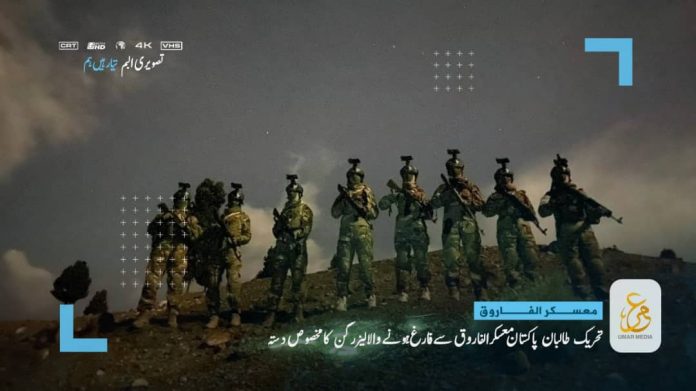
Special squad of Tehreek-e-Taliban Pakistan (TTP) undergoing training. (File Pic)

Peshawar, Dec 30 (NVI) Tehreek-e-Taliban Pakistan (TTP) has killed 13 Pakistani military and police personnel and injured several in multipe attacks across Khyber Pakhtunkhwa Province of Pakistan, according to the outfit.

The biggest among the attacks was carried out in Bajaur district, where a military convoy was ambushed in Inam Khoro Chengai in Wada Mahmond, according to TTP spokesman Mohammad Khorasani.

Four personnel of Pakistan Army, including a Major, were killed in the attack in which two military vehicles were destroyed, Khorasani said.

Another big attack was carried out in Karak district, where a joint team of Pakistan Army and Counter-Terrorism Department (CTD) of police was ambushed in Bande Dawood Shah, he said.

Three personnel of the government forces were killed and three were injured in the attack, he said, adding two Army vehicles and a Tank were destroyed in the operation.

The joint team was proceeding to carry out a raid in Shaheedan Kali, the spokesman said.

In North Waziristan, two military personnel were killed and several others were injured in an ambush on a military convoy at Abelanki in Dosli.

One vehicle was completely destroyed and others were damaged in the attack, the TTP spokesman said.

An unspecified number of military personnel were also killed and injured in TTP ambush on a convoy on the Teti Madakhel Road in the Abakhel area of Spin Wam in North Waziristan, he said in a statement.

The army contingent was surrounded during the operation, but the surviving military personnel were allowed to flee to protect the general population, Khorasani said.

In district Tank, a policeman was killed in an attack in Nasraniwala, he said.

Another policeman — Assistant Sub-Inspector Mumtaz Ali — was killed in a separate targeted attack in the same district.

An official of the Pakistani intelligence agency ISI was killed in an attack on the main road of Naje Pezo in Tank district, the spokesman said.

One Pakistani military official was killed and one was injured in sniper attacks on two military posts in Akakhel Khongi in Bara in Khyber district, he said. (NVI)

Afghanistan – Pakistan: Refugee predicament

Afghan refugees crossing Chaman border between Pakistan and Afghanistan. (File Pic)

Column

By Sanchita Bhattacharya

On December 27, local authorities in the Swabi District of Khyber Pakhtunkhwa (KP) Province in Pakistan issued official notices ordering Afghan refugees residing in the Barakai Afghan and Gandaf Afghan camps to evacuate immediately and return to Afghanistan.

The decision is part of Pakistan’s broader policy to completely clear Afghan refugee camps by December 30, 2025. The notice stated that the process of fully dismantling the camps will begin on December 31, and refugees have been instructed to move their belongings, household items, and workspaces before that date.

The ongoing Afghan refugee repatriation from Pakistan is a three-phase plan. The official start of this drive was on September 26, 2023, when Pakistan’s Ministry of Interior issued the Illegal Foreigners’ Repatriation Plan (IFRP) targeting undocumented Afghans and, later, registered cardholders, initiating the policy to return Afghan nationals, including both undocumented migrants and holders of Afghan Citizen Cards (ACC) and UNHCR Proof of Registration (PoR) cards.

So far, IFRP has been divided into three phases by the Pakistan Government. In the first phase, which began in October 2023, unregistered or undocumented Afghan migrants were given a 30-day deadline to leave voluntarily or face deportation. This phase was accompanied by widespread arrests, harassment, and pressure on Afghan communities across Pakistan.

On April 1, 2025, Pakistan officially launched the second phase, targeting Afghan nationals holding ACCs issued between 2017 and 2019.

According to UNHCR’s Operational Update, Pakistan November, 2025, the implementation of these two phases saw major returns of over 1.1 million Afghans from urban areas and refugee villages as of July 2025.

The third phase, targeting holders of PoR commenced in September 2025 and has seen close to 166,000 PoR card holders return.

As of November 2025, over 1.82 million Afghans have returned to Afghanistan since the start of the IFRP.

In November alone, 171,055 have returned to Afghanistan, with 37,899 deportations registered.

As relations between Kabul and Islamabad soured after the Taliban’s return to power, Pakistan – once the Taliban’s principal benefactor – accused Kabul of sheltering the Tehreek-e-Taliban Pakistan (TTP), the group behind a deadly spike in insurgent attacks in Pakistan’s border regions.

As reported on October 1, 2025, TTP attacks, mostly targeting Pakistani Police, Army, and Paramilitaries, over the past four years, have left more than 2,500 dead.

According to partial data collated by South Asia Terrorism Portal, in 242 incidents of killing involving TTP in 2025, 1,281 people were killed, including 83 civilians, 173 SF personnel and 1,025 militants (data till December 27).

In 2024, 291 people died in 87 incidents, including nine civilians, 71 SF personnel, and 211 militants.

In 2023, 158 people were killed in 66 incidents, including two civilians, 137 SF personnel, and 158 militants. 2022 registered 24 such incidents, in which 48 were killed, including three civilians, 17 SF personnel, and 28 militants.

In 2021, in 33 incidents, 61 people died, including six civilians, eight SF personnel, and 47 militants. Since 2021, consequently, there has been a sharp increase of 2,000 per cent in TTP orchestrated killing inside Pakistan.

On October 6, 2025, ACLED reported that TTP was engaged in 778 attacks in 2025 (till September 26) with North Waziristan, South Waziristan, Lakki Marwat, Dera Ismail Khan, Bajaur and Bannu in KP the worst affected districts, among others. The year 2024 recorded 617 such attacks; 2023 187 attacks; and 2022 158 attacks, respectively.

The harsh steps against Afghan refugees portray the entire migrant Afghan population as a potential threat to national security.

But these refugees have long been tangled in a web of human rights violations and systemic neglect. Reports of forced evictions and arbitrary detentions have been alarmingly common.

In a statement issued on January 7, 2025, Afghanistan’s Embassy in Pakistan said around 800 Afghans living in Islamabad had been detained by authorities. Refugee settlements, often makeshift and overcrowded, were subject to sudden demolitions, leaving thousands homeless and destitute.

For instance, as reported on October 15, 2025, over 300 Afghan houses and shops were
demolished during an operation near the Northern Bypass of Karachi.

Similarly, on October 31, 2023, authorities in Islamabad had demolished mud houses belonging to Afghan refugees.

Discrimination against Afghan refugees is deeply entrenched in Pakistani society. Refugees
encountered ethnic and racial hostilities.

As reported on January 2, 2025, there was a spike in racial profiling in Islamabad and Rawalpindi District of Punjab. Police were given free license to pick up whoever they wanted, and to extort and exploit them.

Earlier on November 24, 2024, Pakistan’s Interior Minister, Syed Mohsin Raza Naqvi, announced that Afghan nationals residing in Islamabad must obtain a No Objection Certificate (NOC) by December 31, 2024 or face expulsion from the city.

“No Afghan  national will be allowed to stay in Islamabad without an NOC after December 31,” Naqvi said.

Consequently, as reported on January 8, 2025, over 800 Afghans were detained in Islamabad after January 1, 2025.

Pakistan’s accelerated refugee evictions have immensely compounded the hardships of this
unfortunate population, and underscore deepening strains in Pakistan-Afghanistan relations that risk aggravating regional instability.

Without coordinated bilateral mechanisms and international support, forcible returns will fuel uncertainty, economic susceptibility, and further escalation of cross-border tensions.

(Sanchita Bhattacharya is a Research Fellow at the Institute for Conflict Management).

NIA’s Pahalgam Chargesheet: The Anatomy of a Proxy War

Site in Pahalgam in Kashmir where Pakistani terrorists massacred 26 people on April 22, 2025

Column

By Ajmal Shah

The recent filing of a 1597 page chargesheet by the National Investigation Agency (NIA) regarding the April 2025 Pahalgam massacre is much more than a routine legal submission.

It stands as a calculated and definitive assertion of Indian sovereignty against a decades old machinery of terror.

This document provides an exhaustive forensic roadmap of a conspiracy that was conceived in foreign safe houses and executed in the Baisaran Valley of Kashmir.

By meticulously documenting every thread of the attack, the investigators have moved beyond mere rhetoric. They have constructed a fortress of truth that no amount of propaganda can dismantle.

The Forensic Demise of Plausible Deniability:

Justice in a modern democracy relies on the undeniable power of scientific proof. The investigation into the April 2025 attack, which saw militants use M4 carbines and AK-47 rifles against innocent tourists, was conducted under the rigorous standards of the Bharatiya Nagarik Suraksha Sanhita and the Bharatiya Sakshya Adhiniyam.

Investigators did not rely on hearsay but instead tracked the digital and financial trails of handlers like Sajid Saifullah Jatt in Lahore.

The evidence recovered is staggering in its specificity. Authorities found laminated voter identity cards from the Election Commission of Pakistan among the terrorists.

They also recovered micro SD cards containing NADRA biometric records that traced the family trees of the militants to specific residential addresses in Gujranwala in Pakistani Punjab.

Even mundane items, such as chocolates found in the possession of the attackers, were traced back to commercial consignments shipped to Muzaffarabad in Pakistan Occupied Jammu and Kashmir, therefore serving as concrete proofs of state sponsored logistics.

Precision Over Collective Punishment:

A self-respecting nation demonstrates its strength through the precision of its laws rather than the blunt force of its military. In a region as vast as the Kashmir Valley, which is home to over seventy lakh people, the state charged only two local associates named Parvaiz and Bashir Ahmad Jothar.

This surgical approach in a district like Anantnag, with a population exceeding 12 lakhs shows how surgically the investigation has been conducted.

The Indian state utilised the scalpel of the law to excise only the specific malignant nodes of the terror network. Advanced ballistics analysis further solidified this case by matching cartridges from the Pahalgam crime scene to weapons recovered during Operation Mahadev in the Dachigam forest of Srinagar.

Unlike its neighbour, India builds airtight prosecutions in open civilian courts that rely on irrefutable scientific links rather than the coercion of witnesses.

A Legacy of Desertion and Deceit:

The context of this investigation is inseparable from a history of proxy conflict dating back to 1947.

Pakistan has a long standing tradition of disowning its own participants.

This pattern began with Major General Akbar Khan’s orchestrated invasion in 1947, which he later admitted was a state operation in his memoirs titled Raiders in Kashmir.

It continued through the failures of Operation Gibraltar in 1965 and reached a cynical peak in 1999 during the Kargil conflict.

 The refusal to accept the bodies of Northern Light Infantry soldiers who fell on the peaks of Kargil remains a stain on military history.

A state that abandons its own uniformed sons will feel no hesitation in disowning
the irregulars it sends to murder civilians.

Furthermore, that nation’s selective use of international law is a hollow performance. By refusing to vacate occupied territories for seven decades, it has remained in blatant violation of UNSC Resolution 47 of 1948 and has therefore lost all legal and moral authority to lecture others.

The Ballot as a Plebiscite on Peace

The democratic journey of the region is rooted in the 1954 Constituent Assembly, which formally ratified the Accession to India. This historic act functioned as the original and ultimate plebiscite where the people of Jammu and Kashmir chose their destiny within the Indian Union.

Today, the fruits of that choice are visible in the stability of daily life.

The 2024 elections functioned as a thunderous rejection of the culture of violence.

Record breaking turnouts, including a 64 percent average in the Assembly elections prove that the narrative of separatism has collapsed.

The participation of former separatists and Jamaat-e-Islami affiliates in the democratic process represents the ultimate victory of the Indian constitution.

Schools now operate on consistent academic calendars without the threat of shutdowns, markets thrive with hustle and bustle, cinemas have reopened after three decades to full houses, signalling a society that has moved on from a conflict driven economy.

While critics lecture India on demographic changes, they ignore the systemic demographic engineering occurring in their own occupied territories like Gilgit-Baltistan.

The Strength of the Constitutional State:

The contrast between two neighbouring nations is a study in institutional integrity. In India, even the most significant policies are subject to legal scrutiny.

The 2019 abrogation of Article 370 was upheld by a five judge bench in 2023, confirming it as a valid constitutional process. Across the border, the constitution is treated as a temporary document.

The 27th Amendment of 2025, which entrenched military supremacy and shielded chiefs from accountability, reveals a garrison state where the law is merely a suggestion.

 A nation that cannot investigate the disappearance of its own Baloch citizens is in no position to offer forensic help to a democracy. India investigates its crimes with the confidence of a sovereign power that relies on its own agencies instead of seeking assistance like a client state.

The Pahalgam chargesheet is not just a document of the past but a declaration that the
sovereign will of India is non-negotiable.

(Ajmal Shah is an advocate practicing at High Court of Jammu & Kashmir and Ladakh at
Srinagar. He writes on CI/ CT, internal security, politics and geopolitics).

Balochistan: BLA says it killed 8 Pakistani soldiers, injured 4 in multiple attacks

Fighters of Baloch Liberation Army (BLA) at some undisclosed location. File Pic

Quetta, Dec 29 (NVI) Baloch Liberation Army (BLA) tonight said it killed 8 personnel of the occupier Pakistani military and injured 4 in attacks at various places in Balochistan.

Among these attacks, the biggest was carried out on the China-Pakistan Economic Corridor (CPEC) route in Katgari area of Panjgur district.

In this attack, the BLA freedom fighters targeted a vehicle of occupying Pakistani army with a remote-controlled IED on December 25, its spokesman Jeeyand Baloch said.

As a result of the explosion, six occupying army personnel were eliminated and four more were wounded, he said, adding their vehicle was severely damaged.

The military vehicle was targeted when it was ferrying soldiers back to the barracks from various places after picket security duties, he said.

In another incident, BLA fighters targeted a post of occupying Pakistani army in Tajaban area of Kech district on December 23, the spokesman said.

The freedom fighters used automatic weapons and fired several shells at enemy positions using grenade launchers, he said.

In the attack, two enemy army personnel were eliminated on the spot, he said.

The freedom fighters also destroyed surveillance cameras installed in the camp.

Baloch Liberation Army freedom fighters also destroyed yesterday (December 28) a communication tower used by occupying Pakistani army in the Dank area of Turbat district by planting explosives and targeting the spy cameras installed on it, which were active, Jeeyand Baloch said. (NVI)

TTP says it killed and injured 35 Pakistani soldiers in multiple attacks

Cadres of Tehreek-e-Taliban Pakistan (TTP). (File Pic)

Peshawar, Dec 28 (NVI) Tehreek-e-Taliban (TTP) tonight claimed to have killed and injured at least 35 Pakistani military personnel in multiple attacks across Khyber Pakhtunkhwa Province of Pakistan.

The maximum damage was caused to the Pakistani military in Lakki Marwat district of Khyber Pakhtunkhwa Province where TTP claimed to have killed and injured more than 25 personnel of the government forces in fierce clashes in Takhti Khel in Norang on December 26, according to TTP spokesman Mohammad Khorasani.

He said TTP also lost 4 comrades in these clashes.

Two Pakistani military personnel were killed and three injured in a TTP attack on Zam Qila (Fort), which housed a post of paramilitary Frontier Corps (FC), in Tank district during the intervening night of December 26 and 27, he said.

More personnel were killed and injured in an ambush on an FC convoy carrying the wounded in the morning of December 27, he said.

A Pakistani soldier was killed and a security camera was destroyed in an attack on Kot Azam FC picket in Gomal in Tank district, the TTP spokesman said.

In Khyber district, a soldier was killed in a sniper attack on an army post in Tirah Pabikhel in Bara on December 26.

Three soldiers were killed in an ambush on a military convoy between Tirah Pirmila and Parak Bangla in Khyber district on December 23, he said.

In North Waziristan, a military drone was shot down in Qami Khel in Spin Wam, Khorasani said. (NVI)

TTP claims to have killed 8 Pakistani soldiers, injured 8 in multiple attacks in Pakistan

Tehreek-e-Taliban Pakistan (TTP) cadre in specialised gear. File pic released by TTP

Peshawar, Dec 27 (NVI) In its latest series of attacks under Operation Al-Khandaq, Tehreek-e-Taliban Pakistan (TTP) claimed to have killed 8 Pakistani soldiers and injured 8 in Khyber Pakhtunkhwa Province.

The biggest among these was the counter-attack in Gomal in Tank district, where TTP claimed to have killed 5 Pakistani soldiers and injured 7.

The counter-attack by TTP took place after a raid by the Pakistani military, its spokesman Mohammad Khorasani said in a statement.

TTP fighters also seized military equipment after the gunfight in Kot Azam, he said.

When the surviving Pakistani soldiers were fleeing Kot Azam, TTP fighters carried out an ambush on them, which resulted in unspecified number of casualties among the military personnel, the spokesman said.

In the same Tank district, a soldier was killed in an attack on Gomal Police Station on the night of December 25, he said.

In South Waziristan, a soldier was killed and another injured in an attack in Baski area of Sarvekai, the spokesman said.

One more soldier was killed in a TTP attack in Splatoi in Sarvekai in South Waziristan district, Khorasani said.

An army ration supply vehicle was also targeted in an attack at Shaga De Chowk in South Waziristan, he said.

The spokesman said TTP has been warning people repeatedly to refrain from supplying rations to the army.

In Orakzai district, a soldier was injured in a sniper attack on an under-construction post in Sherindara, he said.

In Lakki Marwat district, a clash took place between TTP fighters and the police in Naurang and Takhtikhel, resulting in casualties among the enemy, Khorasani said.

In Bannu district, an MI spy injured in an attack in Norr 10 days back succumbed to the wounds, he said.

TTP also carried out an attack on a center of Counter-Terrorism Department (CTD) in Dera Ghazi Khan in Punjab Province on the night of December 25, resulting in casualties among the government forces, the spokesman said. (NVI)

Mirwaiz Umar Farooq removes Hurriyat Conference tag from X handle

Mirwaiz Umar Farooq delivering Friday sermons at Jamia Masjid, Srinagar

Srinagar, Dec 26 (NVI) In a major development, Mirwaiz Umar Farooq has removed the title of ‘Chairman’ of separatist and banned Hurriyat Conference from his X handle.

He invited trolling and criticism from radicals for this action after which he sought to justify, saying he was compelled to do so to retain his X handle.

“For some time now, I was being pressed by the authorities to make changes to my X (formerly Twitter) handle as Hurriyat chairman, as all constituents of Hurriyat Conference, including the Awami Action Committee that I head have been banned under the UAPA, making Hurriyat a banned organisation, failing which they will take down my handle,” he posted on his X handle.

“At a time when public space and avenues of communication stand severely restricted, this platform remains among the very few means available to me to reach out to my people and share my views on our issues with them, and the outside world. Under such circumstances, it is a Hobson’s choice I was left to make,” he added.

Umar Farooq, who is the Mirwaiz (Islamic religious head) of Kashmir, has been associated with the separatist Hurriyat Conference since its inception in 1993 at the behest of Pakistan.

He has been its Chairman for several years during this period.

The Hurriyat Conference was a conglomerate of various separatist groups and was formed at part of Pakistan’s machinations to hurt and bleed Jammu and Kashmir.

It was the nodal organisation for fomenting terrorism and violence in Kashmir, following direct diktats from Pakistan.

Waheed Para, an MLA of J&K PDP, appreciated the act of Mirwaiz Umar Farooq and equated it to what Prophet Mohammad had done once for the sake of peace.

“In the Treaty of Hudaybiyyah, the Prophet ﷺ agreed to erase the words “Muhammad-ur-Rasoolullah”—the very foundation of the Kalima—solely in the interest of peace. History remembers this not as compromise, but as wisdom, foresight, and moral courage,” Parra posted on his X handle.

“If Mirwaiz Kashmir has removed the APHC tag as an act of peace, it must never be weaponized against him. Choosing peace over rigidity is not weakness; it is leadership,” he added.

“Mirwaiz has acted within the framework of law and circumstances. Those attacking and trolling him for this decision are deliberately trying to undermine him, making his path harder despite the extraordinary challenges he has endured and the supreme sacrifice of his father. Such attacks do not serve justice or peace, they only deepen division,” Parra said. (NVI)

TTP says it killed 9 Pakistani soldiers, injured several in multiple attacks

Special squad of Tehreek-e-Taliban Pakistan (TTP) undergoing training. (File Pic)

Peshawar, Dec 24 (NVI) Tehreek-e-Taliban Pakistan (TTP) today said it killed at least 9 Pakistani soldiers and injured several more as it carried out seven operations at various places in Khyber Pakhtunkhwa Province over the last two days.

The TTP operations included 2 in Karak district, and one each in Khyber district, North Waziristan Province, Bannu, Orakzai and Tank district.

The biggest among the attacks was in Karak district, where five Pakistani soldiers were killed in an ambush on a patrol party in Gargri area of Banda Dawood Shah yesterday, according to TTP spokesman Mohammad Khorasani.

He said a vehicle carrying the soldiers was completely destroyed in the attack after which TTP seized 5 guns and other equipment from the slain military personnel.

Suggesting that it was a revenge strike, Khorasani pointed out it was the same area where TTP lost its three cadres in a military drone attack some time back.

He identified the killed Pakistani soldiers as Shahid Iqbal, Safdar, Samiullah, Arif, driver Muhammad Abrar.

In Khyber district, three military personnel were killed and two injured in an ambush on two check posts in Momandri in Bara area, he said.

One soldier was killed in a sniper attack on an army post in Kalai area of  Orakzai district, he said.

In Tank district, a Police Constable Shakirullah was injured in a targeted attack last evening, the TTP spokesman said.

In other attacks too, there is a strong possibility of casualties but the numbers were not confirmed, he said.

Giving details, he said, two days ago, the Pakistan Army attempted a raid in Takht Nusrat from two sides of Lakki Marwat and Karak, but the TTP retaliated in a timely manner.

The armed clash lasted five hours and there were reports of enemy casualties, Khorasani said.

In North Waziristan, a Pakistan Army convoy was ambushed by TTP near Hasokhel in Mir Ali district, the spokesman said.

He added that there was a strong possibility of casualties among the soldiers as three military vehicles were partially destroyed in the ambush.

There is also a strong possibility of several soldiers being killed and injured in a mortar attack by TTP on the military in Sardi Khel area of Bakakhel district last night, the spokesman said. (NVI)

Martyr Karima Baloch remembered at BNM event

London, Dec 22 (NVI) An event organised here to remember Karima Baloch, a martyred woman leader of Baloch freedom struggle, became a platform for political leaders, intellectuals, human rights activists of various sections oppressed by the Pakistani establishment to voice the tales of their sufferings.

Karima, former Chairperson of Baloch Students Organisation (Azad) who had taken asylum in Canada to escape persecution by Pakistani intelligence agencies, was found murdered on this day in 2020 near the Ontario Lake in mysterious circumstances.

The 30-year-old activist who was named one of the world’s 100 most “inspirational and influential” women in 2016 by the BBC had gone missing on December 20, 2020, two days before her body was found.

The killing was clearly the handiwork of notorious Pakistani intelligence agencies but nobody has been punished so far for the gruesome crime.

The Baloch National Movement (BNM) organized a seminar here to mark the 5th anniversary of the martyrdom of Karima Baloch.

Political leaders, intellectuals, human rights activists, and representatives of oppressed nations attended the event and expressed solidarity with the Baloch struggle, said BNM in a statement.

Participation by people from various nations—particularly Sindhi, Pashtun, Kashmiri, and Gilgit-Baltistan communities—was seen as a symbol of unity among oppressed nations, it said.

At the beginning of the programme, the participants observed a one-minute silence to remember Karima’s life, struggle, and sacrifice.

A short documentary titled ‘Banuk Karima: Life, Struggle, and Legacy’ was then screened, highlighting Banuk Karima Baloch’s political journey, her fearless leadership, and her enduring legacy as a global symbol of resistance.

The seminar also featured the launch of the book “Karima Baloch: From Student Leader to a Global Symbol of Resistance,” published by Zurbesh Publications.

Speakers at the event included BNM Chairman Dr. Naseem Baloch; author Dr. Naseer Dashti; University of London scholar and SOAS South Asia Centre member Burzine Waghmar; Fahmeeda Khushik, Deputy Organizer of the World Sindhi Congress (UK & Europe); human rights activist Noor-e-Maryam Kanwar; Pashtun Tahafuz Movement (PTM) representative Brakhna Sayyad; and Banuk Karima’s cousin, Mehlab Kambar.

Dr. Naseem Baloch described Karima Baloch as a leader with extraordinary political insight and consciousness.

He said that although the suffering of the Baloch, Sindhi, Pashtun, and Kashmiri nations may appear different, the root cause is the same: a Punjabi-dominated military state that calls itself Pakistan.

He emphasized that Karima’s exile was imposed upon her and was not a personal choice, yet she continued her struggle for dignity and freedom for her people.

According to Dr. Naseem Baloch, her life and martyrdom exposed the colonial nature of the Pakistani state and its systematic repression of oppressed nations.

He criticized Western governments for the selective application of human rights principles and questioned why occupation and oppression are condemned in some regions but ignored in Balochistan and other oppressed areas.

He stated that Karima challenged not only military occupation but also the occupation of history, language, resources, and political authority.

Concluding, he said that freedom is not extremism but a natural human instinct, and peace in the region is impossible until Pakistan’s colonial structure is dismantled and oppressed nations attain freedom.

Author and political analyst Dr. Naseer Dashti said that Karima Baloch will be remembered as a pioneer who transformed the foundations of the Baloch national struggle.

Comparing her historical role to that of Nawab Akbar Bugti, he said Karima inspired a new generation—especially Baloch women—to actively participate in politics and resistance.

He stressed that today’s Baloch leadership must make bold and principled decisions, adapt to global conditions, and work to secure dignity and unity for the nation.

University of London scholar and SOAS South Asia Centre member Burzine Waghmar strongly criticized Pakistan’s human rights record and held Pakistan’s deep state responsible for the killing of Karima Baloch.

He said Pakistan exploits international neglect and impunity to target peaceful activists even in exile.

He also questioned the failure of Canadian authorities to conduct a transparent investigation and raised concerns about the role of international interests in the exploitation of Balochistan’s resources.

Waghmar warned that silence over such crimes is often bought through financial and political collusion.

Fahmeeda Khushik, Deputy Organizer of the World Sindhi Congress in the UK and Europe, said that Karima Baloch played a central role in organizing Baloch youth and raising global awareness about enforced disappearances and extrajudicial killings.

She emphasized that Karima’s struggle transcended gender and geography, and that her martyrdom represents a shared loss for both the Baloch and Sindhi nations.

According to her, Karima Baloch’s legacy continues to inspire political activism and resistance among oppressed nations.

Human rights activist Noor-e-Maryam Kanwar said that collective punishment is among the most brutal methods used against the Baloch nation.

She referred to the enforced disappearance of the father of prominent human rights activist and young leader of the movement for the recovery of enforced disappeared persons, Mahzeb Shafiq, explaining how the state targets families to suppress resistance.

She described the Baloch Women’s Red March as a historical continuation of Karima Baloch’s struggle and said that Karima provided leadership in organizing women even under extreme pressure.

Pashtun Tahafuz Movement (PTM) representative Barkhna Syed expressed solidarity with the Baloch struggle and said that enforced disappearances and collective punishment have become a daily reality in Pashtun regions as well.

She described Karima Baloch as a symbol of hope who broke patriarchal barriers and stood firmly against state repression. Rejecting official claims regarding Karima’s death, she said her martyrdom symbolizes resistance against international pressure and oppression.

Karima Baloch’s cousin, Mehlab Kambar, highlighted Karima’s continuous struggle for justice, national identity, and collective strength.

She said Karima organized rallies and protests for enforced disappeared persons and consistently raised her voice against the genocide of the Baloch nation.

She emphasized that Karima never confined the struggle to herself but encouraged collective participation and always worked for a better future for the Baloch nation.

She further stated that Karima was born into a politically conscious family, where her uncles—Wahid Kambar and Dr. Khalid—devoted their lives to the national struggle.

Despite repeated state raids and threats, Karima remained a source of strength, courage, and resilience for her family.

Mehlab said that Karima’s presence, guidance, and unwavering commitment made her a central figure in sustaining and advancing the Baloch movement. (NVI)

Hadi killing & Attacks on Indian interests in Bangladesh, some history lessons needed there
Internal involvement and ISI role must be probed

Osman Hadi who was killed in Bangladesh by some unknown persons

By Ajay Kaul

Bangladesh is in turmoil since last few days after the mysterious killing of radical Islamist leader Osman Hadi by fellow Muslim countrymen and for intriguing reasons his followers are targeting Indian interests in the country.

Hadi, a staunch India-hater who emerged as a national leader during the massive student agitation that led to ouster of Sheikh Hasina government months back, was shot at by masked gunmen in Bangladesh’s capital Dhaka in broad daylight on December 12.

The 32-year-old spokesperson of Inqilab Moncho organisation and independent candidate for the upcoming February Parliament elections, was shot in his head and died on December 18 in a hospital in Singapore where he was taken for specialised treatment at government expense.

According to reports, one of the assailants has been identified as Faisal Karim, a Bangladeshi Muslim.

Although the motive is not clear yet, the reasons for the killing clearly seem to be domestic.

The killing may be the result of some internal fued or machinations of Pakistan’s notorious intelligence agency ISI.

However, Hadi’s followers are targeting India’s interests in the country in the wake of the killing.

Two days back, the residence of India’s Assistant High Commissioner in Chattogram was attacked, with mobs pelting stones at the premises.

In view of this incident, India suspended visa operations in Chittagong (Chattogram) till further notice.

So the question arises, why are Indian interests in Bangladesh being targeted by Hadi’s followers? Isn’t it intriguing?

Do the attacks on Indian interests suggest, in any way, that his followers suspect India’s role in the killing?

It would then mean that his followers are being led down the wrong path by some interests inimical towards India. Who could be these vested interests?

It is no secret that Pakistan’s notorious intelligence agency ISI is very active in Bangladesh and over the last two decades or so, it has penetrated deep into the Bangladeshi society as well as the military, helped by the increasing Islamisation and radicalisation.

ISI, out to avenge the utmost humiliation suffered by the Pakistani military in the 1971 war that led to Pakistan’s partition and creation of Bangladesh, has been fanning hatred against India among the Bangladeshis for decades.

It started achieving success in this endeavour over the last two decades but Sheikh Hasina was a huge hindrance in its efforts.

She kept suppressing the anti-India activities but finally, thanks to a huge let down by her military, she was made to succumb and flee the country to save her life.

It is so ironic that Bangladesh, which was born just because of India, has today so many people nursing hatred for the same birth-giver.

It has been just 54 years and the ungrateful people of Bangladesh have forgotten what oppression and torment their forefathers suffered at the hands of brutal Pakistani military when it was ‘East Pakistan’.

They have forgotten how their forefathers — Bengali-speaking people of ‘East Pakistan’, including Muslims, were humiliated and treated in a derogative manner by the Punjabi-dominated Pakistani establishment based in Islamabad.

They have forgotten how their grandmothers were raped and brutalised, how their grandfathers were tortured and massacred.

They have forgotten how their forefathers lived like suffering pigeons before India intervened militarily and gave them freedom to prosper as proper citizens who could decide their future by themselves.

They need to be reminded that their forefathers, despite being Muslims, suffered extreme brutalities at the hands of Muslim military of Pakistan.

The East Pakistanis were facing anhiliation at the hands of Punjabi army of Pakistan.

India, by defeating the Pakistani military in a short war, saved the people of Bangladesh, including Muslims of course, from a genocide after humiliation which had peaked by then.

In doing so, India had to make many sacrifices, including the ultimate ones in the shape of losing soldiers in the war.

Had India not intervened, Bangladesh would have been another Balochistan of Pakistan.

Those nursing antipathy for India need to be referred to the extreme brutalities being committed by the Pakistani military in occupied Balochistan against the ethnic Baloch people every day.

The Baloch people are yearning and fighting for independence from Pakistan as they also want to live as free citizens who can decide their future by themselves.

Like the Baloch people, Bangladeshis too would have been suffering even today, had India not intervened before it was too late.

There is still time for the Bangladeshis to realise that they are on a path that leads only to destruction and devastation and must take steps backwards.

People of Bangladesh need to realise that Pakistani agencies, who are using Islam to incite them, do not wish well for them. If they need any help in understanding this, they may contact the Taliban in Afghanistan.

Meanwhile, it is shocking that the US, European Union, Germany, France and some others are giving so much undue importance to the killing of a student leader, who was an extremist radical Islamist and was nursing the dream of ushering in Islamic rule in Bangladesh.

Osman Hadi was no proponent of peace but a votary of violent means to achieve the Islamist goals.

Hadi and his followers indulged in widespread arson and violence during the agitation against Sheikh Hasina. They even vandalised and destroyed iconic monuments associated with Sheikh Mujibur Rahman, the legendary founder of Bangladesh.

By giving so much importance to Hadi, these western nations seem to be approving of the actions he and his followers have been undertaking. (NVI)

MUST READ