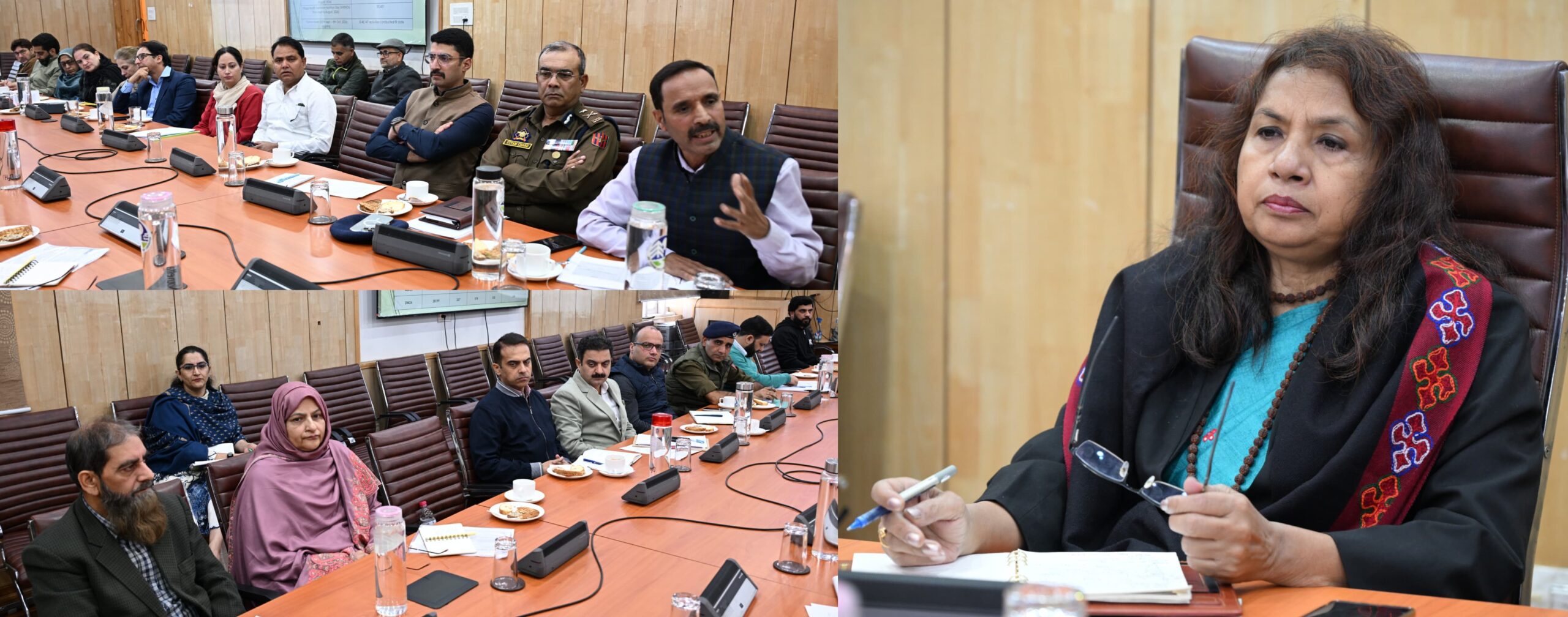
Srinagar, Oct 27 (NVI): National Human Rights Commission (NHRC) Special Rapporteur Shomita Biswas on Tuesday reviewed the human rights situation in Jammu and Kashmir, with a focus on welfare safeguards and the protection of vulnerable sections of society.
Biswas chaired a high-level meeting at the Civil Secretariat here to assess the functioning of the Social Welfare, Health and Prisons departments and review the implementation of measures aimed at protecting citizens’ rights.
The meeting was attended by senior administrative and police officers, including IGP Personnel (Headquarters) Uttam Chand, senior officials of the Social Welfare Department, Mission Directors of Mission Poshan and Mission Vatsalya and Shakti, DIG CID, Superintendent of Central Jail Srinagar and Head of the Department of Psychiatry at Government Medical College (GMC), Srinagar.
During the meeting, the departments presented details of institutional mechanisms, legal safeguards and ongoing welfare initiatives, particularly those aimed at underprivileged and vulnerable sections of society.
Mission Director, Mission Poshan, Sajad Hussain Ganai, briefed the meeting on initiatives undertaken to strengthen child protection, healthcare, immunisation and nutritional coverage across the Union Territory.
He also highlighted the disbursement of academic scholarships to support students from socio-economically disadvantaged backgrounds.
Mission Director, Mission Vatsalya and Mission Shakti, Rubina Kousar, outlined the regulatory framework and support mechanisms for destitute, abandoned and distressed women in Jammu and Kashmir.
She also highlighted measures under the juvenile justice system to strengthen child protection and prevent atrocities against women and minors.
IGP Personnel (Headquarters) Uttam Chand presented an overview of measures taken to uphold human rights in prison facilities and safeguard the rights of undertrial and convicted prisoners.
He also briefed the Special Rapporteur on legal interventions and enforcement measures undertaken by law enforcement agencies to protect the constitutional and human rights of vulnerable groups and ensure action against reported atrocities.
Head of the Institute of Mental Health and Neurosciences (IMHANS), GMC Srinagar, Prof Arshad Hussain, outlined the existing mental healthcare infrastructure, service delivery mechanisms and gaps in access to mental health services across the Union Territory.
He also highlighted ongoing infrastructure projects and their potential to strengthen mental healthcare services in the region.
Following the presentations, Biswas expressed satisfaction with the safeguards, welfare programmes and coordinated enforcement measures being implemented by the departments.
She urged the concerned departments and police officers to adopt a more proactive approach towards reaching out to people in rural and marginalised areas.
The Special Rapporteur also stressed the need to regularly improve grievance redressal mechanisms to ensure that public complaints, particularly those concerning vulnerable sections of society, are addressed professionally and promptly.—(NVI)