Column
By Commodore DS Sodhi, NM (Retd.)
The Birth of Pakistan carved out of India on 14 Aug 1947 as a result of two nation
theory left behind wounds that fail to Heal. Approximately one million perished in the
inter-communal violence. Innumerable accounts have been written on partition.
Documentaries and movies made a fortune narrating this story.
Subsequent to the partition, the princely State of Jammu and Kashmir chose to
remain independent probably with the intent that the Muslim majority State would not
be comfortable with India and the Hindu and Sikh minorities would be vulnerable if
the State joined Pakistan.
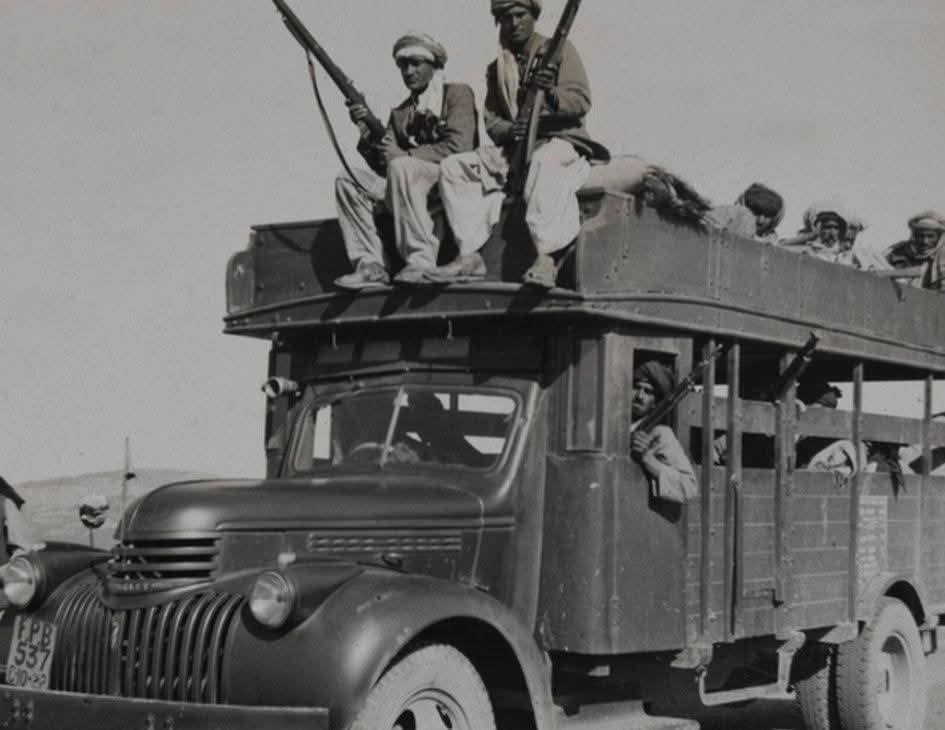
Understanding the developments in the State, when uprising by Muslims in Poonch started gaining momentum, Pakistan designed a plot using Pashtun armed raiders (kabalis) to invade and occupy the State of Jammu and Kashmir under the ‘Operation Gulmarg’.
Early indicators/Intelligence of Pakistani intent were revealed by the British officer
Maj Gen Scott to the Maharaja.
Pakistan cut off supplies of fuel, Sugar and Salt to Kashmir causing unrest amongst the people. The Kabalis supported by Pakistan Army in disguise attacked through two main axis Poonch and Muzzafarabad.
These invaders in formation of Lashkars (approx 4000 men) invaded Muzzafarabad on 22 Oct 1947. Since the invaders were heading towards Baramulla with the aim to take
over Srinagar Airport under their control, the tactical defence at Uri by State Forces
of Maharaja was a pivotal delay action.
Brigadier Rajinder Singh (Chief of Staff of State Forces) with 200 soldiers fought the invaders gallantly at Saran Khowan De Bagh Muzzafarabad. However, being out numbered he was forced to withdraw.
Whilst retreating, he destroyed the Uri bridge, thus halting their movement for some
time.
Brigadier Rajinder Singh was martyred on 27 Oct fighting near Boniyar.
The resistance offered by the forces gave time to the Maharaja to take a decision and
sign the instrument of Accession on the evening of 26 Oct 1947.
The invaders had initially planned a five-day operation to take over Srinagar Airport. However, after Uri, the invaders entered Baramulla. Instead of moving forward
towards Srinagar, the Kabalis did a tactical mistake of staying back at Baramulla and
adjacent villages for two days carrying out Loot, Arson, Rape, Killings and plundring
the property of mostly the minority community.
Meanwhile after signing of the Instrument of Accession, on 27 Oct morning, 1st Sikh Regiment landed at Srinagar Airport and took control.
The Indian forces fought the Kabalis at Khwaja Bagh Baramulla, Pattan, Budgam and Shalteng forcing the invaders to withdraw.
Col DK Rai was martyred at Khawaja Bagh, Baramulla and Major Som Nath at Badgam.
Finally, the Kabalis turned back and were chased by the Indian Army till Uri.
Whilst retreating back they again killed innocent people including Muhammad Maqbool
Sherwani at Baramulla (He had guided the Sikhs to take a different route to escape
being killed by the Kabalis).
Supreme Sacrifice of Sikhs.
This article is to bring out some important events that are examples of supreme
sacrifice as also of interfaith brotherhood (complete chain of events cannot be
covered in the space offered in the publication).
In Sep 1947, when things started building up in Pakistan with an imminent attack on
Jammu and Kashmir, Akali Kor Singh sent a message to Sikhs of Muzaffarabad from
Punjab asking them to be vigilant.
At that stage, Sant Gurbaksh Singh Danna, Jathedar Kapur Singh and Giani Ujagar Singh toured various villages to apprise Sikhs of the prevailing situation.
Jathedar Kapur Singh also convened a meeting of Shirmoni Khalsa Dal at Gurdwara Amira Kadal, Srinagar.
Prior to the attack by the Kabalis, Mr Vanchoo (from public works department) and S
Sadhu Singh of village Khadniyar had visited Muzaffarabad on an official tour.
When Muzzafarbad was attacked, they fled to Baramulla, informing the Sikhs about the
Kabali raid.
S Kala Singh Raina, who fled from Ghaddi Hateyan, met S Tara Singh Musafir, S Mohan Singh Bali, and S Nand Singh Kanlibagh.
These Sikhs met the Deputy Commissioner Mr Chaudhary Faiz Ullah who apprised them that he had information that the Kabalis would be heading to Srinagar.
He asked the Sikhs to move to Jungles. The Sikhs moved to Singhpora, Dardpura and Ichama (to name a few).
The Sikhs fought the Kabalis at every front with courage and bravery and accordingly delayed their move to Srinagar Airport.
Many Sikhs including women and children attained Martyrdom.
Some Sikhs were killed in Kanaspora and one of the village muslim Sultan Dar
carried the bodies to a house and set the house on fire to give the slain a dignified
funeral.
At village Chandosa, two Muslims Khalik Sheikh and Mohammad Sheikh helped Sardarni Ghoni Kaur in cremating the bodies of the martyred Sikhs.
The Kabalis attacked village Atna on 01 Nov 1947 and started Loot and Arson. A
courageous woman Mata Ganga Kaur came out in the field with a sword in her hand
to fight and motivate Sikhs. She, however, suffered a bullet injury and succumbed to
her wounds.
Kamraz, on the other axis of River Jhelum, had many villages with significant Sikh
population. Here the Sikhs left their homes and property and assembled at a
Gurdwara in Village Satarna. A conscious decision was taken to move towards Srinagar.
S Harnam Singh Ranger of Wampura recited the prayer and the Sikhs left Satarna. Near Sopore, the Sikhs reached a marshy land (Nambli) at Bulgam
Choora.
Here the Sikhs who were in hiding fell in the trap of passing Kabalis who raised Sikh Slogans. Almost 450 to 500 Sikhs were killed here.
Some of the Sikhs managed to escape to Srinagar whilst others returned to their native Villages.
The Sikhs who had come from Karnah to Chogal were advised by the Kashmiri
Pandits living there not to move to Sopore.
Sardarni Salinder kaur w/o S Sital Singh Raina distinctly remembers the chain of events how the Sikhs at Sopore tried to kill the women to save their dignity as also jumped in river Jhelum.
She herself had wound cuts on her limbs but managed to escape to her village Patusa.
She also recalls how a local Muslim Ghulam Mohd Mir helped them with food and shelter.
In the Village Mandna, kind-hearted Muslims like Sultan Tantarey, Gaffar Tantarey and
Razzak Goria pleaded with the Kabalis not to harm Sikhs.
In Village Khushipura, bodies of Sikhs lay scattered all around. Sardarni Makhan Kaur, daughter-in-law of S Ganga Singh, pleaded with a Muslim for a respectful funeral of these bodies.
He agreed on the condition that she would marry him which she accepted. However,
when the bodies were collected and a pyre was lit, Sardarni Makhan Kaur along with
her child jumped into the fire and sacrificed her life to save her dignity and honour.
Today, every house in Kashmir has a story to tell.
Mr Bamzey in his book ‘History of Kashmir’, giving reference of New York Times
report, has written: “Surviving residents estimate that 3000 of the fellow town’s men including four European and a retired British Army Officer and his pregnant wife were
slain.”
The basic aim of writing this article (confined to Kashmir) is to awaken the government that the supreme sacrifice of the Sikhs who, after the breach of the State
Forces forward defence by the invading raiders, formed the principal civilian line of
determined resistance and delayed the movement of the Kabalis to Srinagar.
The Kashmiris, in the spirit of indigenous secularism and brotherhood, (now termed
Kashmiriyat) fought together in the defence of the Valley and the Nation.
However, it was the Sikhs of Baramulla, Kamraz, Karnah, and Budgam who faced the Brunt.
The role and sacrifices of the Sikh community during this defining chapter has been
documented by Locals, Eyewitnesses and other contemporary accounts.
The supreme sacrifice of the Sikh Martyrs deserves enduring public recognition through a dedicated memorial and an appeal has accordingly been made to the concerned
authorities.
Such a memorial would not only honour their sacrifice but would also preserve for posterity an inspiring chapter in the history of the defence of Jammu and Kashmir and the Nation during Kabali raid of 1947.
Ends
(The author is Former Deputy Assistant Chief of Headquarters Integrated Staff (IT), Author and Social Activist.)