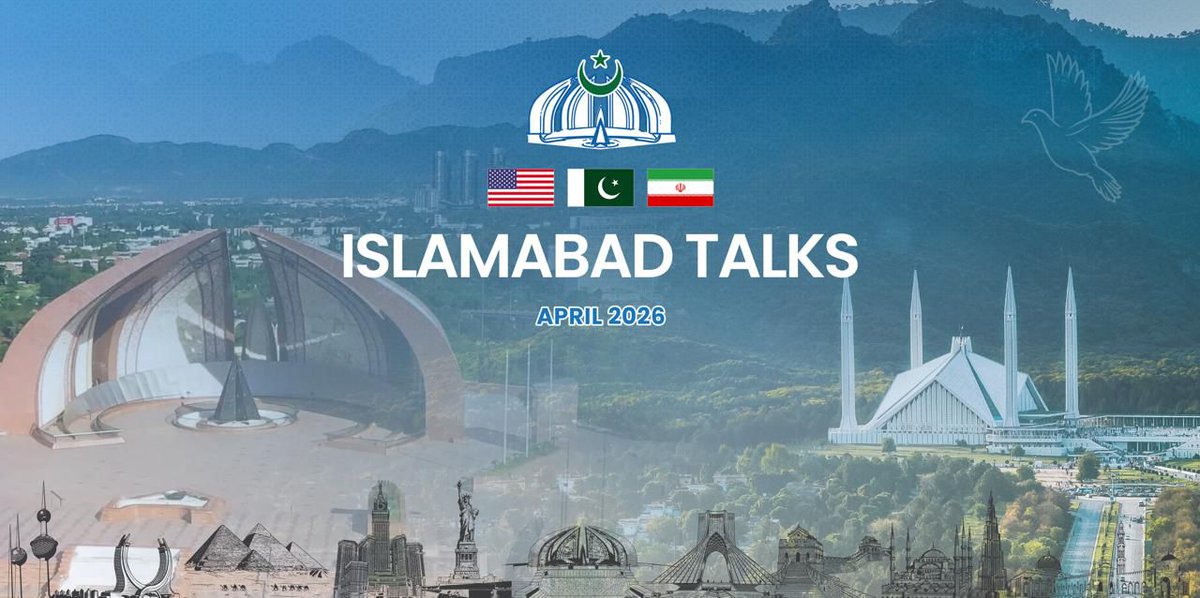
New Delhi, Apr 21: Uncertainty prevails over the much-anticipated second round of peace talks between the US and Iran in Islamabad even as Pakistan has made all the preparations for the event.
According to the indications emerging from the US and Pakistan, the talks were planned for today and tomorrow and American delegation, led by Vice President JD Vance, was supposed to reach Islamabad by this morning.
The Trump administration has said the US delegation would attend peace talks in Pakistan this week.
US President Donald Trump initially said talks would take place in Islamabad on April 21 and 22, but the date could be pushed back.
As of now, there is no confirmation about arrival of the US delegation in Islamabad.
However, Iran kept saying it had no plans to send any delegation for any talks until the US gave up its “aggressive” stance.
Tehran hardened its stance after its cargo ship was attacked and seized by the US Navy in the Arabian Sea on April 19, a development that Iran described as a “violation of the ceasefire”. The two-week ceasefire is in place till tomorrow.
Trump has said it is highly unlikely that it will be extended and that Iran must participate in the negotiations in Islamabad and sign a deal by then.
If there is no breakthrough, “then lots of bombs start going off”, he threatened in a media interview.
“I mean, they’re supposed to be there. We agreed to be there, although they say we didn’t. But no, it was set up. And we’ll see whether or not it’s there. If they’re not there, that’s fine too,” he added.
Iran, on the other hand, said it “will not accept negotiations under the shadow of threats” and that Tehran has “new cards” if the war resumes.
Iran’s powerful parliament speaker Mohammad Bagher Ghalibaf, who is the country’s top negotiator in talks with the US, said that Trump, by imposing a blockade and violating the ceasefire, seeks to turn the negotiating table into a table of surrender or to justify renewed warmongering.
In a social media post, he said while Iran wants peace, “in the past two weeks, we have prepared to reveal new cards on the battlefield.”
Escalation:
While the two-week ceasefire was declared to allow peace negotiations to take place, there has been escalation in the rhetoric and posturing by both sides during this period.
Trump has repeatedly issued threats to Iran to finalise a deal urgently, even declaring that the agreement the US had prepared was a greatest ever.
Iran, on the other hand, has maintained that certain conditions put forth by the US were unacceptable to Tehran and it would not sign any agreement under pressure.
Meanwhile, both sides have come face-to-face over the blockade of the Strait of Hormuz, with the US recently starting to target Iranian ships moving out of this globally-crucial maritime corridor.
Three days back, the US Navy intercepted and seized an Iranian cargo ship, which was returning home from China.
The US Navy attacked it in the Arabian Sea, evoking angry reactions from Iran which has vowed to retaliate.
China, too, has expressed anger over this development, saying it will not tolerate targeting of any ship moving between the two countries. It threatened to take effective measures if such a thing happens again. (NVI)