
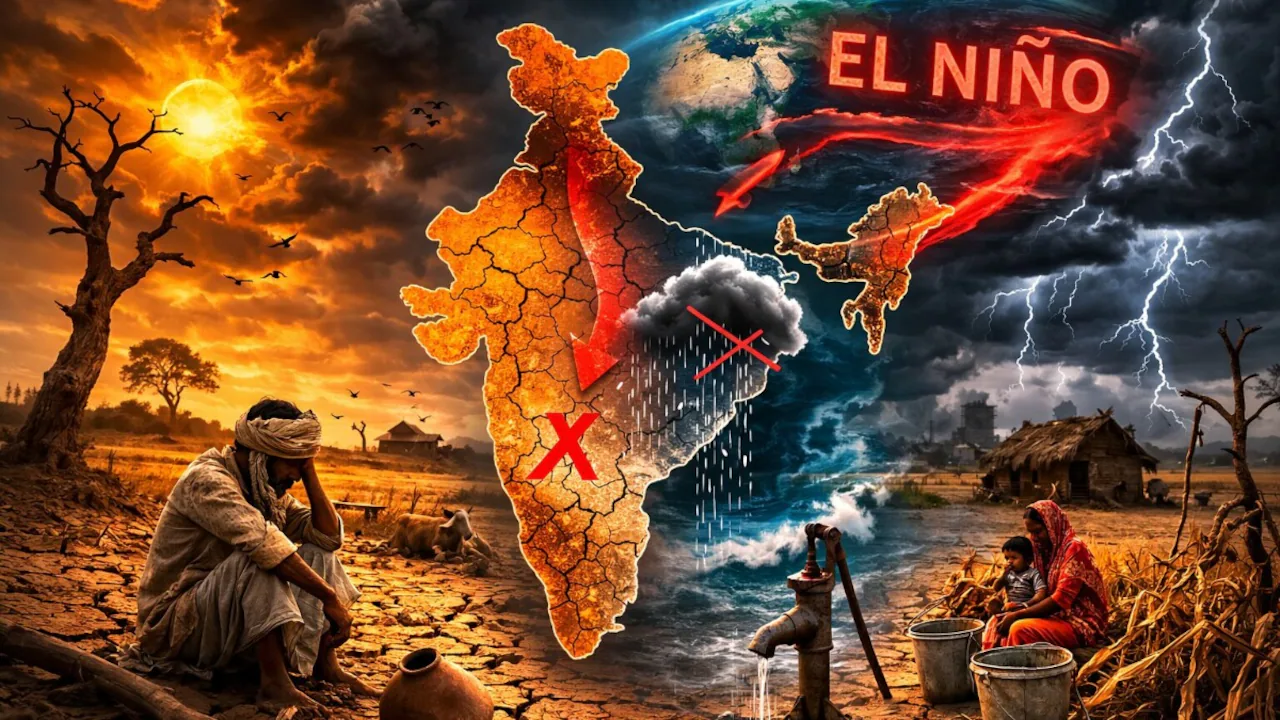
New delhi: As global temperatures shatter records, climatologists are sounding the alarm over a potential “Mega El Nino” (or Super El Niño) in 2026. This rare and extreme climate phenomenon hasn’t reached its peak intensity since 1877–78, a period that remains one of the deadliest in human history, resulting in the deaths of approximately 4% of the global population due to drought and famine.
The World Meteorological Organisation (WMO) has confirmed a rapid rise in sea-surface temperatures in the Equatorial Pacific, pointing toward an onset as early as May–July 2026.

Historical Context: The Tragedy of 1877–78
The 1877 event serves as a grim warning. It was characterized by unusually warm temperatures in the central and eastern Pacific, which:
-
Triggered Global Famine: Severe droughts in India, China, Brazil, and parts of Africa led to massive crop failures.
-
Massive Mortality: An estimated 19 to 50 million people died—roughly 4% of the world’s population at the time.
-
Economic Collapse: The lack of monsoon rain decimated agricultural economies, a vulnerability that still exists for many nations today.
2026 Forecast: What the Models Are Showing
According to Chief of Climate Prediction at WMO, climate models are now strongly aligned.
-
High Confidence: There is high confidence in the onset of El Niño by mid-2026, with further intensification expected by 2027.
-
Global Temperatures: This event, compounded by existing human-induced climate change, could push global temperatures to unprecedented record highs within the next 18 months.
-
Salinity Factor: Scientists have noted higher salt levels in the Pacific, which could make this cycle 20% stronger than average El Niño events.
Should India Worry?
For India, the stakes are exceptionally high, as 70% of the rainfall needed for agriculture and reservoirs comes from the monsoon.
| Metric | 2026 Prediction | Impact |
| Monsoon Rainfall | 92% of long-term average | Classified as “Below Normal” rainfall. |
| Drought Risk | 60% Chance | Strong El Niños historically cause drought in at least one-third of the country. |
| Agricultural Output | Significant Decline | Reduced yields in North, Central, and Eastern India could trigger food inflation. |
| Heatwave Duration | Extreme | Predicted “Heat Domes” may lead to longer, more lethal heatwaves in urban centers. |
Economic and Social Fallout
The India Meteorological Department (IMD) warns that a weak southwest monsoon will put immense pressure on water resources. Reservoirs and groundwater levels are already dropping, and a failed monsoon in 2026 would:
-
Increase Food Prices: Lower crop yields will drive up inflation for basic commodities.
-
Water Scarcity: Urban and rural areas may face severe water rationing.
-
Health Risks: Rising heat combined with humidity increases the risk of heatstroke and respiratory issues.
While it is too early to guarantee a “Mega” event, the signs are strong enough that experts are calling for immediate Heat Action Plans and robust water management strategies to mitigate a repeat of the 19th-century catastrophe.