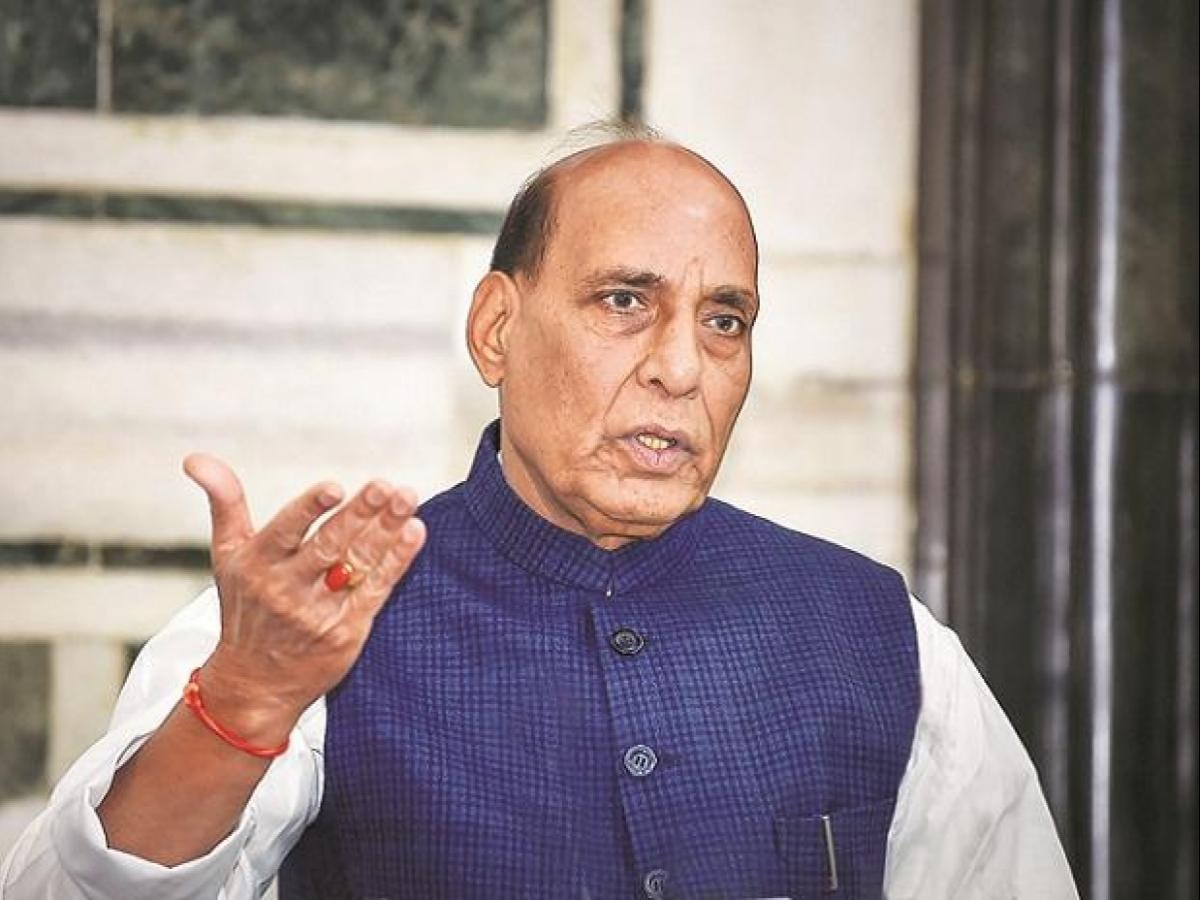
New Delhi, Sep 24 (NVI): National security is not limited to safeguarding the country’s borders and the government has adopted a holistic approach to strengthen India’s defence preparedness against emerging and evolving threats, Defence Minister Rajnath Singh said.
Addressing an event, Singh said India is a peace-loving nation but must remain prepared to safeguard its integrity and sovereignty.
“India possesses both ‘Power of Argument’ and ‘Argument of Power’. We will respond in the language best understood by the other party,” he said.
The defence minister said India’s counter-terrorism approach has evolved beyond “strategic containment” and “deterrence by denial” towards “deterrence by punishment”.
“Any terror attack originating from Pakistani soil will be considered an ‘Act of War’ against India and will be met with a deserving response,” Singh said.
He said the country’s economic growth and defence preparedness were moving together, noting that India’s economy is growing at 7.8 per cent and the country is now among the world’s top five economies.
Singh said the defence budget has nearly tripled from around Rs 2.50 lakh crore in 2013-14 to a record Rs 7.85 lakh crore in 2026-27.
Defence production has also reached an all-time high of around Rs 1.80 lakh crore, he said, adding that the armed forces are undergoing continuous modernisation and defence public sector undertakings are registering profits.
Describing “Terrain, Technology and Thinking” as the three key factors in modern warfare, Singh said the government is focusing on technological development to meet challenges posed by new domains of warfare.
He said capabilities are being developed in areas including drones, artificial intelligence, cyber security, electronic warfare, space and quantum technology.
“We have developed indigenous unmanned aerial vehicles like Rustom, Ghatak and Nagastra. Our drone warfare capabilities were demonstrated during Op Sindoor,” Singh said.
He also highlighted India’s indigenous BrahMos missile system and said the government was developing the ‘Sudarshan Chakra’ system keeping future combat challenges in mind.
Emphasising that self-reliance is crucial for robust national security, Singh said the government was working with the vision of “Design in India, Develop in India and Manufacture in India”.
He said defence research and development allocation has increased by more than 112 per cent in the last 12 years, from around Rs 13,700 crore in 2014-15 to over Rs 29,000 crore currently.
Twenty-five per cent of the defence R&D budget has been opened up for industry, start-ups and academia to encourage innovation, he said.
Singh said licensing rules in defence production have been simplified and indigenous systems are being given priority under the Defence Acquisition Procedure.
More than 5,500 items have so far been included in over 10 Positive Indigenisation Lists, aimed at reducing dependence on imports, he said.
The minister also highlighted the transfer of technology for conventional missile systems developed by the Defence Research and Development Organisation to Indian industry and the establishment of 15 Industry-Academia Centres of Excellence.
He said India is among the few countries possessing advanced Multiple Independently Targetable Re-entry Vehicle (MIRV) technology, which was successfully tested with the Agni-5 missile.
To strengthen the domestic defence supply chain, defence industrial corridors have been established in different parts of the country, Singh said.
He said start-ups and micro, small and medium enterprises were being integrated into the defence innovation ecosystem along with major manufacturers.
“Indian defence manufacturers, MSMEs and vendors are being brought together through the Srijan Defence Equipment Empowerment Platform. So far, over 41,000 vendors and more than 2.7 lakh products have been listed on this platform,” he said.
Singh also underlined the government’s focus on the welfare of serving personnel, veterans and their families.
He said facilities under the Ex-Servicemen Contributory Health Scheme have been expanded, while the SPARSH platform was launched to ensure “Right Pension, Right Pensioner, Right Time”.
The minister said the One Rank One Pension policy, which had been pending for years, had also been implemented.
The courage and sacrifice of soldiers should be honoured not merely through words but by ensuring their welfare and comfort, Singh said, adding that a lifetime free train travel facility was recently granted to all Sena Medal awardees and selected members of their families.—(NVI)