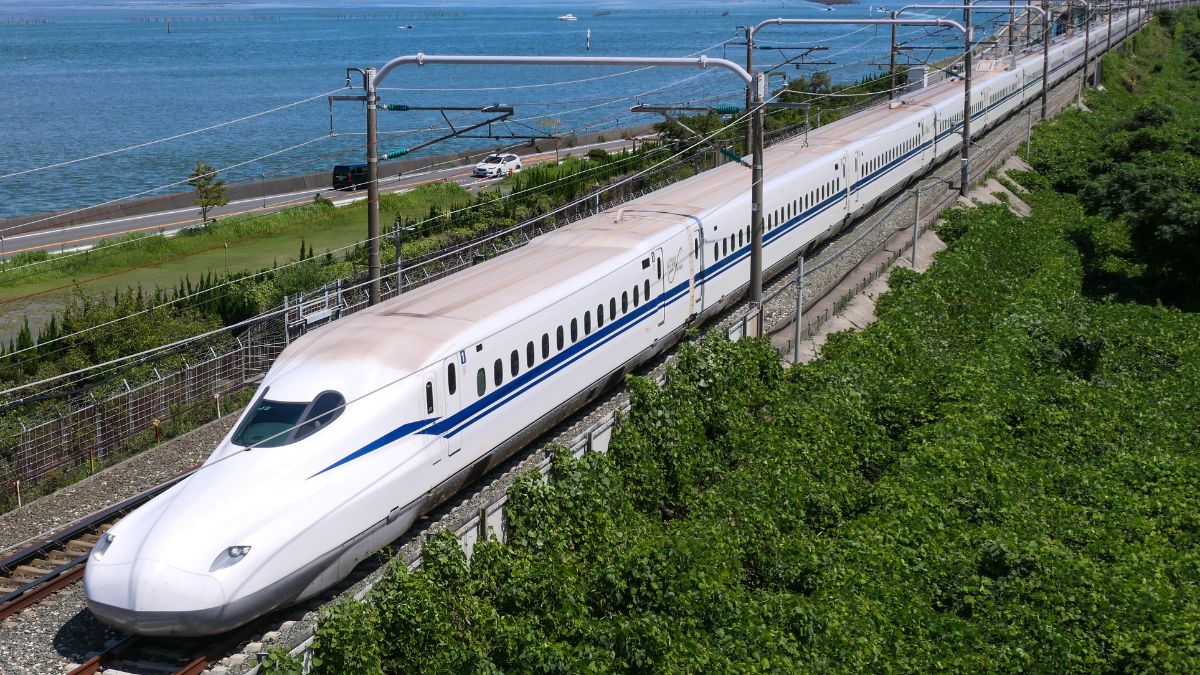
NEW DELHI — In a major stride toward the Aatmanirbhar Bharat vision, Indian Railways has set a definitive timeline for its first homegrown high-speed train. Known as the “B28” trainset, India’s first indigenous bullet train is expected to make its debut in 2027, marking a shift from importing Japanese technology to domestic engineering.
The project, spearheaded by BEML Limited in Bengaluru and the Integral Coach Factory (ICF) in Chennai, aims to establish India as a global player in the high-speed rail sector.
Speed and Technology Specifications
The B28 is designed to push the boundaries of current Indian rail travel. While the Vande Bharat trains are “semi-high-speed,” the B28 enters the “high-speed” bracket with significantly enhanced metrics.
| Feature | Specification |
| Operational Speed | 250 km/h |
| Maximum Design Speed | 280 km/h |
| Manufacturer | BEML & ICF Consortium |
| Formation | 8-car trainset (Standard Gauge) |
| Capacity | Approx. 580 seats |
| Environmental Design | Built for temperatures up to 50°C and heavy monsoon rain |
Timeline and Rollout Strategy
The debut of the indigenous bullet train is synchronized with the broader Mumbai–Ahmedabad High-Speed Rail (MAHSR) project.
-
December 2026 – March 2027: The first two prototype trainsets are expected to be rolled out from BEML’s Bengaluru facility.
-
Q2 2027: Extensive static and dynamic testing, including RDSO-mandated safety trials.
-
August 15, 2027: Initial commercial operations are targeted to begin on the Surat–Vapi (or Surat–Bilimora) stretch in Gujarat.
-
2028-2029: Full-scale operations on the complete 508 km corridor connecting Mumbai and Ahmedabad.
Vande Bharat vs. B28: The Evolutionary Gap
While the Vande Bharat has revolutionized Indian travel, the B28 represents a different league of engineering:
-
Tracks: Vande Bharat runs on upgraded broad-gauge tracks; B28 requires dedicated standard-gauge high-speed corridors.
-
Speed: B28 (250 km/h) is nearly 40% faster than the maximum operational speed of Vande Bharat (160–180 km/h).
-
Tech: The B28 features advanced aerodynamics, pressurized cabins for high-speed tunnel travel, and specialized bogies for stability at 250+ km/h.
Why 2027 is a Landmark Year
The indigenous bullet train initiative was accelerated after challenges in procurement costs for the Japanese Shinkansen E5 rolling stock. By building the B28 at home, India is expected to reduce the cost of high-speed trainsets by nearly 50%, making future corridors (like the proposed Delhi–Varanasi or Mumbai–Hyderabad routes) more economically viable.
“The B28 is not just a train; it’s a shift from technology adoption to technology creation.”
— Ministry of Railways official