
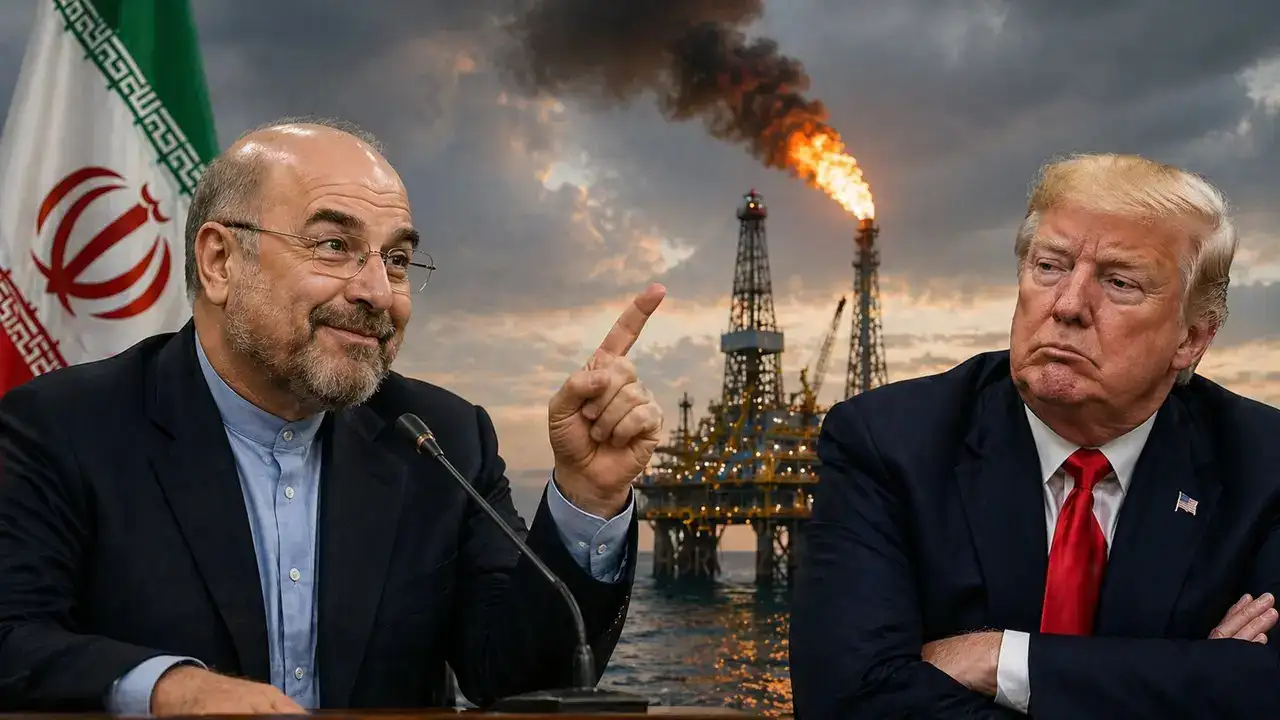
New Delhi, May 03: Recent geopolitical tensions involving the United States and Iran have brought renewed attention to Iran’s oil sector. A controversial claim made by former US President Donald Trump suggested that Iran’s oil wells could “explode” if storage capacity runs out during export blockades. The statement sparked confusion and debate, prompting energy experts to clarify how oil production actually works and whether such a scenario is technically possible.
Why This Issue Is in the News
The discussion emerged during escalating tensions in the Gulf region, where maritime routes and oil exports remain strategically sensitive. The focus has been on restrictions affecting Iran’s ability to export crude oil through key shipping routes such as the Strait of Hormuz.
According to the political narrative presented by Trump, blocking Iran’s oil exports could force economic pressure strong enough to compel negotiations. However, his claim that oil wells would physically “explode” has been widely questioned by energy experts.
What Trump’s Claim Means
Trump’s statement suggested that if Iran cannot export oil due to blockades or sanctions, and if storage tanks become full, pressure would build up in oil wells leading to explosions.
The argument was tied to economic warfare logic:
- Block exports
- Cut Iran’s oil revenue
- Force economic strain
- Push Iran toward negotiations on broader geopolitical issues
However, this interpretation mixes economic pressure with a technically inaccurate understanding of oil production systems.
How Oil Production Actually Works
Oil is extracted from underground reservoirs where it exists under natural pressure. These reservoirs are trapped between layers of rock, and when drilled, oil rises due to pressure differences.
In practical terms:
- Oil is located deep underground in porous rock formations
- Wells act as controlled channels for extraction
- Initial flow is often driven by natural reservoir pressure
- Over time, pressure decreases and pumps or injection techniques are used to maintain production
Iran produces around 3 to 3.2 million barrels of oil per day, with a portion used domestically and the rest intended for export.
Can Oil Wells Really Explode?
Experts in petroleum engineering reject the idea that oil wells “explode” simply because storage is full or exports are blocked.
Key technical reasons:
- Oil wells are controlled systems with valves and pressure regulation
- If export capacity is blocked, production can be reduced or shut in
- Pressure does not build indefinitely because operators manage flow rates
- Reservoirs are not closed containers; they are porous rock systems, not sealed tanks
In real-world scenarios, shutting down wells can cause operational issues such as:
- Reduced efficiency when restarting production
- Possible contamination from water or gas intrusion
- Economic losses due to idle infrastructure
But there is no mechanism that leads to spontaneous explosion due to “overflow pressure.”
What Actually Happens When Exports Are Blocked
In situations like sanctions or shipping restrictions affecting Iran’s oil exports, the industry typically responds in predictable ways:
1. Production Adjustments
Oil production is reduced rather than maintained at full capacity.
2. Storage Use
Crude oil is stored in onshore tanks or floating tankers at sea.
3. Alternative Trade Routes
Iran has historically used unofficial or “shadow” shipping networks to continue exports, often involving ship-to-ship transfers.
4. Economic Pressure
The main impact is financial, not physical damage to oil infrastructure. Iran’s storage capacity is estimated to be large enough to handle short-term disruptions, but prolonged blockades would mainly cause revenue stress rather than physical hazards.
Role of Strategic Maritime Routes
A major factor in the discussion is the importance of the Strait of Hormuz, through which a significant portion of global oil shipments pass.
Any disruption in this narrow passage can:
- Affect global oil prices
- Delay exports from Gulf producers
- Increase shipping insurance and logistics costs
This is why tensions in the region often have global economic implications.
Reality Check: What Experts Agree On
Energy specialists broadly agree on the following points:
- Oil wells cannot explode simply due to export blockages
- Production can be slowed or halted safely
- Infrastructure damage occurs only through accidents, sabotage, or technical failures—not storage overflow
- The biggest impact of sanctions or blockades is economic, not physical destruction of wells
The claim that Iran’s oil wells are “about to explode” is not supported by petroleum engineering principles or real-world evidence. While geopolitical tensions can heavily disrupt oil exports and strain Iran’s economy, oil wells operate within controlled systems designed to prevent such outcomes.
The real issue lies in export restrictions, storage limitations, and geopolitical pressure—not physical explosion risks in oil fields.