Thursday, September 10, 2026
Home Blog Page 1057

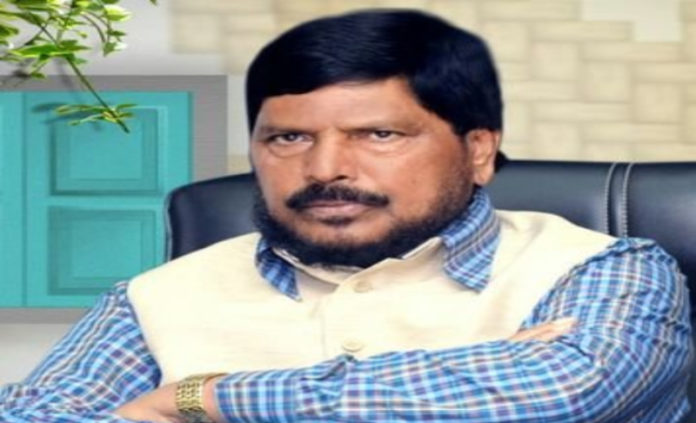
Ramdas Athawale tests COVID-19 positive

Ramdas Athawale

New Delhi (NVI): Union Minister Ramdas Athawale today said he has tested positive for COVID-19 and has been admitted to a hospital as a precautionary measure.

Taking to Twitter, Athawale said, “I have tested COVID-19 positive and as per advise of doctors I have been hospitalised for few days. Those who have been come in contact with me are advised to get COVID-19 tests done. Take Care & Stay Safe.”

Earlier yesterday, the Minister had met Actor Payal Ghosh who joined his Republican Party of India (A) in Mumbai, Maharashtra.

In the past few months, several union ministers have tested positive for COVID-19 including Amit Shah, Nitin Gadkari, Dharmendra Pradhan, Arjun Ram Meghwal, Gajendra Singh Shekhawat, Shripad Naik and Pralhad Joshi.

So far, in worst affected Maharashtra coronavirus tally today increased to 16,48,665. The state reported 84 fatalities in the last 24 hours, taking the death toll to 43,348.

-RJV

India added 883 MW of rooftop solar in 9 months amid Covid-19: Report

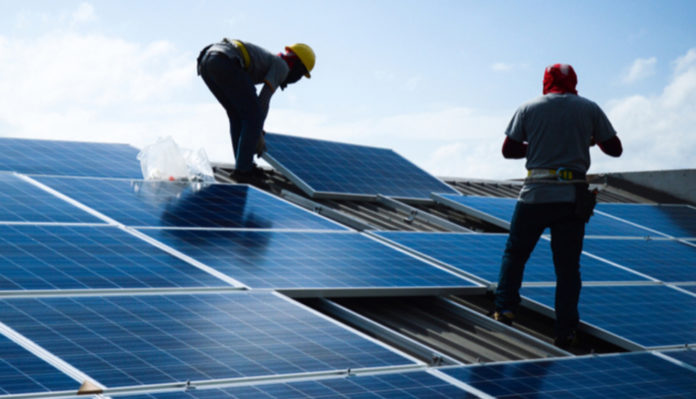
Representational image

New Delhi (NVI): About 883 megawatt (MW) of rooftop solar were added in India, in the period between January to September this year, despite the COVID-19 pandemic, according to a new report.

The new generation capacity included, a total of 2,320 megawatt (MW) of solar capacity comprising 1,437 MW of ground-mounted projects and 883 MW of rooftop solar, the Haryana-based JMK Research said in a report, which cited data released by the Ministry of New and Renewable Energy.

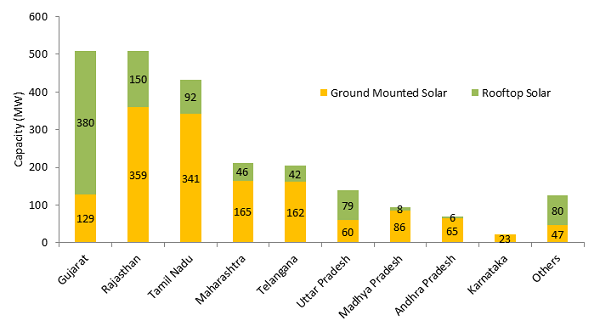
Under this, Rajasthan (360 MW), Tamil Nadu (341 MW), and Maharashtra (165 MW) were the leading states with most of the large-scale solar installations during this period.

Prior to the COVID-19 outbreak, JMK research had projected nearly 7-8 GW of utility-scale solar capacity addition in 2020.

However, only 1.4 GW capacity has been commissioned in the first nine months. Because of COVID 19, there were construction delays, restricted movement of equipment supply, and labour shortages eventually leading to project delays.

To compensate for this, the Ministry has issued a blanket extension of five months to all project developers. Now, most of this delayed capacity is likely to come up in the first half of 2021, the report said.

Moreover, Gujarat added 380 megawatt (MW) of solar rooftop capacity. The state ranks first with 380 MW capacity addition, contributing nearly 43 percent of the total rooftop installations in the first nine months of this year.

After Gujarat, Rajasthan (150 MW) and Tamil Nadu (92 MW) are the leading states who have added the highest rooftop solar capacity.

Graph of states in rooftop solar capacity

The primary reason behind the significant capacity addition in Gujarat is the “Surya Urja Rooftop Yojana – Gujarat” that targets installation of solar rooftops for 8 lakh consumers by March 2022 in the residential sector.

This scheme provides 40 percent of state subsidy on installation of systems up to 3 kW of size and 20 percent subsidy for 3 kW-10 kW.

The another reason for this upsurge in rooftop activity in Gujarat is the MSME policy introduced in September last year by the state government, as part of which MSMEs are allowed to install solar projects with more than 100 percent of their sanctioned load or contract demand, the report said.

Earlier the permitted installation limit was 50 percent of the sanctioned load. As per the new policy, MSMEs are also able to sell excess solar energy to the state government at a price of Rs 1.75/ kWh. The new policy also permits MSMEs to buy solar power from third parties.


-RJV

PM extends greetings on Infantry Day

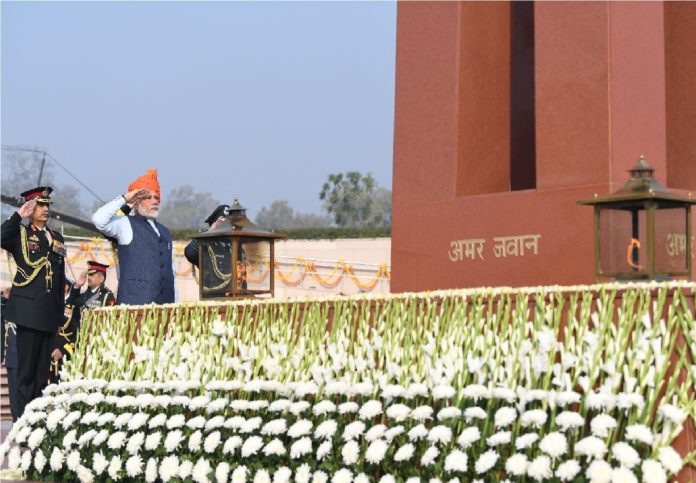
Prime Minister Narendra Modi (File photo)

New Delhi (NVI): Prime Minister Narendra Modi today extended greetings on the occasion of Infantry Day to all ranks of courageous Indian infantry.

The Prime Minister took to twitter and wrote, “Greetings to all ranks of our courageous infantry on the special occasion of Infantry Day.”

“India is proud of the role played by the infantry in protecting our nation. Their bravery continues to motivate millions,” he said.

Infantry Day is observed on October 27 every year, to mark the landing of first Indian troops in Jammu and Kashmir in 1947 to push back Pakistan supported intruders.

-CHK

Northern Command celebrates 74th Infantry Day in J&K’s Udhampur

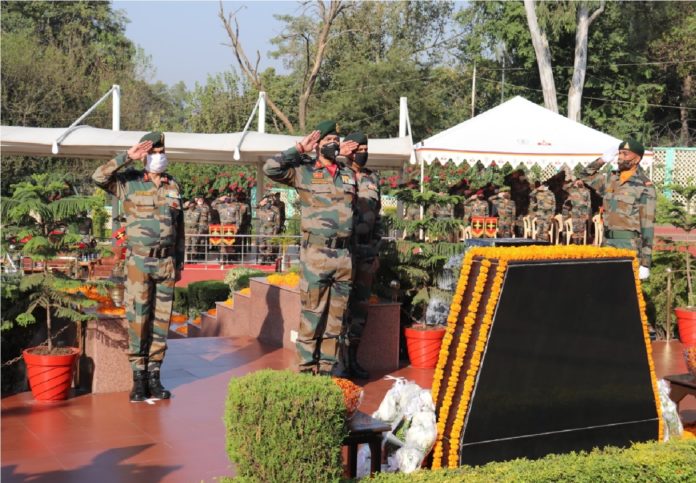
New Delhi (NVI): The 74th Infantry Day was celebrated by Northern Command with traditional wreath laying ceremony at the Dhruva Shahid Smarak in Udhampur, Jammu and Kashmir today.

Lieutenant General C Bansi Ponnappa, Chief of Staff, Northern Command on behalf of Lieutenant General YK Joshi, Army Commander, Northern Command laid wreath at Dhruva Shahid Smarak, Udhampur and complimented all ranks and veterans of Infantry for their devotion to duty and indomitable spirit while working under trying and challenging conditions.

He saluted their contributions and sacrifices to protect territorial integrity of the Nation and fighting terrorism with unstinting resolve.

Infantry Day is celebrated to commemorate the operations launched by the Indian Army on October 27, 1947, to thwart the Pakistani aggression on Jammu and Kashmir.

On this solemn day, the supreme sacrifices made by the Indian Army in defending the honour and integrity of the nation is remembered by all.

-CHK

India, US sign crucial strategic pact, Pompeo says China’s threat being tackled

New Delhi (NVI): India and the US today signed the Basic Exchange and Cooperation Agreement (BECA), a crucial strategic pact, amidst assertion by the American Secretary of State Michael Pompeo that the two countries are taking steps to strengthen cooperation against all matters of threats, including those posed by China.

The BECA, which will give India access to accurate geo-spatial data with several military applications using the American satellites, was signed after the 2+2 Ministerial Dialogue between the two countries here.

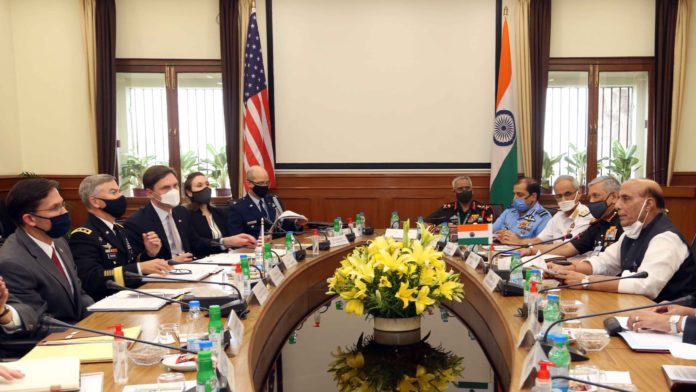
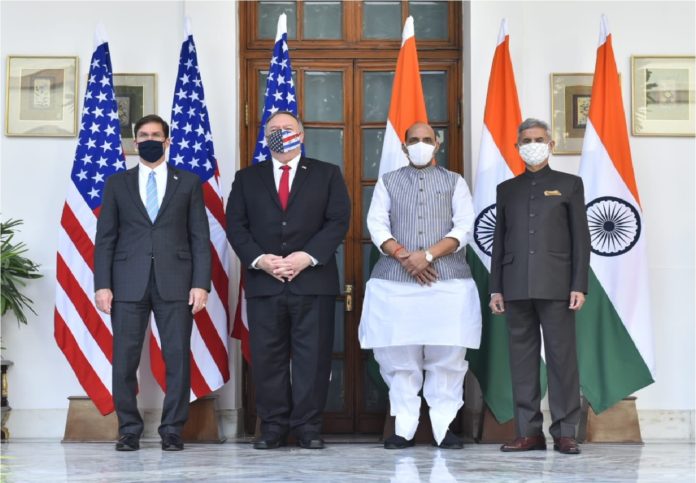
Besides Pompeo, it was attended by Secretary of Defence Mark Esper from the US side and Defence Minister Rajnath Singh and External Affairs Minister S Jaishankar from the Indian side.

The pact between the National Geospatial-Intelligence Agency of the US Department of Defence and India’s Defence Ministry entails sharing of military information, including maps, nautical and aeronautical charts, commercial and other unclassified imagery, geodetic, geophysical, geo-magnetic and gravity data.

While the information to be shared will mostly be of unclassified nature, there is a provision for sharing classified information as well with proper safeguards in place to ensure that the information is not shared with any third party.

The agreement, signed at a time when India is locked in a military faceoff with China, will allow US armed forces to provide advanced navigational aids and geospatial intelligence which will improve Indian military’s accuracy of automated hardware systems and weapons like cruise missiles, ballistic missiles and drones.

The BECA is the fourth and last of foundational agreements between the two countries. The other three already signed are — the General Security of Military Information Agreement (GSOMIA) in 2002, the Logistics Exchange Memorandum of Agreement (LEMOA) in 2016 and Communications Compatibility and Security Agreement (COMCASA) in 2018.

After the meeting, Pompeo said at a media interaction that “India and the US are taking steps to strengthen cooperation against all matters of threats, not just those posed by the Chinese Communist Party (CCP).”

While referring to the Coronavirus pandemic which emerged from China’s Wuhan city, he said, “Our leaders & our citizens see with increasing clarity that the CCP is no friend to democracy, rule of law, transparency, freedom of navigation and prosperous Indo-Pacific.”

Earlier, at the meeting, Pompeo said, “Today is the real opportunity for two great democracies like ours to grow closer, as I said on my trip to India last year when I called for a new age of ambition in our relationship. I think we’ve delivered on that over this past year. There is much more work to do for sure.”

He said the two countries need to cooperate to confront the Chinese Communist Party’s threats to security and freedom and to promote peace and stability throughout the region.

“Together our two countries are building a better future for our people based on our shared set of values and our cultures, our defense ties, our scientific collaboration, and mutual prosperity,” the US Secretary of State said.

Esper emphasised on institutionalizing and regularizing cooperation between India and the US to meet the challenges of the day.

“Today we meet in the midst of public health, economic, and security challenges around the globe, which the partnership between our two nations has better prepared us to address and deter,” the US Secretary of Defence noted.

He pointed out that this year marks the 15th anniversary of the first U.S.-India Defence Framework and third 2+2 Ministerial.

“We have strengthened our defence and security partnership considerably since then, especially over the past year, during which we advanced our regional security, military-to-military, and information-sharing cooperation,” Esper said.

“Our focus now must be on institutionalizing and regularizing our cooperation to meet the challenges of the day and uphold the principles of a free and open Indo-Pacific well into the future,” he added.

Rajnath Singh said the meeting today was taking place “at an extraordinary time” and referred to the “reckless aggression on our northern borders”, which is posing a challenge to India. This was reference to Chinese aggression on the Ladakh border, where the Communist party is trying to change to Line of Actual Control.

The Defence Minister also talked about coronavirus and said, “This pandemic is something that we have never experienced in our lifetime. Our economies have suffered losses. People have been affected by the pandemic, and a number of those have succumbed, which is a number that is far from insignificant.”

Jaishankar said India and the US can make a real difference by working together in respect of regional and global challenges or in the context of respecting territorial integrity, an oblique reference to the Chinese aggression on the Ladakh border.

“We live in a more uncertain world with much greater stresses and sharper fault lines. For most countries, that means giving security a greater salience in their foreign policy. As major powers, this is even more so in our case,” he said.

He noted that over the last two decades, the Indo-US bilateral relationship has grown steadily in its substance, facets and significance.

“The accompanying comfort levels today enable us to engage much more intensively on matters of national security. This format is clearly tailored to that purpose,” the Indian External Affairs Minister said.

“At a time when it is particularly important to uphold a rules-based international order, the ability of India and the US to work closely in defence and foreign policy has a larger resonance,” he said.

“Together, we can make a real difference when it comes to regional and global challenges, whether it is in respecting territorial integrity, promoting maritime domain awareness, countering terrorism or ensuring prosperity,” Jaishankar said.

Although he did not elaborate on the regional and global challenges or on the aspect of “respecting territorial integrity”, the indication was clearly towards the Chinese aggression on the Ladakh border with an aim of changing the Line of Actual Control (LAC).

China launched the aggression in May and has amassed over 50,000 troops along with heavy artillery and air assets along the LAC. India has also mobilised the matching number of troops and military assets to meet the challenge.

Solar is now the ‘cheapest electricity in history’: IEA report

solar energy
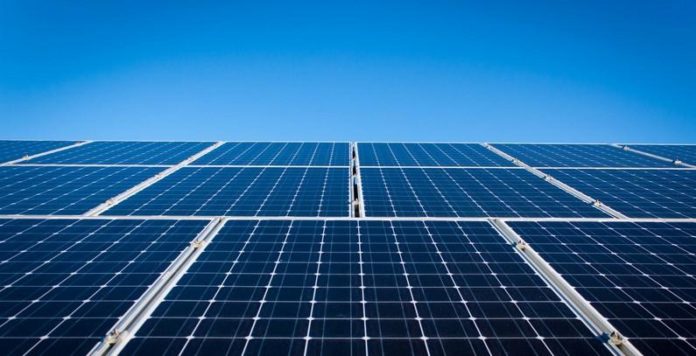
Representational image of solar plant

New Delhi (NVI): The International Energy Agency (IEA) has said that solar power is now the cheapest form of electricity for utility companies to build.

This extraordinary admission was included in the 2020 version of IEA’s annual reference tome, the World Energy Outlook (WEO). The 464-page outlook, also outlines the “extraordinarily turbulent” impact of coronavirus and the “highly uncertain” future of global energy use over the next two decades.

This year, the agency has announced for the first time that, in most nations, electricity produced by solar photovoltaics (i.e. solar panels) is cheaper than the kind from plants fired by coal or natural gas.

In the best locations and with access to the most favourable policy support and finance, the IEA says that solar can now generate electricity “at or below” USD 20 per megawatt hour (MWh), which is considerably less than coal or gas.

In addition to this, the cost of solar is set to fall further still. The IEA expects the cost could drop 65 per cent in the next two decades in India.

Even on the IEA’s modified “value adjusted levellised cost of electricity” (VALCOE), which includes the simulated value of three system services: energy, flexibility and capacity, solar still beats coal and gas in all continents, and is beaten only by onshore wind in Europe.

Tim Buckley, from the Institute for Energy Economics and Financial Analysis, said solar this cheap would be a “gamechanger”.

“Within half the lifespan of a new coal-fired power plant, solar will be essentially free in one of the largest electricity markets in the world,” he said.

But how rapidly solar is taken up will be largely shaped by when COVID is brought under control, and whether governments pursue clean energy policies during the recovery, or stick with what they did before the pandemic.

The WEO2020 includes, for the first time, a scenario that is broadly consistent with what might be needed to try and cap average global warming to a maximum 1.5°C, rather than the second prize of 2.0°C previously modelled under its Sustainable Development Scenarios.

This requires reaching net zero emissions by 2050, rather than 2070, and includes significant emissions reductions over the next decade, driven mostly by a vast increase in wind and solar production, a shift to electric vehicles, and “behavioural changes” that could reduce demand.

Furthermore, this year’s version of the highly influential annual outlook offers four “pathways” to 2040, all of which see a major rise in renewables. The IEA’s main scenario has 43 per cent more solar output by 2040 than it expected in 2018, partly due to detailed new analysis showing that solar power is 20-50 per cent cheaper than thought.

Despite a more rapid rise for renewables and a “structural” decline for coal, the IEA says it is too soon to declare a peak in global oil use, unless there is stronger climate action. Similarly, it says demand for gas could rise 30 per cent by 2040, unless the policy response to global warming steps up.

This means that, while global CO2 emissions have effectively peaked, they are “far from the immediate peak and decline” needed to stabilise the climate. The IEA says achieving net-zero emissions will require “unprecedented” efforts from every part of the global economy, not just the power sector.

-CHK

Delhi’s air remains ‘very poor’ for fourth consecutive day

air quality
File photo

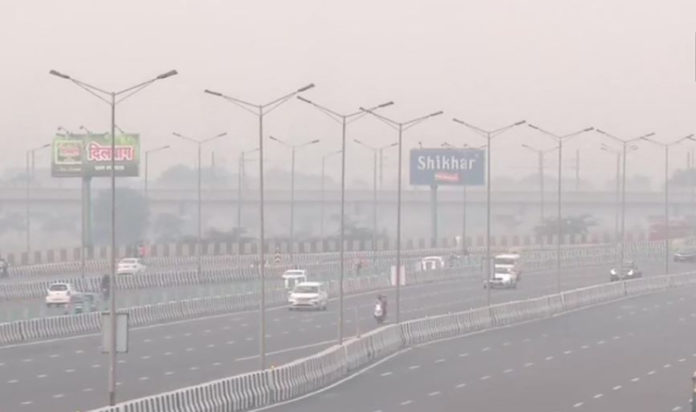
New Delhi (NVI): The national capital today recorded its air quality index (AQI) in the ‘very poor’ category for fourth consecutive day, as layer of toxic haze lingered over Delhi this morning, the Central Pollution Control Board (CPCB) said.

The air quality index was at 346 in Rohini, 329 in RK Puram, 377 in Anand Vihar and 363 in Mundka, all four in ‘very poor’ category. The overall AQI was recorded at 347 in Delhi, according to the CPCB data.

Most of the air quality monitoring stations in the city recorded the air quality in the ‘very poor’ category, while pollution levels rose to “severe” levels at Vivek Vihar (AQI 414), Wazirpur (404) and Anand Vihar (418).

The city recorded a 24-hour average air quality index (AQI) of 353 on Monday. It was 349 on Sunday, 345 on Saturday and 366 on Friday.

In an attempt to curb the increasing air pollution in the national capital, the Delhi government recently launched the ‘Red Light On, Gaadi Off’ campaign as part of its ‘Yuddh Pradushan Ke Viruddh’ (War Against Pollution) initiative.

Along with this, the Graded Response Action Plan (GRAP) has been implemented in the Delhi-National Capital Region (NCR) from October 15 to check air pollution.

The severe air pollution in Delhi is a year-round problem, which can be attributed to unfavourable meteorological conditions, farm fires in neighbouring regions and local sources of pollution.

However, Delhi’s air quality is predicted to remain in the ‘very poor’ category till October 31, as per the CPCB data.

-RJV

10,000 cases sanctioned under Back to Village-3 programme in J&K: LG Manoj Sinha

ATAL J&K Yojana to cover 35,000 youth for entrepreneur skill development

Abid Bashir

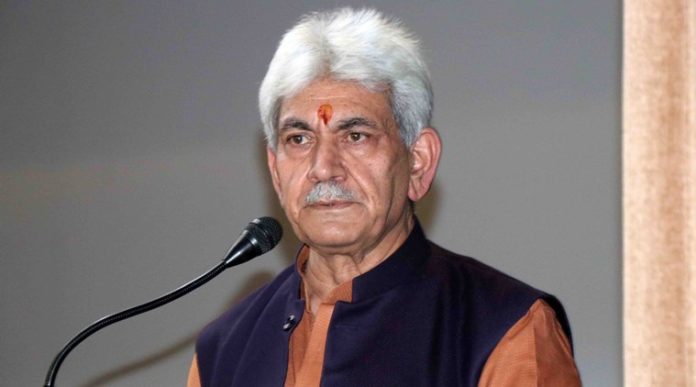
Srinagar (NVI): Jammu and Kashmir Lieutenant Governor Manoj Singh today announced that 10,000 cases have been sanctioned under Back to Village-3 programme in the Union Territory.

Sinha also said that economic package, self-employment package and Rs 100 crore have been disbursed which signifies the J&K government’s commitment towards youth and women empowerment in the Union Territory.

Addressing media men at Rajbhawan here, the J&K LG said that his focus is on four P’s— Peace, Prosperity, Progress and People. “No more promises, only work. I am glad to see that development and prosperity is in full swing across the UT. We will touch new heights,” he added.

Sinha said that in total 15,309 applications were received and promised and every pending case will be reviewed.

About the government’s commitment towards empowering Panchayats in J&K, the LG Sinha said that two youth of each panchayat have been provided with the financial assistance to start their own ventures. “11,000 cases were received from the panchayats alone,” he said.

Sinha added that it was just a beginning. “Government is committed to helping the aspirational youth so that they start their own ventures. There is no place for red-tapism. I am committed to the announcement of minimum government and maximum governance,” the LG said.

“Time is over when youth were supposed to make rounds of government offices for jobs and financial assistance. That’s history now.”

He said that J&K Bank employees are reaching at the door steps of youth to complete formalities and to provide sanction letters.

The LG Sinha said that he is committed to ensure fast track development, industrial growth, infrastructural development, skill development as envisioned by the Prime Minister Narendera Modi.

Sinha also announced mega youth convention titled “Youth Empowerment society—Youth engagement” on October 31 in J&K UT in which experts from outside will be invited to counsel youth,” he said, adding that the experts will guide the youth as to how they can start their own ventures and on other issues related to self-employment.

-RJV

State-wise details of Covid-19 cases in India

Fact Check

New Delhi (NVI): The total number of coronavirus cases in India has crossed the 79 lakh-mark and stands at 79,46,429 after 36,469 new cases were reported in the last 24 hours, according to the Union Health Ministry data.

This marks the country’s lowest single-day spike in nearly four months.

The country’s death toll stands at 1,19,502 after 488 new fatalities were reported during the same period.

Total positive cases in States/UTs:

Andaman and Nicobar Islands- 4,253

Andhra Pradesh- 8,08,924

Arunachal Pradesh- 14,391

Assam- 2,04,386

Bihar- 2,12,355

Chandigarh- 14,085

Chhattisgarh- 1,77,608

Dadra and Nagar Haveli– 3,228

Delhi- 3,59,488

Gujarat- 1,67,919

Goa- 42,532

Haryana– 1,59,457

Himachal Pradesh- 20,586

Jammu and Kashmir- 92,225

Jharkhand- 99,906

Karnataka- 8,05,947

Kerala- 3,97,217

Ladakh- 5,978

Madhya Pradesh- 1,67,969

Maharashtra- 16,48,665

Manipur- 17,424

Meghalaya- 9,066

Mizoram- 2,527

Nagaland- 8,663

Odisha- 2,82,695

Puducherry- 34,336

Punjab- 1,31,391

Rajasthan- 1,88,048

Sikkim- 3,840

Tamil Nadu- 7,11,713

Telangana- 2,32,671

Tripura- 30,293

Uttarakhand- 60,744

Uttar Pradesh- 4,72,077

West Bengal – 3,53,822

State/UT wise total death toll:

Andaman and Nicobar Islands- 58

Andhra Pradesh- 6,606

Arunachal Pradesh- 35

Assam- 908

Bihar- 1,058

Chandigarh- 222

Chhattisgarh- 1,861

Dadra and Nagar Haveli- 2

Delhi- 6,312

Goa- 582

Gujarat- 3,690

Haryana- 1,737

Himachal Pradesh- 293

Jammu and Kashmir- 1,444

Jharkhand- 872

Karnataka- 10,947

Kerala- 1,352

Ladakh- 71

Madhya Pradesh- 2,890

Maharashtra- 43,348

Manipur- 144

Meghalaya- 81

Nagaland- 33

Odisha- 1,259

Puducherry- 588

Punjab- 4,125

Rajasthan- 1,853

Sikkim- 65

Tamil Nadu- 10,956

Telangana- 1,315

Tripura- 344

Uttar Pradesh- 6,904

Uttarakhand- 1,001

West Bengal- 6,546

However, a total of 72,01,070 people have been cured and discharged. The total active cases stands at 6,25,857 in the country.

-CHK

India, US can make real difference by working together: Jaishankar

EAM Dr S Jaishankar and Defence Minister Rajnath Singh welcomed their US counterparts Secretaries of State & Defense Mike Pompeo and Mark T Esper

New Delhi (NVI): India and the US can make a real difference by working together in respect of regional and global challenges or in the context of respecting territorial integrity, External Affairs Minister S Jaishankar said today, against the backdrop of Chinese aggression on the Ladakh border.

Jaishankar was speaking at the 2+2 Ministerial Dialogue here between India and the US which was also attended by American Secretary of State Michael Pompeo and Secretary of Defence Mark Esper along with Defence Minister Rajnath Singh.

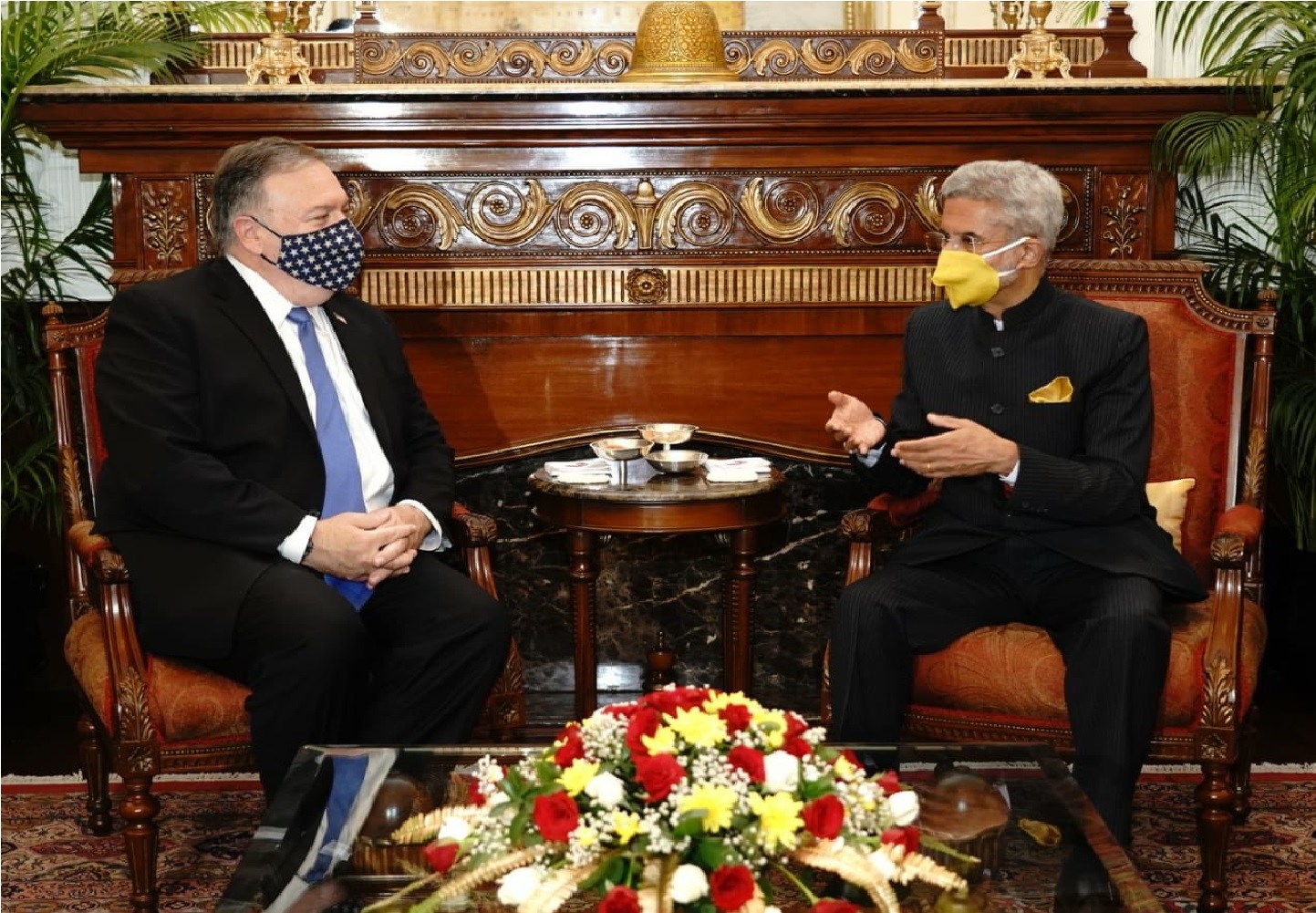
EAM Jaishankar with US counterpart discussing key bilateral, regional and global issues.

In his initial remarks at the meeting, Jaishankar said, “we live in a more uncertain world with much greater stresses and sharper faultlines. For most countries, that means giving security a greater salience in their foreign policy. As major powers, this is even more so in our case.”

He noted that over the last two decades, the Indo-US bilateral relationship has grown steadily in its substance, facets and significance.

“The accompanying comfort levels today enable us to engage much more intensively on matters of national security. This format is clearly tailored to that purpose,” the Indian External Affairs Minister said.

“At a time when it is particularly important to uphold a rules-based international order, the ability of India and the US to work closely in defence and foreign policy has a larger resonance,” he said.

“Together, we can make a real difference when it comes to regional and global challenges, whether it is in respecting territorial integrity, promoting maritime domain awareness, countering terrorism or ensuring prosperity,” Jaishankar said.

Although he did not elaborate on the regional and global challenges or on the aspect of “respecting territorial integrity”, the indication was clearly towards the Chinese aggression on the Ladakh border with an aim of changing the Line of Actual Control (LAC).

China launched the aggression in May and has amassed over 50,000 troops along with heavy artillery and air assets along the LAC. India has also mobilised the matching number of troops and military assets to meet the challenge.

This is the third 2+2 Ministerial meeting between the two sides in two years, which reflects the commitment to forge closer cooperation on strategic matters.

MUST READ