Thursday, September 10, 2026
Home Blog Page 1058

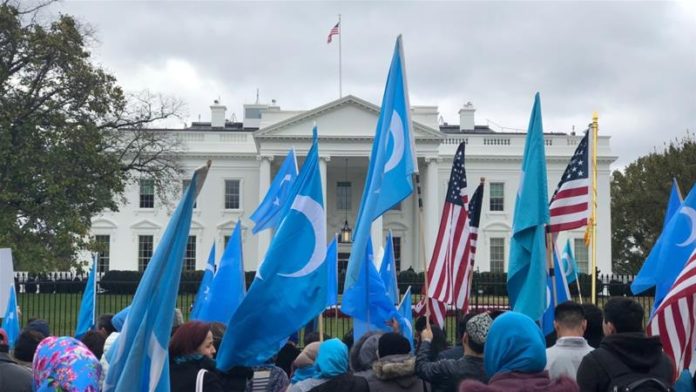
Indisputably, East Turkestan is an Occupied Territory

COLUMN

There are three ways for a territory to be yours, two of which are legal, and one is illegal. First, if the land is inherited from your ancestors, it is yours and legal. Second, if you payed for and bought this land, it is yours and legal. The third one is that you forcibly occupied it, it is yours but illegal and with the possibility that the original owners of the land will take it back someday.

Now, let us look at China’s shameless claims about East Turkistan according to these criteria. It should be said that historically, the Chinese are not an ethnic group who have lived in this territory! However, the Chinese, whether nationalists or communists, have been trying to inculcate this myth in the history books as if the land were theirs for “two thousand years”.

Furthermore, they have put in considerable effort in to implanting this lie in the subconsciousness of their descendants, guiding them to believe in it as historical fact. As a result of this indoctrination, Chinese authorities have successfully made Chinese people accept that not only East Turkistan but also all of Central Asia is theirs as fact. However, if we put it into practice and examine this “historical fact,” everything becomes clear:

According to Amnesty International in 2002, before the communists occupied East Turkestan in 1949, the Chinese population made up only 2 per cent of the population in East Turkestan. This percentage exclusively included the number of the invading army, the police, the colonial government officials, and their family members. There were no Chinese farmers or herdsmen living in East Turkistan. So, how can the Chinese, who made up only 2 percent until 1949, claim the land as something they inherited from their ancestors? Where is the homeland of the remaining 98 percent?

Did the Chinese rent the land out to the Uyghurs and other Turkic nations while they returned to China? If so, do they have the rental agreement or contract? To change this historical reality, the Chinese authorities are now selling the myth that “Chinese people have become the majority in East Turkestan. Uyghurs and the other ethnic groups in East Turkistan are the migrants,” fabricating a false history and forcing it to be accepted.
If China bought the land, is there any contract or document proving it? Obviously, China has never claimed that they have bought this land.

In that case, what remains here is the third possibility, namely, China has occupied East Turkistan by force or other illegal means. If this is the case, respecting this as a historical fact, China or the rest of the world should recognize East Turkistan as an occupied region. In general, morality is very black and white, you are either good or evil. If one ignores injustice and fails to accept the truth, they are truly evil. Putting personal interest above the truth is also immoral.

In light of these reflections, we, the people of East Turkestan who are being brutally oppressed and humiliated in today’s civilized world, sincerely urge the whole world to acknowledge, advocate and stand up for the truth, as opposed to taking side of the oppressor, and ignoring historical facts. We expect that the world will recognize East Turkestan as an occupied country. Furthermore, to recognize China as the occupier and aggressor. Fascism is always a catastrophe, and we warn all of humanity of Chinese fascism.

We as the oppressed understand China the most. We understand that the unique Chinese method of expansionism is immigration. Colonialism is “殖民主义” in Chinese, literally meaning “reproduction or growth of the population.” It is the practice of changing the demographic structure of the local population with an influx of immigrants from the colonizers. For example, Singapore, originally part of Malaysia, has an immense majority Chinese population thanks to mass influx of Chinese immigrants. The point is, China has taken over Singapore without even using military forces. Today, Malaysia has a population of more than four million Chinese immigrants, who contribute to more than half of the Malaysian economy.

The demographic structure of far Russian regions such as Siberia and Vladivostok, is completely changing. The Chinese immigrant population there has surpassed the local population. Chinese immigrants in Central Asia, who are settling by marrying natives, are being intentionally encouraged by the Chinese state to create a cooperative force from within for China’s expansionism into Central Asia. It is only a matter of time before China starts claiming these lands. Africa was liberated from European colonialism but now is under threat of colonization again as the Chinese immigrant population grows.

Unfortunately, the growing number of Chinese immigrants are increasing also in Latin America and Canada, where their efforts to seize mining rights for the oil industry, and their success in these types of schemes are still not taken seriously by these countries. China will not stop until they get in full control of everything. And until they do, Chinese people will try to be the quietest, friendliest, and gentlest people in the world.

The fact is, we cannot convince anyone other than us to believe in the deceptive nature of the Chinese people. The cruelty is hidden under the hard working, gentle, soft spoken expressions of the Chinese and is not so easily exposed. By the time their original color is revealed we are already too late (just like in our experience) to rectify our mistakes and change our situation.

Chinese aid given underdeveloped countries today, is the beginning of a catastrophe tomorrow. After this aid gets too difficult for the debtor country to repay, China will claim their land. This is proven by what happened in Tajikistan and Kyrgyzstan, where China succeeded in demanding land in exchange for debts.

We consider it our humanitarian duty to warn you that the same genocide is fast approaching countries indebted to China. Soon the aid they received will become a strangling rope around their neck. We call on the world to respect historical facts and recognize East Turkistan as an occupied country.

Furthermore, we call on the world to fight with the Uyghurs to regain our independence and control of our homeland. If you allow this to happen to the Uyghurs, what’s stopping China from doing the same to your country?

(This article was written by the president of East Turkistan Government in-Exile Ghulam Osman)


Pakistan: Blast at seminary in Peshawar kills at least 7, injures 70

Nearly 1,000 children were present in the seminary at the time of the blast (Source: @twitter)

New Delhi (NVI): At least seven people were killed and over 70 injured in a massive explosion at a seminary in Pakistan’s Peshawar city this morning.

The blast was reported inside a seminary at the Dir Colony, according to Geo News.

Meanwhile, the police and rescue service arrived at the crime scene and launched operations. The initial investigations revealed that the time-bomb was planted inside a bag, Geo News reported quoting Khyber Pakhtunkhwa police.

Nearly 1,000 children were present in the seminary at the time of the blast and majority of the victims were children and instructors.

The blast took place during classes in Madrasa (religious school), teachers and boys as young as 7 were among the wounded, as per the reports.

The injured were moved to Lady Reading Hospital, where at least five are reportedly in critical condition. The hospital official confirmed that they received at least seven bodies and over 70 injured.

Pakistan Prime Minister Imran Khan strongly condemned the incident and prayed for the speedy recovery of the injured.

“Deeply saddened by terrorist attack on madrassah in Peshawar. My condolences go to the victims families & prayers for early recovery of the injured. I want to assure my nation we will ensure the terrorists responsible for this cowardly barbaric attack are brought to justice asap,” Imran Khan tweeted.

Federal Information Minister Shibli Faraz also condemned the attack and promised to “bury those with nefarious intentions to destabilise the country”.

Terming it a heartbreaking incident, Pakistan Muslim League-Nawaz (PML-N) vice-president Maryam Nawaz also condoled with the victims and their families.

PML-N leader Ahsan Iqbal also condoled the victims and said, “Very sorry to hear about the blast & casualties in Peshawar. Terrorists, who had been defeated, are again hitting us because Imran Khan has pitched security apparatus against the opposition instead of terrorists.”

“National Action Plan has been forgotten. Ministry of Interior is an extension of NAB,” he tweeted.

-RJV

Global coronavirus cases surge past 43.3 million

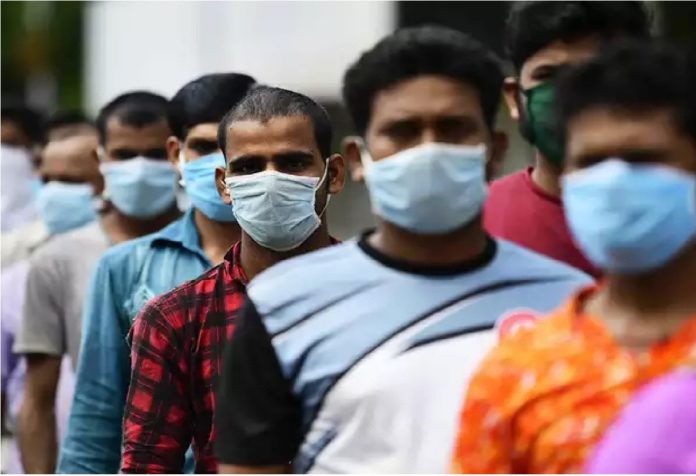
New Delhi (NVI): More than 43.3 million people have been infected by coronavirus worldwide, with over 11,58,880 deaths reported, according to Johns Hopkins University tally.

Atleast 29 million patients have been cured and recovered from the deadly contagion globally.

In the US, the total number of coronavirus cases have reached over 8.7 million while the total number of fatalities have surpassed 2,25,600 in the country.

Brazil registered 15,726 COVID-19 cases within past 24 hours and surpassed 5.4 million mark. The country has world’s second-highest COVID-19 death toll, after the United States which stands at 1,57,397.

Iran announced 5,960 new COVID-19 confirmed infections in the past 24 hours, taking the tally of the novel coronavirus in the country to 5,74,856.

The number of COVID-19 cases in Germany increased by 11,409 to 449,275, data from the Robert Koch Institute (RKI) for infectious diseases showed. The reported death toll rose by 42 to 10,098.

Moreover, with new coronavirus cases on the rise, residents of El Paso, Texas, settled on the US-Mexico border, are encouraged to stay home for two weeks as a judge imposes a mandatory curfew.

The World Health Organization (WHO) has urged people around the world not to give up in the fight against the coronavirus as cases surge once again, stressing the need for mask-wearing and social distancing.

-RJV

India’s COVID-19 tally reaches 79.46 lakh with 36,469 new cases

COVID-19

New Delhi (NVI): India today continued its downward trajectory of coronavirus cases as the country reported 36,469 new infections in the last 24 hours, taking the overall caseload to 79,46,429, Union Health Ministry said.

This marks the country’s lowest single-day spike in nearly four months.

Notably, the death toll in the country has gone up to 1,19,502 with 488 new fatalities being reported during the same period.

So far, 72,01,070 patients have recovered all over the country, while active cases stands at 6,25,857. The recovery rate also improves further to 90.23 per cent.

In terms of total number of cases, Maharashtra continues to be the worst affected state with 16,48,665 coronavirus cases followed by Andhra Pradesh with 8,08,924 cases, Karnataka with 8,05,947 positive cases.

The other worst affected states included Tamil Nadu (7,11,713), Uttar Pradesh (4,72,077) and Delhi (3,59,488).

In terms of fatalities, Maharashtra tops the tally with 43,348 deaths followed by Tamil Nadu 10,956, ministry said.

The death toll in the national capital surged to 6,312 while another 3,27,390 patients have been cured so far, healthy ministry data shows.

According to Indian Council of Medical Research (ICMR), a total of 10,44,20,894 samples tested for COVID-19 up to October 26. Of these 9,58,116 samples were tested yesterday.

Meanwhile, Maharashtra health minister Rajesh Tope informed that the government has brought down the rate for COVID-19 tests conducted at private laboratories by Rs 200 in the state.

“The new rates will be Rs 900, Rs 1400 and Rs 1800 per test, adding it was the fourth time rates had been revised from the original Rs 4,500,” he said.

-RJV

J&K: One terrorist killed, another surrenders in Pulwama encounter

Security forces launch search op in South Kashmir's Pulwama
(File/Representational Image)

Abid Bashir

Srinagar (NVI): An unidentified terrorist was killed and another surrendered in a gunfight that broke out with the security forces in Noorpora area of Awantipora belt of south Kashmir’s Pulwama district this evening, officials said.

Srinagar-based Defence Spokesman, Col Rajesh Kalia, said one terrorist was killed and another surrendered during the encounter. “One terrorist eliminated. Second terrorist responded to surrender appeal and apprehended. One AK-47 recovered from the encounter site,” he said.

A joint team of Police, Army’s 42 RR and CRPF launched a cordon and search operation based on specific information about the presence of terrorists in the area, an official said.

“As the joint team of forces approached towards the suspected spot, the hiding terrorists fired upon them, which was retaliated, triggering an encounter,” he said.

“Due to the dark, lights have been installed and cordon layers tightened to ensure that terrorists don’t flee,” he added.

Meanwhile, IGP Kashmir, Vijay Kumar said, “It was after hectic persuasion that the second terrorist agreed to surrender.”

-CHK

India will drive global energy demand: PM Modi at India Energy Forum

Prime Minister Narendra Modi

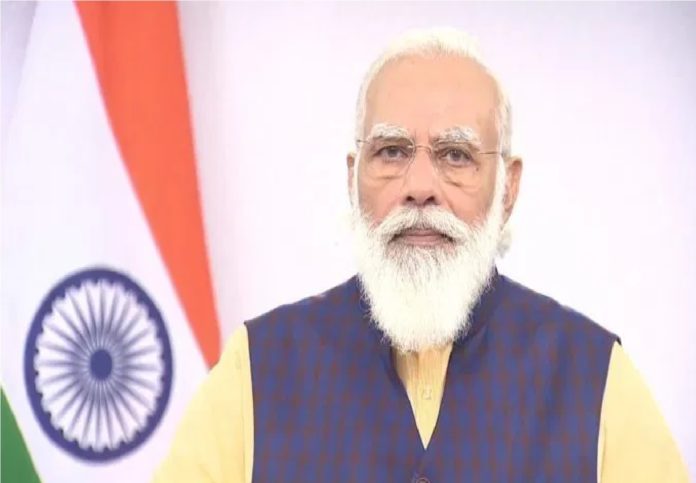
New Delhi (NVI): India will drive the global energy demand, Prime Minister Narendra Modi today said as he showcased government’s recent reforms in the sector to global investors.

Speaking at the India Energy Forum by CERAWeek, PM Modi said that the coronavirus pandemic had resulted in global energy demand falling by one-third, investment decisions being impacted and predictions of a contraction in demand over the next few years.

“But India is likely to see energy consumption double over the long term,” he said.

PM further added that India was on track to meet its COP21 commitment of raising electricity generation from renewable energy sources.

Notably, the theme of this year’s forum is “India’s Energy Future in a world of Change”.

Stating that India saw transformational reforms in the energy sector in the last five years, the Prime Minister highlighted changes in oil and gas exploration and production regime as well as gas marketing.

“India’s reform journey has been on the high speed in the last five years,” he emphasised.

While the focus is to make India a gas-based economy, the nation would also be raising oil refining capacity from 250 million tonnes per annum currently to 450 million tonnes by 2025 to keep self-reliance in sync with demand, the Prime Minister added.

“We are moving forward with the vision of ‘Aatmanirbhar Bharat’. A self-reliant India will also be a Force Multiplier for the global economy. Energy security is at the core of our efforts. You would be happy to know that our work is giving positive results. During these challenging times, we have witnessed investment through the oil and gas value chain. We are seeing similar signs in others sectors too,” PM added.

“India’s energy future is bright and secure,” Modi said, adding access to energy should be affordable and reliable.

“Our energy sector will be growth-centric, investor-friendly and environment conscious,” he added.

-CHK

Pompeo in Delhi, US says military ties expanding

US Secretary of State, Mike Pompeo

New Delhi (NVI): As Secretary of State Michael Pompeo arrived here today on a two-day visit, the US State Department said the two countries are expanding cooperation between their militaries, including navies which play a critical role in ensuring freedom of navigation in the Indo-Pacific.

Pompeo and US Secretary of Defence Mark T. Esper are here for 2+2 Ministerial Dialogue with External Affairs Minister S. Jaishankar and Defence Minister Rajnath Singh tomorrow.

Pompeo will also meet Prime Minister Narendra Modi and hold discussions with other government and business leaders on ways to advance the U.S.-India Comprehensive Global Strategic Partnership.

The US said the bilateral relationship is rooted in democratic traditions and growing in new strategic dimensions.

“The United States and India have a strong and growing bilateral relationship built on shared values and a commitment to a free and open Indo-Pacific. As the world’s oldest and largest democracies, the United States and India enjoy deeply rooted democratic traditions,” the State Department said in a statement.

It said the growth in the partnership reflects a deepening strategic convergence on a range of issues.

“Our cooperation is expanding in important areas including health, infrastructure development, energy, aviation, science, and space,” it said, adding holding the third U.S.-India 2+2 Ministerial Dialogue in just over two years demonstrates high-level commitment to the shared diplomatic and security objectives.

Describing India as a regional and international leader, the statement said, “As outlined in our National Security Strategy, the United States welcomes India’s emergence as a leading regional and global power. The United States looks forward to collaborating closely with India during its upcoming term on the UN Security Council.”

Noting that the US-India defence and security cooperation is getting increasingly strong, the statement said the defence trade has increased significantly over the past two decades.

India maintains the largest fleets of C-17 and P-8 aircraft outside of the United States, and as of 2020 the United States has authorized more than $20 billion in defence sales to India, the State Department said.

“The United States and India enjoy robust defense industrial cooperation. Through the U.S.- India Defence Technology and Trade Initiative, the United States and India work together on co-production and co-development of defence equipment,” it said.

Referring to the recent Quadrilateral Ministerial meeting in Tokyo attended by Pompeo and his counterparts from India, Japan, and Australia, the State Department said it demonstrated the strong cooperative ties among Indo-Pacific democracies interested in strengthening a rules-based order in which all nations are sovereign, strong, and prosperous.

The Quad has proven to be an effective multilateral mechanism, helping to create resilient supply chains, promote transparency, counter disinformation, and increase maritime security, it said.

“India, with its large economy, strong support for entrepreneurship and innovation, and its growing international trade, is one of the world’s leading economic powers and is well positioned to promote our shared vision for a free and rules-based Indo-Pacific where all nations can prosper,” it said.

Millions of used vehicles exported to developing countries cause air pollution: Report

Representational image

New Delhi (NVI): Millions of used vehicles exported mainly from Europe, the United States and Japan to the developing countries contribute significantly to air pollution and hinder efforts to mitigate the effects of climate change, according to a new report by the UN Environment Programme (UNEP).

The first-ever report of its kind, Used Vehicles and the Environment – A Global Overview of Used Light Duty Vehicles: Flow, Scale and Regulation, calls for action to fill the current policy vacuum with the adoption of harmonized minimum quality standards that will ensure used vehicles contribute to cleaner, safer fleets in importing countries.

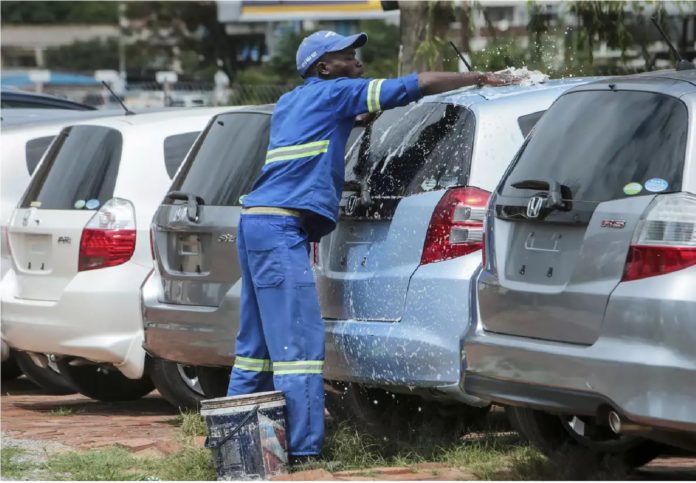
According to the report, between 2015 and 2018, some 14 million used light-duty vehicles were exported worldwide. Some 80 per cent went to low- and middle-income countries, with more than half going to Africa.

Experts say that up to 80 per cent failed to meet minimum safety and environmental standards in exporting countries.

The report says that both exporters and importers need to put tougher regulations in place to stem the flow of these cars.

Car ownership is booming all over the world with an estimated 1.4bn vehicles on the roads, a number that’s expected to reach around two billion by 2040.

Much of that growth is happening in developing countries in Asia, Africa and Latin America.

In their three-year analysis, researchers found that regulations on car imports in the majority of the 146 countries they studied were “weak” or “very weak”.

However, it also shows that where countries have implemented measures to govern the import of used vehicles – notably age and emissions standards – these give them to access high-quality used vehicles, including hybrid and electric cars, at affordable prices.

For example, Morocco only permits the import of vehicles less than five years old and those meeting the EURO4 European vehicles emission standard; as a result, it receives only relatively advanced and clean used vehicles from Europe.

The fast-growing global vehicle fleet is a major contributor to air pollution and climate change; globally, the transport sector is responsible for nearly a quarter of energy-related global greenhouse gas emissions. Specifically, vehicle emissions are a significant source of the fine particulate matter (PM2.5) and nitrogen oxides (NOx) that are major causes of urban air pollution, the report added.

Furthermore, the report found that African countries imported the largest number of used vehicles (40 per cent) in the period studied, followed by countries in Eastern Europe (24 per cent), Asia-Pacific (15 per cent), the Middle East (12 per cent) and Latin America (nine per cent).

Poor quality used vehicles also lead to more road accidents. According to the report, many of the countries with “very weak” or “weak” used vehicles regulations, including Malawi, Nigeria, Zimbabwe, and Burundi, also have very high road traffic death rates. Countries that have introduced used vehicles regulations also see safer fleets and fewer accidents.

“Cleaning up the global vehicle fleet is a priority to meet global and local air quality and climate targets,” said Inger Andersen, Executive Director of UNEP. “Over the years, developed countries have increasingly exported their used vehicles to developing countries; because this largely happens unregulated, this has become the export of polluting vehicles.”

“Developed countries must stop exporting vehicles that fail environment and safety inspections and are no longer considered roadworthy in their own countries, while importing countries should introduce stronger quality standards,” she added.

In addition to this, a recent review conducted by The Netherlands of its exports found that most of these vehicles did not have a valid roadworthiness certificate at the time of export.

Most vehicles were between 16 and 20 years old, and most fell below EURO4 European Union vehicles emission standards. For example, the average age of used vehicles exported to the Gambia was close to 19 years old, while a quarter of used vehicles exported to Nigeria were almost 20 years old.

“These results show that urgent action needs to be taken to improve the quality of used vehicles exported from Europe. The Netherlands cannot address this issue alone. Therefore, I will call for a coordinated European approach, and a close cooperation between European and African governments, to ensure that the EU only exports vehicles that are fit for purpose, and compliant with standards set by importing countries” Stientje Van Veldhoven, The Netherlands Minister for the Environment, said.

Poor quality used vehicles also lead to more road accidents. According to the report, many of the countries with “very weak” or “weak” used vehicles regulations, including Malawi, Nigeria, Zimbabwe, and Burundi, also have very high road traffic death rates. Countries that have introduced used vehicles regulations also see safer fleets and fewer accidents.

UNEP, with the support of the UN Road Safety Trust Fund and others, is part of a new initiative supporting the introduction of minimum used vehicles standards.

he initiative’s first focus will be countries on the African continent; a number of African countries have already put in place minimum quality standards – including Morocco, Algeria, Côte d’Ivoire, Ghana and Mauritius – with many more showing interest in joining the initiative.

-CHK

India invites US investments in defence sector; set to sign crucial BECA pact

India, US sign MoU on intellectual property cooperation
Representational image

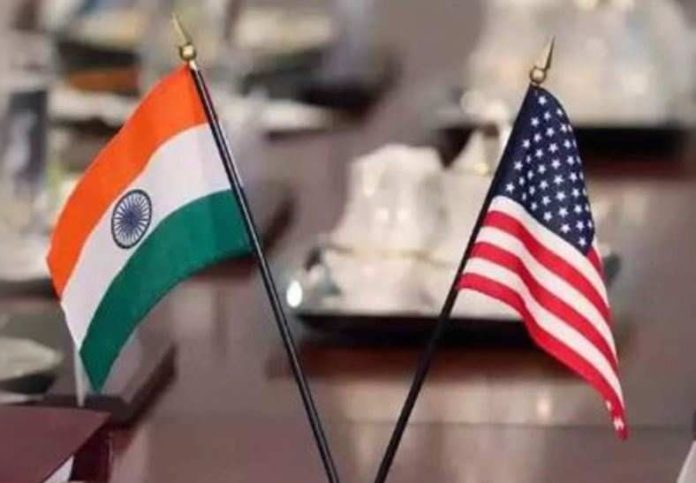
New Delhi (NVI): India on Monday invited US investments in the defence sector under the Atmanirbhar Bharat initiative while the two countries were set to sign BECA, a crucial agreement that will give New Delhi access to accurate geo-spatial data with several military applications.

BECA is Basic Exchange and Cooperation Agreement for Geo-Spatial Cooperation which will be signed tomorrow during the 2 + 2 India-US ministerial dialogue. The 2+2 ministerial dialogue involves Ministers of Foreign and Defence of the two sides.

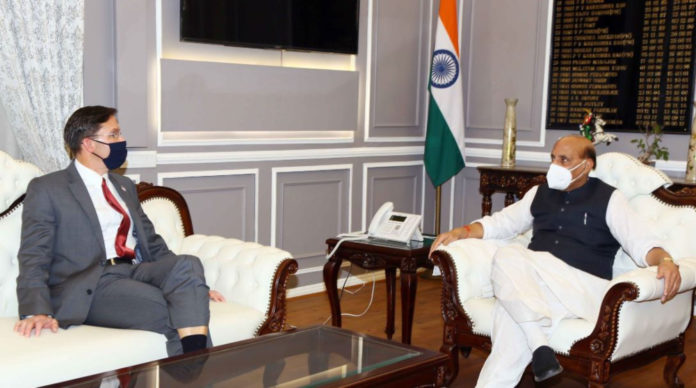
Ahead of tomorrow’s Dialogue, Defence Minister Rajnath Singh and visiting US Secretary of Defence Mark Esper met here today and reviewed bilateral defence cooperation spanning military-to-military cooperation, secure communication systems and information-sharing, defence trade and industrial issues.

The two ministers, who met under the shadow of Chinese aggression on the Ladakh border and the Communist country’s expansionist designs in South China Sea, also discussed ways to take bilateral cooperation forward.

“Both the ministers expressed satisfaction at the close engagements between the respective armed forces. They discussed potential new areas of cooperation, both at Service-to-Service level and at the joint level,” the Defence Ministry spokesman said.

The two sides called for continuation of existing defence dialogue mechanisms during the pandemic, at all levels, particularly the Military Cooperation Group (MCG). They also discussed requirements of expanding deployments of liaison officers, the spokesman said.

“The two ministers expressed satisfaction that agreement of BECA will be signed during the visit,” the spokesman said.

The US Secretary of Defence also welcomed Australia’s participation in the Exercise MALABAR 2020 under the framework of Quadrilateral Security Dialogue or QUAD, which  comprises India, the US, Japan and Australia.

Singh elaborated upon the initiatives under the Atmanirbhar Bharat to encourage investments in the defence industry in India and invited the US companies to avail of the liberalised policies and the favourable defence industry ecosystem in India.

-CHK

Rajnath Singh meets US Defence Secy ahead of 2+2 ministerial dialogue

Rajnath Singh with US Secretary of Defence, Mark Esper

New Delhi (NVI): Defence Minister Rajnath Singh today held a bilateral meeting with US Secretary of Defence, Mark Esper, who was accorded Guard of Honour at South Block in New Delhi, ahead of the 2+2 ministerial dialogue of Indian ministers with their US counterparts.

In a tweet, Rajnath Singh said, “India is delighted to host US Secretary of Defence, Dr Mark Esper. Our talks today were fruitful, aimed at further deepening defence cooperation in a wide range of areas.”

“Today’s discussions will add new vigour to our defence relations and mutual cooperation,” he added.

Along with US Defence Secretary, Secretary of State Mike Pompeo also arrived in India to participate in the 3rd India-US 2+2 Ministerial Dialogue.

During the meeting, Chief of Defence Staff General Bipin Rawat, Army Chief General Manoj Mukund Naravane, Air Chief Marshal RKS Bhadauria and Navy Chief Admiral Karambir Singh were also present.

The formal 2+2 ministerial dialogue will happen tomorrow and will be followed by a joint meeting called by Indian and US foreign and defence leaders with Prime Minister Narendra Modi.

The ministerial dialogue will focus on cross-cutting bilateral issues of mutual interest and the two sides will also exchange views on regional and international issues.

In addition to this, several important topics including Chinese aggressiveness, Indo-Pacific concept, how to deal with COVID pandemic, and increase in people to people engagement will also be discussed.

Furthermore, India and the United States are also expected to sign the Basic Exchange and Cooperation Agreement (BECA) for geo-spatial cooperation.

-RJV

MUST READ