Wednesday, September 9, 2026
Home Blog Page 1155

Centre asks states, UTs to ensure free medical oxygen movement

oxygen generation plants

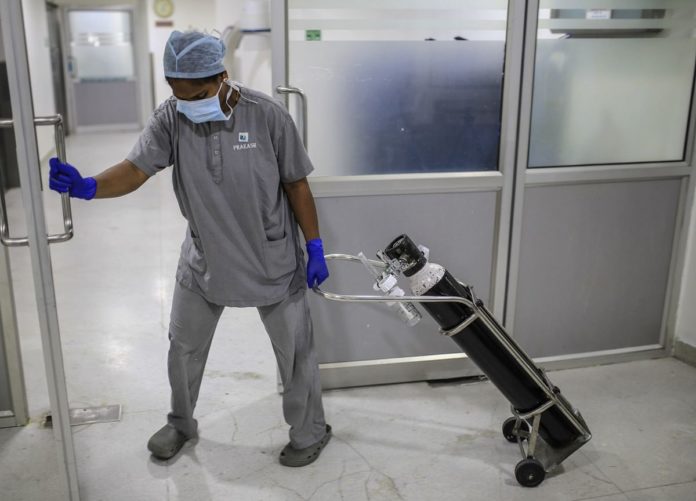
New Delhi (NVI): The Union Health Ministry today asked the states and UTs to ensure that no restriction is imposed on the movement of medical oxygen and noted that they were responsible to ensure that every hospitalised COVID patient receives oxygen.

“It has come to the knowledge of the Union Health Ministry that few States are trying to curb the free inter-State movement of oxygen supplies by exercising provisions under various Acts and also mandating the manufacturers/suppliers located in the State to restrict their oxygen supplies to only the hospitals of the State,’’ the Ministry noted in a statement.

In view of this, the Health Ministry has reiterated the critical importance of Oxygen in hospitals for management of critical COVID patients.

In a letter written to the States/UTs, Union Health Secretary, Rajesh Bhushan, emphasised that availability of adequate and uninterrupted supply of medical oxygen was an important prerequisite for managing moderate and severe cases of COVID-19. He urged them to ensure that no restriction was imposed on the movement of medical oxygen.

The Ministry said, “It has been strongly reinforced that it is every State’s responsibility to ensure that every hospitalised COVID-19 patient receives oxygen.’’

It had brought to the notice of all concerned that medical oxygen constituted an Essential Public Health Commodity and any impediment in its supplies may critically impact the management of COVID-19 patients.

“Moreover, some of the major oxygen manufacturers/supplies already have existing supply agreements with hospitals in various States with a legal obligation to fulfill such agreements,” it stated.

The Centre-led COVID management strategy is based on Standard of Care Treatment Guidelines. These guidelines have ensured a uniform and standardised quality of medical care in all the COVID facilities, including hospitals.

Adequate supply of oxygen throughout the country has enabled effective clinical care of the hospitalised moderate and severe cases, in conjunction with other measures.

The adopted host of strategies have actively resulted in rising Recovery Rate and steadily declining Case Fatality Rate (1.67 per cent currently). As on date, less than 3.7 per cent of active patients are on oxygen support, the Health Ministry stated.

-CHK

Passenger vehicle sales in India rise 14% in August, says SIAM

Representational image

New Delhi (NVI): The total domestic sales of the passenger vehicles increased by 14.16 per cent and two-wheeler sales rose by 3 per cent in August, after a period of lull owing to the nationwide lockdown, the Society of Indian Automobile Manufacturers (SIAM) said.

According to the data released by the SIAM, the sales of passenger vehicles in the domestic market stood at 2,15,916 units in August 2020, a growth of 14.16 per cent from 1,89,129 units in same month last year.

On the other hand, two-wheeler sales rose 3 per cent to 15,59,665 units, as compared to 15,14,196 units in the previous year.

Motorcycle sales were up 10.13 per cent, 10,32,476 units against 9,37,486 units in August last year aided by a good rural and semi urban demand, the SIAM figures showed.

Kenichi Ayukawa, President at SIAM said, “We are beginning to observe growth which is instilling confidence back into the industry, especially in the Two-wheeler and the Passenger Vehicle segments.”

He further added, “Even though the industry witnessed year-on-year growth in August 2020, it is to be recognized that the base figures in August 2019 itself was very low.”

“Still 14 per cent growth of Passenger vehicles and 3 per cent growth in two wheelers in August 2020 indicates trends of recovery for the Industry, though it is on the backdrop of pent-up demand and beginning of a festive season this month,” Ayukawa said.

Meanwhile, scooter sales and three-wheeler sales witnessed decline in August. Scooter sales slipped to 12.3 per cent from 4,56,848 units sold in August 2020 as against 5,20,898 units in the previous year, as per the SIAM data.

The three-wheeler sales, however, slipped 75.29 per cent. On the production front, Passenger car production was down 5.98 per cent, total two-wheeler production was minutely up 0.03 per cent.

On the export front, Passenger car exports were down 45.17 per cent, two-wheeler exports were down 14.23 per cent and three-wheeler exports slipped 13.61 per cent. However, the passenger vehicle numbers (domestic sales, production and exports) do not include wholesale figures of BMW, Mercedes, Tata Motors and Volvo Auto.

Rajesh Menon, Director General at SIAM said, “Industry is positive that the coming festive season will pave the way for a faster revival of the industry.”

-RJV


Rajnath launches Aero India 21 website, Asia’s largest Aeroshow scheduled for Feb

New Delhi (NVI): Defence Minister Rajnath Singh today launched the website of Aero India 2021, which will be held between February 3-7, 2021, giving the go ahead for space booking.

The 13th edition of Aero India-21 will be held at Air Force Station, Yelahanka, Bengaluru in Karnataka.

“Raksha Mantri Shri @rajnathsingh launched the website of @AeroIndiashow 2021 at South Block today. The Aero India Show is scheduled from 03 to 07th of February, 2021 in Bengaluru,” Office of Defence Minister said in a tweet.

The Aero India 2021 website will be a contactless online interface for Asia’s largest aero show. It will host and stream all online services related to the event for both the exhibitors and visitors, Ministry of Defence said in a statement.

Besides, it will also host informative content about the Ministry of Defence’s recent policies, initiatives and product profile of indigenous aircraft and helicopters.

Exhibitors will be able to register and book space online as per their requirements on a first-come-first-served basis and make all payments online on the Aero India website, the statement added.

Exhibitors can also avail early bird discounts by booking space on the website before October 31, 2020, it said.

Business and other visitors will be able to buy their tickets online on the website for visiting the show from February 3-7, 2021, during both business and public days.

Media persons will be also able to register on the website for coverage of the event.

The health protocols, which will be implemented to ensure a safe event, will also be available.

The website will be interactive and aims to provide the first of the numerous contactless experiences at the show and will help build the participants’ confidence towards the event being cognizant and in conformance with prevailing pandemic related guidelines and safeguards.

During his recent visit to Russia for bilateral discussions, Rajnath Singh referred to the Aero India-21 show and invited participation of defence ministers and industry delegations of Russia and the central Asian Republic countries.

-CHK

UNICEF appoints Ayushmann Khurana as celebrity advocate for child rights

New Delhi (NVI): Actor Ayushmann Khurana has been appointed as a celebrity advocate by UNICEF for its child rights campaign- #ForEveryChild. Khurana, who is also considered a youth icon, will support UNICEF towards its work around ending violence against children, the agency said in a statement.

Ayushmann Khurrana said that he is very pleased to partner with UNICEF as a celebrity advocate. “I believe that everyone deserves the best start in life. As I watch my children play in the safety and happiness of our home, I think about all the children who never get to experience a safe childhood and grow up with violence at home or outside.

“With UNICEF, I look forward to supporting rights of the most vulnerable children, so that they grow up as happier, healthier, educated citzens in nurturing environments free from violence,” he said.

Dr Yasmin Ali Haque, UNICEF Representative in India said welcomed Khurana as a celebrity advocate for children’s rights.

“I am delighted to welcome Ayushmann Khurrana as a UNICEF celebrity advocate. He’s an actor who challenges the boundary of every role he plays. He will bring a sensitivity, passion and a powerful voice for every child, with a specific focus towards ending violence against children.

“Ayushmann’s support will help increase awareness about this important issue, especially now with Covid-19 heightening the risk of violence and abuse against children due to the extended lockdown and the socio-economic impacts of the pandemic,” she said.

Violence against children, especially amid the Covid-19 pandemic, when people are forced to remain indoors to curb the spread of infection, has been a major concern for UNICEF and other child rights bodies.

UNICEF said that violence occurs every day and is reality for a large number of girls and boys in India. Often the violence is caused or perpetrated by someone the child knows and trusts. Violence happens in those places intended to be protective: at home, at school, in their communities, in specialized institutions for children.

The violence or abuse can also be online, UNICEF said. As daily lives and families are disrupted by COVID-19, children may be at increased risk as illness, school closures, job loss and isolation measures put additional stress on families and may lead to negative coping mechanisms that may sadly include abusive behaviors against children, it added.

As per the data by National Family Health Survey (NFHS), one out of five adolescent girls have experienced physical violence since age 15 and one in three adolescent girls married or in union have experienced violence by their husband or partners.

Every hour, 5 cases of child sexual abuse are reported, as per a 2018 NCRB (National Crime Records Bureau) report.

50% of cases of sexual abuse are perpetrated by close family members or friends, says another 2018 NCRB report.

99% of school children are subjected to physical and mental abuse by teachers, according to a 2012 NCPCR report.

One in three children in India have reported that they experienced cyberbullying, says a 2019 U-Report.

-ARK

Global wildlife population decline by 68% since 1970: WWF

Representational image

New Delhi (NVI): The global population of mammals, birds, amphibians, fish and reptiles has seen a decline of around 68 per cent between 1970 and 2016, according to the World Wildlife Fund’s Living Planet Report 2020.

According to the Living Planet Index (LPI), the average two-thirds decline in global populations of wildlife species, in less than 50 years in large parts is due to the same environmental destruction, which is contributing to emergence of zoonotic diseases such as COVID-19.

The index shows that factors believed to increase the planet’s vulnerability to pandemics, including land-use change and the use and trade of wildlife, were also behind the 68 per cent decline in global vertebrate species populations, according to the report.

Natural habitat loss, degradation and deforestation driven by food production processes were the other factors the report attributed the decline to.

The WWF report tracked almost 21,000 populations of more than 4,000 vertebrate species between 1970 and 2016, also shows that wildlife populations found in freshwater habitats have suffered a decline of 84 per cent.

Marco Lambertini, director general, WWF International said, “The Living Planet Report 2020 indicates how humanity’s increasing destruction of nature is having catastrophic impacts on wildlife populations and also on human health and all aspects of our lives.”

“We can’t ignore the evidence. These serious declines in wildlife populations are an indicator that nature is unravelling and that our planet is flashing red warning signs of systems failure. The decline of wildlife directly affects nutrition, food security and the livelihoods of billions of people,” he stated.

Lambertini also said in the midst of COVID-19 pandemic, it is now more important than ever to take unprecedented global action to halt and start to reverse the loss of biodiversity and wildlife populations across the globe, and protect future health and livelihoods. “Our own survival increasingly depends on it,” he added.

Based on a research paper, ‘Bending the curve of terrestrial biodiversity needs an integrated strategy,’ which is co-authored by WWF and over 40 NGOs and academic institutions and is published in Nature, the LPR 2020 also includes a pioneering modelling, which shows that without further efforts to counteract habitat loss and degradation, global biodiversity will continue to decline.

The research, however, shows that implementing these measures together rather than in isolation will allow the world to rapidly alleviate pressures on wildlife habitats.

“The focus of the Living Planet Report 2020 is to reiterate a scientific case for the urgent action we need to protect and restore nature and biodiversity,” said Ravi Singh Secretary General and CEO, WWF India.

-RJV

PM urges all stakeholders to come together to implement NEP by 2022

New Delhi (NVI): Prime Minister Narendra Modi today said that National Education Policy (NEP) is the beginning of a new era in school education and urged all stakeholders to come together to implement it by 2022 when the nation celebrates its 75th year of Independence.

“The New education policy will sow the seeds for starting a new era, will give new direction to 21st century India,” PM Modi said while addressing the conclave on ‘School Education in 21st Century’ organised by the Ministry of Education as a part of Shiksha Parv (festival of education).

During his address, the PM said that NEP addresses the big issue of marksheet driven education dominating in place of learning driven education in the country. He said that the marksheet has now become like a “mental pressure” sheet. Removing this stress from education is one of the main objectives of the National Education Policy, he said.

He said instead of a mark sheet, the National Education Policy has proposed for a holistic report card which will be a detailed sheet of unique potential, aptitude, attitude, talent, skills, efficiency, competency and possibilities of the students. He added that a new National Assessment Center “Parakh” will also be established for the overall improvement of the evaluation system.

The PM added that a lot has changed in the country in the last three decades but the education system needs to be updated. He stressed on the importance of replacing the old 10 Plus 2 with the system of 5 Plus 3 Plus 3 Plus 4 under the policy. He said now playful education of the pre-school which is limited to private schools in cities will also reach villages once this policy is implemented.

He emphasized that focus on basic education is the most important aspect of this policy. Under the Policy, the development of foundational literacy and numeracy will be taken as a national mission, he said.

“The child should go ahead and read to learn, for that it is necessary that in the beginning he should learn to read. This development journey from learn to read to read to learn will be completed through foundational literacy and numeracy,” he added.

The Prime Minister further said that it must be ensured that every child who crosses the third grade can easily read 30 to 35 words in a minute. He added that this will help him in understanding the content of other subjects with ease.

He said that it is in preschool where children begin to understand their senses, their skills better. NEP 2020 focuses on primary-level education for fun, playful, activity-based and discovery-based learning of the students, he said in his speech.

He said that behind the NEP is the hard work of people of every field, every language for last 4-5 years.

As the child progresses, it is very necessary to develop a greater learning spirit, scientific and logical thinking, mathematical thinking and scientific temperament, the PM added.

He said that within past one week, the Education Ministry has received over 15 lakh suggestions on its implementation.

Earlier on September 7, the PM had talked about the higher education part of the NEP during a conclave on ‘transformational reforms in higher education’.

In today’s speech, PM also listed out the 21st-century skills- Critical Thinking, Creativity, Collaboration, Curiosity and Communication. He said that students should learn coding from the beginning, understand Artificial Intelligence, join Internet of Things, Cloud Computing, Data Science and Robotics.

In addition to this, PM said that early education should be in the mother tongue like in most other countries. “Otherwise when children hear something in another language, they first translate it in their own language, then understand it,” he said.

“This creates great confusion in the child’s mind, it is very stressful. Therefore, as far as possible, keeping the local language, mother tongue, medium of education up to grade five, grade five at least, is stated in the National Education Policy,” he added.

The Shiksha Parv is being celebrated from September 8-25. Several webinars and conferences are taking place to discuss the action plan for the implementation of NEP 2020.

-ARK

State-wise details of Covid-19 cases in India

Covid variant
File photo

New Delhi (NVI): The total number of coronavirus cases in India has reached 45,62,415, after 96,551 new cases were reported in the past 24 hours, biggest single-day rise, according to Union Health Ministry data.

The country’s death toll has gone up to 76,271 after 1,209 new fatalities were reported in the country during this period.

In worst-hit Maharashtra, the COVID-19 cases climbed to 9,90,795, followed by Andhra Pradesh with 5,37,687 cases, and Tamil Nadu with 4,86,052 cases.

Total positive cases in States/UTs:

Andaman and Nicobar Islands- 3,465

Andhra Pradesh- 5,37,687

Arunachal Pradesh- 5,672

Assam- 1,35,805

Bihar- 1,53,568

Chandigarh- 6,987

Chhattisgarh- 55,680

Dadra Nagar Haveli & Diu – 2,671

Delhi- 2,05,482

Gujarat- 1,09,465

Goa- 22,890

Haryana– 85,944

Himachal Pradesh- 8,466

Jammu and Kashmir- 49,134

Jharkhand- 58,079

Karnataka- 4,30,947

Kerala- 99,266

Ladakh- 3,177

Madhya Pradesh- 81,379

Maharashtra- 9,90,795

Manipur- 7,470

Meghalaya- 3,296

Mizoram- 1,333

Nagaland- 4,636

Odisha- 1,39,121

Puducherry- 18,536

Punjab- 72,143

Rajasthan- 97,376

Sikkim- 2,009

Tamil Nadu- 4,86,052

Telangana- 1,52,602

Tripura- 17,811

Uttarakhand- 28,266

Uttar Pradesh- 2,92,029

West Bengal– 1,93,175

State/UT wise total death toll:

Andaman and Nicobar Islands- 51

Andhra Pradesh- 4,702

Arunachal Pradesh- 9

Assam- 414

Bihar- 785

Chandigarh- 83

Chhattisgarh- 493

Dadra and Nagar Haveli- 2

Delhi- 4,666

Goa- 268

Gujarat- 3,164

Haryana- 907

Himachal Pradesh- 66

Jammu and Kashmir- 845

Jharkhand- 517

Karnataka- 6,937

Kerala- 396

Ladakh- 36

Madhya Pradesh- 1,661

Maharashtra- 28,282

Manipur- 44

Meghalaya- 20

Nagaland- 10

Odisha- 591

Puducherry- 353

Punjab- 2,149

Rajasthan- 1,192

Sikkim- 7

Tamil Nadu- 8,154

Telangana- 940

Tripura- 173

Uttarakhand- 377

Uttar Pradesh- 4,206

West Bengal- 3,771

However, a total of 35,42,663 people have been cured or discharged. Total active cases stand at 9,43,480.

-CHK

UN chief calls for $35bn funding for WHO Covid-19 program

UN Chief Guterres
UN Secretary General Antonio Guterres (file photo)

New Delhi (NVI): The United Nation’s Secretary-General, Antonio Guterres, called on countries for additional funding of USD 35 billion to the World Health Organisation’s COVID-19 program.

The funding will go to the World Health Organization (WHO) ACT-Accelerator program that supports vaccines, treatments and diagnostics against COVID-19.

Speaking at a virtual meeting, Guterres, called for USD 35 billion more, including USD 15 billion in the next three months.

According to the UN chief, around USD 3 billion has so far been contributed but it is less than 10 per cent of what the WHO wants for the program.

“We now need USD 35 billion more to go from ‘start up’ to ‘scale up and impact. There is real urgency in these numbers. Without an infusion of USD 15 billion over the next three months, beginning immediately, we will lose the window of opportunity,” Guterres said.

The total being requested, USD 38 billion, exceeds the previously published USD 31.3 billion ACT goal and includes additional funding for health systems, in addition to vaccines, therapeutics and diagnostics, according to the WHO

Meanwhile, the financial support has, so far, been slow as nations or governments including the European Union, Britain, Japan and the United States reach bilateral vaccine deals, forcing Guterres and WHO Director-General Tedros Adhanom Ghebreyesus to plead to nations to contribute, as per the reports.

Earlier in August, the European Commission President Ursula von der Leyen also pledged the commissions backing and promised USD 474 million funding to WHO’s cooperative vaccine access program COVAX, which is part of the ACT program.

-RJV

Coronavirus tally mounts to 28.1 mn worldwide; US tally nears 6.4 mn

Coronavirus cases
(Representational/file photo)

New Delhi (NVI): More than 28.1 million people around the world have been diagnosed with the coronavirus and more than 9,09,000 have died, according to Johns Hopkins University. Some 18.8 million people have recovered.

In the US, the number of coronavirus infections are nearing 6.4 million while the number of fatalities have surpassed 1,91,000 in the country.

Brazil recorded 40,557 additional confirmed cases of the novel coronavirus and 983 deaths from the disease, the health ministry said. Brazil has registered more than 4.2 million cases of the virus since the pandemic began, while the official death toll has risen to 1,29,522.

Greece, France and Palestine have all reported a record number of daily coronavirus cases.

Greece has reported 372 new coronavirus cases, its highest daily number since the start of the outbreak in the country. The latest jump in cases brought the total number of cases in Greece to 12,452 and 297 deaths since its first case surfaced in late February.

France has reported 9,843 new coronavirus cases, setting an all-time high of daily infections, six days after the previous record of 8,975.

Palestine has confirmed seven more deaths and 1,000 new coronavirus infections over the past 24 hours – the highest single-day jump since the outbreak began. Death toll in Palestine rose to 224, while the total infections reached 37,214 – including 25,483 recoveries.

The UAE says daily coronavirus cases have jumped five-fold compared with a month ago, and warns residents and citizens to abide by measures. The daily tally of cases has hit 930, compared with 179 on August 10.

Portugal has been added to the list of countries from which travellers must quarantine when entering the United Kingdom.

-CHK

6.4 million Indians were exposed to coronavirus by early May, shows ICMR’s survey

Representational image

New Delhi (NVI): Around 6.4 million infections of coronavirus were estimated in India by the early May, the first national sero-survey conducted by Indian Council of Medical Research (ICMR) revealed.

The survey, published in the Indian Journal of Medical Research, was carried out between May 11 and June 4. The exercise had covered 28,000 individuals whose blood samples were tested for IgG antibodies.

However, the survey results indicated that 0.73 per cent of the adult population was exposed to coronavirus by mid-May this year.

“The low prevalence observed in most districts indicates that India is in the early phase of the epidemic and the majority of the Indian population is still susceptible to SARS-CoV-2 infection,” ICMR said.

Moreover, the seropositivity was found to be highest in the age-group of 18-45 years (43.3 per cent), followed by those between 46-60 years (39.5 per cent). The lowest seropositivity was detected in those aged above 60 (17.2 per cent).

The sero-prevalence ranged between 0.62 and 1.03 per cent across the four strata of districts from which data was collected, it said.

A total of 30,283 households were visited from 700 clusters in 70 districts across the four strata including zero cases- 15 districts, low cases- 22 districts, medium cases – 16, high cases 17 districts, for the sero survey conducted by the ICMR.

“The present findings of seropositivity in the strata of districts with zero to a low incidence of COVID-19 cases underscore the need to strengthen surveillance and augment the testing of suspected cases in these areas,” it added.

Furthermore, the survey also said that about one-fourth (25.9 per cent) of the surveyed clusters were from urban areas.

-RJV

MUST READ